Colossians 3
Nǫ̀htsı̨̨ Nı̨̨htł'è · Tap a verse to see its cross-references.
Dànì degaı k'ę̀ę̀ ts'eeda
1Zezì-Krı wexè naàhdà aahjà ts'ıhɂǫ̀, ı̨dòo yak'e Zezì-Krı, Nǫ̀htsı̨-Gotà gà nàgòts'ehnèe wheda t'à yak'e ghǫ naxıdzeè nàtsoò aahwhǫ. 2Eyıt'à ı̨dòo gots'ǫ ne sìı ghǫ naxıdzeè nàtsoò aahwhǫ, dıı nèk'e t'asìı whelaa ghǫ naxıdzeè nàtsoò aahwhǫ-le. 3Ełaahdèe lanì ı̨lè, eyıt'à dıì aahdaa sìı Zezì-Krı wexè Nǫ̀htsı̨ nezı̨į̀ naxık'èdì. 4Eyıt'à Zezì-Krı wets'ıhɂǫ̀ aahda, eyıts'ǫ K'àowocho enıìyah k'ę̀ę̀ wègoèht'į̀ nı̨dè naxı̨ sı wexè naxègaat'ı̨ ha hǫt'e.
5Eyıt'à dıı nèk'e gots'ǫ hołı̨ı̨ nàowoò naxıts'ǫ̀ k'àowo-le aahłe. Dıı hołı̨ı̨ nàowoò hǫt'e: gozhį̀į̀ t'à hołı̨ı̨ k'alats'edèe, gonìłı̨ı̨, hołı̨ı̨ ghats'eewı, eyıts'ǫ t'asìı ghǫ ets'edì-le. T'asìı gha ets'edì-le sìı gogha nǫ̀htsı̨ elı̨į̀ at'į̀ hǫt'e. 6Dǫ eyı hanıı hołı̨ı̨ k'alagedè ts'ıhɂǫ̀ Nǫ̀htsı̨ nàgoehkwa ha hǫt'e. 7Įnę̀ę sìı eyı hanıı hołı̨ı̨ nàowoò k'ę̀ę̀ aahda ı̨lè. 8Hanìkò dıı hazǫǫ̀ wedę aahłe: ts'ìch'ee, goınì nàìtłoo, hołı̨ı̨ k'ę̀ę̀ k'ehots'eɂaa, dǫ k'adats'edèe, eyıts'ǫ whàdagots'etsǫ̀ǫ, eyı hazǫǫ̀ wedę aahłe. 9Naxınìłı̨ı̨ k'ę̀ę̀ aahda-le aahjà t'à ełets'ǫ̀ hoahts'ì-le. Naxıgoht'ǫǫ̀ wezǫą yìı xàahde lanì hǫt'e. 10Goht'ǫ gòò yìı aahde laahjà, Nǫ̀htsı̨ gòèhtsı̨ı̨ sìı deghàà wek'èahsǫǫ̀ aahjà, eyıts'ǫ wexèht'eè aahdaà aahjà. 11Zezì-Krı wegha ts'eeda nı̨dè hazǫǫ̀ ełèts'ı̨ı̨ht'e hǫt'e. Israel got'ı̨į̀, Greece got'ı̨į̀ ełexègı̨ı̨ht'ee, nàgoet'àa, nàgoet'à-le, nàowo eładı̨ı̨ k'ę̀ę̀ geedaa dǫǫ̀, dǫ edets'ǫ̀ k'agedè-le, edets'ǫ̀ k'agedèe, hazǫǫ̀ ełexègı̨ı̨ht'e. Zezì-Krı ededı̨ zǫ gogha K'àowo elı̨, eyıts'ǫ goxı̨ hazǫǫ̀ godzeè yìı eda.
12Eyıt'à Nǫ̀htsı̨ naxììchì, wets'ǫ dǫ degaı aahłı̨ xè naxıghǫneètǫ t'à, dǫ eteahɂı̨, dǫ ts'ǫ̀ naxıdzeè nezı̨ı̨ laaht'e, k'èeweèt'ı̨ k'ę̀ę̀ aahda, eyıts'ǫ dǫ xè ts'èwhı̨į̀ hòwhahɂǫ. 13Gots'eèdı kò ełınì nezı̨ı̨ aaht'ı̨, eyıts'ǫ ełek'èch'a hòahtsı̨ nı̨dè ełeghǫ nahoahłe. Gots'ǫ̀ K'àowo naxıghǫ nahoı̨la lanì ełeghǫ nahoahłe. 14Eyı nàowo nezı̨ı̨ hazǫǫ̀ k'ę̀ę̀ aahda, eyı wedaats'ǫ̀ ełeghǫnıahtǫ, hanì-ı̨dè eyı nàowo nezı̨ı̨ hazǫǫ̀ sìı nàowodeè ı̨łè zǫ k'ę̀ę̀ aahda ha.
15Zezì-Krı wexè ts'èwhı̨į̀ hòɂǫǫ sìı wek'ę̀ę̀ aahda welì. Zezì-Krı wezhį̀į̀ aahłı̨ı̨ sìı ts'èwhı̨į̀ aahda ha naxììchì, eyı weghǫ Nǫ̀htsı̨ ts'ǫ̀ masì dahwhǫ. 16Zezì-Krı weyatıì hazǫǫ̀ naxıdzeè yìı t'aats'ǫǫ̀ wet'à goahsǫ aahda, eyıts'ǫ wet'à hoghàłaahtǫ xè nezı̨į̀ ełek'èahdì. Naxıdzeè t'à Nǫ̀htsı̨ masì weahwhǫ eyıts'ǫ shı̨ xàɂaa t'à wegha aahjı̨. 17Ayìı dàahdıı, eyıts'ǫ ayìı ghàlaahdaa sìı hazǫǫ̀ gots'ǫ̀ K'àowo Zezì wedahxà aaht'ı̨. Eyıts'ǫ Zezì wıızì t'à Nǫ̀htsı̨-Gotà masì wèahdı.
Dǫ gıgha ehkw'ı-ahodıı sìı dànì ełexè geeda ha
18Ts'èko yàahłı̨ı̨ sìı naxıdǫǫ̀ k'èaht'e, gots'ǫ̀ K'àowo wexè hanì aahda.
19Dǫzhìı yàahłı̨ı̨ sìı naxıts'èkeè gıghǫnıahtǫ, eyıts'ǫ yatı nàtsoo t'à tsį̀gıahɂa-le.
20Chekoa yàahłı̨ı̨ sìı naxıtà eyıts'ǫ naxımǫ gık'èaht'e, eyı sìı gots'ǫ̀ K'àowo yeghǫ sìghà anıwǫ hǫt'e.
21Gotà yàahłı̨ı̨ sìı naxıza gınì tsį̀ahwhı-le, haaht'ı̨ nı̨dè ahxe whìle gı̨ı̨wǫǫ̀ agede ha.
22Dǫ gıcheekeè yàahłı̨ı̨ sìı dıı nèk'e naxıts'ǫ̀ k'aodèe gı̨ı̨lı̨ı̨ sìı gık'èaht'e. Gınadąą̀ zǫ nezı̨į̀ k'ehoahɂa-le, ekìı naxıghǫ nezı̨į̀ agı̨ı̨wǫ gha aaht'ı̨-le. Hanìkò gots'ǫ̀ K'àowo ts'ǫ̀ nezı̨į̀ kànıahɂa xè naxıdzeè t'à nezı̨į̀ eghàlaahda. 23Ayìı ghàlaahdaa sìı hotıì naxıdzeè t'à nezı̨į̀ weghàlaahda, dǫ gha zǫ aaht'ı̨-le, hanìkò gots'ǫ̀ K'àowo wegha eghàlaahda lanì aaht'ı̨. 24Eyı wek'èxa gots'ǫ̀ K'àowo naxıda t'asìı whehłaa sìı naxıghàɂà ha wek'èahsǫ t'à hanì eghàlaahda welì. Gots'ǫ̀ K'àowo Zezì-Krı wegha eghàlaahda aaht'ı̨ hǫt'e. 25Amìı ekǫ-le eghàlaedaa sìı wek'èxa hoìla weghǫ̀t'à ha. Nǫ̀htsı̨ sìı wegha dǫ denahk'e nezı̨ı̨ gǫ̀hłı̨ nıìle, hazǫǫ̀ ełèht'eè gosınìyaehtı ha hǫt'e.
Did you know?
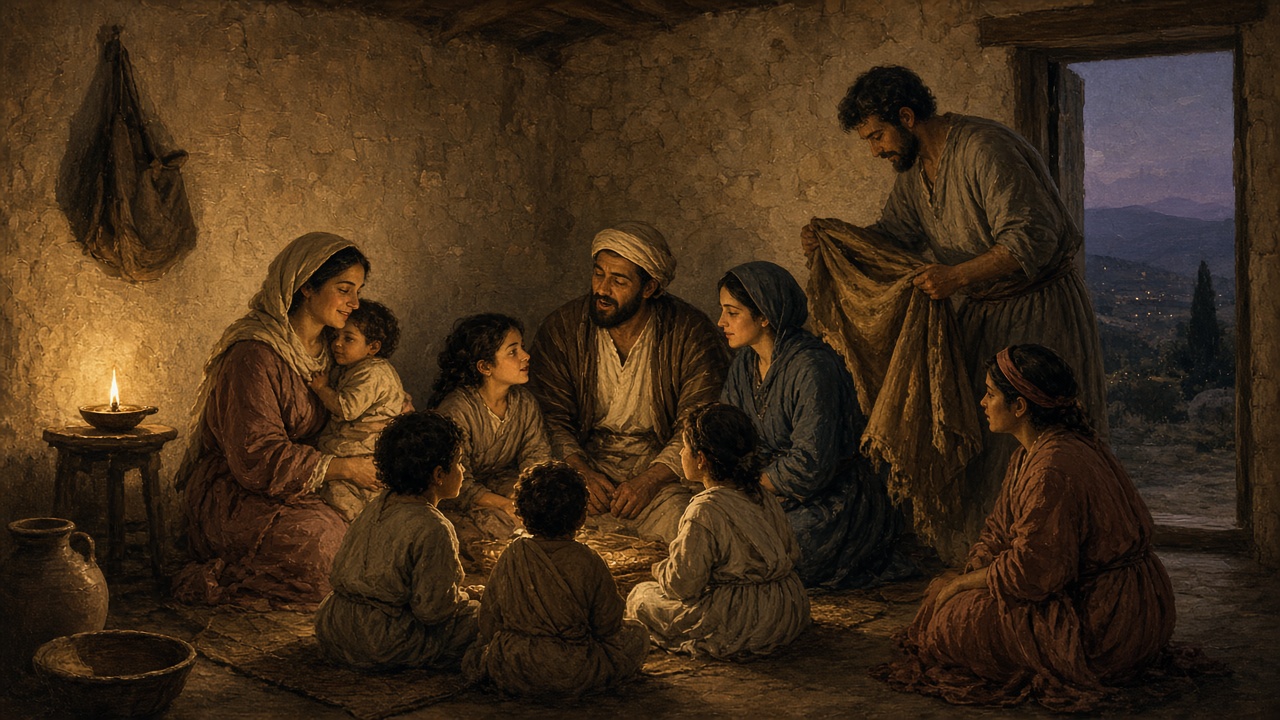
New life in one body and at home
- This chapter pictures a changed life as a change of clothing. Readers are said to have taken off the old self with its practices and put on the new self, which is being renewed in knowledge in the image of its Creator. They are then told to clothe themselves with hearts of compassion, kindness, humility, gentleness, and patience, and to put on love over all these virtues as the bond of perfect unity.Sources: the Bible text itself
- The chapter lists Greek and Jew, circumcised and uncircumcised, barbarian, Scythian, slave and free, and declares that here none of these distinctions remains, because Christ is all and is in all.Sources: the Bible text itself
- The chapter then gives instructions for household relationships: wives and husbands, children and parents, and slaves and their earthly masters. Fathers are warned not to provoke their children, so that the children will not become discouraged. Slaves are told to obey with sincerity of heart, not only while they are being watched, and to work with their whole being for the Lord rather than for men, with the promise of an inheritance from the Lord as a reward; whoever does wrong will be repaid, and there is no favoritism.Sources: the Bible text itself
Notes written with AI assistance from open sources (Theographic Bible Metadata, CC BY-SA 4.0; Easton’s Bible Dictionary, public domain) and reviewed before publishing.
Credits and license for this translation
Nǫ̀htsı̨̨ Nı̨̨htł'è
Dogrib: Dogrib Genesis & New Testament New Testament & Portions of Old Testament
copyright © 2009 Canadian Bible Society
Language: Dogrib
Translation by: Canadian Bible Society
Tłı̨chǫ Genesis and New Testament
About Tłı̨chǫ
Tłı̨chǫ (Dogrib) is a Na-Dene (Athabaskan) language. It is spoken by the First Nations Tłı̨chǫ people in the Northwest Territories in Canada. It has the largest number of speakers of any of the Aboriginal language communities in the NWT, and is one of the official languages of the Northwest Territories.
About This Translation
This translation includes the book of Genesis and the New Testament in Tłı̨chǫ. The first edition of the Tłı̨chǫ New Testament was published in 2003. It was a historic event, as it was the first time in more than a hundred years that a complete New Testament was published for one of the Dene First Nations in the Territories. The first edition was well received and quickly sold out. In the meantime the book of Genesis had been completed. Consequently, the 2008 reprint of the Tłı̨chǫ New Testament included Genesis.
Though this translation of the New Testament and Genesis took a total of ten years, the people who worked on it built on years of labor invested by the Tłı̨chǫ people, elders, priests and missionaries, translators, educators, and linguists. The material contained in this book was checked and approved by consultants from Wycliffe Bible Translators and the Canadian Bible Society.
If you are interested in obtaining a printed copy of this Bible, please contact the Canadian Bible Society at http://www.biblescanada.com .
Copyright Information
Dogrib Genesis and New Testament © 2003, 2008 Canadian Bible Society
The text of the Bible in Tłı̨chǫ that appears in this electronic format or website is for personal use only.
Up to five hundred (500) verses of the Bible text in any form (written, visual, electronic or audio) may be quoted without permission. The quoted verses may not be more than 50% of a complete book of the Bible, or more than 25% of the total text of the work in which they are quoted. Prior written permission must be obtained for any other use of the text. Copyright acknowledgement must in all cases appear on the title or copyright page.
For more information on copyright conditions or to apply, visit http://www.biblesociety.ca/copyright .
This translation is made available to you under the terms of the
Creative Commons Attribution-Noncommercial-No Derivatives license 4.0.
You may share and redistribute this Bible translation or extracts from it in any format, provided that:
You include the above copyright and source information.
You do not sell this work for a profit.
You do not change any of the words or punctuation of the Scriptures.
Pictures included with Scriptures and other documents on this site are licensed just for use with those Scriptures and documents.
For other uses, please contact the respective copyright owners.
2014-04-22
Source: http://ebible.org/dgrDOGNT/ · eBible.org