Acts 8
Nǫ̀htsı̨̨ Nı̨̨htł'è · Tap a verse to see its cross-references.
Saul dǫ gıgha ehkw'ı-ahodıı sìı dagòı̨hɂa
1Dǫ degaı mǫ̀hdaa Stephen wekw'ǫǫ̀ nègı̨į̀tǫ eyıts'ǫ gıghǫ hòtł'ò gı̨ı̨tsè. Eyı dzęę̀ k'e Jerusalem Nǫ̀htsı̨ wecheekeè hazǫǫ̀ dagı̨ı̨ɂaà agììdlà. Eyıt'à Judea nèk'e eyıts'ǫ Samarıa nèk'e ts'ǫ̀ kwı̨geèhde. Hanìkò Zezì wecheekeèdeè t'aa Jerusalem ageèhkw'e. 3Saul Nǫ̀htsı̨ wecheekeè godıhohtsı̨ ha, kǫ̀ta dǫzhìı eyıts'ǫ ts'èko nıgoìle gà dǫ-danìı̨laa-kǫ̀ ts'ǫ̀ agohɂı̨.
4Nǫ̀htsı̨ wecheekeè edı̨į̀ ehkègı̨ı̨dee sìı ekǫ godı nezı̨ı̨ t'à dǫ xè gogedo.
Phılıp Samarıa nèk'e nììtła
5Nǫ̀htsı̨ wecheekeè Phılıp wìyeh Samarıa nèk'e kǫ̀godeè ts'ǫ̀ ajà, ekǫ Zezì-Krı wegodıì t'à dǫ hoghàehtǫ. 6Dǫ hazǫǫ̀ Phılıp gıìkw'o eyıts'ǫ enıìyah hòèhtsı̨ gıaɂı̨ t'à dàdıı sìı hotıì nezı̨į̀ egeèhkw'ǫ. 7Įnìłı̨ı̨ łǫ yagìzeh xè dǫ yìı gots'ǫ xàgı̨ı̨de, dǫ gıkw'ǫǫ̀ ełaı̨dèe łǫ eyıts'ǫ dǫ k'egedè-le łǫ k'aàt'ıì agǫ̀ǫ̀là. 8Eyıt'à eyı kǫ̀godeè dǫ sıì gınà agòjà.
Sımon, ı̨k'ǫǫ̀-k'èezǫǫ-dǫǫ̀
9Dǫ ı̨łè Sımon wìyeh whaà gots'ǫ Samarıa nèk'e kǫ̀godeè ı̨k'ǫǫ̀ k'alaı̨wo t'à dǫ hazǫǫ̀ eyı nèk'e nàgedèe sìı gogha sììdì hòèhtsı̨. T'asìı aht'e edeewǫ t'à edeghǫ xàdahodì. 10Dǫ łǫ gıts'ǫ̀ at'ı̨, k'aodèe eyıts'ǫ dǫ t'ahoòyį̀ı̨ gıxè at'ı̨. Hagedı, “Eyı dǫ Nǫ̀htsı̨ dahxà t'asìı nàtsoo wets'ǫ̀-èlı̨,” gıìhdı. 11Whaà gots'ǫ edets'ǫ ı̨k'ǫǫ̀ t'à gogha sììdì hòèhtsı̨ t'à dǫ łǫ gık'èè k'edè. 12Hanìkò Phılıp Nǫ̀htsı̨ Wenàowoò wegodıì nezı̨ı̨ eyıts'ǫ Zezì wegodıì nezı̨ı̨ dǫ hoghàgoehtǫ t'à gıgha ehkw'ı-ahodıì agejà. Eyıt'à dǫzhìı eyıts'ǫ ts'èko sı gık'ètaìdzǫ. 13Sımon ededı̨ sı wegha ehkw'ı-ahodı t'à wek'ètaìdzǫ. Phılıp edı̨į̀ k'edaa sìı yek'èè k'eda. Enıìyah deè wedaà nàhòwo t'à sıì wegha enıìyah dìì.
14Samarıa got'ı̨į̀ Nǫ̀htsı̨ yatıì gıgha ehkw'ı-ahodıì agòjàa Zezì wecheekeèdeè Jerusalem geèhkw'ee sìı eyı godı gıìkw'o ekò Peter eyıts'ǫ John gots'ǫ̀ gogeèhɂà. 15Ekǫ nègı̨ı̨de ekò Yedàyeh Nezı̨ı̨ dǫ gık'e ade ha gok'eèyagı̨ı̨htı. 16Įłaà Yedàyeh Nezı̨ı̨ gık'e ajà-le ı̨lè, gots'ǫ̀ K'àowo Zezì wıızì zǫ t'à gık'ètaìdzǫ ı̨lè. 17Eyıt'à Peter eyıts'ǫ John gokwìt'a dageèhdì gà Yedàyeh Nezı̨ı̨ gık'e ajà.
18Zezì wecheekeèdeè edılà dǫ k'e agehɂı̨-ı̨dè Yedàyeh Nezı̨ı̨ gık'e at'į̀, Sımon yaɂı̨. Ededı̨ sı hat'ı̨ ha nıwǫ t'à sǫǫ̀mba gots'àɂeehdì ha nıwǫ, 19hadı, “Sı̨ sı haht'ı̨ ha seghàhòahɂà. Sılà dǫ k'e whıhdì nı̨dè Yedàyeh Nezı̨ı̨ gık'e ade ha,” gòhdı.
20Peter yets'ǫ̀ hadı, “Nǫ̀htsı̨ t'asìı k'èxa-le dǫ ghàyeɂàa sìı, sǫǫ̀mba t'à nàı̨hdì ha neewǫ t'à, nesǫǫ̀mbaà nexè wedıhołè welè! 21Nedzeè t'à Nǫ̀htsı̨ ts'ǫ̀ ehkw'ı nànınewo-le t'à, dıı Nǫ̀htsı̨ wılaà sìı nexè ha nıìle. 22Nenàowołı̨ı̨ wek'enelı̨ eyıts'ǫ gots'ǫ̀ K'àowo ts'ǫ̀ yanehtı. Edahxǫ neghǫ nahoele ha welì. 23Sıì goghǫ ts'ohoı̨dı xè hołı̨ı̨ nets'ǫ̀ k'àowo,” Peter yèhdı.
24Sımon yets'ǫ̀ hadı, “Dàı̨dıı sìı sexè hagode ha-le t'à, gots'ǫ̀ K'àowo ts'ǫ̀ segha yanehtı,” yèhdı.
25Gots'ǫ̀ K'àowo weyatıì dǫ ghàgı̨ı̨ɂǫ tł'axǫǫ̀ Peter eyıts'ǫ John ek'èt'à Jerusalem ts'ǫ̀ nageèhde. Samarıa nèk'e kǫ̀ta yàgòlaa sìı gok'egı̨į̀de, ekǫ godı nezı̨ı̨ t'à dǫ xè gogıado.
Phılıp eyıts'ǫ Ethıopıa nèk'e gots'ǫ dǫ
26Ekìıyeè k'e gots'ǫ̀ K'àowo edets'ǫ yak'eet'ı̨į̀ Phılıp ts'ǫ̀ yı̨ı̨hɂà, hayèhdı, “Ekìı-ka nèk'e tı̨lı sazı̨ ts'ǫ̀ nı̨ı̨ɂàa sìı k'èè anede. Eyı tı̨lı Jerusalem gots'ǫ kǫ̀ta Gaza ts'ǫ̀ nı̨ı̨ɂàa sìı k'èè anede,” yèhdı. 27Eyıt'à Phılıp ekǫ ajà. Ekǫ naetłe ekò Ethıopıa nèk'e gots'ǫ dǫ-wet'àaɂàa-deè ghǫ nììtła. Eyı dǫ sìı Ethıopıa nèk'e ts'èko-k'àowo gha sǫǫ̀mba-k'èdìı-dǫǫ̀ elı̨. Jerusalem wexè yatı ha t'à ekǫ ts'ǫ̀ èhtła ı̨lè. 28Ek'èt'à edekǫ̀ ts'ǫ̀ tłı̨cho-behchı̨į̀ t'à naehtłe ekò nakwenàoɂǫǫ Isaıah wenı̨htł'è k'eyahtı ı̨lè. 29Yedàyeh Nezı̨ı̨ Phılıp ts'ǫ̀ hadı, “Eyı dǫ webehchı̨į̀ ts'ǫ̀ nıwà-lea nìı̨tła,” yèhdı.
30Eyıt'à Phılıp yebehchı̨į̀ ts'ǫ̀ tı̨mǫèhza, eyı dǫ nakwenàoɂǫǫ Isaıah wenı̨htł'è k'eyahtı nǫǫ̀ yeèhkw'ǫ. Phılıp dayeehke, “Eyı wek'eyaąhtıı sìı asį̀į̀ wenıı̨dì?” dǫ èhdı.
31“Dǫ sedaedı lenǫsıı dànì weneehdì lì?” hadı. Eyıt'à Phılıp ts'ǫ̀ hadı, “Segà behchı̨į̀ yìı̨tła,” yèhdı.
32Eyı k'àowo sìı enı̨htł'è k'e dıı hanì dek'eèhtł'è yek'eyahtı ı̨lè:
“Sahzǫ̀ą edeweè ts'ǫ̀ etłe lanì natł'ıgıaxà. Sahzǫ̀ą weghàà xaget'à kò t'asadı-le, eyı lanì xàyaı̨htı-le. 33Sıì tsį̀gį̀ı̨hɂa eyıts'ǫ ehkw'ı gısınìyaı̨htı-le. Dıı nèk'e ełaàwìgwo t'à, wets'ıhɂǫ̀ǫ-dǫǫ̀ gǫ̀hłı̨-le,” hanì dek'eèhtł'è.
34Eyı dǫ, Phılıp daehke, “Sets'ǫ̀ haı̨dı, nakwenàoɂǫǫ amìı ghǫ godeè-adı? Edeghǫ gode, hanì-le-ı̨dè eyıì-le ghǫ godeè-adı?” yèhdıì dayeehke. 35Eyıt'à Phılıp eyı enı̨htł'è k'e dànì dek'eèhtł'èe sìı t'à yexè godo, eyıts'ǫ Zezì wegodıì nezı̨ı̨ yets'ǫ̀ hadı.
36Tı̨lı k'e nagıadè ekò tı whehtǫ gà nègı̨ı̨de. Eyı dǫ hadı, “Jǫ tı whehtǫ, asį̀į̀ sek'ètaìdzı̨ ha dìì-le?” yèhdı. 38Eyı dǫ edecheekeè ts'ǫ̀ goı̨de t'à tłı̨cho behchı̨į̀ nììtła agį̀į̀là. Eyıt'à Phılıp eyıts'ǫ eyı dǫ į̀łah teè łegeèhtła gà Phılıp yek'ètaį̀dzǫ. 39Tı yìı gots'ǫ xàgı̨ı̨de ts'ǫ̀et'ıì Phılıp Yedàyeh Nezı̨ı̨ t'asį̀ı̨ nayeèhchì. Eyı dǫ nayat'ı̨-le hanìkò sıì wınà xè edekǫ̀ ts'ǫ̀ naèhtła. 40Ekò Phılıp kǫ̀ta Ashdod ekǫ k'enatło, eyı tł'axǫǫ̀ hazǫǫ̀ nèk'e ajà. Ekǫ kǫ̀ta yàgòlaa eyıts'ǫ kǫ̀ta Caesarea nììtła gots'ǫ̀ godı nezı̨ı̨ t'à dǫ ts'ǫ̀ gode.
Did you know?
The message spreads beyond Jerusalem
- After Stephen’s death, a great persecution broke out against the church in Jerusalem, and all except the apostles were scattered through Judea and Samaria. Philip, one of the seven and later called the evangelist, was among them; he went first to Samaria, where the crowds gave their attention to his message about the Christ.Sources: the Bible text itself · Phillip the Evangelist
- Before Philip arrived, Simon had long astounded Samaria by sorcery, and people called him the divine power known as the Great Power. He believed and was baptized, then offered money for the power to give the Holy Spirit by the laying on of hands; the word simony, for buying a spiritual office, is derived from his name.Sources: the Bible text itself · Simon the Sorcerer
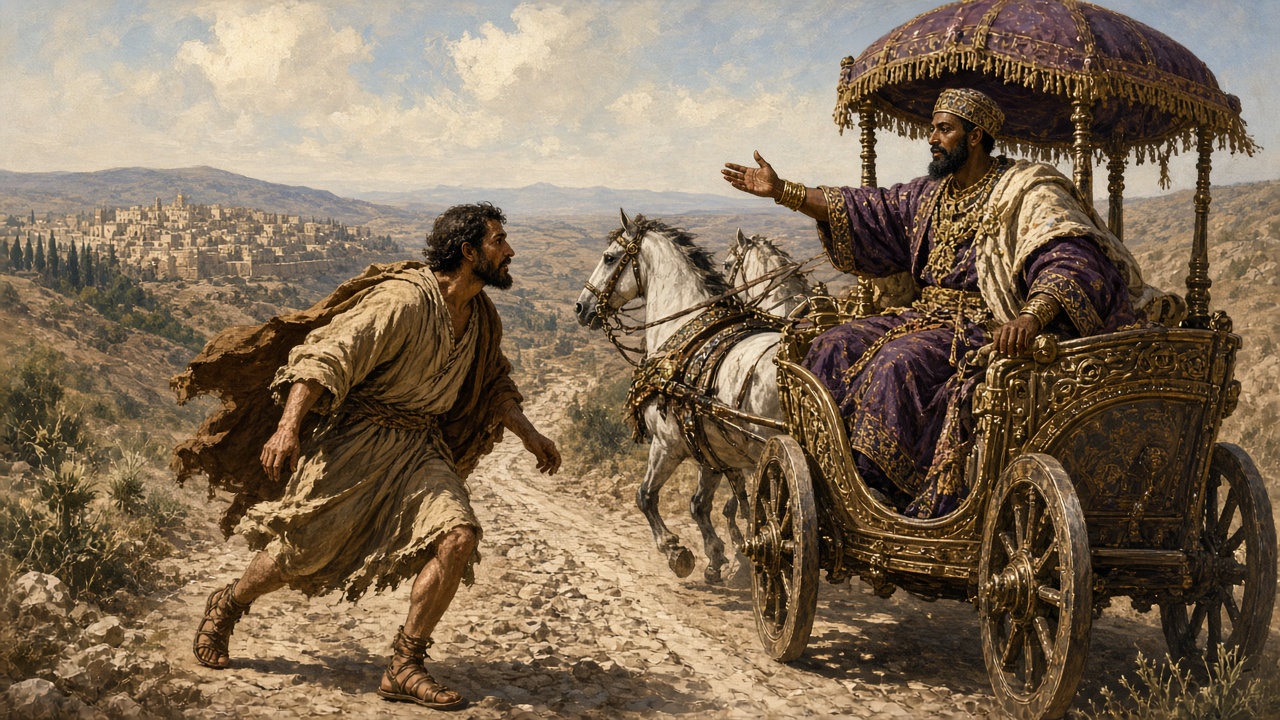
- Two roads linked Jerusalem and Gaza; Philip was sent along the one through Hebron and a thinly inhabited district called the desert. There he met an Ethiopian eunuch, treasurer to Candace, queen of the Ethiopians, returning from worship in Jerusalem and reading the prophet Isaiah in his chariot. Candace was a title borne by successive queens of Meroe in Upper Nubia, a wealthy center of trade between Africa and southern Asia.Sources: the Bible text itself · Phillip the Evangelist · Candace
Notes written with AI assistance from open sources (Theographic Bible Metadata, CC BY-SA 4.0; Easton’s Bible Dictionary, public domain) and reviewed before publishing.
Places in this chapter
- Jerusalem · 31.777, 35.234 · verses 1, 14, 25, 26, 27
- Judea · Today: Judea 1 · 31.777, 35.234 · verse 1
- Samaria · Today: Samaria 2 · 32.276, 35.195 · verses 1, 5, 9, 14, 25
- Gaza · Today: Tell Harube · 31.504, 34.464 · verse 26
- Ethiopia · 16.935, 33.751 · verse 27
- Ashdod · Today: Tel Ashdod · 31.757, 34.658 · verse 40
- Caesarea · Today: Caesarea Maritima · 32.500, 34.892 · verse 40
Only places identified with high confidence are shown (90% or more according to the scholarly sources compiled by OpenBible). Period map: DARE (Digital Atlas of the Roman Empire), CC BY 4.0; modern map: © OpenStreetMap contributors; places: OpenBible.info (CC BY 4.0).
Credits and license for this translation
Nǫ̀htsı̨̨ Nı̨̨htł'è
Dogrib: Dogrib Genesis & New Testament New Testament & Portions of Old Testament
copyright © 2009 Canadian Bible Society
Language: Dogrib
Translation by: Canadian Bible Society
Tłı̨chǫ Genesis and New Testament
About Tłı̨chǫ
Tłı̨chǫ (Dogrib) is a Na-Dene (Athabaskan) language. It is spoken by the First Nations Tłı̨chǫ people in the Northwest Territories in Canada. It has the largest number of speakers of any of the Aboriginal language communities in the NWT, and is one of the official languages of the Northwest Territories.
About This Translation
This translation includes the book of Genesis and the New Testament in Tłı̨chǫ. The first edition of the Tłı̨chǫ New Testament was published in 2003. It was a historic event, as it was the first time in more than a hundred years that a complete New Testament was published for one of the Dene First Nations in the Territories. The first edition was well received and quickly sold out. In the meantime the book of Genesis had been completed. Consequently, the 2008 reprint of the Tłı̨chǫ New Testament included Genesis.
Though this translation of the New Testament and Genesis took a total of ten years, the people who worked on it built on years of labor invested by the Tłı̨chǫ people, elders, priests and missionaries, translators, educators, and linguists. The material contained in this book was checked and approved by consultants from Wycliffe Bible Translators and the Canadian Bible Society.
If you are interested in obtaining a printed copy of this Bible, please contact the Canadian Bible Society at http://www.biblescanada.com .
Copyright Information
Dogrib Genesis and New Testament © 2003, 2008 Canadian Bible Society
The text of the Bible in Tłı̨chǫ that appears in this electronic format or website is for personal use only.
Up to five hundred (500) verses of the Bible text in any form (written, visual, electronic or audio) may be quoted without permission. The quoted verses may not be more than 50% of a complete book of the Bible, or more than 25% of the total text of the work in which they are quoted. Prior written permission must be obtained for any other use of the text. Copyright acknowledgement must in all cases appear on the title or copyright page.
For more information on copyright conditions or to apply, visit http://www.biblesociety.ca/copyright .
This translation is made available to you under the terms of the
Creative Commons Attribution-Noncommercial-No Derivatives license 4.0.
You may share and redistribute this Bible translation or extracts from it in any format, provided that:
You include the above copyright and source information.
You do not sell this work for a profit.
You do not change any of the words or punctuation of the Scriptures.
Pictures included with Scriptures and other documents on this site are licensed just for use with those Scriptures and documents.
For other uses, please contact the respective copyright owners.
2014-04-22
Source: http://ebible.org/dgrDOGNT/ · eBible.org