Acts 27
Nǫ̀htsı̨̨ Nı̨̨htł'è · Tap a verse to see its cross-references.
Paul kǫ̀godeè Rome ts'ǫ̀ dèhtła
1Italy nèk'e ts'ǫ̀ ts'eeɂè ha gedı t'à, Paul eyıts'ǫ dǫ gıdanìı̨laa mǫ̀hdaa eghǫǫ-dǫǫ̀-gha-k'àowo ı̨łè, Julıyus wìyeh, wetł'aà nègogį̀ı̨wa. Ededı̨ sìı dèe-ts'ǫ̀-k'àowo gha eghǫǫ-dǫǫ̀-gha-k'àowo elı̨. 2Kǫ̀ta Adramaton gots'ǫ elàcho yìı ts'ı̨ı̨de. Asıa nèk'e tıchobàa kǫ̀ta yàgòlaa sìı ts'ǫ̀ ts'eeɂè ha nìkw'o t'à elàcho tak'è ts'ǫ̀ agı̨į̀là. Dǫ ı̨łè Arıstarchus wìyeh, Macedonıa nèk'e kǫ̀ta Thessalonıca gots'ǫ dǫ goxè ajà.
3Ek'èdaedzęę̀ k'e kǫ̀ta Sıdon nèts'ı̨ı̨ɂe. Eghǫǫ-dǫǫ̀-gha-k'àowo Paul ts'ǫ̀ dǫ nezı̨ı̨ elı̨. Paul weàgı̨ą nezı̨į̀ gık'èdì ha nıwǫ t'à, edeàgı̨ą gots'àèhtłaà ayį̀į̀là. 4Whaà-le-t'ıì k'achı̨ elàcho yìı nats'ı̨ı̨de gà nats'eèɂe. Sıì nı̨hts'ı nàtso t'à dı nechàa Cyprus wìyeh weecha ts'eèɂe, ekǫ nı̨hts'ı nàtso-le. 5Cılıcıa nèk'e eyıts'ǫ Pamphylıa nèk'e gıxa tıdeè te ts'eèɂe, Lycıa nèk'e kǫ̀ta Myra gòyeh dàts'eède. 6Ekǫ t'aa eghǫǫ-dǫǫ̀-gha-k'àowo elàcho Italy nèk'e ts'ǫ̀ deɂè ha yegòį̀hɂǫ. Eyıt'à eyı elàcho yìı goı̨wa. 7Sıì nı̨hts'ı nàtso xè gonìhdǫǫ̀ nawhets'ı t'à, łǫ dzęę̀ ts'ǫ̀ tı k'e ı̨whąą̀ ats'ı̨ı̨t'į̀-le. Įkaa-t'a kǫ̀ta Cınıdus ts'ǫ̀ gǫǫwà-lea nèts'ı̨ı̨ɂe whìle. Edı̨į̀ ts'ǫ̀ ats'et'ı̨ ı̨lèe sìı ekǫ ats'ede ha dìì t'à kǫ̀ta Salmone goxa ts'eèɂe, eyıts'ǫ dı nechàa Crete wìyeh weecha ts'eèɂe. 8Dèè wek'abàa goxè k'etaetı̨ t'à ı̨kaa-t'a ts'aɂò whìle. Kǫ̀ta Faır Havens gòyeh ts'ǫ̀ nèts'ı̨ı̨ɂe, kǫ̀ta Lasea ts'ǫ̀ gǫǫwà-le hǫt'e.
9Goxè whaà hoòwo eyıts'ǫ xat'ǫ̀ k'e edets'egǫǫ dzęę̀ te hoòwo ne t'à elàcho t'à k'ets'edè ha hoejı̨į̀ agòjà. Eyıt'à Paul dǫ ts'ǫ̀ hadı, 10“Àgı̨ą, elàcho t'à goxè hoejı̨į̀ agode ha wek'èehsǫ. Elàcho eyıts'ǫ t'asìı hazǫǫ̀ weyìı whelaa sìı wedıhołè ha sǫnı, eyıts'ǫ goxı̨ kò t'asats'ede ha sǫnı,” gòhdı. 11Hanìkò eghǫǫ-dǫǫ̀-gha-k'àowo yeèhkw'ǫ ha nıwǫ-le, elàcho k'èdìı elı̨ı̨ eyıts'ǫ dǫ elàcho wets'ǫ ne sìı goyatıì k'èı̨t'e. 12Eyı kǫ̀ta sìı goxè xo hoowı ha nezı̨-le gedı t'à dǫ deɂǫ̀atłǫ ı̨daà nats'ııɂè gedı. Kǫ̀ta Phoenıx ts'ǫ̀ nèts'ııɂè gı̨ı̨wǫ, ekǫ goxè xo hoowı ha gı̨ı̨wǫ. Eyı kǫ̀ta dı Crete wìyeh k'e gòɂǫǫ sìı dą̀ą ts'ǫnèe naɂa.
Goxè nı̨hts'ı deè agòjà
13Sazı̨ gots'ǫ yaazea nawhets'ıì agòjà t'à dǫ gınà, eyıt'à tègozè tekàgıachì gà dı nechàa Crete gòyeh wexa nageèɂe. 14Eyıgots'ǫ whaà-le-t'ıì nı̨hts'ı deè “chı̨k'è-k'àbatsǫ̀ǫ̀ nı̨hts'ı” wìyeh, dı nechàa gots'ǫ nawhets'ıì agòjà. 15Elàcho k'eweehts'ı t'à nı̨hts'ı dàà ts'eeɂè ha dìì, ats'ııde whìle t'à elàcho goxè k'eweehts'ıì ats'ı̨į̀là. 16Dı nechà-lea Cauda wìyeh weecha ts'eèɂe. Elà nechà-lea edexè k'ets'etı̨ı̨ sìı wedıhołè ch'à nezı̨į̀ nèts'etį̀ ha nàhots'eèhdè. 17Elà nechà-lea elàcho k'e dageèhchı tł'axǫǫ̀, elàcho wetagotł'ì ha-le gı̨ı̨wǫ t'à tł'ı wemoèhdoò agı̨į̀là. Syrtıs nèk'e ekìıyeè tagoǫhwhàà-le t'à elàcho ewaà nììɂà k'e dahtła ha sǫnı gı̨ı̨wǫ. Eyıt'à ts'ımbàa ı̨dè tı yìı gıadlì, hanì elàcho gıxè k'eweehts'ıì agı̨į̀là. 18Sıì nı̨hts'ı nàtso xè elàcho į̀hnǫǫ̀ k'eweehts'ı t'à ek'èdaedzęę̀ k'e t'asìı nedàa k'egelee sìı tègeèhde. 19Taı dzęę̀ k'e elàcho wets'ǫ satsǫ̀ nedàa eyı kò tèe geèhde. 20Edlaàtłǫ dzęę̀ ts'ǫ̀ sadeè eyıts'ǫ whǫ̀ ts'aɂı̨ whìle. Įłaà nı̨hts'ı nàtso t'à edaxàts'eedè ha gogha ı̨ka whìle lagòjà.
21Whaà bò gıwàhǫǫdì-le tł'axǫǫ̀ Paul gots'ǫ̀ hadı, “Àgı̨ą, dı nechàa Crete gots'ǫǫ̀ ts'ııɂè-le naxèehsı̨ ekò seàhkw'ǫ-le ı̨lè. Sek'èaht'e nı̨dè t'asìı goghǫ wedıhołè ha-le ı̨lè eyıts'ǫ t'asìı tèts'ehdè ha-le ı̨lè. 22Hanìkò dıì-gogha naxınì nàtsoò aahłe. Dǫ ı̨łàet'ee wı̨ı̨zìı wedıhołè ha nıìle, elàcho zǫ wedıhołè ha. 23Įdìı toò k'e, Nǫ̀htsı̨ wets'ǫ̀ yahtı eyıts'ǫ wegha eghàlaehdaa sìı weyak'eet'ı̨į̀ segà nàwo ı̨lè, 24hasèhdı, ‘Nı̨ı̨jı̨-le, Paul. Dèe-ts'ǫ̀-k'àowo Caesar wenadąą̀ nesınìyaetı ha. Nǫ̀htsı̨ etenèeɂı̨ t'à nı̨ eyıts'ǫ dǫ hazǫǫ̀ nexè aget'ı̨ı̨ sìı edaxànaxeehłe ha hǫt'e,’ yak'eet'ı̨į̀ sèhdı. 25Eyıt'à, seàgı̨ą, naxınì nàtsoò aahłe. Nǫ̀htsı̨ dàgode ha sèhdıı sìı hotıì wek'ę̀ę̀ agode ha segha ehkw'ı hǫt'e. 26Hanìkò elàcho dıa k'e, ewaà k'e dahtłaà ade ha,” Paul gòhdı.
Nı̨hts'ı nàtso t'à elàcho wetagoı̨tł'ı
27Hoònǫ-daats'ǫ̀-dı̨ to tıcho Adrıatıc wìyeh wete ts'ǫ̀ k'egohts'ı. Totanı ekìıyeè dǫ elàcho k'ègedìı sìı dèè ts'ǫ̀ gǫǫwà-lea ats'ejà lagı̨ı̨wǫ. 28Dàtagǫǫhwha gha tı k'ageèhtǫ t'à ı̨łèakw'eènǫ-daats'ǫ̀-naènǫ gokè haàtagǫǫhwha gıgòhɂǫ. K'achı̨ tı k'ageèhtǫ ekò łǫǫ̀tǫènǫ gokè haàtagǫǫhwhaà agòjà. 29Kwe k'e ats'ede ha sǫnı gı̨ı̨wǫ t'à elàchotł'à gots'ǫ tègozè dı̨ tègı̨ı̨hde tł'axǫǫ̀ goxè dzęę̀ agode gha yats'ı̨ı̨htı. 30Elàcho k'ègedìı sìı elàcho ch'à kwı̨geehdè ha gı̨ı̨wǫ t'à elà nechà-lea ı̨zhıì tı ts'ǫ̀ agį̀į̀là. Ekìı-hò elàchokwì gots'ǫ tègozè tègehdè ha laget'ı̨. 31Eyıt'à Paul eghǫǫ-dǫǫ̀-gha-k'àowo ts'ǫ̀ hadı, “Eyı dǫ elàcho yìı geèhkw'e lenǫsıı edaxàahdè ha nıìle,” yèhdı. 32Eyıt'à elà nechà-lea tł'ı t'à daetł'ı̨ı̨ sìı eghǫǫ-dǫǫ̀ gık'eı̨t'a gà elà tèe ts'ǫ̀ geèhde.
33Dzęh agode kwe dǫ hazǫǫ̀ shègezhe ha, Paul gòhdı, eyıts'ǫ gots'ǫ̀ hadı, “Hoònǫ-daats'ǫ̀-dı̨ dzęę̀ naxıxè gots'eèdı t'à t'asìı wı̨ı̨zìı naxıwàhǫǫdì-le. 34Eyıt'à dıì t'asìı naxıwàhodı ha, wet'à aahda ha. Dǫ wı̨ı̨zìı t'asade ha nıìle,” gòhdı. 35Paul hadı tł'axǫǫ̀ dǫ hazǫǫ̀ godaà łèt'è nıìchì gà Nǫ̀htsı̨ ts'ǫ̀ masì dı. Łèt'è tàı̨zhì gà yı̨ı̨ɂà. 36Dǫ hazǫǫ̀ gınì nàtsoò ajà eyıts'ǫ ededı̨ sı shègıazhe. 37Hazǫǫ̀ t'à dǫ nàkeakw'eènǫ-daats'ǫ̀-łǫ̀hdı̨ènǫ-daats'ǫ̀-ek'ètaı (276) elàcho yìı dèhkw'e. 38Dǫ hazǫǫ̀ nezı̨į̀ shègıazhe tł'axǫǫ̀ elàcho nedà gı̨ı̨wǫ t'à tł'olà ɂǫhchì elàcho yìı whelaa sìı tègeèhde.
39K'omǫǫ̀dǫǫ̀ dzęh agòjà ekò dèè gògaat'ı̨ hanìkò edı̨į̀ agǫ̀ht'ee sìı nàgeèhzhį̀-le, tł'àà tabàa ewaà zǫ gıaɂı̨. Ekǫ elàcho ewaà k'e dahtłaà ats'ııle, gedı. 40Tègozè wetł'ıì k'egı̨ı̨hwho gà tèe aìlaà agį̀į̀là. Eyıts'ǫ elàcho wetł'aht'oò tł'ı t'à daetł'ı̨ı̨ sìı ehjıgı̨ı̨ge. Eyı tł'axǫǫ̀ elàchokwì k'e ts'ımbàa ı̨dòo agı̨į̀là, hanì t'aa tabàa ts'ǫ̀ geèɂe. 41Tàgeehɂè kwe elàcho ewaà k'e dahtła. Elàchokwì ewaà yìı ajà t'à nàeda-le ajà, eyıts'ǫ taatı̨į̀ nàtsoo wetł'à k'e at'ı̨ t'à wetaı̨tǫ̀.
42Eghǫǫ-dǫǫ̀, dǫ danìı̨laa k'ègedìı sìı tèe ts'ǫ̀ kwı̨geehdè ha sǫnı gı̨ı̨wǫ t'à, ełaàgogìhde ha gı̨ı̨wǫ ı̨lè. 43Hanìkò eghǫǫ-dǫǫ̀-gha-k'àowo Paul ełaàwı ha yı̨ı̨hwhǫ-le t'à t'asagogele ha-le, gòhdı. Dǫ k'egebe ha dìì-le sìı tèahka, tabàa ts'ǫ̀ naahmį̀, gòhdı. 44Dǫ k'ebe ha dìì sìı dechı̨kàà hanì-le-ı̨dè elàcho wetaı̨tǫ̀ǫ daelee sìı yàahtǫ̀, gòhdı. Hanì t'aa dǫ hazǫǫ̀ tekàgı̨ı̨de, dǫ wı̨ı̨zìı tı t'à t'asajà-le.
Did you know?
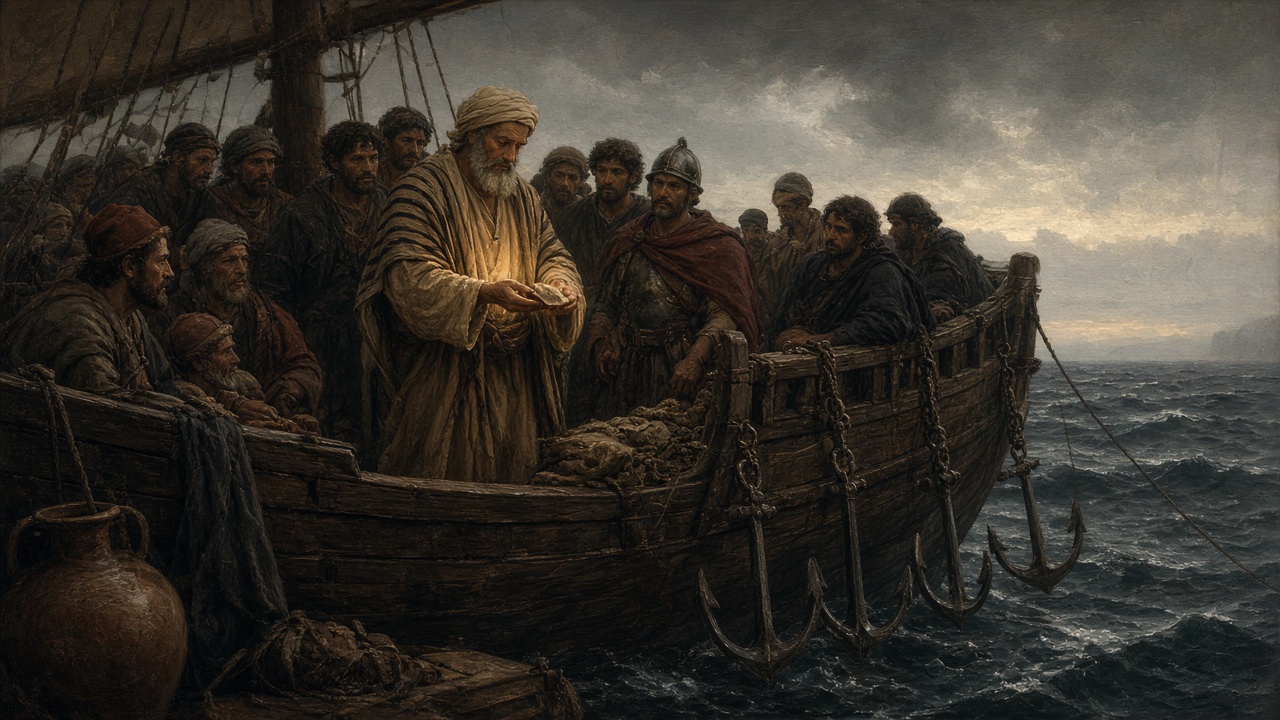
Storm and Shipwreck on the Way to Rome
- Paul and the other prisoners did not sail straight to Italy. At Caesarea they boarded a ship of Adramyttium, a city on the coast of Mysia in Asia Minor, bound for ports along the coast of Asia, a name Easton's Bible Dictionary takes in this verse as probably Asia Minor, and that ship carried them only as far as Myra in Lycia. There the centurion put them aboard an Alexandrian ship sailing for Italy; the dictionary notes that it was rare for a ship to sail from any port of Palestine direct to Italy.Sources: Adramyttium · Asia · the Bible text itself
- The prisoners were handed over to Julius, a centurion of the Imperial Regiment. Easton's Bible Dictionary identifies him as centurion of the Augustan cohort, or the emperor's body-guard, and describes his courteous regard for Paul. At Sidon, about twenty-five miles north of Tyre, he let Paul visit friends and receive care; later he blocked the soldiers' plan to kill the prisoners so that Paul's life would be spared.Sources: Julius · Sidon · the Bible text itself
- After Cnidus the ship worked along Crete, one of the largest islands in the Mediterranean, about 140 miles long and 35 broad, which Paul visited on this voyage to Rome. The account says the voyage had already become dangerous because it was after the Fast, and Fair Havens was unsuitable for wintering. One chronology dates the start of the journey to Rome to AD 56 and the shipwreck in the storm to AD 57.Sources: Crete · Journey to Rome begins · Paul is shipwrecked by a storm · the Bible text itself
Notes written with AI assistance from open sources (Theographic Bible Metadata, CC BY-SA 4.0; Easton’s Bible Dictionary, public domain) and reviewed before publishing.
Places in this chapter
- Italy · 41.892, 12.485 · verses 1, 6
- Adramyttium · Today: Oren · 39.501, 26.933 · verse 2
- Asia · 38.400, 28.300 · verse 2
- Thessalonica · Today: Thessaloniki · 40.638, 22.946 · verse 2
- Sidon · Today: Sandikli archaeological site in Sidon · 33.561, 35.372 · verse 3
- Cyprus · 35.000, 33.000 · verse 4
- Cilicia · 36.913, 34.892 · verse 5
- Lycia · 36.733, 29.900 · verse 5
- Myra · 36.259, 29.985 · verse 5
- Pamphylia · 37.000, 31.000 · verse 5
- Alexandria · 31.183, 29.896 · verse 6
- Cnidus · 36.686, 27.375 · verse 7
- Crete · 35.310, 24.893 · verses 7, 8, 12, 13, 14, 21
- Salmone · Today: Cape Sideros · 35.316, 26.312 · verse 7
- Fair Havens · Today: Kaloi Limenes · 34.930, 24.800 · verses 8, 12
- Lasea · Today: Lasaea · 34.941, 24.811 · verse 8
- Cauda · Today: Gavdos · 34.833, 24.083 · verse 16
- Syrtis · Today: Sidra · 31.500, 18.000 · verse 17
- Adriatic Sea · Today: Adriatic and Ionian Seas · 38.000, 19.000 · verse 27
Only places identified with high confidence are shown (90% or more according to the scholarly sources compiled by OpenBible). Period map: DARE (Digital Atlas of the Roman Empire), CC BY 4.0; modern map: © OpenStreetMap contributors; places: OpenBible.info (CC BY 4.0).
Credits and license for this translation
Nǫ̀htsı̨̨ Nı̨̨htł'è
Dogrib: Dogrib Genesis & New Testament New Testament & Portions of Old Testament
copyright © 2009 Canadian Bible Society
Language: Dogrib
Translation by: Canadian Bible Society
Tłı̨chǫ Genesis and New Testament
About Tłı̨chǫ
Tłı̨chǫ (Dogrib) is a Na-Dene (Athabaskan) language. It is spoken by the First Nations Tłı̨chǫ people in the Northwest Territories in Canada. It has the largest number of speakers of any of the Aboriginal language communities in the NWT, and is one of the official languages of the Northwest Territories.
About This Translation
This translation includes the book of Genesis and the New Testament in Tłı̨chǫ. The first edition of the Tłı̨chǫ New Testament was published in 2003. It was a historic event, as it was the first time in more than a hundred years that a complete New Testament was published for one of the Dene First Nations in the Territories. The first edition was well received and quickly sold out. In the meantime the book of Genesis had been completed. Consequently, the 2008 reprint of the Tłı̨chǫ New Testament included Genesis.
Though this translation of the New Testament and Genesis took a total of ten years, the people who worked on it built on years of labor invested by the Tłı̨chǫ people, elders, priests and missionaries, translators, educators, and linguists. The material contained in this book was checked and approved by consultants from Wycliffe Bible Translators and the Canadian Bible Society.
If you are interested in obtaining a printed copy of this Bible, please contact the Canadian Bible Society at http://www.biblescanada.com .
Copyright Information
Dogrib Genesis and New Testament © 2003, 2008 Canadian Bible Society
The text of the Bible in Tłı̨chǫ that appears in this electronic format or website is for personal use only.
Up to five hundred (500) verses of the Bible text in any form (written, visual, electronic or audio) may be quoted without permission. The quoted verses may not be more than 50% of a complete book of the Bible, or more than 25% of the total text of the work in which they are quoted. Prior written permission must be obtained for any other use of the text. Copyright acknowledgement must in all cases appear on the title or copyright page.
For more information on copyright conditions or to apply, visit http://www.biblesociety.ca/copyright .
This translation is made available to you under the terms of the
Creative Commons Attribution-Noncommercial-No Derivatives license 4.0.
You may share and redistribute this Bible translation or extracts from it in any format, provided that:
You include the above copyright and source information.
You do not sell this work for a profit.
You do not change any of the words or punctuation of the Scriptures.
Pictures included with Scriptures and other documents on this site are licensed just for use with those Scriptures and documents.
For other uses, please contact the respective copyright owners.
2014-04-22
Source: http://ebible.org/dgrDOGNT/ · eBible.org