Acts 24
Nǫ̀htsı̨̨ Nı̨̨htł'è · Tap a verse to see its cross-references.
Paul k'àowo Felıx wenadąą̀ edek'edaedı
1Sı̨làı dzęę̀ tł'axǫǫ̀ yahtıı-wet'àaɂàa-deè Ananıas kǫ̀ta Caesarea ts'ǫ̀ èhtła. Ǫhdah mǫ̀hdaa eyıts'ǫ dǫ-k'edaedıı-dǫǫ̀ Tertullus wìyeh xè agejà. Paul k'e nìdahogeeɂà gha k'àowo Felıx ts'ǫ̀ geède. 2Paul xàyagı̨ı̨htı tł'axǫǫ̀ ayìıha weghǫ nàyaetıı sìı dǫ-k'edaedıı-dǫǫ̀ Tertullus Paul ghǫ k'àowo Felıx ts'ǫ̀ goı̨de, hadı, “Nı̨ gogha k'àowo nelı̨ t'à whaà gots'ǫ goxè ts'èwhı̨į̀ hòɂǫ hǫt'e, eyıts'ǫ ı̨daà gogha nànınewo t'à gonèk'e nezı̨į̀ hòɂǫǫ̀ anelà. 3K'àowo Felıx sıì masì nets'ı̨ı̨hwhǫ t'à t'aats'ǫǫ̀ neghǫ hats'edı. 4Hanìkò goghǫ dìì anede kwe whaà-lea gots'ǫ̀ goį̀kw'o ha nets'eekè.
5“Dıı dǫ sìı hoìla-hohtsı̨ı̨-dǫǫ̀ hǫt'e wek'èhots'eèhzà. Wets'ıhɂǫ̀ dıı nèk'e hazǫǫ̀ ts'ǫ̀ Israel got'ı̨į̀ gıxè nàdahoowo. Ededı̨ sìı dǫ xàɂaa Nazarene gìyeh gha k'àowo elı̨ hǫt'e. 6Eyıts'ǫ Nǫ̀htsı̨kǫ̀-gocho eyı kò tsį̀gohwhı ha hoèhdzà, eyıt'à dawets'aachì ı̨lè. 8Nı̨ xàè dawı̨ı̨hke nı̨dè t'asìı hazǫǫ̀ wek'e nìdahots'į̀ı̨ɂǫǫ sìı hazǫǫ̀ ehkw'ı zǫ ats'edı wek'èhoı̨zǫ ha,” Tertullus, k'àowo Felıx ts'ǫ̀ hadı.
9Israel got'ı̨į̀ gha k'aodèe ededı̨ sı Paul k'e nìdahogį̀ı̨ɂǫ, eyıts'ǫ Tertullus yeghǫ dàdıı sìı ehkw'ı adı, gedı.
10K'àowo Felıx, Paul edegha gode ha yets'ǫ̀ dadıìtso. Paul hadı, “Whaà gots'ǫ Israel nèk'e gogha dǫ-sınìyaehtıı-dǫǫ̀ nelı̨ wek'èehsǫ, eyıt'à edegha gohde ha sınà. 11Nàke dzęahta ekìıyeè k'e Jerusalem Nǫ̀htsı̨ ts'ǫ̀ yahtı ha ekǫ nàwhıhtła ı̨lè, eyı ehkw'ı aehsı̨ wegǫ̀ǫ̀hɂà ha dìì-le. 12Dǫ sek'e nìdahogį̀ı̨ɂǫǫ sìı Nǫ̀htsı̨kǫ̀-gocho gà dǫ xè nàyaehtı segıaɂı̨ whìle. Ełègehdèe-kǫ̀ eyıts'ǫ Jerusalem dǫ xè nàdahoowoò ahłà segıaɂı̨ whìle. 13Ayìı sek'e nìdahogį̀ı̨ɂǫǫ sìı wek'ę̀ę̀ eghàlaıhdà-le t'à negha ehkw'ı agedıì anegele ha dìì hǫt'e. 14Hanìkò naxıts'ǫ̀ dıı haehsı̨ ha: gocho Gınǫ̀htsı̨-ghàsǫehdıı-dǫǫ̀ aht'e, eyıts'ǫ Zezì wenàowoò k'ę̀ę̀ edaa dǫǫ̀ aht'e, eyı nàowo sìı ekǫ-le hǫt'e gedı. Moses wenàowoò k'ę̀ę̀ t'asìı hazǫǫ̀ dǫ hoghàgogeehtǫǫ sìı segha ehkw'ı ne, eyıts'ǫ t'asìı hazǫǫ̀ nakwenàoɂǫǫ dek'enègı̨ı̨tł'èe sìı eyı sı segha ehkw'ı-ahodı hǫt'e. 15Nǫ̀htsı̨ dǫ naìdà ayele ghǫ gogedee sìı gıxèht'eè segha ehkw'ı-ahodı hǫt'e. Ehkw'ı-geedaa-dǫǫ̀ eyıts'ǫ hołı̨ı̨-k'ę̀ę̀-geedaa-dǫǫ̀, į̀łah nagìdà ha hǫt'e. 16Goxè hanì hòɂǫ ha t'à Nǫ̀htsı̨ wenadąą̀ eyıts'ǫ dǫ gınadąą̀ sınì ehkw'ı t'à eghàlaehda ha dehwhǫ.
17“Łǫ xo tł'axǫǫ̀ Jerusalem ts'ǫ̀ anahjà. Sèot'ı̨ Zezì wenàowoò k'ę̀ę̀ geedaa sìı sǫǫ̀mba gıtł'aehłe ha ekǫ anahjà. Eyı sǫǫ̀mba sìı dǫ-teèt'ı̨ı̨ gını nàdèe sìı gıgha hǫt'e, eyıts'ǫ Nǫ̀htsı̨ wets'ǫ̀ t'asìı k'eehk'ǫ̀ ha jǫ nǫǫ̀whıhtła hǫt'e. 18Gonàowoò k'ę̀ę̀ sıìdehɂı̨ ghǫ naht'e ekò Israel got'ı̨į̀ Nǫ̀htsı̨kǫ̀-gocho gà segıaɂı̨ ı̨lè. Dǫ łǫ sexè aget'ı̨-le ı̨lè eyıts'ǫ dǫ gıxè nàdahoowo hòwhıhtsı̨-le ı̨lè. 19Hanìkò Asıa nèk'e gots'ǫ Israel got'ı̨į̀ mǫ̀hdaa eyı geèhkw'e ı̨lèe sìı, ededı̨ èhłı̨ jǫ nenadąą̀ nàgeèhza ha ı̨lè. Ekǫ-le eghàlaıhdàa sègedı nı̨dè ededı̨ nets'ǫ̀ hagedı ha ı̨lè. 20Hanì-le-ı̨dè jǫ dǫ nàgeèhzaa sìı Israel got'ı̨į̀ gha k'aodèe gınadąą̀ seghǫ nàyaetı ekò, ayìı t'à hoìla hòwhıhtsı̨ sègedıı sìı dıì gıghǫ gogede ha ı̨lè. 21Gınadąą̀ nàhwho ekò t'asìı ı̨łè zǫ t'à sek'e nìdahogį̀ı̨ɂǫ, dıı haehsı̨ ı̨lè: ‘Dǫ ełaı̨dèe sìı naìdà ha eyı segha ehkw'ı-ahodı t'à dıı dzęę̀ k'e jǫ nenadąą̀ nàhwho hǫt'e.’ ” Paul hadıì Felıx ts'ǫ goı̨de.
22Eyı tł'axǫǫ̀ k'àowo Felıx, Zezì wenàowoò yek'èezǫ t'à dıì-gogha nàyaetı ghǫnahǫ̀t'e ayį̀į̀là. Paul ts'ǫ̀ hadı, “Eghǫǫ-dǫǫ̀-gha-k'àowo Lysıyas jǫ nììtła nı̨dè dànì nesınìyahtı ha sìı nets'ǫ̀ haehsı̨ ha,” yèhdı. 23K'àowo Felıx, eghǫǫ-dǫǫ̀-gha-k'àowo k'èè whedaa ts'ǫ̀ hadı, “Paul wèhoedı ha hanìkò yaazea edets'ǫ̀ k'àowo awı̨ı̨le, eyıts'ǫ weàgı̨ą gık'èdì ha t'asanìle,” yèhdı. Eghǫǫ-dǫǫ̀-gha-k'àowo k'èè whedaa|src="HK074F.tif" size="span" ref="24.23"
24Edlaàtłǫ dzęę̀ k'ehǫǫwo tł'axǫǫ̀ k'àowo Felıx edets'èkeè Drusılla xè eyı nǫ̀ǫtła. Wets'èkeè Israel got'ı̨į̀ hǫt'e. K'àowo Felıx, Paul kàwhehɂà, dànì Zezì wenàowoò gogha ehkw'ı-ahodıı sìı t'à Paul yexè goado. 25Dànì Nǫ̀htsı̨ gha ehkw'ı ts'eedaa, hołı̨ı̨ ch'à edek'èts'edìı eyıts'ǫ gosınìyaetıı dzęę̀ ghǫ yexè godo ekò k'àowo Felıx dèhyeh t'à hadı, “Dıì gogha hòt'a welè! Naı̨tła kò. Segha hòɂǫ nı̨dè k'achı̨ nekàehɂà ha,” yèhdı. 26Hanìkò Felıx edahxǫ Paul xàetłaà ayele k'èxa yets'àɂeehdì ha nıwǫ ı̨lè. Eyıt'à łǫ eht'aà yekàehɂà eyıts'ǫ yets'ǫ̀ gode.
27Nàke xo k'ehǫǫwo tł'axǫǫ̀ k'àowo ładı̨ı̨, Porcıus-Festus wìyeh, yetł'axǫǫ̀ ajà. K'àowo Felıx, Israel got'ı̨į̀ gınà agııhłe nıwǫ t'à Paul dǫ-danìı̨laa-kǫ̀ aìdaà ayį̀į̀là.
Did you know?
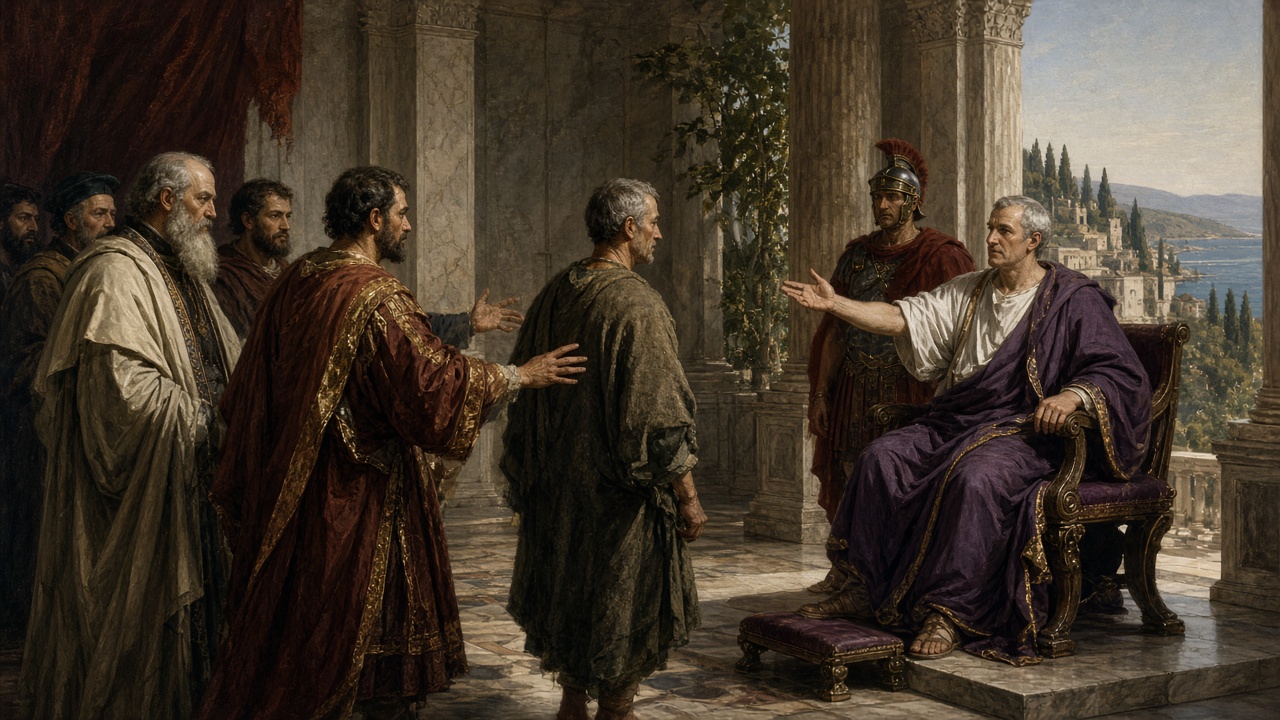
Paul before Felix
- The high priest Ananias came down with some elders and a lawyer named Tertullus, whom Easton's Bible Dictionary describes as a Roman advocate employed by the Jews to state their case against Paul before Felix. Tertullus praised the governor and then called Paul a pestilence who stirred up dissension among the Jews all over the world, a ringleader of the sect of the Nazarenes, and a man who had tried to desecrate the temple. The dictionary links that opening praise with Felix's clearing the country of bandits and impostors.Sources: the Bible text itself · Tertullus · Felix
- Felix, who was well informed about the Way, adjourned the hearing and kept Paul under guard, while allowing him some freedom and letting friends meet his needs. The account says he hoped Paul would offer a bribe and so sent for him often; Easton's Bible Dictionary likewise says he appears to have expected a bribe and therefore held several interviews with him. After two years Porcius Festus succeeded him—Easton's Bible Dictionary (1897) dates that appointment to A.D. 60—and, wishing to do the Jews a favor, Felix left Paul in prison.Sources: the Bible text itself · Felix · Portius Festus
- Several days later Felix returned with his wife Drusilla, who was Jewish, and listened as Paul spoke about faith in Christ Jesus and about righteousness, self-control, and the coming judgment; Felix became frightened and sent him away. Easton's Bible Dictionary (1897) identifies Drusilla as the third and youngest daughter of Herod Agrippa I and says Felix induced her to leave her husband, Azizus, king of Emesa. The same entry says that she and her son perished in the eruption of Mount Vesuvius in A.D. 79.Sources: the Bible text itself · Drusilla
Notes written with AI assistance from open sources (Theographic Bible Metadata, CC BY-SA 4.0; Easton’s Bible Dictionary, public domain) and reviewed before publishing.
Places in this chapter
- Caesarea · Today: Caesarea Maritima · 32.500, 34.892 · verse 1
- Jerusalem · 31.777, 35.234 · verses 11, 17
- Asia · 38.400, 28.300 · verse 18
Only places identified with high confidence are shown (90% or more according to the scholarly sources compiled by OpenBible). Period map: DARE (Digital Atlas of the Roman Empire), CC BY 4.0; modern map: © OpenStreetMap contributors; places: OpenBible.info (CC BY 4.0).
Credits and license for this translation
Nǫ̀htsı̨̨ Nı̨̨htł'è
Dogrib: Dogrib Genesis & New Testament New Testament & Portions of Old Testament
copyright © 2009 Canadian Bible Society
Language: Dogrib
Translation by: Canadian Bible Society
Tłı̨chǫ Genesis and New Testament
About Tłı̨chǫ
Tłı̨chǫ (Dogrib) is a Na-Dene (Athabaskan) language. It is spoken by the First Nations Tłı̨chǫ people in the Northwest Territories in Canada. It has the largest number of speakers of any of the Aboriginal language communities in the NWT, and is one of the official languages of the Northwest Territories.
About This Translation
This translation includes the book of Genesis and the New Testament in Tłı̨chǫ. The first edition of the Tłı̨chǫ New Testament was published in 2003. It was a historic event, as it was the first time in more than a hundred years that a complete New Testament was published for one of the Dene First Nations in the Territories. The first edition was well received and quickly sold out. In the meantime the book of Genesis had been completed. Consequently, the 2008 reprint of the Tłı̨chǫ New Testament included Genesis.
Though this translation of the New Testament and Genesis took a total of ten years, the people who worked on it built on years of labor invested by the Tłı̨chǫ people, elders, priests and missionaries, translators, educators, and linguists. The material contained in this book was checked and approved by consultants from Wycliffe Bible Translators and the Canadian Bible Society.
If you are interested in obtaining a printed copy of this Bible, please contact the Canadian Bible Society at http://www.biblescanada.com .
Copyright Information
Dogrib Genesis and New Testament © 2003, 2008 Canadian Bible Society
The text of the Bible in Tłı̨chǫ that appears in this electronic format or website is for personal use only.
Up to five hundred (500) verses of the Bible text in any form (written, visual, electronic or audio) may be quoted without permission. The quoted verses may not be more than 50% of a complete book of the Bible, or more than 25% of the total text of the work in which they are quoted. Prior written permission must be obtained for any other use of the text. Copyright acknowledgement must in all cases appear on the title or copyright page.
For more information on copyright conditions or to apply, visit http://www.biblesociety.ca/copyright .
This translation is made available to you under the terms of the
Creative Commons Attribution-Noncommercial-No Derivatives license 4.0.
You may share and redistribute this Bible translation or extracts from it in any format, provided that:
You include the above copyright and source information.
You do not sell this work for a profit.
You do not change any of the words or punctuation of the Scriptures.
Pictures included with Scriptures and other documents on this site are licensed just for use with those Scriptures and documents.
For other uses, please contact the respective copyright owners.
2014-04-22
Source: http://ebible.org/dgrDOGNT/ · eBible.org