Acts 20
Nǫ̀htsı̨̨ Nı̨̨htł'è · Tap a verse to see its cross-references.
Paul Macedonıa nèk'e eyıts'ǫ Greece nèk'e kǫ̀ta k'etło
1Nàdahoowo ghǫnahǫ̀t'e tł'axǫǫ̀ Paul Nǫ̀htsı̨ wecheekeè gokàehɂà. Gınì nàtso ha nezı̨į̀ gots'ǫ̀ goı̨de tł'axǫǫ̀ Macedonıa nèk'e ts'ǫ̀ ajà. 2Eyı nèk'e hazǫǫ̀ ts'ǫ̀ ajà. Dǫ gınì nàtso ha nıwǫ t'à gots'ǫ̀ goı̨de. Nǫǫde t'à Greece nèk'e nììtła. 3Ekǫ taı sa ts'ǫ̀ nàı̨dè. Elàcho t'à Syrıa nèk'e ts'ǫ̀ ade ha nıwǫ, hanìkò Israel got'ı̨į̀ t'asagele ha gı̨ı̨wǫ t'à ekǫ ts'ǫ̀ ade ha dìì. Macedonıa nèk'e gots'ǫ dèè k'e ek'èt'à naèhtła. 4Dǫ gıxè at'ı̨ı̨ sìı Berea got'ı̨į̀ Pyrhus weza, Sopater wìyeh, eyıts'ǫ Thessalonıca got'ı̨į̀ nàke Arıstarchus eyıts'ǫ Secundus, eyıts'ǫ Derbe got'ı̨į̀ Gaıus. Tımothy, Asıa got'ı̨į̀ Tychıcus eyıts'ǫ Trophımus goxè aget'ı̨. 5Dǫ haàtłǫǫ sìı gonakweè geède. Kǫ̀ta Troas ekǫ godanageèhɂı̨. 6Dzędeè Passover tł'axǫǫ̀ kǫ̀ta Phılıppı gots'ǫ ts'eèɂe. Sı̨làı dzęę̀ tł'axǫǫ̀ kǫ̀ta Troas ekǫ goàgı̨ą gıghaàts'ı̨ı̨de. Troas ekǫ łǫ̀hdı̨ dzęę̀ ts'ǫ̀ nàts'ı̨ı̨dè.
Cheko naìdà awììdlà
7Nǫ̀htsı̨ Dzęę̀ tł'axǫǫ̀ ełexè łèt'è ts'eɂà ha łą̀ą nèts'ı̨ı̨de. Paul dǫ ts'ǫ̀ goı̨de. Ek'èdaedzęę̀ k'e naetła ha nıwǫ t'à totanı ts'ǫ̀ goı̨de. 8Įdòo dahkǫ̀ gǫchàa ek'aèk'ǫ łǫ dèk'ǫ̀, ekǫ ełets'eèhdì. 9Cheko ı̨łè Eutychus wìyeh edzak'è xàgǫǫɂàa ekǫ dawheda ı̨lè. Paul to whaà goı̨de t'à cheko dètı̨. Sıì hòtł'ò dètı̨ t'à taı dahkǫ̀ gots'ǫ hodàdeèwò. Nıgı̨į̀htı̨ ekò ełaı̨wo nǫǫ̀. 10Paul yets'ǫ̀ hodàèhtła. Cheko k'e dèchǫhtı̨ xè edegǫ̀ǫ̀ yemǫǫ̀ ayį̀į̀là. Hadı, “Weghǫ nànıahdè-le, eda ne,” gòhdı. 11Eyı tł'axǫǫ̀ Paul ı̨dòo dahkǫ̀ dekıìtła gà goxè łèt'è ı̨ı̨ɂà. Dzęh agòjà ts'ǫ̀ goı̨de, eyı tł'axǫǫ̀ naèhtła. 12Cheko eda t'à dǫ gınà, wekǫ̀ ts'ǫ̀ nageèhchì.
Paul kǫ̀ta Ephesus gots'ǫ Nǫ̀htsı̨ wecheekeè gha k'aodèe ts'ǫ̀ goı̨de
13Paul wenakweè elàcho t'à kǫ̀ta Asos ts'ǫ̀ ts'eèɂe. Ededı̨ ededzaà t'à kǫ̀ta Asos ts'ǫ̀ etła ha. Paul ekǫ nı̨dè elàcho yìetła ha edexè sıìgǫ̀ǫ̀là. 14Kǫ̀ta Asos ekǫ goghaetła t'à goxè elàcho yìetła. Kǫ̀ta Mıtylena ts'ǫ̀ ts'eèɂe. 15Ek'èdaedzęę̀ k'e ekǫ gots'ǫ nats'eèhɂe, kǫ̀ta Kıyos ts'ǫ̀ nıwà-le nèts'ı̨ı̨ɂe. K'achı̨ ek'èdaedzęę̀ k'e kǫ̀ta Samos ts'ǫ̀ ts'eèɂe eyıts'ǫ k'achı̨ ek'èdaedzęę̀ k'e kǫ̀ta Mıletus nèts'ı̨ı̨ɂe. 16Paul, Asıa nèk'e whaà wheda ha nıwǫ-le t'à, kǫ̀ta Ephesus goxa naèhɂe. Edahxǫ Dzędeè Pentecost wekwe Jerusalem nììtła ha nıwǫ t'à, ekǫ ts'ǫ̀ ı̨whąą̀ nıwǫ.
17Kǫ̀ta Mıletus nììtła ekò Ephesus gots'ǫ Nǫ̀htsı̨ wecheekeè gha k'aodèe gı̨ı̨lı̨ı̨ sìı gokàehɂà. 18K'aodèe eyı nègı̨ı̨de ekò gots'ǫ̀ hadı, “T'akwełǫ̀ǫ̀ Asıa nèk'e ts'ǫ̀ ahjà gots'ǫ naxını nàıhdè t'à dànì ıhdàa sìı sek'èahsǫ hǫt'e. 19Israel got'ı̨į̀ segha hoìla hogehtsı̨ t'à sıì segį̀ı̨hdzà hǫt'e, hanìkò k'èeweèt'ı̨ı̨ laht'e eyıts'ǫ senatì łǫ xè gots'ǫ̀ K'àowo wegha hòtł'ò eghàlaıhdà hǫt'e. 20Wet'à naxıgha sìghà ha t'à naxıts'ǫ̀ goıhde ı̨lè, weghǫ edèdaehdı-le wek'èahsǫ hǫt'e. Ełets'eèhdìı gonı eyıts'ǫ naxıkǫ̀ goyìı hazǫǫ̀ hoghànaxeèhtǫ ı̨lè. 21Israel got'ı̨į̀ eyıts'ǫ Greece got'ı̨į̀ į̀łah gıts'ǫ̀ goıhde ı̨lè. Edek'egı̨ı̨lı̨ t'à Nǫ̀htsı̨ ts'ǫ̀ agede ha eyıts'ǫ gots'ǫ̀ K'àowo Zezì ehkw'ı adı gı̨ı̨wǫ gha haehsı̨į̀ gıts'ǫ̀ goıhde ı̨lè.
22“Ekò dıì sìı, Yedàyeh Nezı̨ı̨ Jerusalem ts'ǫ̀ sehɂa, ekǫ sexè dàgode ha sìı wek'èehsǫ-le. 23Kǫ̀ta hazǫǫ̀ ts'ǫ̀ aht'ı̨ı̨ sìı Yedàyeh Nezı̨ı̨ sets'ǫ̀ hadı, sexè hoìla ha eyıts'ǫ dǫ-danìı̨laa-kǫ̀ ts'ǫ̀ asegele ha hanì segha hòɂǫ. Eyı zǫ wek'èehsǫ. 24Hanìkò edegha ehda ha segha wet'àaɂà-le. Gots'ǫ̀ K'àowo la nechàa seghàı̨ɂǫǫ sìı welǫ ts'ǫ̀ weghǫ naht'è ha, eyı zǫ dehwhǫ. Nǫ̀htsı̨ gots'ǫ̀ sǫnıwǫǫ sìı eyı godı nezı̨ı̨ t'à dǫ ts'ǫ̀ gohde ha hǫt'e.
25“Naxı̨, Nǫ̀htsı̨ Wenàowoò t'à naxıts'ǫ̀ goıhde ı̨lèe sìı k'achı̨ seahɂį̀ ha-le, wek'èehsǫ hǫt'e. 26Eyıt'à dıı dzęę̀ k'e dıı naxıts'ǫ̀ haehsı̨ ha: dǫ edaxàweètı̨-le nı̨dè sı̨ set'à nıìle. 27Nǫ̀htsı̨ dànıwǫǫ sìı edèdaehdı-le hazǫǫ̀ naxıts'ǫ̀ haehsı̨ ı̨lè. 28Hotıì edexoahdı eyıts'ǫ Nǫ̀htsı̨ wecheekeè sı gıxoahdı, Yedàyeh Nezı̨ı̨ eyı la naxıghàı̨ɂǫ hǫt'e. Nǫ̀htsı̨ ededoò t'à edets'ǫ dǫ edaxàwhela ne t'à nezı̨į̀ gıxoahdı. 29Setł'axǫǫ̀ dàgode ha sìı wek'èehsǫ. Dìga ı̨ghǫǫ lanì naxıta agede ha, naxıts'ǫ sahzǫ̀ą hazǫǫ̀ dzıìgehɂà ha. 30Naxıta gots'ǫ kò dǫ mǫ̀hdaa Nǫ̀htsı̨ wecheekeè edek'ę̀ę̀ agogele ha gı̨ı̨wǫ t'à, godı ehkw'ıı sìı ekǫ-le agele ha. 31Eyıt'à sıì kexoahdı! Taı xo gots'ǫ̀, dzę, to senatì xè naxıghǫnatıehɂà ghǫ naht'è-le, eyı wenaahdì.
32“Hòt'a Nǫ̀htsı̨ ghànaxèehła, eyıts'ǫ naxıts'ǫ̀ wesǫnıwǫǫ godı t'à naxınì nàtsoò awede. Hanì-ı̨dè ı̨daà Nǫ̀htsı̨ dǫ hazǫǫ̀ edegha gòį̀hchìı sìı gıxè ayìı godawhehłaa sìı naxıghàyele ha hǫt'e. 33Dǫ wı̨ı̨zìı wesǫǫ̀mbaà eyıts'ǫ wegoht'ǫǫ̀ gha aht'ı̨ nıìle. 34Sılà t'à edegha eghàlaıhdà eyıts'ǫ dǫ sexè aget'ı̨ı̨ sìı gıgha aeht'į̀, wek'èahsǫ hǫt'e. 35T'asìı hazǫǫ̀ ghàlaıhdàa sìı hanì hòtł'ò eghàlats'eeda t'à dǫ-teèt'ı̨ı̨ ts'àts'edı ha hǫt'e, eyı wek'èahsǫ anaxèhłà. Gots'ǫ̀ K'àowo Zezì, ededı̨ dàdıı sìı wenats'edì ha hǫt'e: ‘Dǫ ghàts'eedıı sìı t'asìı goghǫ̀t'à nahk'e nezı̨ hǫt'e,’ gòhdı ı̨lè.”
36Paul hanì gots'ǫ̀ goı̨de tł'axǫǫ̀ hazǫǫ̀ goxè nàgòı̨hgè gà yaı̨htı. 37Hazǫǫ̀ gınatì ajà, edegııtǫ̀ xè gı̨ı̨ts'į̀. 38K'achı̨ seahɂį̀ ha-le gòhdı t'à gıgha dìì. Elàcho ts'ǫ̀ gık'èè goòhwho.
Did you know?
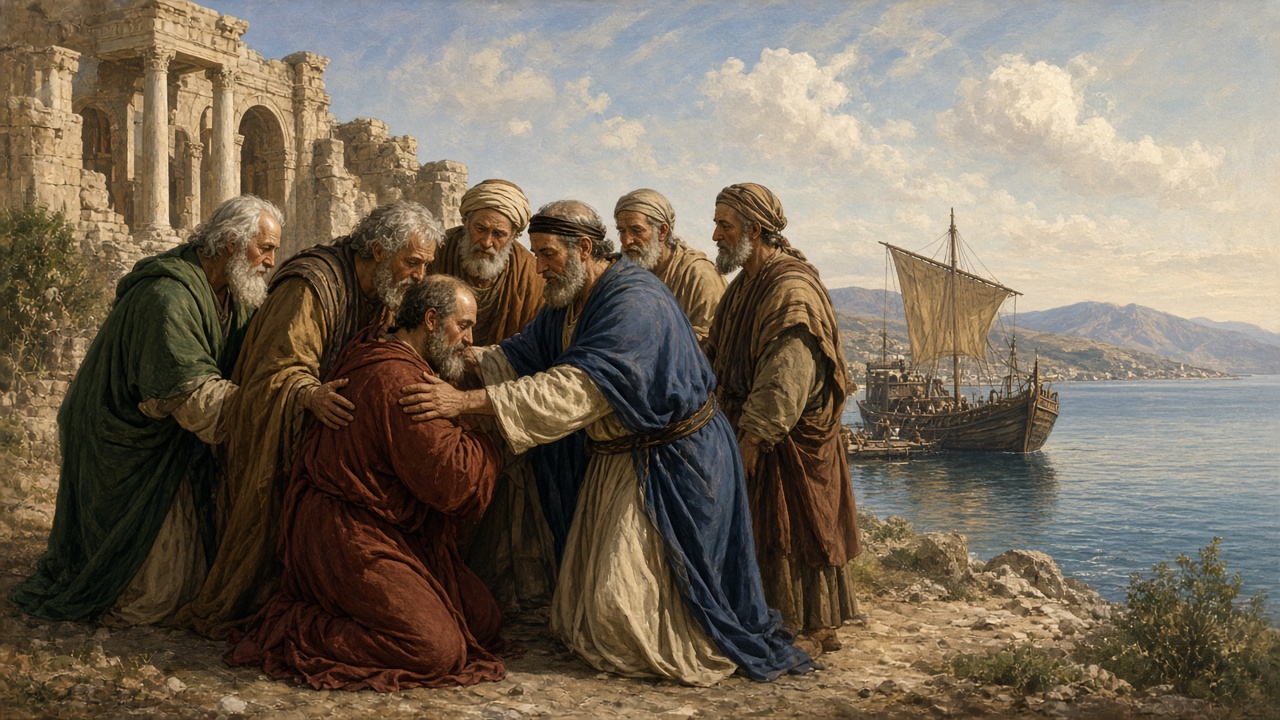
Farewell on the way to Jerusalem
- Leaving Troas, Paul sent his companions ahead by ship and walked to Assos along the Roman road. Assos was a seaport of Proconsular Asia in Mysia, on the north shore of the Gulf of Adramyttium; the walk was about 20 miles, the sea route about 30, and the island of Lesbos lay about 7 miles offshore.Sources: the Bible text itself · Assos
- Paul sailed past Ephesus to avoid spending time in the province of Asia—the Roman province in western Asia Minor, with Ephesus as its capital—because he hoped, if possible, to reach Jerusalem by the day of Pentecost. He stopped at Miletus, a seaport and the ancient capital of Ionia about 36 miles south of Ephesus, and summoned the elders of the Ephesian church.Sources: the Bible text itself · Asia · Miletus
- Seven men traveled with him: Sopater of Berea, Aristarchus and Secundus of Thessalonica, Gaius of Derbe, Timothy, and Tychicus and Trophimus from Asia. Aristarchus of Thessalonica later shared Paul’s imprisonment in Rome, and Trophimus, an Ephesian, accompanied him on this part of the journey and was with him in Jerusalem.Sources: the Bible text itself · Aristarchus · Trophimus
Notes written with AI assistance from open sources (Theographic Bible Metadata, CC BY-SA 4.0; Easton’s Bible Dictionary, public domain) and reviewed before publishing.
Places in this chapter
- Macedonia · 41.600, 22.540 · verses 1, 3, 6
- Greece · 37.972, 23.727 · verse 2
- Syria · Today: Syria 2 · 33.511, 36.306 · verse 3
- Asia · 38.400, 28.300 · verses 4, 16, 18
- Berea · Today: Veria · 40.518, 22.200 · verse 4
- Thessalonica · Today: Thessaloniki · 40.638, 22.946 · verse 4
- Troas · Today: Alexandria Troas · 39.752, 26.159 · verses 5, 6
- Philippi · 41.012, 24.285 · verse 6
- Assos · 39.491, 26.337 · verses 13, 14
- Mitylene · Today: ancient theater at Mitylene · 39.110, 26.547 · verse 14
- Chios · 38.373, 26.137 · verse 15
- Miletus · 37.531, 27.276 · verses 15, 17
- Samos · 37.750, 26.833 · verse 15
- Trogyllium · Today: Cape Mycale · 37.659, 27.003 · verse 15
- Ephesus · 37.939, 27.341 · verses 16, 17
- Jerusalem · 31.777, 35.234 · verses 16, 22
Only places identified with high confidence are shown (90% or more according to the scholarly sources compiled by OpenBible). Period map: DARE (Digital Atlas of the Roman Empire), CC BY 4.0; modern map: © OpenStreetMap contributors; places: OpenBible.info (CC BY 4.0).
Credits and license for this translation
Nǫ̀htsı̨̨ Nı̨̨htł'è
Dogrib: Dogrib Genesis & New Testament New Testament & Portions of Old Testament
copyright © 2009 Canadian Bible Society
Language: Dogrib
Translation by: Canadian Bible Society
Tłı̨chǫ Genesis and New Testament
About Tłı̨chǫ
Tłı̨chǫ (Dogrib) is a Na-Dene (Athabaskan) language. It is spoken by the First Nations Tłı̨chǫ people in the Northwest Territories in Canada. It has the largest number of speakers of any of the Aboriginal language communities in the NWT, and is one of the official languages of the Northwest Territories.
About This Translation
This translation includes the book of Genesis and the New Testament in Tłı̨chǫ. The first edition of the Tłı̨chǫ New Testament was published in 2003. It was a historic event, as it was the first time in more than a hundred years that a complete New Testament was published for one of the Dene First Nations in the Territories. The first edition was well received and quickly sold out. In the meantime the book of Genesis had been completed. Consequently, the 2008 reprint of the Tłı̨chǫ New Testament included Genesis.
Though this translation of the New Testament and Genesis took a total of ten years, the people who worked on it built on years of labor invested by the Tłı̨chǫ people, elders, priests and missionaries, translators, educators, and linguists. The material contained in this book was checked and approved by consultants from Wycliffe Bible Translators and the Canadian Bible Society.
If you are interested in obtaining a printed copy of this Bible, please contact the Canadian Bible Society at http://www.biblescanada.com .
Copyright Information
Dogrib Genesis and New Testament © 2003, 2008 Canadian Bible Society
The text of the Bible in Tłı̨chǫ that appears in this electronic format or website is for personal use only.
Up to five hundred (500) verses of the Bible text in any form (written, visual, electronic or audio) may be quoted without permission. The quoted verses may not be more than 50% of a complete book of the Bible, or more than 25% of the total text of the work in which they are quoted. Prior written permission must be obtained for any other use of the text. Copyright acknowledgement must in all cases appear on the title or copyright page.
For more information on copyright conditions or to apply, visit http://www.biblesociety.ca/copyright .
This translation is made available to you under the terms of the
Creative Commons Attribution-Noncommercial-No Derivatives license 4.0.
You may share and redistribute this Bible translation or extracts from it in any format, provided that:
You include the above copyright and source information.
You do not sell this work for a profit.
You do not change any of the words or punctuation of the Scriptures.
Pictures included with Scriptures and other documents on this site are licensed just for use with those Scriptures and documents.
For other uses, please contact the respective copyright owners.
2014-04-22
Source: http://ebible.org/dgrDOGNT/ · eBible.org