2 Corinthians 7
Nǫ̀htsı̨̨ Nı̨̨htł'è · Tap a verse to see its cross-references.
1Seàgı̨ą, Nǫ̀htsı̨ hanì goxè yatı whehtsı̨ t'à, t'asìı hazǫǫ̀ hołı̨ı̨ ne sìı wedę ats'ııle. Gozhį̀į̀ eyıts'ǫ goınì t'à hołı̨ı̨ hots'ehtsı̨ı̨ sìı k'alats'ııdè-le. Nǫ̀htsı̨ gots'ǫ̀ wek'èch'a sǫ̀ǫ̀ ts'ı̨ı̨wǫ t'à hotıì degaı k'ę̀ę̀ ts'ııdà.
Paul sıì wınà agòjà
2Naxıdzeè yìı gogha gòɂǫǫ̀ aahłe. Dǫ wı̨ı̨zìı k'èch'a hots'èhtsı̨ whìle, dǫ wı̨ı̨zìı ekǫ-le eghàlaı̨dà ats'ı̨ı̨là whìle, eyıts'ǫ dǫ t'à edegha sìghà k'ehots'ı̨ı̨ɂa whìle. 3Eyı hanì naxıts'ǫ̀ gohdee sìı naxısınìyaehtıì aehsı̨-le. Godzeè t'à naxıghǫnets'eètǫǫ sìı naxıts'ǫ̀ haehsı̨ ı̨lè, eyıt'à naxıxè ts'eeda eyıts'ǫ naxıxè ełaàts'ede gha ts'eèhkw'e hǫt'e. 4Sıì naxıghǫ ehkw'ı aahwhǫ hǫt'e eyıts'ǫ naxıghǫ xàhohdì. Naxıts'ıhɂǫ̀ sınì nàtsoò ajà. Gogha hoìla łǫ kò sıì sınà hǫt'e.
5Macedonıa nèk'e nèts'ı̨ı̨de ekò, goxè ts'èwhı̨į̀ gòı̨ɂà-le. T'aats'ǫǫ̀ goxè hoìla k'ehokw'o t'à godzeè dejı̨ ı̨lè. 6Hanìkò dǫ gıxè hoìlaa sìı Nǫ̀htsı̨ gıdzeè t'à nàtsoò agohɂį̀ hǫt'e. Tıtus gots'ǫ̀ nììtła t'à Nǫ̀htsı̨ godzeè nàtsoò ayį̀į̀là hǫt'e. 7Ededı̨ gots'àèhtła zǫ t'à godzeè nàtsoò ajà nıìle, naxı̨ sı wedzeè nàtsoò awèahłà t'à godzeè nàtsoò adlà hǫt'e. Naxıdzeè t'à seahɂį̀ ha dahwhǫ, dànì ts'ǫǫ̀dahwhǫ, eyıts'ǫ dànì sıì seghǫ nànıahdèe sìı ghǫ goxè goado. Eyıt'à sıì denahk'e sınà hǫt'e.
8Naxıts'ǫ̀ ııhtł'èe t'à naxıdzeè etseè ahłà sǫnı kò wek'eehłı̨-le. T'akwełǫ̀ǫ̀ wek'eehłı̨ ı̨lè, naxıts'ǫ̀ eehtł'è t'à naxıdzeè etseè ahłà t'à, hanìkò whaà-lea ts'ǫ̀ zǫ naxıdzeè etse hǫt'e. 9Eyıt'à dıì sınà hǫt'e. Naxıdzeè etse t'à sınà nıìle, hanìkò naxıdzeè etse t'à edek'eahłı̨ xè naxınì ładı̨į̀ aahłà t'à sınà hǫt'e. Nǫ̀htsı̨ hanì edek'eahłı̨ naxı̨ı̨hwhǫ hǫt'e, eyıt'à goxı̨ dànaxèts'edıı t'à naxınì tsį̀ts'ı̨ı̨hwho nıìle. 10Nǫ̀htsı̨ wınì k'ę̀ę̀ godzeè etse nı̨dè edek'ets'ı̨ı̨lı̨, eyı wet'à edaxàgotè hǫt'e. Hanì godzeè etse nı̨dè ı̨daà t'asìı wı̨ı̨zìı k'ets'ı̨ı̨lı̨ ha-le. Hanìkò dǫ gınàowoò k'ę̀ę̀ godzeè etsee sìı wet'à ełaàts'ede ha hǫt'e. 11Nǫ̀htsı̨ wınì k'ę̀ę̀ naxıdzeè etse t'à eładı̨į̀ aahjàa sìı wedaànıahdè. Dıì wet'à Nǫ̀htsı̨ gha naxınì nàtsoò ajà, hołı̨ı̨ nàowoò wedę ha dahwhǫǫ̀ aahjà, dǫ hołı̨ı̨ hogehtsı̨ nı̨dè naxık'èch'a hǫt'e, wet'à dajıahdeè laahjà, eyı ts'ıhɂǫ̀ seahɂį̀ ha dahwhǫ, wet'à sedaànıahdè aahjà, t'asìı hazǫǫ̀ ekǫ-le sìı ı̨whąą̀ wesınìyaetı ha dahwhǫ. Eyı hazǫǫ̀ hołı̨ı̨ k'ę̀ę̀ k'ehokw'oo sìı naxı̨ naxıxè agot'ı̨ nıìle naxık'èedzǫǫ̀ aahłà hǫt'e. 12Naxıts'ǫ̀ ııhtł'è ekò, dǫ ekǫ-le hòèhtsı̨ı̨ hanì-le-ı̨dè dǫ wets'ǫ̀ ekǫ-le eghàlaeda ts'ıhɂǫ̀ naxıts'ǫ̀ ııhtł'è nıìle. Hanìkò Nǫ̀htsı̨ wenadąą̀ dànì naxıdzeè t'à goghǫnıahtǫǫ sìı wek'èahsǫ ha dehwhǫ t'à, naxıts'ǫ̀ ııhtł'è hǫt'e. 13Eyı hazǫǫ̀ wet'à sıì godzeè t'à nàts'etsoò ats'ejà.
Eyı xè Tıtus sıì wınà awèahłà wek'èts'eezǫ t'à, denahk'e goınà hǫt'e. 14Wets'ǫ̀ naxıghǫ xàdahohdì ı̨lè, eyıts'ǫ naxıghǫ į̀į̀zhaehłı̨-le asèahłà. T'asìı hazǫǫ̀ naxıts'ǫ̀ hats'edıı sìı ehkw'ı zǫ hǫt'e, eyı xèht'eè Tıtus ts'ǫ̀ naxıghǫ xàdahots'edìı sìı eyı sı ehkw'ı hǫt'e wek'èhoedzǫǫ̀ ajà. 15Dànì hazǫǫ̀ wek'èaht'e yenadì nı̨dè denahk'e ededzeè t'à naxıghǫneètǫ hǫt'e. Dànaxèhdı ha sǫnı dahwhǫ t'à wets'àahjı̨ kò nezı̨į̀ wets'ǫ̀ naahɂa ı̨lè, eyıts'ǫ t'asìı hazǫǫ̀ t'à wek'èaht'e ı̨lè. 16T'asìı hazǫǫ̀ ehkw'ı weghàlaahda ha hotıì wek'èehsǫ t'à sınà hǫt'e.
Did you know?
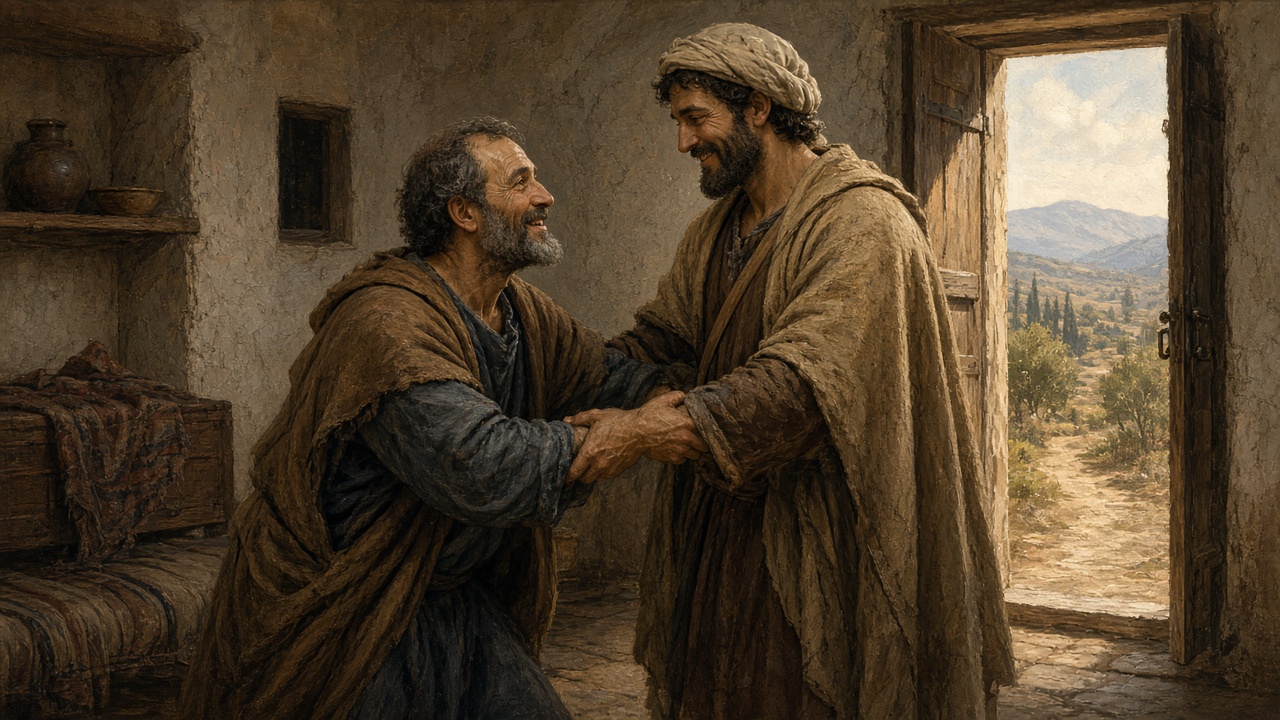
Comfort after a painful letter
- Macedonia, where Paul says he arrived with no rest in his body—conflicts outside and fears within—was a Roman province north of Greece. There, he writes, the God who comforts the downcast comforted him by the arrival of Titus.Sources: Macedonia · the Bible text itself
- Paul speaks of a letter that made them sorrowful, but only for a short time. He now rejoices not because they were sorrowful, but because that sorrow led them to repentance; he says they felt the sorrow God intended, were not harmed by him, and showed earnestness, zeal, and innocence in the matter.Sources: the Bible text itself
- A short account describes Titus as a companion of Paul, apparently a Gentile chiefly engaged in ministering to Gentiles. In this chapter Paul says Titus’s arrival comforted him, that Titus reported their longing, mourning, and zeal, and that they welcomed Titus with fear and trembling.Sources: Titus · the Bible text itself
Notes written with AI assistance from open sources (Theographic Bible Metadata, CC BY-SA 4.0; Easton’s Bible Dictionary, public domain) and reviewed before publishing.
Places in this chapter
- Macedonia · 41.600, 22.540 · verse 5
Only places identified with high confidence are shown (90% or more according to the scholarly sources compiled by OpenBible). Period map: DARE (Digital Atlas of the Roman Empire), CC BY 4.0; modern map: © OpenStreetMap contributors; places: OpenBible.info (CC BY 4.0).
Credits and license for this translation
Nǫ̀htsı̨̨ Nı̨̨htł'è
Dogrib: Dogrib Genesis & New Testament New Testament & Portions of Old Testament
copyright © 2009 Canadian Bible Society
Language: Dogrib
Translation by: Canadian Bible Society
Tłı̨chǫ Genesis and New Testament
About Tłı̨chǫ
Tłı̨chǫ (Dogrib) is a Na-Dene (Athabaskan) language. It is spoken by the First Nations Tłı̨chǫ people in the Northwest Territories in Canada. It has the largest number of speakers of any of the Aboriginal language communities in the NWT, and is one of the official languages of the Northwest Territories.
About This Translation
This translation includes the book of Genesis and the New Testament in Tłı̨chǫ. The first edition of the Tłı̨chǫ New Testament was published in 2003. It was a historic event, as it was the first time in more than a hundred years that a complete New Testament was published for one of the Dene First Nations in the Territories. The first edition was well received and quickly sold out. In the meantime the book of Genesis had been completed. Consequently, the 2008 reprint of the Tłı̨chǫ New Testament included Genesis.
Though this translation of the New Testament and Genesis took a total of ten years, the people who worked on it built on years of labor invested by the Tłı̨chǫ people, elders, priests and missionaries, translators, educators, and linguists. The material contained in this book was checked and approved by consultants from Wycliffe Bible Translators and the Canadian Bible Society.
If you are interested in obtaining a printed copy of this Bible, please contact the Canadian Bible Society at http://www.biblescanada.com .
Copyright Information
Dogrib Genesis and New Testament © 2003, 2008 Canadian Bible Society
The text of the Bible in Tłı̨chǫ that appears in this electronic format or website is for personal use only.
Up to five hundred (500) verses of the Bible text in any form (written, visual, electronic or audio) may be quoted without permission. The quoted verses may not be more than 50% of a complete book of the Bible, or more than 25% of the total text of the work in which they are quoted. Prior written permission must be obtained for any other use of the text. Copyright acknowledgement must in all cases appear on the title or copyright page.
For more information on copyright conditions or to apply, visit http://www.biblesociety.ca/copyright .
This translation is made available to you under the terms of the
Creative Commons Attribution-Noncommercial-No Derivatives license 4.0.
You may share and redistribute this Bible translation or extracts from it in any format, provided that:
You include the above copyright and source information.
You do not sell this work for a profit.
You do not change any of the words or punctuation of the Scriptures.
Pictures included with Scriptures and other documents on this site are licensed just for use with those Scriptures and documents.
For other uses, please contact the respective copyright owners.
2014-04-22
Source: http://ebible.org/dgrDOGNT/ · eBible.org