2 Corinthians 4
Nǫ̀htsı̨̨ Nı̨̨htł'è · Tap a verse to see its cross-references.
Godzeè yìı t'asìı enıìyah k'èts'edì
1Nǫ̀htsı̨ wesǫnıwǫ dahxà dıı la goghǫ̀t'ǫ hǫt'e, eyıt'à gogha gots'eèdı ha nıìle. 2Hanìkò deɂı̨į̀ k'ehots'eɂa eyıts'ǫ t'asìı weghǫ į̀į̀zhats'ı̨ı̨lı̨ı̨ sìı wedę ha ts'ı̨ı̨wǫ. Dǫ ghǫyats'eeɂà t'à eghàlats'eeda nıìle, eyıts'ǫ Nǫ̀htsı̨ weyatıì ładı̨į̀ ats'ehɂı̨ nıìle. Hanìkò dǫ ededzeè t'à gogeèhkw'ǫ ha ts'ı̨ı̨wǫ t'à Nǫ̀htsı̨ wenadąą̀ nàowo ehkw'ıı ghǫ hotıì ehkw'ı gots'ede hǫt'e. 3Gots'ǫ godı nezı̨ı̨ sìı dǫ mǫ̀hdaa deghàà gınıedì-le t'à gıgha ɂehtł'ı̨ ɂı̨į̀ wheɂǫ lanì, dǫ gıdıhołè ha ts'ǫ̀ gıadèe sìı gıgha hanì hǫt'e. 4Wehłı̨ı̨ dıı nèè gha k'àowo elı̨ı̨ sìı dǫ gıgha ehkw'ı-ahodı-le sìı gınì t'à gıgha xègaat'ı̨-le agǫ̀ǫ̀là. Eyıt'à Zezì-Krı wegodıì nezı̨ı̨ ts'ıhɂǫ̀ dǫ xè dzęh hòɂǫǫ sìı gıgha wègaat'ı̨ ha dìì, eyıts'ǫ Zezì-Krı enıìyah wehòhɂǫ xè hotıì Nǫ̀htsı̨ xèht'eè wègaat'ı̨ı̨ sìı, gınıedì ha dìì hǫt'e. 5Goxı̨ edeghǫ gots'edeè-ats'edı-le, Zezì-Krı, t'asìı hazǫǫ̀ ts'ǫ̀ k'àowo elı̨ı̨ sìı weghǫ gots'edeè-ats'edı. Zezì wets'ıhɂǫ̀ naxıgha eghàlats'eeda hǫt'e. 6Nǫ̀htsı̨ hadı, “Togoòtł'òo yìı gots'ǫ dzęh xàı̨dı̨į̀ awede,” hadıı sìı godzeè yìı dzęh nı̨ı̨dı̨į̀ ayį̀į̀là, eyı ts'ıhɂǫ̀ Zezì-Krı weghàts'eeda nı̨dè Nǫ̀htsı̨ dànì enıìyah elı̨ı̨ sìı wek'èts'eezǫ ats'et'į̀.
7Gozhį̀į̀ kwetǫ lanìı sìı weyìı t'asìı enıìyah k'èts'edì hǫt'e. Eyı t'asìı enıìyah xè nàtsoo sìı Nǫ̀htsı̨ wets'ǫ hǫt'e wek'èhoedzǫ, goxı̨ gots'ǫ nıìle. 8Goxı̨ sìı hazǫǫ̀ gomǫǫ̀ goòɂàa ts'ǫ̀ dǫ gogha hoìla hogehtsı̨, hanìkò anats'et'è nıìle; gogha hoezhì agot'ı̨ kò gogha ahxe whìle ts'ı̨ı̨wǫ-le, 9dǫ dagogį̀ı̨hɂa hanìkò Nǫ̀htsı̨ ɂǫ̀goehdè whìle, dèè k'e ts'ǫ̀ gogeèhde hanìkò godıhogèhtsı̨ whìle. 10Zezì dànì gogha dàı̨ɂàa xè ełaı̨woo sìı t'aats'ǫǫ̀ gozhį̀į̀ yìı edexè k'ets'eɂa hǫt'e, eyı ts'ıhɂǫ̀ Zezì gozhį̀į̀ yìı edaa sìı wek'èedzǫǫ̀ ade ha. 11Goxı̨ ı̨łaà ts'eeda et'ıì t'aats'ǫǫ̀ Zezì wets'ıhɂǫ̀ ełaàts'ede ha gogha hòɂǫ hǫt'e, hanì-ı̨dè gozhį̀į̀ ełaàwı ha sìı weyìı Zezì edaa sìı wek'èedzǫǫ̀ ade ha hǫt'e. 12Eyıt'à goxı̨ t'aats'ǫǫ̀ ełaàts'ede lanì, hanìkò eyı ts'ıhɂǫ̀ naxı̨ sìı aahda gha adlà hǫt'e.
13Dıı hanì dek'eèhtł'è, “Segha ehkw'ı-ahodı t'à weghǫ gohde hǫt'e,” dek'eèhtł'è. Goxı̨ sı eyı xèht'eè gogha ehkw'ı-ahodı t'à weghǫ gots'ede hǫt'e. 14Nǫ̀htsı̨ sìı Zezì-Krı naìdà ayį̀į̀là hǫt'e, goxı̨ sı Zezì xè nats'ìdà agole ha hǫt'e, eyıts'ǫ naxıxè wenadąą̀ nàts'eèhzaà agole ha wek'èts'eezǫ. 15Eyı hazǫǫ̀ sìı wet'àhoahwhı gha agòjà hǫt'e. Hanì-ı̨dè Nǫ̀htsı̨ wesǫnıwǫǫ sìı deɂǫ̀ǫ̀ dǫ łǫ ts'ǫ̀ ade ha, deɂǫ̀ǫ̀ dǫ łǫ Nǫ̀htsı̨ masì gı̨ı̨wǫ ha, eyıts'ǫ enıìyah xè deɂǫ̀ǫ̀ dǫ łǫ Nǫ̀htsı̨ ghàsǫgeedıì agede ha.
16Eyıt'à gogha gots'eèdı nıìle. Gozhį̀į̀ nàtso-le adaade kò dzę taàt'eè goınì t'à denahk'e nàts'etsoò agodaade hǫt'e. 17Whaà-lea gots'ǫ̀ yaazea goxè hoìla hǫt'e, hanìkò wet'à welǫ whìle ts'ǫ̀ goxè sıì enıìyah hòɂǫ gha agot'ı̨ hǫt'e, eyı sìı hazǫǫ̀ t'à denahk'e wet'àaɂà hǫt'e. 18Eyıt'à ayìı wègaat'ı̨ı̨ sìı gha goınì nàtso ats'ı̨ı̨hwhǫ-le, hanìkò ayìı wègaat'ı̨-le sìı gha goınì nàtso ats'ı̨ı̨hwhǫ hǫt'e. T'asìı wègaat'ı̨ı̨ sìı whaà-le gots'ǫ̀ zǫ gha hǫt'e, ekò t'asìı wègaat'ı̨-le sìı welǫ whìle ts'ǫ̀ gha hǫt'e.
Did you know?
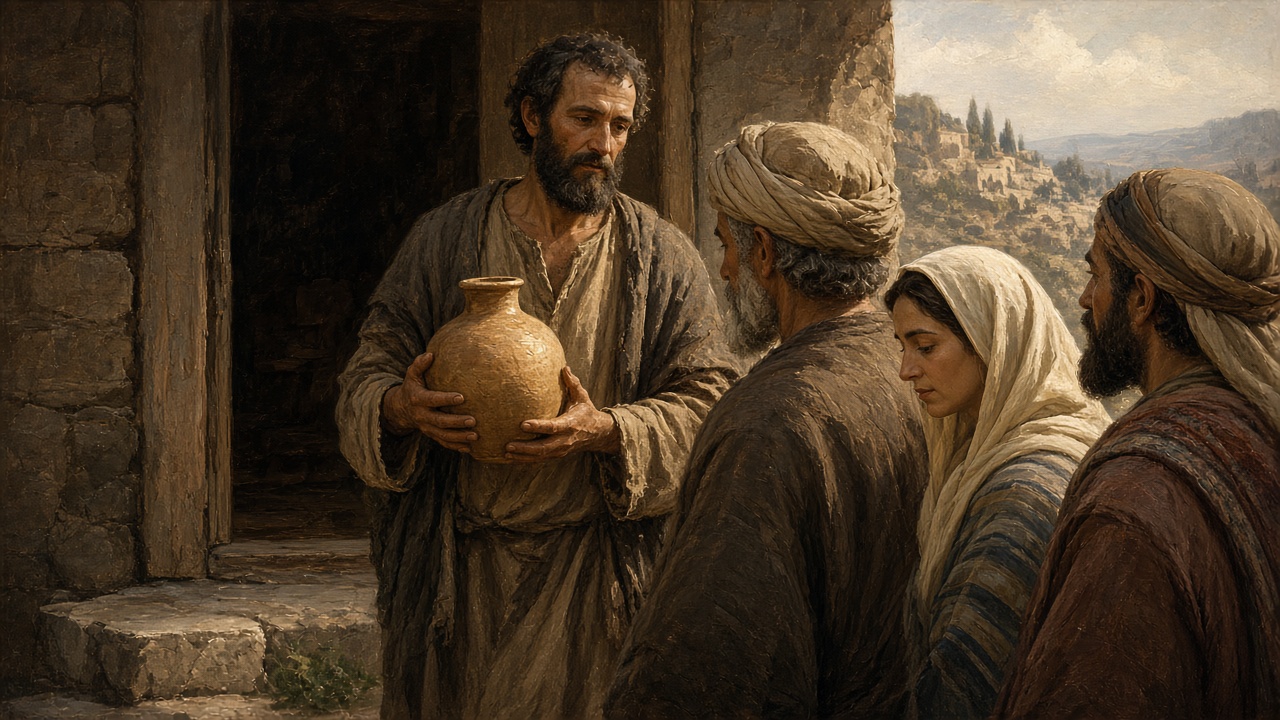
Treasure in Jars of Clay
- In this chapter the speakers say that, because God in his mercy has given them this ministry, they do not lose heart. They have renounced secret and shameful ways: they do not practice deceit or distort the word of God, but by the open proclamation of the truth they commend themselves to every person's conscience in the sight of God.Sources: the Bible text itself
- Their message is pictured as a treasure held in jars of clay, so that this surpassingly great power is shown to be from God and not from them. The same contrast runs through their hardships: hard pressed on all sides but not crushed, perplexed but not in despair, persecuted but not forsaken, struck down but not destroyed.Sources: the Bible text itself
- Light is the chapter's other central image. God, who said, "Let light shine out of darkness," is said to have shone his light in their hearts to give the light of the knowledge of the glory of God in the face of Jesus Christ. They proclaim not themselves but Jesus Christ as Lord, and themselves as servants of those they address, for Jesus' sake; if the gospel is veiled, the text says it is veiled to those who are perishing, whose minds "the god of this age" has blinded.Sources: the Bible text itself
Notes written with AI assistance from open sources (Theographic Bible Metadata, CC BY-SA 4.0; Easton’s Bible Dictionary, public domain) and reviewed before publishing.
Credits and license for this translation
Nǫ̀htsı̨̨ Nı̨̨htł'è
Dogrib: Dogrib Genesis & New Testament New Testament & Portions of Old Testament
copyright © 2009 Canadian Bible Society
Language: Dogrib
Translation by: Canadian Bible Society
Tłı̨chǫ Genesis and New Testament
About Tłı̨chǫ
Tłı̨chǫ (Dogrib) is a Na-Dene (Athabaskan) language. It is spoken by the First Nations Tłı̨chǫ people in the Northwest Territories in Canada. It has the largest number of speakers of any of the Aboriginal language communities in the NWT, and is one of the official languages of the Northwest Territories.
About This Translation
This translation includes the book of Genesis and the New Testament in Tłı̨chǫ. The first edition of the Tłı̨chǫ New Testament was published in 2003. It was a historic event, as it was the first time in more than a hundred years that a complete New Testament was published for one of the Dene First Nations in the Territories. The first edition was well received and quickly sold out. In the meantime the book of Genesis had been completed. Consequently, the 2008 reprint of the Tłı̨chǫ New Testament included Genesis.
Though this translation of the New Testament and Genesis took a total of ten years, the people who worked on it built on years of labor invested by the Tłı̨chǫ people, elders, priests and missionaries, translators, educators, and linguists. The material contained in this book was checked and approved by consultants from Wycliffe Bible Translators and the Canadian Bible Society.
If you are interested in obtaining a printed copy of this Bible, please contact the Canadian Bible Society at http://www.biblescanada.com .
Copyright Information
Dogrib Genesis and New Testament © 2003, 2008 Canadian Bible Society
The text of the Bible in Tłı̨chǫ that appears in this electronic format or website is for personal use only.
Up to five hundred (500) verses of the Bible text in any form (written, visual, electronic or audio) may be quoted without permission. The quoted verses may not be more than 50% of a complete book of the Bible, or more than 25% of the total text of the work in which they are quoted. Prior written permission must be obtained for any other use of the text. Copyright acknowledgement must in all cases appear on the title or copyright page.
For more information on copyright conditions or to apply, visit http://www.biblesociety.ca/copyright .
This translation is made available to you under the terms of the
Creative Commons Attribution-Noncommercial-No Derivatives license 4.0.
You may share and redistribute this Bible translation or extracts from it in any format, provided that:
You include the above copyright and source information.
You do not sell this work for a profit.
You do not change any of the words or punctuation of the Scriptures.
Pictures included with Scriptures and other documents on this site are licensed just for use with those Scriptures and documents.
For other uses, please contact the respective copyright owners.
2014-04-22
Source: http://ebible.org/dgrDOGNT/ · eBible.org