Revelation 21
Bigu a tipan: I mahusay a baheta para ta panahun tam · Tap a verse to see its cross-references.
I Bigu a Langet Sakay I Bigu a Mundu
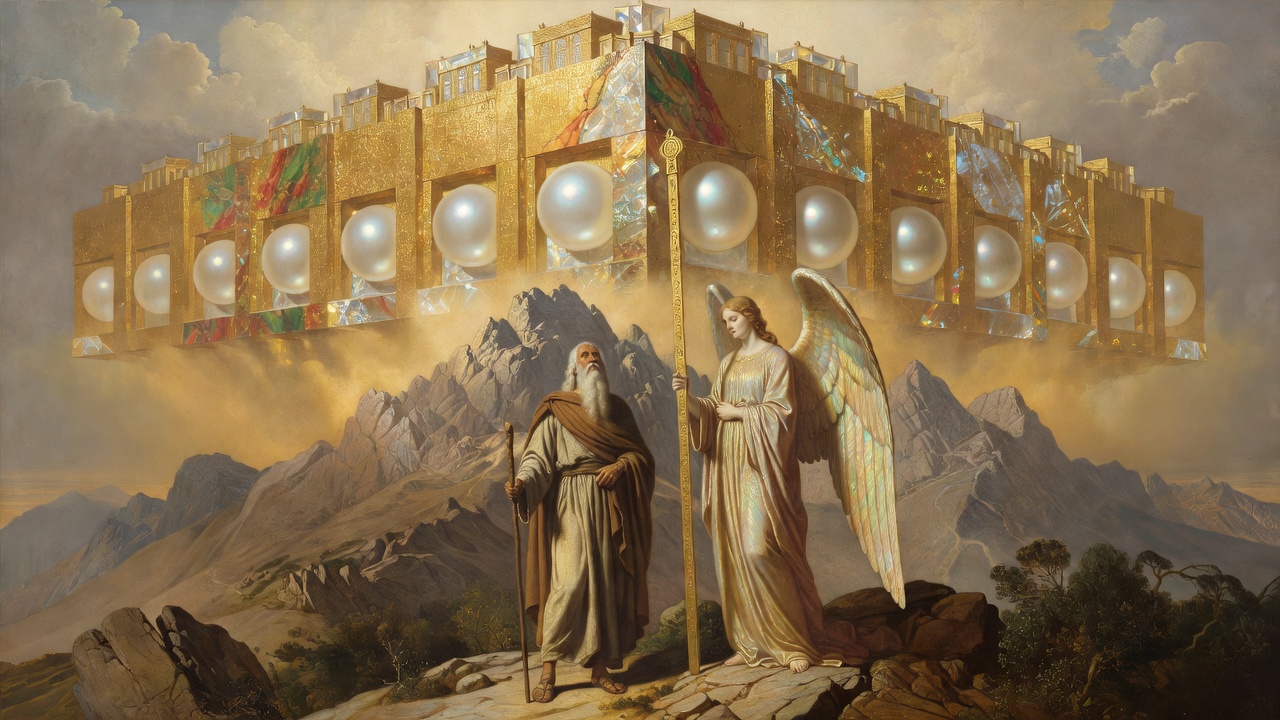
1Nadid, kétapos na éya, éy neta ko i bigu a langet sakay bigu a mundu. Ewan dén tu dati a langet, sakay tu dati a luta, sakay tu dati a diget. 2Sakay neta ko be a dumédibe a gébwat ta Diyos ta langet i bigu a Jerusalem, a banuwan na Diyos. Kamahalan dén a kapareho na kamahal no bébe a kasalén, a nakahanda dén a sumambat to lélake a maging asawa na. 3Nadid, nabati ko i medegsén a boses to bangko, a kinagi na, a “Nadid, i pégiyanan na Diyos éy édse dén ta tolay! Mégiyan siya dide, éy side i sakup na a tolay. Ey palagi na side a kaguman. 4Sakay pahiden na Diyos i léwa ta mata dia,” kagi na, “sakay éwan dén tu mate; éwan dén tu kalungkutan; éwan dén tu magsanget; éwan dén tu te saket; da nakalipas dén i étanan a dati a nanyari.”
5Nadid, kinagi man dén na Diyos, a “Entan mo, baguén ko dén nadid i étanan a bagay.” Sakay kinagi na be diyakén, a “Isulat mo ye, da maasaan ye a katutuhanan i kagi a éye. 6Naganap dén i tarabaho ko,” kagi na. “Sakén i neditula ta étanan, sakay sakén i katapusana. Sindu mégeplék éy atdinan ko ta dinom a éwan tu bayad a gébwat to bukal a méngatéd ta buhay. 7Sakay du éwan madaig na medukés ta mundua, éy atdinan ko side ta gantimpala de. Ey sakén i Diyos de, sakay side i maging anak ko. 8Pero du méganteng a manatili diyakén,” kagi na, “sakay du éwan méniwala, sakay du medukés, sakay du mémuno, sakay du méngibébi, sakay du méngilélake, sakay du mégilo, sakay du sumésamba ta diyos-diyosan, sakay du étanan a mégbuli-buli, i pagdanasan dia éy tu melélawa a lumélagablab a apoy sakay asupre, a saya i ikaduwa a kamatayan.”
I Bigu a Jerusalem
9Nadid, inumadene diyakén i esa du pitu a anghel a néngibulak to pitu a ahung a putat ta peste. Kinagi na diyakén, a “Kadon se, a ipeta ko diko tu bébe a maging asawa no Tupa.” 10Pékabati ko ta éya, éy nipaisip diyakén na Espiritu na Diyos, a tulos kembilék no anghel to melangkaw a buked, sakay nipeta na diyakén i Jerusalem a banuwan na Diyos, a dumédibe a gébwat ta langet. 11I demlag na Diyos i mégpademlaga ta éya a banuwan. Ey méngislap i éya a kapareho na mahalaga a bito--melélekmang a koman pa i salaming. 12Sakay tu pader ta palebut no banuwan éy melangkaw, sakay te labindalawa siya a pintuan. I bawat esa dide éy te guwardia a anghel. Ey nakasulat ta bawat pintuan i ngahen na labindalawa a lahi na Israel. 13Te étélo a pintuan ta bawat parti no pader: te étélo ta sikatan; te étélo be ta kamiyanan; te étélo ta kabagatan, sakay te étélo be ta sahéman. 14I padera no banuwan éy te tupo ta labindalawa a bito. Ey te sulat be dide i ngahen du labindalawa a apostol no Tupa.
15Nadid, tu anghel a négkagi diyakén éy te kébil ta pégsukat a gintu, a monda sukatén na tu banuwan, sakay du pintuan na, sakay tu pader na. 16Tu banuwan éy kwadradu--éng kodya i kaatakdug naa, éy kona be sa i kalawa naa. Ey nadid, to péngsukat no anghel to banuwan, éy duwapulu éy ta épat a datos a kilumetru i kaatakdug naa, sakay ta kalawa naa. Ey kona be sa i kalangkaw naa. 17Sinukat na be tu pader, éy épat a pulu a dépa i kalangkaw na. 18Tu pader éy ginimet ta mahalaga a bito, sakay tu banuwan éy purus a gintu, a koman i bubug a melekmang. 19Sakay du labindalawa a bito a te topwan no pader, éy nahiyasan side ta étanan a kalakalase a mahalaga a bito. Te bito a medideg, sakay dilaw, sakay mengitet, sakay asul, sakay berde, sakay du iba a bito éy halu-halu side a kolor. Ey kamahalan side a tahod. Labindalawa side a kalakalase. 21Sakay du labindalawa a pintuan, éy ginimet i bawat esa dide ta esa a perlas. Sakay tu karsada na banuwan éy ginimet ta purus a gintu, a koman i bubug a melekmang.
22Nadid, napansing ko a éwan tu templo ta banuwan a éya a panalanginan de ta Diyos. Da édsa sa I Panginoon Diyos sakay tu Tupa. Kanya éwan side tu kailangan a umange ta templo a manalangin. 23Sakay éwan dén kailangan i bilag éy ta bulan a demlag de ta éya, da demlag na Diyos i tanglaw de ta éya, sakay i demlag no Tupa. 24Sakay mégiyan i étanan a tolay ta éya a demlag. Sakay du étanan a hari ta mundua, éy purién de i éya a banuwan, a gumalang side diya.
25Palagi a bukas ta maghapun du pintuan na éya a banuwan. Ewan side mégseradu, da éwan dén sa dumemét i kélép. 26Sakay kébilén sa du tolay i kayamamanan de a gébwat dudu iba a banuwan. 27Pero éwan somdép ta éya i maski anya a medukés. Sakay éwan be sa makasdép i maski ti ésiya a mégimet ta medukés, sakay du mégbuli-buli. Basta du nakasulat tu ngahen to libru a makabuhay a koo no Tupa, éy side ya di makasdépa ta éya a banuwan.
Did you know?
The New Jerusalem
- In this vision the city coming down from heaven is called the holy city, the new Jerusalem. Jerusalem was also known as the holy city and the city of God, and in Arabic it is el-Khuds, meaning the holy. Its name is in a dual form and means possession of peace or foundation of peace.Sources: the Bible text itself · Jerusalem
- The seer is carried in the Spirit to a great and high mountain and shown that holy city descending. Jerusalem is described as a mountain city enthroned on a mountain stronghold, and the dual form of the name probably refers to the two mountains on which it was built, Zion and Moriah, or, as some suppose, to the upper and lower city.Sources: the Bible text itself · Jerusalem
- The city wall has twelve gates, three on each side, inscribed with the names of the twelve tribes of Israel. Israel is another name for Jacob, explained as one who follows on another's heels, or as a supplanter.Sources: the Bible text itself · Jacob (Israel)
Notes written with AI assistance from open sources (Theographic Bible Metadata, CC BY-SA 4.0; Easton’s Bible Dictionary, public domain) and reviewed before publishing.
Places in this chapter
Only places identified with high confidence are shown (90% or more according to the scholarly sources compiled by OpenBible). Period map: DARE (Digital Atlas of the Roman Empire), CC BY 4.0; modern map: © OpenStreetMap contributors; places: OpenBible.info (CC BY 4.0).
Credits and license for this translation
Bigu a tipan: I mahusay a baheta para ta panahun tam
New Testament in Agta, Casiguran Dumagat
copyright © 1979 Wycliffe Bible Translators, Inc.
Language: Casiguran Dumagat Agta (Agta, Casiguran Dumagat)
Translation by: Wycliffe Bible Translators
Contributor: Wycliffe Bible Translators, Inc.
Copyright Information
© 1979, Wycliffe Bible Translators, Inc. All rights reserved.
This translation text is made available to you under the
terms of the Creative Commons License: Attribution-Noncommercial-No Derivative Works.
( http://creativecommons.org/licenses/by-nc-nd/3.0/ )
In addition, you have permission to port the text to different file formats, as long as you
do not change any of the text or punctuation of the Bible.
You may share, copy, distribute, transmit, and extract portions
or quotations from this work, provided that you include the above copyright
information:
You must give Attribution to the work.
You do not sell this work for a profit.
You do not make any derivative works that change any of the actual words or punctuation of the Scriptures.
Permissions beyond the scope of this license may be
available if you contact
us with your request.
The New Testament
in Agta, Casiguran Dumagat
© 1979, Wycliffe Bible Translators, Inc. All rights reserved.
This translation is made available to you under the terms of the
Creative Commons Attribution-Noncommercial-No Derivatives license 4.0.
You may share and redistribute this Bible translation or extracts from it in any format, provided that:
You include the above copyright and source information.
You do not sell this work for a profit.
You do not change any of the words or punctuation of the Scriptures.
Pictures included with Scriptures and other documents on this site are licensed just for use with those Scriptures and documents.
For other uses, please contact the respective copyright owners.
2015-03-17
Source: http://ebible.org/dgc/ · eBible.org