Matthew 11
Bigu a tipan: I mahusay a baheta para ta panahun tam · Tap a verse to see its cross-references.
Du Alagad Ni Juan
1Nadid, kétapos ni Jesus a nagbilin du labindalawa a alagad na, éy hinumektat sa siya, da umange siya a magtoldu du banubanuwan ta palebut ta éya.
2Ey ti Juan a Mégbinyag, to édse na ta pihesu, éy nabaheta na tu gégemtén ni Cristo. Kanya pinéglakad ni Juan du alagad na, 3a ange de pakelagip diya éng siya ngani dén i nipangakua na Diyos a umange se a tagapagligtas de, o maguhay pa side ta esa? 4Ey to pégpakelagip de ni Jesus ta éya, éy kinagi na dide, a “Magsoli kam ni Juan, a ikagi moy diya i mineta moy ta éye, 5a naketa dén du buhék, nakapaglakad du lumpu, naghusay dén du te ketong, nakabati dén du tuléng, sakay nabuhay dén du pate. Sakay ikagi moy be ni Juan, a tinétolduan ko du pobre ta Mahusay a Baheta. 6Sakay kagi moy be diya a masuwerte du tolay a éwan mégidel diyakén.”
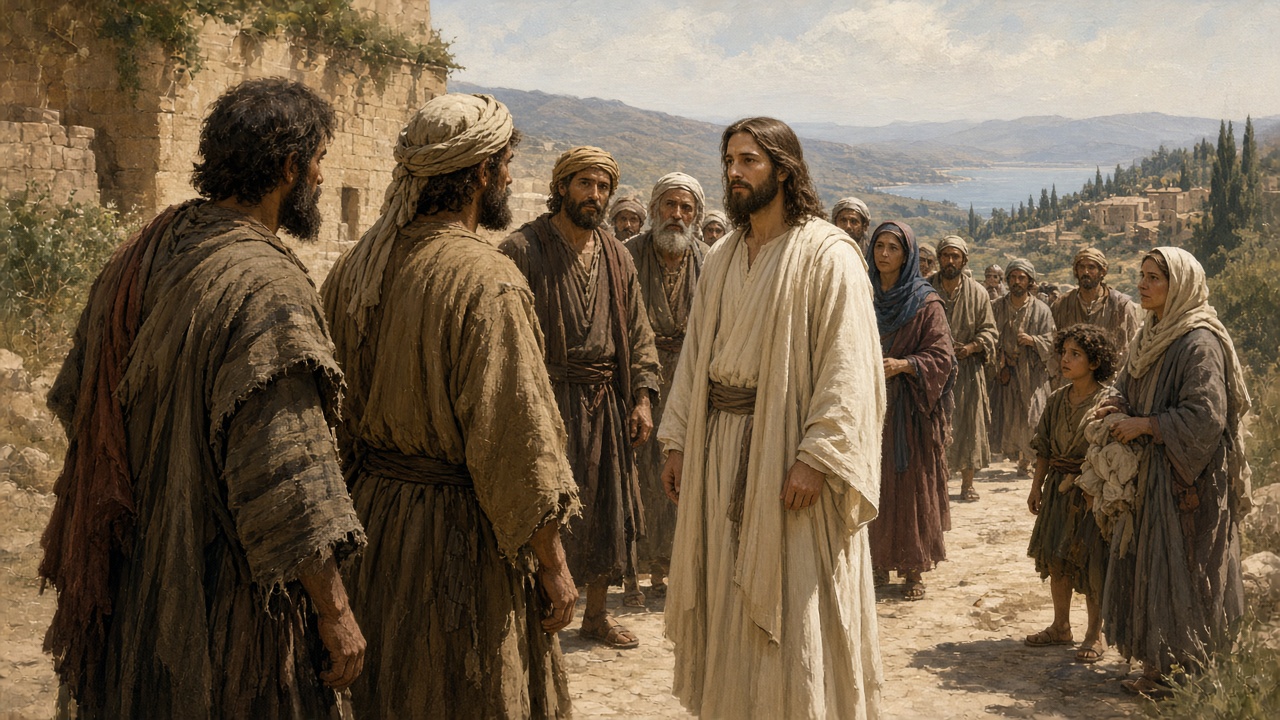
7Nadid, to kéhektat dén du alagad ni Juan, éy négkagi ti Jesus du tolay sa ta tungkul ni Juan. “To kéluwas moy ni Juan ta ilang a lugar,” kagi na, “éy bakit inumange kam diya? Gustu moy wade meta i lélake a mehina a koman san i lamon a sésébyugén na pahés? 8O siguru gustu moy meta i lélake a te badu ta kamahalan? Pero éwan, da du te badu ta kamahalan éy mégiyan side ta bile na hari. 9I gustu moy ngani sa a meta moy éy purupeta! O, tama ya. Ey maigi ngani ti Juan du iba a purupeta. 10Da ti Juan i nihulaa to kasulatan, to pégkagi na, a
‘Tandaan moy. Siya i pinakangbégi ko. Pégdetulén ko siya diko, monda paghandaén na du tolay ta demtan mo.’
11Tandaan moy,” kagi ni Jesus, “du étanan a tolay ta mundua, éy éwan tu mataas ni Juan a Mégbinyag. Pero i mababaa a tolay ta kaharian na Diyos, éy mataas side diya. 12Sapul to pégtoldu ni Juan a Mégbinyag, a hanggan nadid, éy pumépilit du tolay a ipasakup ta kaharian na Diyos. Ey du metapang, éy pilitén de a somdép. 13Dahilan, du étanan a purupeta, sakay tu utus ni Moises, éy nagpahayag side tungkul ta péghari na Diyos, a hanggan to panahun ni Juan. 14Ey nadid, éng gustu moy a maniwala, éy siya ngani dén ina ti Elias a kagi de a dumemét. Da nihula de a magsoli siya. 15Eng makabati kam, éy baten moy ya.
16“Pakodyan ko a méngihalimbawa di tolaya nadid?” kagi ni Jesus. “Mara, kapareho side na anak a te eknud ta plasa, a mégpépintasén side ta kaéyag de. 17Mara kagi de dide, a ‘Tinogtogen me kam, pero éwan kam nagsayaw. Ey to pégsanget me, éy éwan kam nalungkut dikame.’ 18Ey kona be sa di tolaya,” kagi ni Jesus, “da ugali ni Juan, éy nagkulasiyon, a éwan méginom ta alak, éy pinintasan de a hinayup. 19Pero sakén, éy mahusayék a méngan éy ta méginom, éy pintasanék de be, a kagi de a medémoték a méngan éy ta méginom. Sakay pintasanék de be a mékiagumék du mégpabuwes sakay du makasalanan. Pero pabayan moy ya. Tukoy moy éng tama i gimet ko bagay meta moy tu bunga ko, éng mahusay.”
Du Banuwan a Ewan Méniwala
20Nadid, pinagsisian ni Jesus du banubanuwan, da ginimet na dén dide i meadu a makataka-taka, pero éwan side nagsisi to kasalanan de. 21“Kakakagbi kam,” kagi na, “sikam a taga Korasin! Kakakagbi kam, sikam a taga Betsayda! Da ginimet ko dén ta harap moy i meadu a makataka-taka, éy éwan kam nagsisi. Pero du tolay ta Tiro sakay ta Sidon to araw, éng neta de maka to araw tu mineta moy, éy talaga nagsisi side. Nagbadu maka dén side ta kostal, sakay mégiknud ta abu, monda magpatunay side a nagsisi side a talaga. 22Kanya ta péghukum na Diyos, éy masiyadu a mehirap i sapitén moy kesira ta sinapit du taga Tiro éy ta Sidon. 23Sakay sikam a taga Kapernaum,” kagi ni Jesus, “i pégpalalo moya éy makaabut kam ta langet, pero i abutén moy sana éy impiyerno! Pero éng mineta maka du taga Sodoma to araw i mineta moya a makataka-taka, éy éwan side nibagsak na Diyos, da talaga a nagsisi side. 24Kanya tandaan moy, ta péghukum na Diyos, éy masiyadu a mehirap i sapitén moy kesira ta sinapit na Sodoma!”
Umadene Kam Diyakén a Umimang
25Nadid, nanalangin ti Jesus, a kinagi na, a “Mégpasalamaték diko, Améng. Siko i Panginoon ta langet éy ta mundua. Salamat, Améng, da éwan mo nipékipospos tu kaluuben mo du matalinung a mataas a tolay; éngˈwan i néngipaliwanagen mua éy du mababa. 26O ngani, Améng, da kona sa i gustu mua.”
27Nadid, kinagi na du alagad na, a “Tama ko a Diyos, éy inatdinanék na ta étanan. Ey éwan tu makatukoy diyakén, éng éwan Tama ko san. Ey éwan be tu nakatukoy Nama ko, éng éwan sakén san a anak na, sakay du nagpahayagen ko tungkul diya.
28“Umadene kam diyakén, sikam a étanan a pagel dahil ta medégi a kébil moy, sakay paimangén ta kam. 29Sundin moy san i utus kua, sakay magadal kam diyakén. Da sakén éy mebaiték a mababa, éy paimangén ko i buhay moya. 30Ey melagin i utus kua, sakay éwan medégi i pakébil kua dikam.”
Did you know?
John's question and the cities that did not repent
- From prison, John sent his disciples to ask whether Jesus was the one who was to come. Jesus told the crowds that John was more than a prophet—the messenger sent ahead to prepare the way—and, if they were willing to accept it, the Elijah who was to come. A Bible dictionary calls John the forerunner and says his mission was already the subject of prophecy, citing Isaiah 40:3 and Malachi 3:1; it also introduces Elijah as the Elias of the New Testament.Sources: the Bible text itself · John the Baptist · Elijah
- Jesus then denounced Chorazin, Bethsaida, and Capernaum, where most of his miracles had been performed, because they did not repent. A dictionary identifies Chorazin with modern Kerazeh, about two and a half miles up the Wady Kerazeh from Capernaum, and says that Capernaum, absent from the Old Testament, became Jesus' own city after he left Nazareth. It places Bethsaida on the east side of the lake, two miles up the Jordan in Gaulonitis, enlarged by Philip the tetrarch and named Julias after the emperor's daughter, though some have supposed there was only one Bethsaida, near where the Jordan enters the lake.Sources: the Bible text itself · Chorazin · Capernaum · Bethsaida
- He set those cities against Tyre and Sidon, which he said would have repented long ago in sackcloth and ashes, and against Sodom, which he said would have remained to this day. Sidon, on the Mediterranean coast about twenty-five miles north of Tyre, was the oldest Phoenician city there and the mother city of Tyre. A dictionary says the commerce of the whole world was gathered into Tyre's warehouses, and that Sodom, in the vale of Siddim, was destroyed by fire from heaven so completely that no trace of it has been found.Sources: the Bible text itself · Sidon · Tyre · Sodom
Notes written with AI assistance from open sources (Theographic Bible Metadata, CC BY-SA 4.0; Easton’s Bible Dictionary, public domain) and reviewed before publishing.
Places in this chapter
- Galilee · 32.760, 35.527 · verse 1
- Sidon · Today: Sandikli archaeological site in Sidon · 33.561, 35.372 · verses 21, 22
- Tyre · 33.271, 35.196 · verses 21, 22
Only places identified with high confidence are shown (90% or more according to the scholarly sources compiled by OpenBible). Period map: DARE (Digital Atlas of the Roman Empire), CC BY 4.0; modern map: © OpenStreetMap contributors; places: OpenBible.info (CC BY 4.0).
Credits and license for this translation
Bigu a tipan: I mahusay a baheta para ta panahun tam
New Testament in Agta, Casiguran Dumagat
copyright © 1979 Wycliffe Bible Translators, Inc.
Language: Casiguran Dumagat Agta (Agta, Casiguran Dumagat)
Translation by: Wycliffe Bible Translators
Contributor: Wycliffe Bible Translators, Inc.
Copyright Information
© 1979, Wycliffe Bible Translators, Inc. All rights reserved.
This translation text is made available to you under the
terms of the Creative Commons License: Attribution-Noncommercial-No Derivative Works.
( http://creativecommons.org/licenses/by-nc-nd/3.0/ )
In addition, you have permission to port the text to different file formats, as long as you
do not change any of the text or punctuation of the Bible.
You may share, copy, distribute, transmit, and extract portions
or quotations from this work, provided that you include the above copyright
information:
You must give Attribution to the work.
You do not sell this work for a profit.
You do not make any derivative works that change any of the actual words or punctuation of the Scriptures.
Permissions beyond the scope of this license may be
available if you contact
us with your request.
The New Testament
in Agta, Casiguran Dumagat
© 1979, Wycliffe Bible Translators, Inc. All rights reserved.
This translation is made available to you under the terms of the
Creative Commons Attribution-Noncommercial-No Derivatives license 4.0.
You may share and redistribute this Bible translation or extracts from it in any format, provided that:
You include the above copyright and source information.
You do not sell this work for a profit.
You do not change any of the words or punctuation of the Scriptures.
Pictures included with Scriptures and other documents on this site are licensed just for use with those Scriptures and documents.
For other uses, please contact the respective copyright owners.
2015-03-17
Source: http://ebible.org/dgc/ · eBible.org