Luke 10
Bigu a tipan: I mahusay a baheta para ta panahun tam · Tap a verse to see its cross-references.
Pinéglakad Na Du Alagad Na a Magtoldu
1Nadid, kétapos na éya, éy pinili ni Jesus i pitu a pulu a kakaguman na, a inutusan na side a péglakadén na side ta tégdéduwa, a magdetol diya ta bawat angayan na a bariyo-bariyo. 2“Meadu i gapasén,” kagi na, “pero kulang i magapas. Kanya ipanalangin moy to te koo ta kapahayan, a paange na i meadu a magapas ta kapahayan na. 3Ikad moy dén,” kagi na. “Péglakadén ta kam du medukés a tolay. Mara, koman kam i tupa a méglakad ta lubuk du metapang a aso. 4Diyan moy kébilén i kuhata, o maski suput, o reserba a sinelas. Sakay diyan kam magabala a mégéuhunén du kasambat moy ta dilan. 5Sakay éng somdép kam ta tulusan moy a bile, éy batién moy du édsa sa, a kagi moy, a ‘Demtan kam maka na kapayapaan.’ 6Ey nadid, éng mahusay du mégiyan sa, a tanggapén de kam, éy kagbian side na Diyos a talaga. Pero éng éwan side mahusay, éy bawen moy tu nipangbati moy dide. 7Ey diyan kam uméagton ta iba-iba a bile, éngˈwan tumulos kam ta isesa san a bile. Sakay diyan kam mésanike a méngan ta ihayin de dikam, da dapat aguman kam du tolduan moy.
8“Bagay dumemét kam ta esa a banuwan, éng tanggapén de kam, éy méngan kam ta ihayin de dikam. 9Sakay pahusayén moy du te ladu ta éya a banuwan, sakay ibaheta moy dide,” kagi ni Jesus, “a adene dén a dumemét i péghari na Diyos dide. 10Pero éng dumemét kam ta banuwan, éng éwan de kam tanggapén, éy kagin moy dide, a 11‘Pagpagen me i alikabuk na banuwan moya ta tikéd mia, a saya i tanda me dikam,’ kagi moy, ‘a te kasalanan kam ta Diyos.’ Sakay kagi moy be dide, a ‘Talaga a dumemét dikam i Diyos a maghari, éy inidelan moy dén!’ 12Katutuhanan a kédemét na péghukum na Diyos, éy lalo a mehirap i sapitén du tolay na éya a banuwan, kesira to sinapit du taga Sodoma to araw!”
Du Banuwan a Ewan Méniwala
13Nadid, pégisip ni Jesus du mégidel diya a banuwan, éy kinagi na, a “Kakakagbi kam, sikam a taga Korasin! Kakakagbi kam, sikam a taga Betsayda! Da ginimet ko dén ta harap moy i meadu a makataka-taka, éy éwan kam nagsisi. Pero du tolay ta Tiro sakay ta Sidon to araw, éng neta de maka to araw tu mineta moy, éy talaga a nagsisi side. Nagbadu maka dén side ta kostal, sakay mégiknud side ta abu, monda magpatunay side a nagsisi a talaga. 14Kanya ta péghukum na Diyos,” kagi ni Jesus, “éy masiyadu a mehirap i sapitén moy kesira ta sinapit du taga Tiro éy ta Sidon. 15Sakay sikam a taga Kapernaum,” kagi na, “i pégpalalo moy éy makaabut kam ta langet, pero i abutén moy sana éy impiyerno!”
16Nadid, kinagi ni Jesus du alagad na, a “maski ti ésiya i mégbati dikam a mégtoldu, éy bilang mégbati be side diyakén. Sakay du mégidel dikam, éy bilang idelanék de be dén. Sakay du mégidel diyakén, éy bilang idelan de be dén tu Ama ko a nagpaange se diyakén.”
Tungkul Ta Késoli Du Alagad
17Nadid, to késoli du pitu a pulu a alagad, éy mésahat side. “Panginoon,” kagi de, “maski du dimonyo, éy médaig me side bagay dinulaw me i ngahen mua a mégpaibut dide!” 18Ey “O,” kagi ni Jesus. “Ey sakén éy mineta ko ti Satanas a linumugmuk. Ey tu kélugmuk na éy mebakség a koman i kilat. 19Ey tandaan moy,” kagi na, “éy niatéd ko dén dikam i kapangyarian a monda maski yudakén moy i medukés a ulag, o maski kumékontara kam ni Satanas, éy éwan kam maanya. 20Pero maski madaig du medukés a espiritu dikam, éy diyan kam masahat ta éya. Engˈwan, i kasahatan moya éy da nilista dén na Diyos tu ngahen moy ta langet.”
21Nadid, ta éya a oras, éy tu Banal a Espiritu, éy pinasahat na ti Jesus. Tulos kinagi ni Jesus ta Diyos, a “Mégpasalamaték diko, Améng. Siko i Panginoon ta langet éy ta mundua. Salamat, Améng, da éwan mo nipékipospos tu kaluuben mo du matalinung a mataas a tolay; éngˈwan i néngipaliwanagen mua éy du mababa. O ngani, Améng, da kona sa i gustu mua.
22“Tama ko a Diyos,” kagi ni Jesus, “éy inatdinanék na ta étanan. Ey éwan tu makatukoy diyakén, éngˈwan Tama ko san. Ey éwan be tu nakatukoy Nama ko, éng éwan sakén san a anak na, sakay du nagpahayagen ko ta tungkul diya.”
23Nadid, kinagi ni Jesus du alagad na ta lihim, a “Masuwerte kam a talaga, da meeta moy dén tu gimet ko! 24Da tandaan moy, meadu i purupeta to araw, sakay hari, a gustu de a meta i meeta moya, pero éwan de neta. Sakay gustu de a mabati i mébati moya, pero éwan de nabate.”
Tu Istoria No Mebait a Samaritano
25Nadid, te esa a maistu ta rilihiyon na Judeo, a inumange ni Jesus a mégpakelagip diya, a monda pagkamalién na maka siya. “Maistu,” kagi na, “anya wade i gemtén kua, a monda makaabuték ta buhay a éwan tu katapusan?”
26“Ey anya i bébasaén mua ta libru na Diyos tungkul ta éya?” kagi ni Jesus. 27Ey kinagi no maistu ta rilihiyon, a “I kagia na Diyos to libru na, éy ‘Dapat mahalén mo i Panginoon mo a Diyos ta mahigpit, a isipén mo siya a palagi.’ Sakay i utus a esa, éy ‘Dapat mahalén mo tu kapareho mo a kona ta pégmahal mo ta bégi mo.’” 28Ey “O,” kagi ni Jesus, “tama tu sengbet mo. Sundin mo ina, éy makaabut ka ta buhay a éwan tu katapusan.”
29Nadid tu maistu, éy gustu na a maganap tu kagi na ni Jesus, monda isip du tolay a matalinung siya. Kanya kinagi na ni Jesus, a “Ti ésiya wade i kapareho ko a dapat mahalén ko?”
30Ey saye tu nisengbet ni Jesus diya a istoria: “Mara,” kagi na, “éy te esa kan a lélake a Judeo a inumange ta Heriko, a gébwat ta Jerusalem. Ey to péglakad na, éy sinanéb siya na tulisan. Dinoklos de siya, sakay inalap de tu badu na. Sakay binélbég de a hanggan kétihék a mate, sakay gininanan de.
31“Mamaya-maya, éy te sinumalegéd a padi a Judeo. Ey péketa no padi to te tayang a lélake, éy linumekaw siya a sinalinan na san. 32Ey mamaya-maya man dén, éy te sumalegéd be a esa a katulung ta Templo, a Judeo be siya. Ey péketa na to te tayang a lélake, éy sinalinan na be san. 33Nadid, mamaya-maya man dén, éy te sumalegéd man dén a éwan Judeo. Samaritano siya. Ey péketa na to lélake, éy kinagbian na siya. 34Inumadene kan siya, a ginamot na tu talitalingo na, sakay binédbéden na ta damit. Nadid, éy nisakay na siya to kabayo na, a niange na to bile a paupaan, sakay inalagaan na sa siya.
35“To kagabian na, éy inupaan na tu te koo to bile, a kinagi na diya, a ‘Alagaan mo siya. Ey éng mahigit pa ta éye i gastos mo diya, éy dagdagen ko san ta késoli ko,’ kagi na.
36“Ey nadid,” kagi ni Jesus to maistu, “anya i isip mua? Ti ésiya diden ya a étélo a sinumalegéd i nagpatunaya a mahalén na tu kapareho na?”
37“Ey siguru tu éwan Judeo a Samaritano,” kagi no maistu, “da kinagbian na tu te tayang a Judeo.”
“Ey anya pa,” kagi ni Jesus. “Ey nadid, éy dapat kona be sa i ahigén mua.”
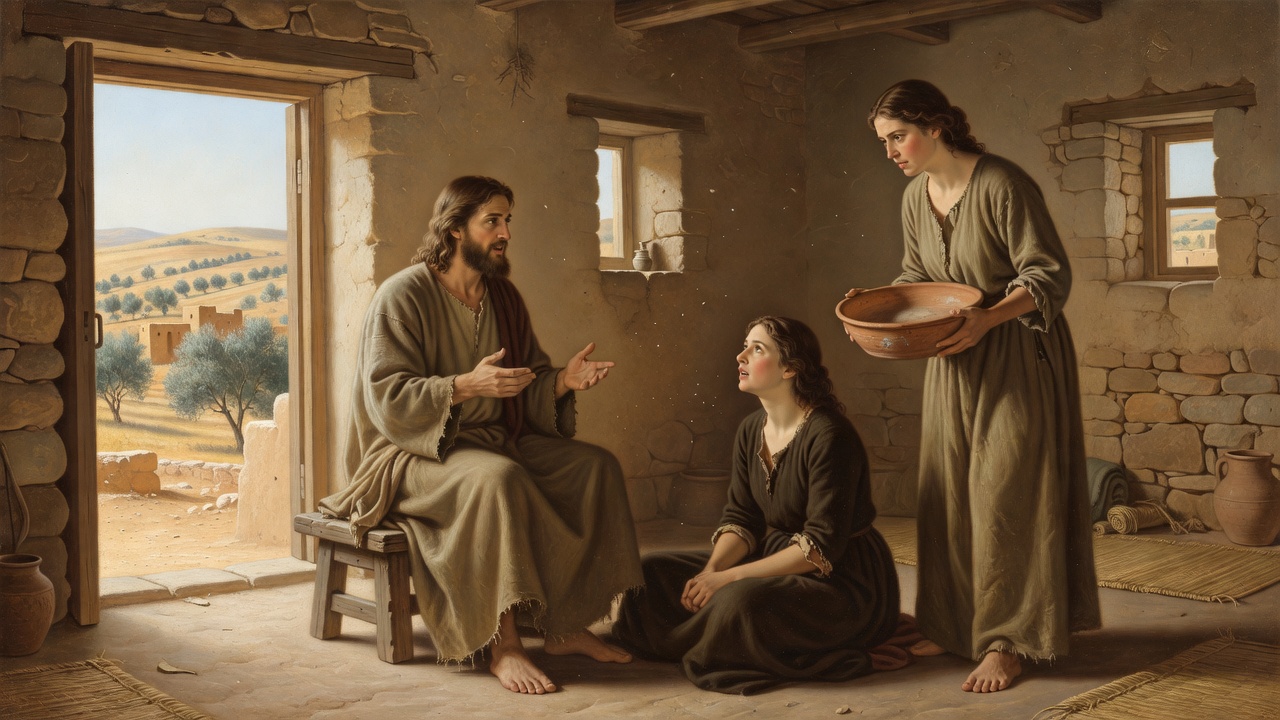
Tinumulos Ti Jesus To Bile De Marta
38Nadid, to péglakad de Jesus, éy inumange side to esa a bariyo. Ey te bébe sa a ti Marta i ngahen naa. Ey siya, éy pinatulos na de Jesus to bile na. 39Ey to péghanda ni Marta to pénganan de, éy ti Maria a wadi na, éy basta te eknud san to giled ni Jesus, a mégbati to pégtoldu na. 40Ey ti Marta, éy métahanta, da meadu i handaén na. Kanya kinagi na ni Jesus, a “Panginoon, entan mo i wadi kuae, pinabayanék na dén a méghanda ta étanan a tarabaho ko. Utusan mo siya beman a tulunganék na.”
41Pero kinagi ni Jesus diya, a “Marta, bakit méligalig ka ta sari-sari? 42Te isesa san a mahalaga a kailangan; éy saya i gimita na wadi muae. Ey éwan maari a sawayén ta siya.”
Did you know?
The mission, the towns, and Martha and Mary
- Easton's Bible Dictionary (1897) identifies Chorazin, named in this chapter's woes along with Bethsaida and Capernaum, with Kerazeh, about two and a half miles up the Wady Kerazeh from Capernaum. It says that after Jesus was expelled from Nazareth, Capernaum became his own city. The chapter compares those towns with Tyre and Sidon; the dictionary calls Sidon the first home of the Phoenicians on the coast of Palestine and the mother city of Tyre, about twenty-five miles north of Tyre.Sources: the Bible text itself · Chorazin · Capernaum · Sidon
- Easton's Bible Dictionary (1897) gives the name Martha as meaning bitterness, and says that she, her sister Mary, and their brother Lazarus lived at Bethany, with Martha probably the eldest. Because this passage calls the house hers, the dictionary notes that some have supposed she was a widow and that her brother and sister lodged with her. It describes her as anxious and bustling in caring for her guest, unlike Mary, who sat at Jesus' feet and listened.Sources: the Bible text itself · Martha · Mary (sister of Lazarus)
- The Lord appoints seventy-two others and sends them two by two ahead of him, and an event chronology dates that sending to AD 29. When they return, rejoicing that even the demons submit in his name, he says he saw Satan fall like lightning from heaven. Easton's Bible Dictionary (1897) explains the name Satan as adversary or accuser, and notes that the New Testament uses it interchangeably with the devil more than thirty times.Sources: the Bible text itself · 70 Sent Out · Satan
Notes written with AI assistance from open sources (Theographic Bible Metadata, CC BY-SA 4.0; Easton’s Bible Dictionary, public domain) and reviewed before publishing.
Places in this chapter
- Sidon · Today: Sandikli archaeological site in Sidon · 33.561, 35.372 · verses 13, 14
- Tyre · 33.271, 35.196 · verses 13, 14
- Jericho · Today: Tell el Alayiq · 31.852, 35.436 · verse 30
- Jerusalem · 31.777, 35.234 · verses 30, 38
Only places identified with high confidence are shown (90% or more according to the scholarly sources compiled by OpenBible). Period map: DARE (Digital Atlas of the Roman Empire), CC BY 4.0; modern map: © OpenStreetMap contributors; places: OpenBible.info (CC BY 4.0).
Credits and license for this translation
Bigu a tipan: I mahusay a baheta para ta panahun tam
New Testament in Agta, Casiguran Dumagat
copyright © 1979 Wycliffe Bible Translators, Inc.
Language: Casiguran Dumagat Agta (Agta, Casiguran Dumagat)
Translation by: Wycliffe Bible Translators
Contributor: Wycliffe Bible Translators, Inc.
Copyright Information
© 1979, Wycliffe Bible Translators, Inc. All rights reserved.
This translation text is made available to you under the
terms of the Creative Commons License: Attribution-Noncommercial-No Derivative Works.
( http://creativecommons.org/licenses/by-nc-nd/3.0/ )
In addition, you have permission to port the text to different file formats, as long as you
do not change any of the text or punctuation of the Bible.
You may share, copy, distribute, transmit, and extract portions
or quotations from this work, provided that you include the above copyright
information:
You must give Attribution to the work.
You do not sell this work for a profit.
You do not make any derivative works that change any of the actual words or punctuation of the Scriptures.
Permissions beyond the scope of this license may be
available if you contact
us with your request.
The New Testament
in Agta, Casiguran Dumagat
© 1979, Wycliffe Bible Translators, Inc. All rights reserved.
This translation is made available to you under the terms of the
Creative Commons Attribution-Noncommercial-No Derivatives license 4.0.
You may share and redistribute this Bible translation or extracts from it in any format, provided that:
You include the above copyright and source information.
You do not sell this work for a profit.
You do not change any of the words or punctuation of the Scriptures.
Pictures included with Scriptures and other documents on this site are licensed just for use with those Scriptures and documents.
For other uses, please contact the respective copyright owners.
2015-03-17
Source: http://ebible.org/dgc/ · eBible.org