Acts 2
Bigu a tipan: I mahusay a baheta para ta panahun tam · Tap a verse to see its cross-references.
Tu Kédemét na Banal a Espiritu
1Nadid, kélipas na sapulu a aldew hanggan to kéontok ni Jesus ta langet, éy dinumemét dén i Piyesta na Pentekos. Ey du méniwala ni Jesus, éy napisan dén side a étanan. 2Nadid, bigla de a nabati i ténog a gébwat ta langet, a koman i ténog na mesibét a pahés. Ey meténog a tahod to lubuk no bile a égsean de. 3Ey mineta de i kékétihék a koman i apoy, a kinumalat a tinumupo ta bawat esa dide. 4Ey inumasék dén i Banal a Espiritu ta bégi dia a étanan, tulos négkagi side ta iba-iba a kagi, ayun ta nipagkaluub dide na Espiritu.
5Nadid, égsa nadid ta Jerusalem i meadu a mékidiyos a Judeo, a mamiyesta side. Gébwat side ta iba-iba a banuwan. 6Pékabati de to ténog, éy dinumulug side to bile du alagad. Nagtaka side, da nabati na bawat esa dide a mégkagi dén du alagad ta iba-iba a kagi de. 7Mégtaka side a tahod, a kinagi de, a “Bakit, éwan beman taga Galilea san diden ina? 8Bakit mébati tam dide i sarili tam a kagi?” 9Du tolay sa a mégtaka éy éwan side taga Galilea, éngˈwan gébwat side ta iba-iba a banuwan a adeyo. Te taga Partia; te taga Medo; te taga Elam; te taga Mesopatamia; te taga Hudea; te taga Kapadosia; te taga Ponto; te taga Asia; 10te taga Pirigia; te taga Pampiliya; te taga Egipto; te taga Libya a sakup na Sirena. Sakay te binumisita sa a taga Roma a Judeo, sakay éwan Judeo a sakup dén na rilihiyon na Judeo. 11Te égsa sa a taga Kreta, sakay Arabia. Diden ya a étanan, maski iba-iba i kagi de, éy nabati de tu ginimet na Diyos a memahal, da nibaheta dide du alagad ta kanikaniya de a kagi. 12Ey basta mégtaka side a tahod, a négpakipakelagip side éng anya i kahulugina no gégemtén du alagad. 13Pero te iba sa a pinintasan de du alagad, a kagi de a lasing san side.
Tu Talumpati Ni Pedro
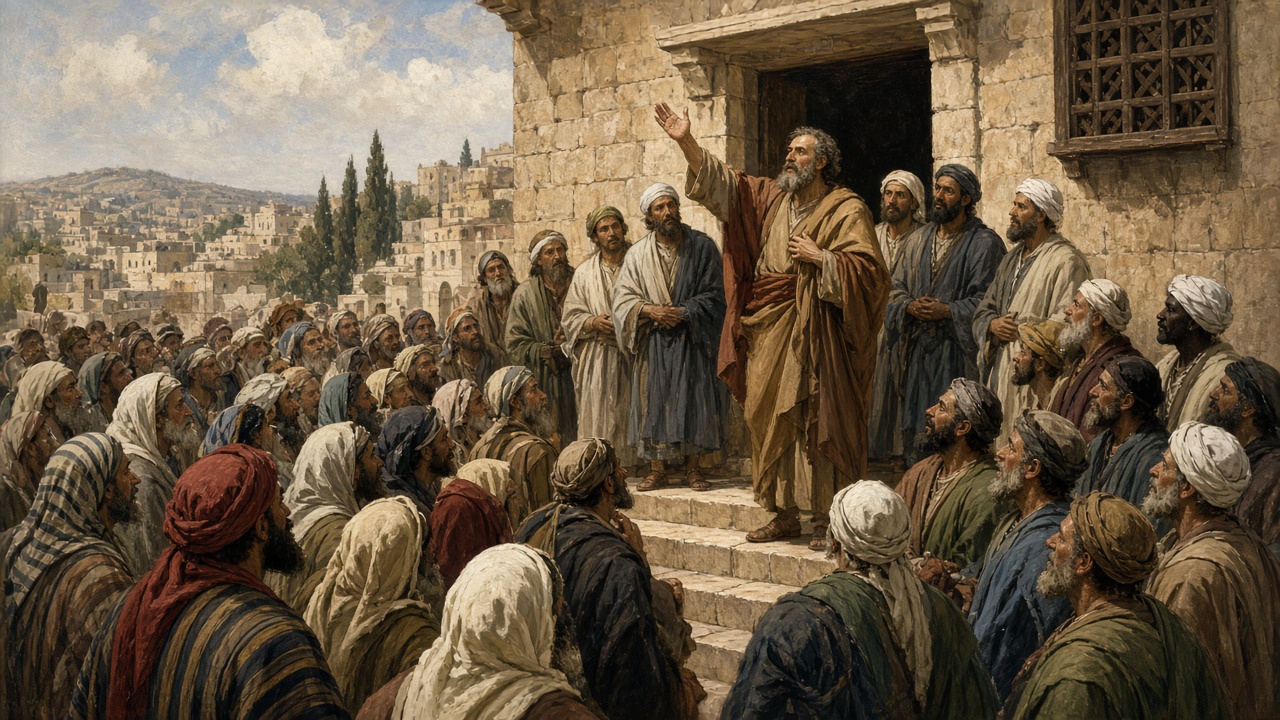
14Ey nadid, tinumaknég du labindalawa a apostol, éy tulos ti Pedro a négkagi du tolay ta medegsén. “Sikam a kapareho ko a Judeo,” kagi na, “sakay sikam a binumisita ta Jerusalemae, te kaginék dikam. Baten moy, 15éwan lasing didi kaguman kuae, da alas nuwebe pabi na gagabi. 16Engˈwan, saye i péngtupad to nihula ni Purupeta Hoel to araw. 17Kinagi dén na Diyos i gemtén na ta katapusan a panahun, a iasék na kan i Espiritu na ta étanan a tolay,” kagi ni Pedro. “Tulos magpahayag kan siya du anak moy ta kagi na. Sakay du lélake moy, éy maketa kan side ta tanda a kataka-taka. Sakay du matanda moy a lélake, éy ipatagenép na kan dide. 18Sakay du sakup na Diyos a tolay, i nihula be ni Hoel, éy iasék kan dide na Diyos i Espiritu na ta éya a panahun; tulos ipahayag de kan i Diyos. 19Sakay ipeta na kan ta langet i pagtakaan na tolay, sakay ipeta na kan be i tanda ta munduae. Te meta kan a dige sakay apoy sakay meaadu a asok. 20Ey nadid, bagu dumemét i aldew a késoli na Panginoon a maghukum,” kagi ni Pedro, “éy dumiklém kan pa i bilag. Sakay i bulan éy maging koman i dige i kolor naa. 21Pero i maski ti ésiya a dumaying ta ngahen na Panginoon éy meligtas.
22“Nadid, sikam a kabébayan ko a Judeo,” kagi ni Pedro, “éy baten moy i kagi kuae. Ti Jesus a taga Nasaret, éy pinatunayan na Diyos dikam a gébwat ta langet i tungkulin naa; da pinagimet siya na Diyos ta meadu a makataka-taka, sakay tanda. Ey tukoy moy dén ya, da ginimet na dén ya ta harap moya. 23Sapul to sapul, éy tiniyak dén na Diyos a itugén na dikam ti Jesus. Ey pinabuno moy siya, da inutusan moy dén du medukés a tolay a méngipako diya ta kudos. 24Pero binuhay siya na Diyos a huway. Pinaluwas na siya to lébéng, da éwan maari a éwan mabuhay siya a huway. 25Baten moy tu nisulat ni Dabid. Nihula na to araw a manalangin ti Jesus ta kona se:
‘Neta ko a palagi a kéye se diyakén i Panginoon. Siya i kaguman ko, monda éwanék méligalig. 26Kanya masaya i isip kua, sakay mésahaték ta kagi kua. Dahilan maski mateék, éy umasaék a buhayénék na Diyos. 27Ewan mo pébayan tu anak mo a mahunot tu bégi na ta luta. 28Iatéd mo diyakén i buhay a éwan tu katapusan. Pasayaénék mo, da siko i kaguman ko.’ Saya tu nisulat ni Dabid.
29“A tétotop ko,” kagi ni Pedro, “i nisulat a éya ni Dabid, éy éwan na nibaheta tu bégi na a sarili, da napospusan tam a minate dén siya, a kéye pabi i pantiyung na ta banuwana a éye. 30Engˈwan purupeta siya. Nihula na ngani i tungkul ta kébuhay a huway ni Cristo. I Diyos, éy nisumpa na ni Dabid a ta esa a panahun éy maghari tu apo na a esa ta kaharian naa. Ey nisulat ni Dabid i éya. Ey tu apo na éy ti Cristo. Siya i éwana pabayan ta Dinatagen. Siya i éwana mahunot ta lébéng. 32Ey nadid,” kagi ni Pedro, “i éya a Jesus, éy siya dén tu binuhay na Diyos. Ey sikame i sistigua na éya, da mineta me dén. 33Ti Jesus, éy pinataas dén siya na Diyos, a kaguman na dén siya nadid a méghari ta langet. Sakay naalap na dén Nama na tu nipangako na a Banal a Espiritu. Ey nadid, i mineta moya nadid ta éye éy tu Banal a Espiritu na Diyos, a niasék na dén dikame. 34Tukoy tam a éwan nibaheta ni Dabid i sarili na, da éwan inumontok tu bégi na ta langet. Ey te sulat ti Dabid a esa, a kona se: ‘Kinagi na Diyos to amo ko, a “Mégiknud ka ta tagirilan kuae, 35a hanggan mapasuku ko diko du kalaban mo.”’
36“Kanya nadid,” kagi ni Pedro, “éy dapat mapospusan na buu a banuwan na Israel a i éya a Jesus a nipako moy to kudos, éy siya i nidéton na Diyos a Panginoon na étanan. Siya i pinili naa a maghari ta tolay na munduae.”
37Nadid pékabati du tolay ta éya a kagi ni Pedro, éy nagsisi side a minasépduan side. “Adiyoy, Akéng,” kagi de, “magenya kame?”
38Ey kinagi ni Pedro, a “Pagsisian moy sakay ibutan moy du kasalanan moy. Sakay ipabinyag kam a ipasakup kam ni Jesu Cristo, monda patawadén na kam ta kasalanan moy, sakay tanggapén moy i kaluub na Diyos, a Banal a Espiritu. 39Dahilan i nipangako na a Espiritu éy para dikam be, sakay ta anak moy, a sakay du édsa ta adeyo a lugar. Para ina ta maski ti ésiya a pinili na Panginoon Diyos.”
40Kona sa i péghatul ni Pedro du tolay. Meadu i pékiohon naa dide, monda méniwala side. “Umadeyo kam du magkadukés a tolay,” kagi na, “monda meligtas kam ta parusa a dumemét dide.”
41Nadid, du méniwala to kinagi ni Pedro éy nagpabinyag side. Te manga étélo a libu a tolay a nipasakup du alagad ta éya a aldew. 42Tulos nanatili side a mégadal ta iyétoldu dide du apostol, sakay négkakaguman side ta mahusay. Négpisan side a aldew-aldew a méngan sakay ménalangin.
Tu Ugali Du Méniwala
43Du étanan a tolay sa, éy méganteng side, dahil ta meadu a makataka-taka a tanda a ginimet du apostol. 44Ey du étanan a méniwala éy négpisan-pisan side ta mahusay, sakay nibugtong de i étanan a ari-arian de. 45Sakay i kabugtungana na éya éy niatéd de du kakaguman de ayun ta kailangan na bawat esa. 46Aldew-aldew éy négpisan side ta Templo. Sakay négdipon side ta mahusay aldew-aldew ta bili-bile de, a masaya side tu isip. 47Mégpuri side ta Diyos; sakay du iba a tolay, éy iyégalang de side. Ey bawat esa aldew éy te tolay a bigu a méniwala, a iyédagdag na Diyos dide, a niligtas na.
Did you know?
The Spirit Comes at Pentecost
- God-fearing Jews from every nation under heaven were already living in Jerusalem when a sound like a mighty rushing wind came from heaven and filled the house, and the speakers began to declare God’s wonders in other languages. In this chapter, “Asia” is the Roman province of Proconsular Asia, in the western part of Asia Minor, whose capital was Ephesus—not the continent of that name. Pontus, along the southern coast of the Euxine Sea, was a Roman province in the apostles’ time and a resort of many Jews of the Dispersion; Cappadocia was the easternmost and largest province of Asia Minor.Sources: the Bible text itself · Asia · Pontus · Cappadocia
- The crowd was amazed that the speakers were Galileans. The one who stood with the Eleven and addressed them was Simon Peter, originally called Simon—that is, Simeon, meaning “hearing”—a fisherman from Bethsaida, on the western coast of the Sea of Galilee, whom his younger brother Andrew first brought to Jesus.Sources: the Bible text itself · Simon Peter
- Peter said this was what the prophet Joel had spoken. Joel, the second of the twelve minor prophets, was the son of Pethuel, and his personal history is known only from his book. Peter also quoted David, the eighth and youngest son of Jesse of Bethlehem, and told the crowd that this patriarch had died and been buried, and that his tomb was still with them in Jerusalem.Sources: the Bible text itself · Joel · David
Notes written with AI assistance from open sources (Theographic Bible Metadata, CC BY-SA 4.0; Easton’s Bible Dictionary, public domain) and reviewed before publishing.
Places in this chapter
- Jerusalem · 31.777, 35.234 · verses 5, 14
- Galilee · 32.760, 35.527 · verse 7
- Asia · 38.400, 28.300 · verse 9
- Cappadocia · 38.671, 34.839 · verse 9
- Judea · Today: Judea 1 · 31.777, 35.234 · verses 9, 14
- Mesopotamia · Today: Aram-naharaim · 36.864, 39.033 · verse 9
- Pontus · 40.680, 37.830 · verse 9
- Cyrene · 32.821, 21.851 · verse 10
- Egypt · 30.129, 31.308 · verse 10
- Libya · 32.821, 21.851 · verse 10
- Pamphylia · 37.000, 31.000 · verse 10
- Phrygia · 39.000, 31.000 · verse 10
- Rome · 41.892, 12.485 · verse 10
- Nazareth · 32.702, 35.298 · verse 22
Only places identified with high confidence are shown (90% or more according to the scholarly sources compiled by OpenBible). Period map: DARE (Digital Atlas of the Roman Empire), CC BY 4.0; modern map: © OpenStreetMap contributors; places: OpenBible.info (CC BY 4.0).
Credits and license for this translation
Bigu a tipan: I mahusay a baheta para ta panahun tam
New Testament in Agta, Casiguran Dumagat
copyright © 1979 Wycliffe Bible Translators, Inc.
Language: Casiguran Dumagat Agta (Agta, Casiguran Dumagat)
Translation by: Wycliffe Bible Translators
Contributor: Wycliffe Bible Translators, Inc.
Copyright Information
© 1979, Wycliffe Bible Translators, Inc. All rights reserved.
This translation text is made available to you under the
terms of the Creative Commons License: Attribution-Noncommercial-No Derivative Works.
( http://creativecommons.org/licenses/by-nc-nd/3.0/ )
In addition, you have permission to port the text to different file formats, as long as you
do not change any of the text or punctuation of the Bible.
You may share, copy, distribute, transmit, and extract portions
or quotations from this work, provided that you include the above copyright
information:
You must give Attribution to the work.
You do not sell this work for a profit.
You do not make any derivative works that change any of the actual words or punctuation of the Scriptures.
Permissions beyond the scope of this license may be
available if you contact
us with your request.
The New Testament
in Agta, Casiguran Dumagat
© 1979, Wycliffe Bible Translators, Inc. All rights reserved.
This translation is made available to you under the terms of the
Creative Commons Attribution-Noncommercial-No Derivatives license 4.0.
You may share and redistribute this Bible translation or extracts from it in any format, provided that:
You include the above copyright and source information.
You do not sell this work for a profit.
You do not change any of the words or punctuation of the Scriptures.
Pictures included with Scriptures and other documents on this site are licensed just for use with those Scriptures and documents.
For other uses, please contact the respective copyright owners.
2015-03-17
Source: http://ebible.org/dgc/ · eBible.org