1 Corinthians 10
Bigu a tipan: I mahusay a baheta para ta panahun tam · Tap a verse to see its cross-references.
Baheta Tungkul Ta Diyos-diyosan
1Sikam a tétotop ko, gustu ko a alélahanén moy tu nanyari du apo-apo tam to araw, to nikuyog de ni Moises to melawa a ilang a lugar. To péglebut de, éy nalduman side no kuném a nangigiya dide. Inumahabes side ta Medideg a Diget. 2Mara, koman side i nabinyagen to kuném sakay to diget, da nagpasakup side ni Moises. 3Sakay néngan side a étanan to kanén a gébwat ta Diyos. 4Sakay ininom de a étanan tu dinom a pinabukal na Diyos to bito. I éya a bito, éy halimbawa ni Cristo, éy siya éy kinumuyog dide to péglebut de. 5Pero maski kona sa, éy mégingél i Diyos ta meadu dide, a tulos pinarusaan na side hanggan minekalat dén tu bangkay de ta éya a ilang.
6Nadid, i éya a nanyari du Judeo to ilang a lugar, éy himala ya dikitam, monda éwan tam gemtén i medukés, a kona to ginamet de. 7Diyan kam sumésamba ta diyos-diyosan a kona ta sénganya dide. Nesulat dén a nagkasayaan kan side, a nagsayaw to diyos-diyosan. 8Sakay diyan kitam méngibébi a kona ta sénganya dide. Kanya pinabuno na Diyos i éduwapulu éy ta étélo a libu ta esa a aldew. 9Sakay diyan moy puhubaan i Panginoon, da éwan na pabayan i kasalanan moy. Side éy pinuhubaan de i Diyos, éy pinabuno na i meadu dide ta ulag. 10Diyan kam méglekramo a kona ta sénganya dide. Kanya tu anghel a mégbébuno, éy binunu na du naglekramo.
11Nadid, i éya a nanyari du apo-apo tam éy monda tandaan du iba. Sakay nesulat dén para dikitam, monda matolduan kitam, a diyan tam ahigén tu kasalanan de. Da adene dén nadid i katapusan.
12Makay isip moy éwan kam magimet ta medukés. Mangilag kam; makay magkasala kam. 13Ewan pabi tu pagsubuk a dinumemét dikam a éwan nadanasan na iba a tolay. Pero matapat i Diyos, éwan na pakultaden a masubukan kam ta higit pa ta kaya moy. Engˈwan, kédemét na pagsubuk dikam éy patibayén na i isip moy, monda matiis moy.
14Nadid, a kakaguman ko, diyan kam méniwala ta diyos-diyosan. 15Sikam éy te isip kam. Kanya isipén moy i kagi ko a éye. 16Bagay mapisan kitam a umaheg to katapusan a péngapon na Panginoon, éy magpasalamat kitam to inumén tam a alak; sakay ta péginom tam, éy mégebahagi tam to dige ni Cristo. Sakay tu tinapay a pisad-pisadén tam a kanén tam, éy saya i mégebahagi tam be to bégi ni Cristo. 17Nadid, esa momon tu tinapay. Ey sikitam, maski meadu kitam, éy maging isesa kitam be dén a bégi, da bahabahagién tam a kanén tam i esa a momon a tinapay. 18Entan moy tu ugali du Judeo. Eng kanén de i pilas a niatang dén to pégatangan éy mékipagesa side to mégatang.
19Nadid, anya i gustu a kagin no kinagi ko a éya? Anya, kinagi ko a te buhay tu diyos-diyosan, o te kabuluhan tu niatang de ta diyos-diyosan? 20Ewan! I gustu kua a kagin, éy bagay mégatang du tolay ta diyos-diyosan, i péngihayinan dia éy éwan ta Diyos, éngˈwan ta dimonyo! Diyan kam mékidipon dide. Sala ko a mékiagum kam ta dimonyo. 21Ewan maari a mékidipon kam ta péngapon na Panginoon sakay tulos kam be a mékidipon ta péghayinan de ta dimonyo. 22Ataay, isip moy beman éwan mégingél i Diyos du mégkona sa? O siguru isip moy mesibét kam diya, a éwan tu maanya dikam?
23Nadid, makay te mégkagi a maari kitam kan a magimet ta maski anya. Pero éwan. Da te gimet be a mégpadukés dikitam. Tutuhanan ya a maari kitam a magimet ta maski anya, pero bakit magimet kam ta éwan makatulung ta tolay? 24Diyan moy isipén tu sarili moy, éngˈwan i sarili na iba.
25Maari a méngan kam ta maski anya a pilas a iyébugtong de ta palengke. Kanén moy san; pero diyan moy pakelagip éng gébwat ta pégatangan, monda éwan kam matageg a makay te kasalanan kam. 26Dahilan i mundu, sakay i étanan a édse ta mundu éy koo na Diyos. Kanya éwan bawal a kanén tam.
27Nadid, mara te tolay a éwan méniwala, éng pékanén de kam, éy kanén moy san i maski anya a ihayin de dikam. Diyan moy ipakelagip éng gébwat ta pégatangan, monda éwan kam matageg a makay te kasalanan kam. 28Pero éng te mégkagi dikam, a “Gébwat ina ta pégatangan ta diyos-diyosan,” éy diyan moy kékanén. Alang-alang to négkagi dikam éy diyan moy kanén; makay matageg siya a te kasalanan kam.
Makay kagi moy, a “Maski métageg i iba a tolay a te kasalanan kitam, éy kanén tam san, da éwan be bawal.” 30O makay kagi moy, a “Bakit sawayén de kitam ta kanén tam, éng nipagpasalamat tam be dén ta Diyos?” 31I sengbet ko man déna ta éya, éy gemtén moy san i mahusay, monda purién na tolay i Diyos. Maski méngan kam, maski méginom kam, éy gemtén moy i pangpurian de ta Diyos. 32Diyan kam pégsapulan na kasalanan na iba a tolay, maski Judeo, maski éwan Judeo, maski du top moy ta péniwala. 33Mara sakén, mékisuyuék ta étanan a tolay. Pero éwanék kanya mékisuyu dide éy monda agumanék de. Engˈwan, alang-alang dide, monda meligtas side.
Did you know?
Wilderness Warnings and the Lord's Table
- Paul says he does not want the Corinthians unaware that the forefathers were all under the cloud and all passed through the sea, and that they were baptized into Moses in the cloud and in the sea. They all ate the same spiritual food and drank the same spiritual drink from the spiritual rock that accompanied them, and he says that rock was Christ.Sources: the Bible text itself
- Paul says God was not pleased with most of them, for they were struck down in the wilderness. He lists idolatry, sexual immorality in which twenty-three thousand died in one day, testing Christ, which brought death by snakes, and complaining, punished by the destroying angel, and calls these events examples written down as warnings.Sources: the Bible text itself
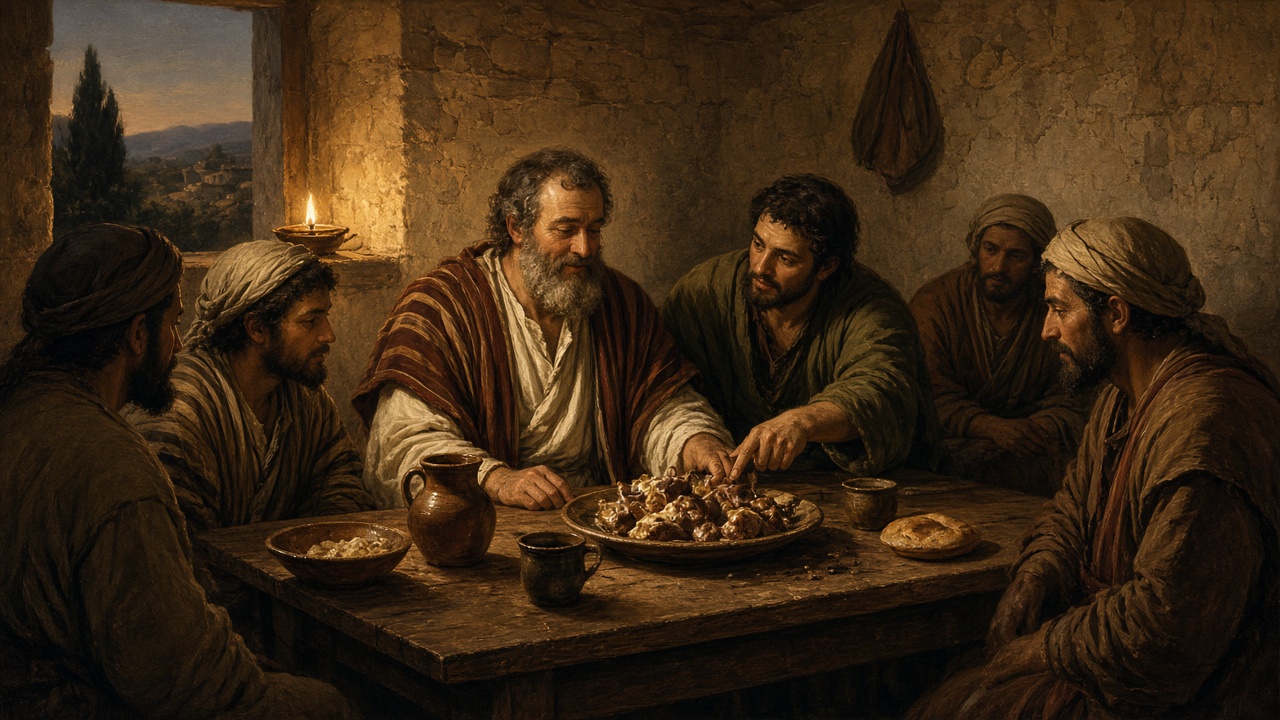
- He calls the cup of blessing and the bread that is broken a participation in the blood and body of Christ, and says pagan sacrifices are offered to demons, not to God, so the two tables cannot be shared. Food sold in the meat market may be eaten without raising questions of conscience, for "The earth is the Lord's, and the fullness thereof," but if someone says it was offered to idols, it should be refused for that person's conscience.Sources: the Bible text itself
Notes written with AI assistance from open sources (Theographic Bible Metadata, CC BY-SA 4.0; Easton’s Bible Dictionary, public domain) and reviewed before publishing.
Credits and license for this translation
Bigu a tipan: I mahusay a baheta para ta panahun tam
New Testament in Agta, Casiguran Dumagat
copyright © 1979 Wycliffe Bible Translators, Inc.
Language: Casiguran Dumagat Agta (Agta, Casiguran Dumagat)
Translation by: Wycliffe Bible Translators
Contributor: Wycliffe Bible Translators, Inc.
Copyright Information
© 1979, Wycliffe Bible Translators, Inc. All rights reserved.
This translation text is made available to you under the
terms of the Creative Commons License: Attribution-Noncommercial-No Derivative Works.
( http://creativecommons.org/licenses/by-nc-nd/3.0/ )
In addition, you have permission to port the text to different file formats, as long as you
do not change any of the text or punctuation of the Bible.
You may share, copy, distribute, transmit, and extract portions
or quotations from this work, provided that you include the above copyright
information:
You must give Attribution to the work.
You do not sell this work for a profit.
You do not make any derivative works that change any of the actual words or punctuation of the Scriptures.
Permissions beyond the scope of this license may be
available if you contact
us with your request.
The New Testament
in Agta, Casiguran Dumagat
© 1979, Wycliffe Bible Translators, Inc. All rights reserved.
This translation is made available to you under the terms of the
Creative Commons Attribution-Noncommercial-No Derivatives license 4.0.
You may share and redistribute this Bible translation or extracts from it in any format, provided that:
You include the above copyright and source information.
You do not sell this work for a profit.
You do not change any of the words or punctuation of the Scriptures.
Pictures included with Scriptures and other documents on this site are licensed just for use with those Scriptures and documents.
For other uses, please contact the respective copyright owners.
2015-03-17
Source: http://ebible.org/dgc/ · eBible.org