Jeremiah 47
Textbibel von Kautzsch und Weizsäcker · Tap a verse to see its cross-references.
Ausspruch gegen Philistäa.
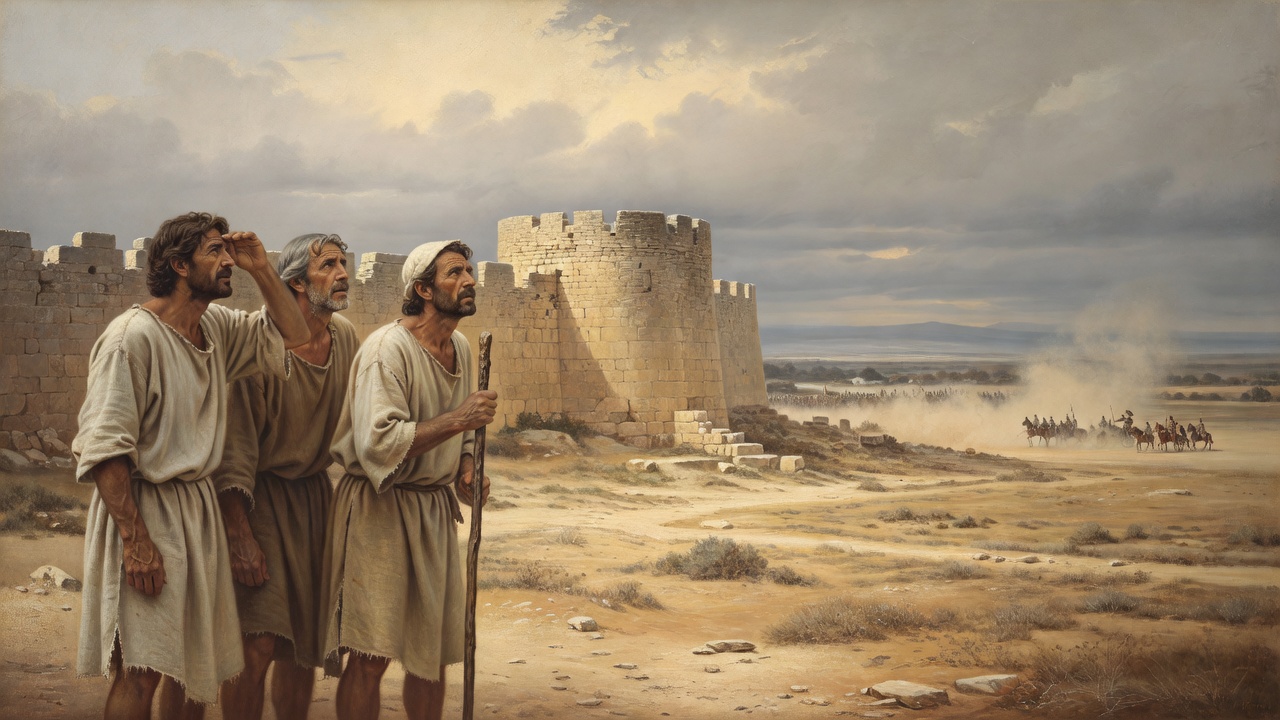
1Was als Wort Jahwes an den Propheten Jeremia erging in betreff der Philister, bevor der Pharao Gaza überwand. 2So spricht Jahwe: Schon fluten Wasser von Norden heran und werden zum überschwemmenden Bach; sie überschwemmen das Land und was es erfüllt, die Städte und die darin wohnen, daß die Menschen laut schreien, und alle Bewohner des Landes heulen. 3Ob des gedröhns vom Aufstampfen der Hufe seiner Hengste, ob des gerassels seiner Wagen, des Getöses seiner Räder, sehen sich Väter nicht nach ihren Kindern um, weil ihre Hände kraftlos geworden, 4wegen des tags, der da angebrochen ist, daß er ganz Philistäa verwüste, daß er Tyrus und Sidon jeden noch übriggebliebenen helfer vertilge. Denn Jahwe will Philistäa verwüsten, den Überrest der Küste Kaphtor. 5Kahlheit ist über Gaza gekommen, vernichtet ist Askalon: Du Überrest der Enakiter, wie lange willst du dir Einritzungen machen? 6Ha! du Schwert Jahwes, wie lange willst du rastlos sein? Zieh' dich zurück in deine Scheide! Beruhige dich und bleibe still! 7Wie sollte es rasten, hat doch Jahwe es beordert? Nach Askalon und nach dem Gestade des Meers, - dorthin hat er es bestellt!
Did you know?
Judgment on the Philistines
- Jeremiah refers to the Philistines as the remnant from the coasts of Caphtor. Biblical traditions identify Caphtor as the place of origin of the Philistines, a location widely associated by scholars with Crete or parts of the eastern Mediterranean coast.Sources: the Bible text itself · Caphtor
- The chapter directs its warnings against Gaza and Ashkelon, two of the five prominent Philistine cities along the Mediterranean coast. Both were ancient centers known for their strategic position and trade links connecting Egypt and the surrounding regions.Sources: the Bible text itself · Gaza · Ashkelon
- The prophecy notes that the coming destruction would cut off every remaining ally from Tyre and Sidon. These two major Phoenician ports to the north were key maritime centers whose interests were closely intertwined with the coastal region.Sources: the Bible text itself · Tyre · Sidon
Notes written with AI assistance from open sources (Theographic Bible Metadata, CC BY-SA 4.0; Easton’s Bible Dictionary, public domain) and reviewed before publishing.
Places in this chapter
- Gaza · Today: Tell Harube · 31.504, 34.464 · verses 1, 5
- Sidon · Today: Sandikli archaeological site in Sidon · 33.561, 35.372 · verse 4
- Tyre · 33.271, 35.196 · verse 4
- Ashkelon · Today: Tel Ashkelon · 31.664, 34.546 · verses 5, 7
- Great Sea · Today: Mediterranean Sea · 31.805, 34.170 · verse 5
- Philistia · 31.664, 34.546 · verse 5
Only places identified with high confidence are shown (90% or more according to the scholarly sources compiled by OpenBible). Period map: DARE (Digital Atlas of the Roman Empire), CC BY 4.0; modern map: © OpenStreetMap contributors; places: OpenBible.info (CC BY 4.0).
Credits and license for this translation
Textbibel von Kautzsch und Weizsäcker
The Holy Bible in German, translation by Kautzsch und Weizsäcker 1906
Public Domain
Language: Deutsch (German, Standard)
Dieser Textbibel wird Ihnen mit freundlicher Genehmigung von eBible.org zur Verfügung gestellt, mit der Hilfe unserer Partner, die für den Erhalt unserer Dienste spenden.
This Public Domain Bible text is provided to you courtesy of eBible.org with help from our partners who donate to keep our servers and services running.
Quelle: Textbibel.de (Hans J. Herbst Mitarbeit bei der Digitalisierung) ist frei!
2025-08-30
Source: http://ebible.org/deutkw/ · eBible.org