Psalms 48
Darby Unrevidierte Elberfelder · Tap a verse to see its cross-references.
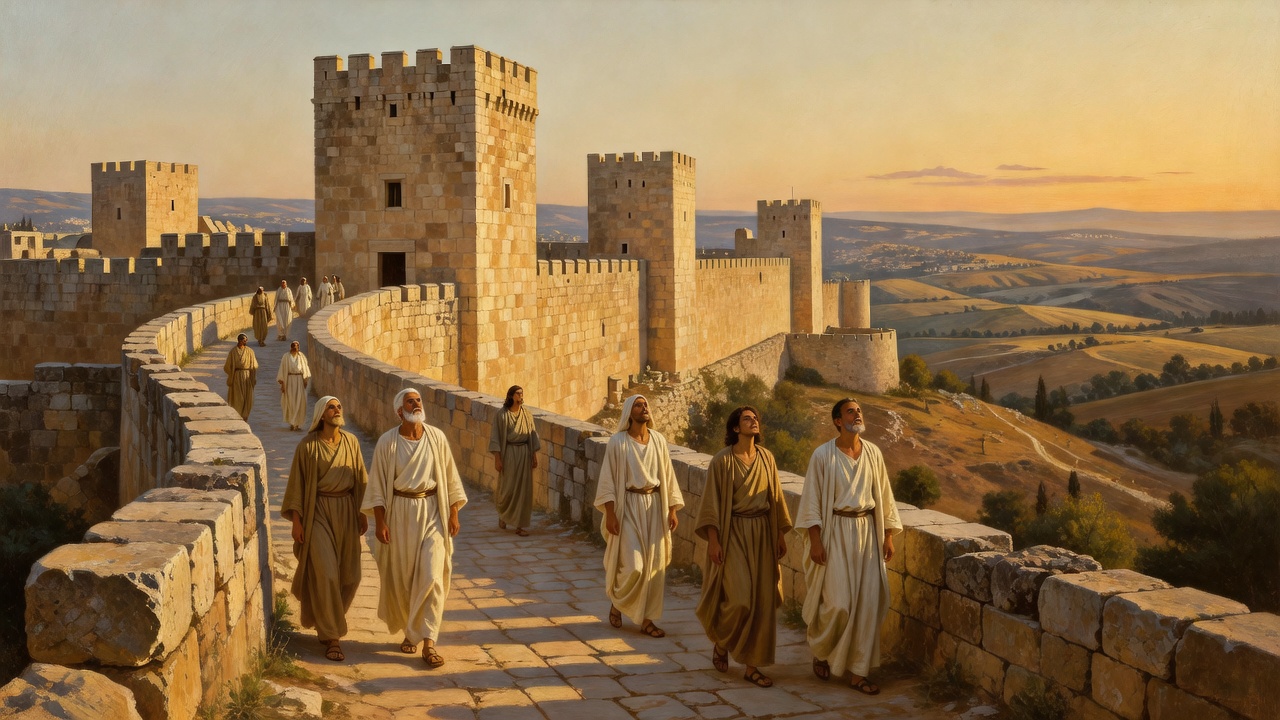
1Ein Lied, ein Psalm. Von den Söhnen Korahs. Groß ist Jehova und sehr zu loben in der Stadt unseres Gottes auf seinem heiligen Berge. 2Schön ragt empor, eine Freude der ganzen Erde, der Berg Zion, an der Nordseite, die Stadt des großen Königs. 3Gott ist bekannt in ihren Palästen als eine hohe Feste. 4Denn siehe, die Könige hatten sich versammelt, waren herangezogen allesamt. 5Sie sahen, da erstaunten sie; sie wurden bestürzt, flohen ängstlich hinweg. 6Beben ergriff sie daselbst, Angst, der Gebärenden gleich. 7Durch den Ostwind zertrümmertest du die Tarsisschiffe. 8Wie wir gehört hatten, also haben wir es gesehen in der Stadt Jehovas der Heerscharen, in der Stadt unseres Gottes: Gott wird sie befestigen bis in Ewigkeit. (Sela.) 9Wir haben gedacht, o Gott, an deine Güte, im Innern deines Tempels. 10Wie dein Name, Gott, also ist dein Lob bis an die Enden der Erde; mit Gerechtigkeit ist gefüllt deine Rechte. 11Es freue sich der Berg Zion, es mögen frohlocken die Töchter Judas um deiner Gerichte willen! 12Umgehet Zion und umkreiset es, zählet seine Türme; 13betrachtet genau seine Wälle, mustert seine Paläste, damit ihr's erzählet dem künftigen Geschlecht! 14Denn dieser Gott ist unser Gott immer und ewiglich! Er wird uns leiten bis an den Tod.
Did you know?
Zion, the City of the Great King
- Mount Zion, originally the fortified southeastern hill of Jerusalem captured by David from the Jebusites, became known as the City of David and the site of his citadel. In Psalm 48, it is celebrated as God's holy mountain, elevated and fortified against advancing enemy kings.Sources: the Bible text itself · Mount Zion · Zion
- The psalm depicts God's power shattering enemy forces like an east wind wrecking the ships of Tarshish. Many scholars identify Tarshish with a distant Phoenician trading port in southwestern Spain, while other ancient traditions proposed locations such as Carthage or ports in the east.Sources: the Bible text itself · Tarshish
- Worshippers are invited to walk around the perimeter of Zion to inspect its ramparts, count its towers, and view its citadels. This survey of the city's defenses was meant to be recounted to future generations as a witness of God's steadfast protection.Sources: the Bible text itself
Notes written with AI assistance from open sources (Theographic Bible Metadata, CC BY-SA 4.0; Easton’s Bible Dictionary, public domain) and reviewed before publishing.
Places in this chapter
- Mount Zion · 31.772, 35.229 · verses 2, 11
- Zaphon · Today: Jebel Aqra · 35.953, 35.969 · verse 2
- Jerusalem · 31.777, 35.234 · verse 3
- Zion · Today: Jerusalem · 31.777, 35.234 · verse 12
Only places identified with high confidence are shown (90% or more according to the scholarly sources compiled by OpenBible). Period map: DARE (Digital Atlas of the Roman Empire), CC BY 4.0; modern map: © OpenStreetMap contributors; places: OpenBible.info (CC BY 4.0).
Credits and license for this translation
Darby Unrevidierte Elberfelder
The Holy Bible in German, Unrevised Elberfelder 1905
Public Domain
Language: Deutsch (German, Standard)
Translation by: Julius Anton von Poseck, Carl Brockhaus, and John Nelson Darby
https://de.wikipedia.org/wiki/Elberfelder_Bibel
Diese Bibel ist bei eBible.org verfügbar.
2023-09-19
Source: http://ebible.org/deuelo/ · eBible.org