Jeremiah 47
Darby Unrevidierte Elberfelder · Tap a verse to see its cross-references.
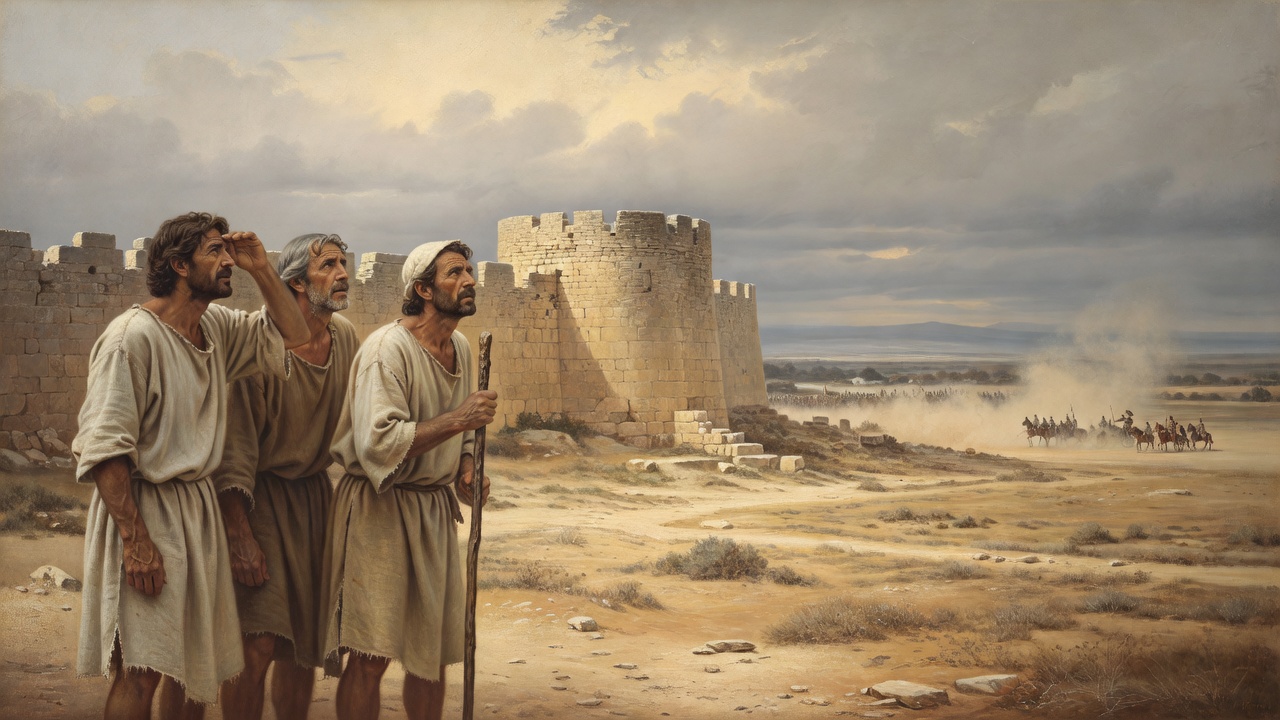
1Das Wort Jehovas, welches zu Jeremia, dem Propheten, geschah über die Philister, ehe der Pharao Gasa schlug. 2So spricht Jehova: Siehe, Wasser steigen herauf von Norden her und werden zu einem überschwemmenden Wildbach; und sie überschwemmen das Land und seine Fülle, die Städte und ihre Bewohner. Und es schreien die Menschen, und alle Bewohner des Landes heulen, 3vor dem Schalle des Stampfens der Hufe seiner starken Rosse, vor dem Getöse seiner Wagen, dem Gerassel seiner Räder, Väter sehen sich nicht um nach den Söhnen vor Erschlaffung der Hände- 4wegen des Tages, der da kommt, um alle Philister zu zerstören und für Tyrus und Zidon jeden hilfebringenden Überrest zu vertilgen. Denn Jehova zerstört die Philister, den Überrest der Insel Kaphtor. 5Kahlheit ist über Gasa gekommen, vernichtet ist Askalon, der Überrest ihres Tales. Wie lange willst du dich ritzen? - 6Wehe! Schwert Jehovas, wie lange willst du nicht rasten? Fahre zurück in deine Scheide, halte dich ruhig und still! 7Wie sollte es rasten, da doch Jehova ihm geboten hat? Gegen Askalon und gegen das Gestade des Meeres, dorthin hat er es bestellt.
Did you know?
Judgment on the Philistines
- Jeremiah refers to the Philistines as the remnant from the coasts of Caphtor. Biblical traditions identify Caphtor as the place of origin of the Philistines, a location widely associated by scholars with Crete or parts of the eastern Mediterranean coast.Sources: the Bible text itself · Caphtor
- The chapter directs its warnings against Gaza and Ashkelon, two of the five prominent Philistine cities along the Mediterranean coast. Both were ancient centers known for their strategic position and trade links connecting Egypt and the surrounding regions.Sources: the Bible text itself · Gaza · Ashkelon
- The prophecy notes that the coming destruction would cut off every remaining ally from Tyre and Sidon. These two major Phoenician ports to the north were key maritime centers whose interests were closely intertwined with the coastal region.Sources: the Bible text itself · Tyre · Sidon
Notes written with AI assistance from open sources (Theographic Bible Metadata, CC BY-SA 4.0; Easton’s Bible Dictionary, public domain) and reviewed before publishing.
Places in this chapter
- Gaza · Today: Tell Harube · 31.504, 34.464 · verses 1, 5
- Sidon · Today: Sandikli archaeological site in Sidon · 33.561, 35.372 · verse 4
- Tyre · 33.271, 35.196 · verse 4
- Ashkelon · Today: Tel Ashkelon · 31.664, 34.546 · verses 5, 7
- Great Sea · Today: Mediterranean Sea · 31.805, 34.170 · verse 5
- Philistia · 31.664, 34.546 · verse 5
Only places identified with high confidence are shown (90% or more according to the scholarly sources compiled by OpenBible). Period map: DARE (Digital Atlas of the Roman Empire), CC BY 4.0; modern map: © OpenStreetMap contributors; places: OpenBible.info (CC BY 4.0).
Credits and license for this translation
Darby Unrevidierte Elberfelder
The Holy Bible in German, Unrevised Elberfelder 1905
Public Domain
Language: Deutsch (German, Standard)
Translation by: Julius Anton von Poseck, Carl Brockhaus, and John Nelson Darby
https://de.wikipedia.org/wiki/Elberfelder_Bibel
Diese Bibel ist bei eBible.org verfügbar.
2023-09-19
Source: http://ebible.org/deuelo/ · eBible.org