Isaiah 15
Darby Unrevidierte Elberfelder · Tap a verse to see its cross-references.
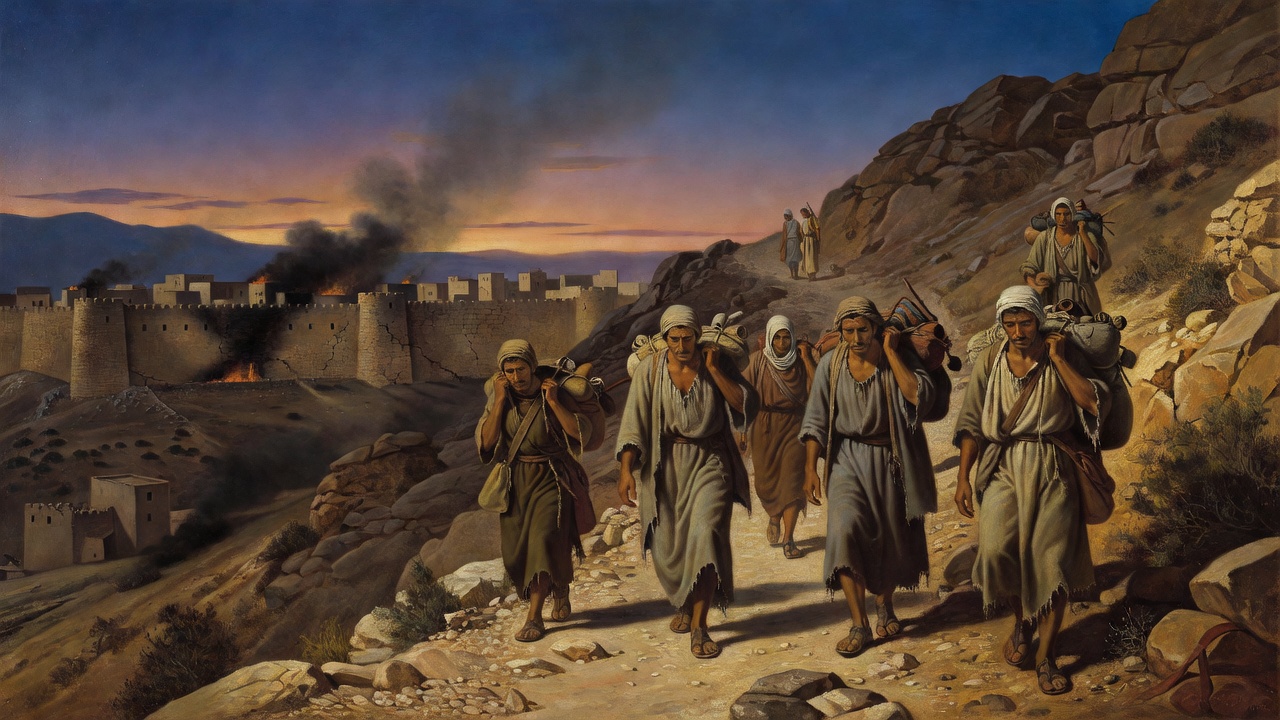
1Ausspruch über Moab. Denn über Nacht ist Ar-Moab verwüstet, vernichtet; denn über Nacht ist Kir-Moab verwüstet, vernichtet. 2Man steigt zum Götzentempel hinauf, und nach Dibon auf die Höhen, um zu weinen; auf Nebo und auf Medeba jammert Moab; auf allen seinen Häuptern ist eine Glatze, jeder Bart ist abgeschoren. 3Auf seinen Gassen gürten sie sich Sacktuch um, auf seinen Dächern und auf seinen Märkten jammert alles, zerfließend in Tränen. 4Und Hesbon schreit und Elale; bis Jahaz wird ihre Stimme gehört. Darum schreien die Gerüsteten Moabs laut auf, seine Seele bebt in ihm. 5Mein Herz schreit über Moab, seine Flüchtlinge fliehen bis Zoar, bis Eglath-Schelischija. Denn die Anhöhe von Luchith steigt man mit Weinen hinauf; denn auf dem Wege nach Horonaim erhebt man Jammergeschrei. 6Denn die Wasser von Nimrim sollen zu Wüsten werden. Denn verdorrt ist das Gras, verschmachtet das Kraut; das Grün ist nicht mehr. 7Darum tragen sie was sie erübrigt haben und ihr Aufbewahrtes über den Weidenbach. 8Denn das Wehgeschrei hat die Runde gemacht in den Grenzen von Moab: bis Eglaim dringt sein Jammern, und bis Beer-Elim sein Jammern. 9Denn die Wasser Dimons sind voll von Blut; denn ich verhänge noch mehr Unheil über Dimon: einen Löwen über die Entronnenen Moabs und über den Überrest des Landes.
Did you know?
The Oracle Concerning Moab
- Moab was a territory situated east of the Dead Sea and the Jordan River, containing ancient settlements such as Ar, Kir, and Medeba. In this chapter, the prophet laments the sudden overnight destruction and wailing throughout these Moabite towns and high places.Sources: Moab · Medeba · the Bible text itself
- The chapter depicts traditional ancient mourning rituals practiced across the region in times of catastrophe. As grief overtakes the land, the people of Moab shave their heads, cut off their beards, and put on sackcloth while weeping publicly in the squares and on flat rooftops.Sources: the Bible text itself
- The city of Dibon, situated north of the Arnon River and east of the Dead Sea, is also identified as Dimon in Isaiah 15:9. The oracle vividly portrays the severity of the invasion by describing the waters of Dimon filled with blood while surviving refugees flee.Sources: Dibon · the Bible text itself
Notes written with AI assistance from open sources (Theographic Bible Metadata, CC BY-SA 4.0; Easton’s Bible Dictionary, public domain) and reviewed before publishing.
Places in this chapter
- Moab · Today: Moab 1 · 31.181, 35.701 · verses 1, 2, 4, 5, 8, 9
- Dibon · Today: Tall Dhiban · 31.502, 35.777 · verse 2
- Medeba · Today: Madaba · 31.716, 35.795 · verse 2
Only places identified with high confidence are shown (90% or more according to the scholarly sources compiled by OpenBible). Period map: DARE (Digital Atlas of the Roman Empire), CC BY 4.0; modern map: © OpenStreetMap contributors; places: OpenBible.info (CC BY 4.0).
Credits and license for this translation
Darby Unrevidierte Elberfelder
The Holy Bible in German, Unrevised Elberfelder 1905
Public Domain
Language: Deutsch (German, Standard)
Translation by: Julius Anton von Poseck, Carl Brockhaus, and John Nelson Darby
https://de.wikipedia.org/wiki/Elberfelder_Bibel
Diese Bibel ist bei eBible.org verfügbar.
2023-09-19
Source: http://ebible.org/deuelo/ · eBible.org