Hosea 6
Darby Unrevidierte Elberfelder · Tap a verse to see its cross-references.
1“Kommt und laßt uns zu Jehova umkehren; denn er hat zerrissen und wird uns heilen, er hat geschlagen und wird uns verbinden. 2Er wird uns nach zwei Tagen wieder beleben, am dritten Tage uns aufrichten; und so werden wir vor seinem Angesicht leben. 3So laßt uns Jehova erkennen, ja, laßt uns trachten nach seiner Erkenntnis! Sein Hervortreten ist sicher wie die Morgendämmerung; und er wird für uns kommen wie der Regen, wie der Spätregen die Erde benetzt.” 4Was soll ich dir tun, Ephraim, was soll ich dir tun, Juda, da eure Frömmigkeit wie die Morgenwolke ist und wie der Tau, der früh verschwindet? 5Darum habe ich sie behauen durch die Propheten, habe sie getötet durch die Worte meines Mundes; und mein Gericht geht hervor wie das Licht. 6Denn an Frömmigkeit habe ich Gefallen und nicht am Schlachtopfer, und an der Erkenntnis Gottes mehr als an Brandopfern. 7Sie aber haben den Bund übertreten wie Adam, haben dort treulos gegen mich gehandelt. 8Gilead ist eine Stadt von Übeltätern, voll Blutspuren. 9Und wie ein Straßenräuber auflauert, so die Rotte der Priester; sie morden auf dem Wege nach Sichem, ja, sie verüben Schandtat. 10Im Hause Israel habe ich Schauderhaftes gesehen: daselbst ist Ephraims Hurerei, Israel hat sich verunreinigt. 11Auch über dich, Juda, ist eine Ernte verhängt, wenn ich die Gefangenschaft meines Volkes wenden werde.
Did you know?
Fleeting Loyalty and True Devotion
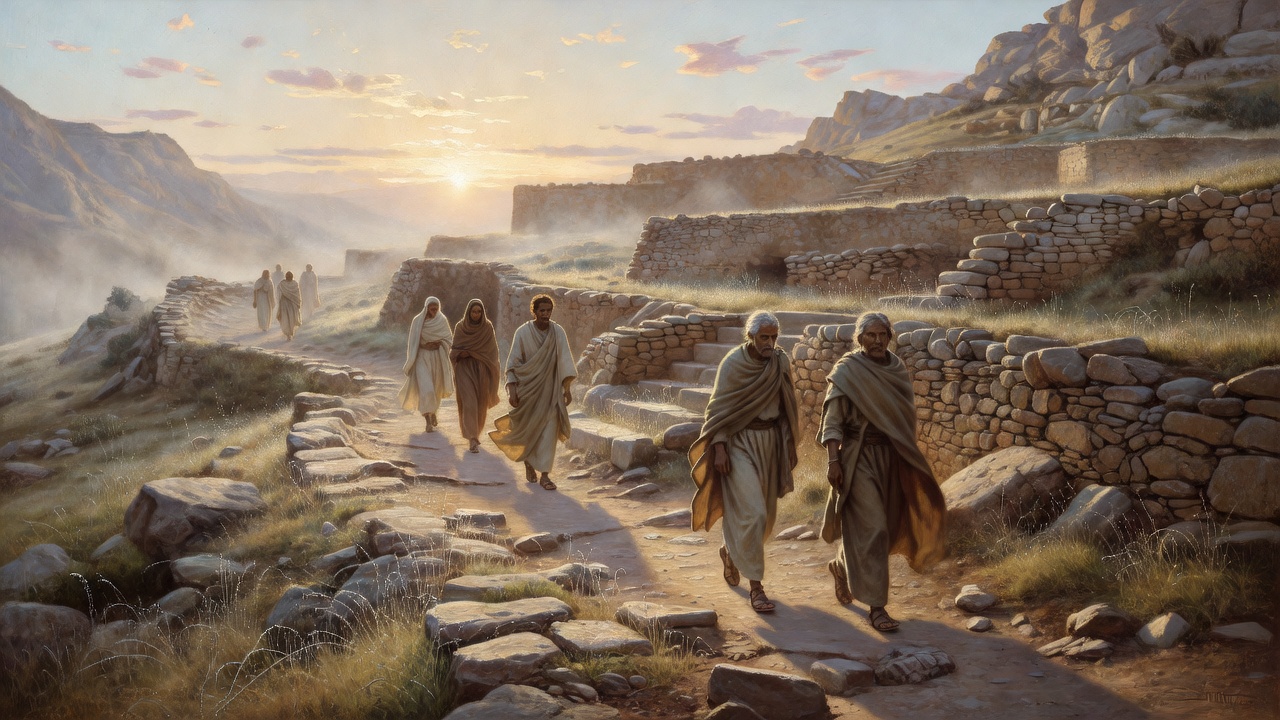
- In Hosea 6:6, the prophet proclaims that God values mercy and the knowledge of God above ritual animal sacrifices and burnt offerings, emphasizing heartfelt covenant faithfulness over mere religious formalities.Sources: the Bible text itself
- The prophetic text compares the loyalty of Ephraim and Judah to morning mist and vanishing dew; Ephraim, originally named after Joseph's son for double fruitfulness, is frequently used in the book to address the northern kingdom of Israel.Sources: the Bible text itself · Ephraim
- The chapter condemns lawlessness in Gilead, a mountainous region located east of the Jordan River, and accuses corrupt bands of priests of committing violent ambushes on travelers along the road toward Shechem.Sources: the Bible text itself · Gilead
Notes written with AI assistance from open sources (Theographic Bible Metadata, CC BY-SA 4.0; Easton’s Bible Dictionary, public domain) and reviewed before publishing.
Places in this chapter
- Shechem · Today: Tell Balatah · 32.214, 35.282 · verse 9
Only places identified with high confidence are shown (90% or more according to the scholarly sources compiled by OpenBible). Period map: DARE (Digital Atlas of the Roman Empire), CC BY 4.0; modern map: © OpenStreetMap contributors; places: OpenBible.info (CC BY 4.0).
Credits and license for this translation
Darby Unrevidierte Elberfelder
The Holy Bible in German, Unrevised Elberfelder 1905
Public Domain
Language: Deutsch (German, Standard)
Translation by: Julius Anton von Poseck, Carl Brockhaus, and John Nelson Darby
https://de.wikipedia.org/wiki/Elberfelder_Bibel
Diese Bibel ist bei eBible.org verfügbar.
2023-09-19
Source: http://ebible.org/deuelo/ · eBible.org