Job 17
Die Schlachter-Bibel 1951 · Tap a verse to see its cross-references.
1Mein Geist ist verstört, meine Tage laufen ab, Gräber warten meiner. 2Treibt man nicht Gespött mit mir und muß nicht mein Auge auf ihren bittren Mienen weilen? 3Setze doch einen ein, verbürge dich selbst für mich! Wer sollte sonst mir in die Hand geloben? 4Du hast ihre Herzen der Einsicht verschlossen, darum wirst du sie nicht obsiegen lassen. 5Wer Freunde der Plünderung preisgibt, dessen Kinder werden sich schämen müssen. 6Man stellt mich den Leuten zum Sprichwort hin, und ich muß sein wie einer, dem man ins Angesicht speit. 7Mein Augenlicht erlischt vor Gram, und alle meine Glieder sind wie ein Schatten. 8Die Gerechten entsetzen sich darüber, und der Unschuldige ist über den Ruchlosen aufgebracht. 9Aber der Gerechte hält fest an seinem Wege, und wer reine Hände hat, dessen Kraft nimmt zu. 10Ihr dagegen, kehrt nur alle wieder um und gehet [heim], ich finde doch keinen Weisen unter euch. 11Meine Tage sind dahin; meine Pläne, die mein Herz besessen hat, sind abgeschnitten. 12Die Nacht machen sie zum Tag; das Licht sei nahe, nicht die Finsternis! 13da ich doch erwarte, daß der Scheol meine Wohnung wird und ich mein Lager in der Finsternis aufschlagen muß; 14da ich zur Grube sagen muß: Du bist mein Vater! und zu den Würmern: Ihr seid meine Mutter und meine Schwestern! 15Wo ist da noch Hoffnung für mich, und wer wird meine Hoffnung [verwirklicht] sehen? 16Zu des Scheols Pforten fährt sie hinab, wenn einmal alles miteinander im Staube ruht!
Did you know?
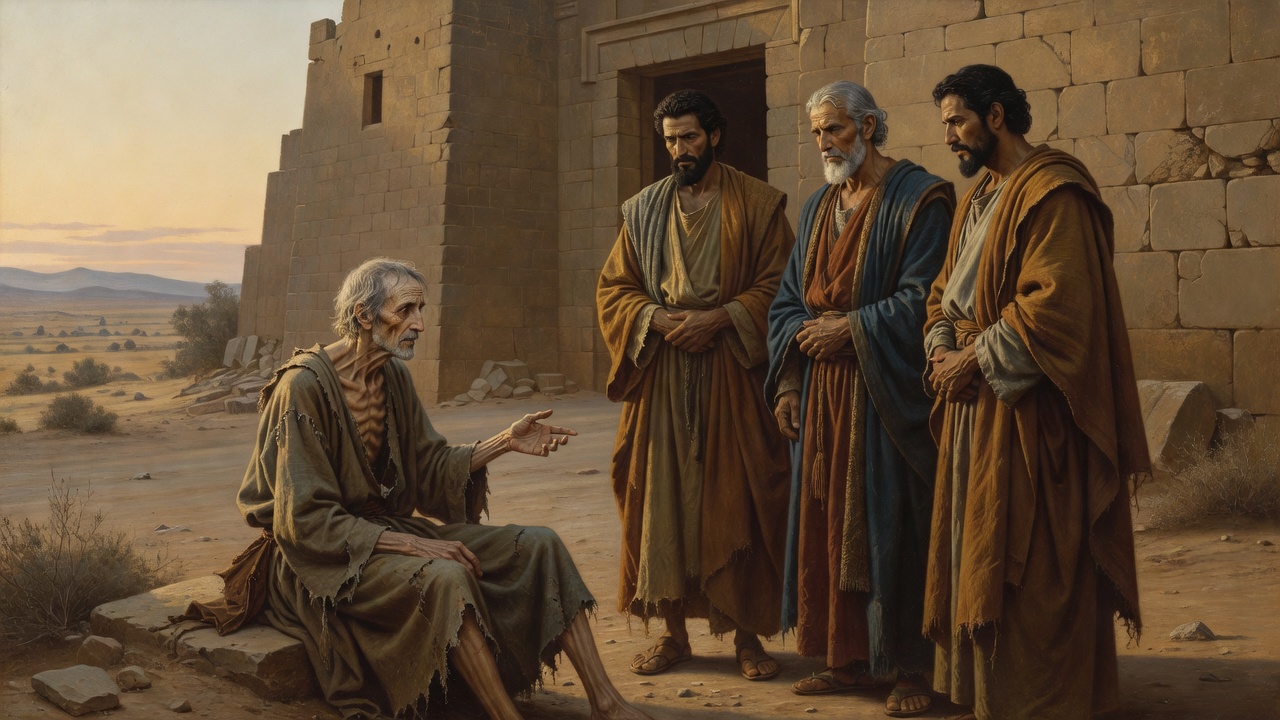
Job's Despair and the Prospect of the Grave
- Job appeals directly to God to act as his pledge or guarantor. In ancient legal practice, a guarantor assumed responsibility for someone accused or indebted, and Job found no human ally willing or able to defend him.Sources: the Bible text itself
- Job describes himself as becoming a byword among the people, a status where an individual's suffering turns into an object of public mockery, contempt, and proverb-like warning.Sources: the Bible text itself
- In his grief, Job speaks of the realm of the dead (Sheol) and the grave as his only remaining home, metaphorically adopting the pit and worms as his closest family members.Sources: the Bible text itself
Notes written with AI assistance from open sources (Theographic Bible Metadata, CC BY-SA 4.0; Easton’s Bible Dictionary, public domain) and reviewed before publishing.
Credits and license for this translation
Die Schlachter-Bibel 1951
The Holy Bible in German, Schlachter 1951 version
copyright © 1951 Genfer Bibelgeschellschaft (Geneva Bible Society)
Language: Deutsch (German, Standard)
Translation by: Franz-Eugen Schlachter
Contributor: Genfer Bibelgesellschaft
Die Heilige Schrift des Alten und Neuen Testaments nach dem Urtext Übersetzt von Franz Eugen Schlachter. Neue Überarbeitung 1951 durch Genfer Bibelgesellschaft.
This translation is made available to you under the terms of the
Creative Commons Attribution license 4.0.
You may share and redistribute this Bible translation or extracts from it in any format, provided that:
You include the above copyright and source information.
If you make any changes to the text, you must indicate that you did so in a way that makes it clear that the original licensor is not necessarily endorsing your changes.
Pictures included with Scriptures and other documents on this site are licensed just for use with those Scriptures and documents.
For other uses, please contact the respective copyright owners.
Note that in addition to the rules above, revising and adapting God's Word involves a great responsibility to be true to God's Word. See Revelation 22:18-19.
2022-03-30
Source: http://ebible.org/deu1951/ · eBible.org