Amos 6
Die Schlachter-Bibel 1951 · Tap a verse to see its cross-references.
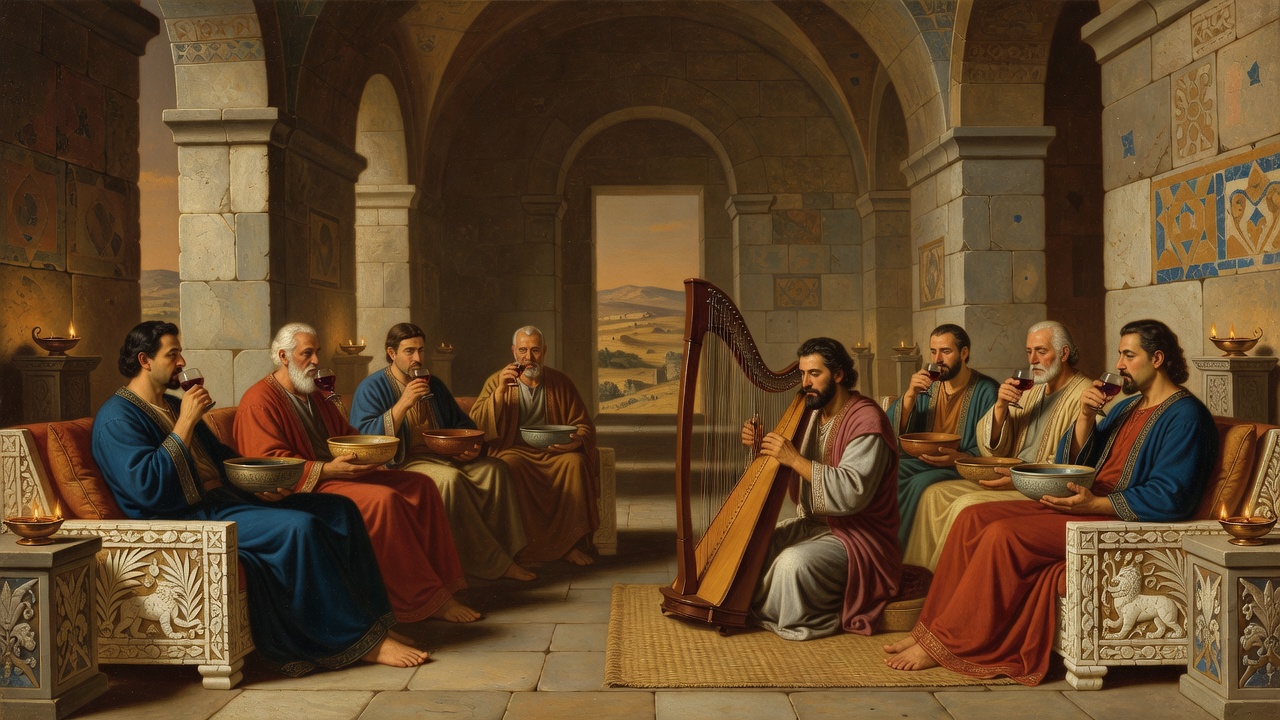
1Wehe den Sorglosen zu Zion und den Sichern auf dem Berge Samaria, den Vornehmsten des ersten der Völker, zu denen das Haus Israel kommt! 2Geht hinüber nach Kalne und seht es euch an und kommt dann von dort nach dem großen Hamat; steigt auch hinab nach Gat im Philisterland! Seid ihr besser als diese Königreiche, oder ist ihr Gebiet größer als euer Gebiet? 3Ihr meinet, der böse Tag sei fern und rücket den Thron der Gewalttat heran! 4Ihr schlafet auf elfenbeinernen Betten und strecket euch aus auf euren Polstern; ihr verzehret Lämmer von der Herde weg und Kälber frisch aus dem Stall! 5Sie phantasieren auf der Harfe und dichten sich selbst Lieder wie David! 6Sie trinken Wein aus Schalen und salben sich mit dem besten Öl; aber um den Schaden Josephs kümmern sie sich nicht! 7Darum sollen sie nun an der Spitze der Gefangenen in die Verbannung wandern, und das Jauchzen der Schlemmer wird verstummen. 8Gott, der HERR, hat geschworen: So wahr ich lebe, spricht der HERR, der Gott der Heerscharen, ich verabscheue Jakobs Stolz und hasse seine Paläste; darum gebe ich die Stadt preis, samt allem, was darin ist. 9Und wenn gleich zehn Männer in einem Hause übrigbleiben, so sollen sie sterben. 10Und heben dann sein Oheim und sein Leichenverbrenner den Toten auf, um die Gebeine aus dem Hause zu schaffen, und fragt er den drinnen im Hause: «Ist noch jemand bei dir?» so wird er antworten: «Niemand mehr!» Dann wird er sagen: «Still! Denn der Name des HERRN soll nicht erwähnt werden!» 11Denn siehe, der HERR wird Befehl geben, daß das große Haus in Trümmer gelegt und das kleine Haus in Stücke geschlagen werde. 12Können Rosse auf Felsen rennen, oder kann man mit Rindern das Meer pflügen, da ihr das Recht in Gift verwandelt habt und die Frucht der Gerechtigkeit in Wermut, 13und da ihr euch dessen freuet, was nicht der Rede wert ist, und saget: «Haben wir nicht mit eigener Kraft uns Hörner verschafft?» 14Doch seht, ich erwecke wider euch, Haus Israel (spricht der HERR, der Gott der Heerscharen), ein Volk, das euch bedrängen wird von da, wo es nach Hamat geht, bis an den Bach der Wüste.
Did you know?
Complacency and Impending Exile
- Amos addresses the ruling elite who felt secure in both Zion, the fortified hill of Jerusalem, and Mount Samaria, the capital of the northern kingdom built on an elevated summit by King Omri. Despite the natural defenses and prestige of these cities, their leaders are warned that their ease and overconfidence would end in captivity.Sources: Zion · Samaria · the Bible text itself
- The prophet challenges Israel to look at renowned foreign cities such as Calneh near the Euphrates, Hamath on the Orontes in Upper Syria, and the Philistine stronghold of Gath. These neighboring powers were neither smaller nor less protected, yet they could not escape destruction.Sources: Calneh · Hamath · Gath · the Bible text itself
- Amos criticizes the aristocracy for indulging in extravagant banquets, resting on beds inlaid with ivory, and improvising music on harps like David, all while ignoring the impending ruin of Joseph. The name Joseph here designates the northern tribes of Israel, whose moral decay and social injustice were neglected by their wealthy leaders.Sources: David · Joseph (son of Jacob) · the Bible text itself
Notes written with AI assistance from open sources (Theographic Bible Metadata, CC BY-SA 4.0; Easton’s Bible Dictionary, public domain) and reviewed before publishing.
Places in this chapter
- Samaria · 32.276, 35.195 · verses 1, 8
- Zion · Today: Jerusalem · 31.777, 35.234 · verse 1
- Hamath · Today: Hama · 35.136, 36.750 · verse 2
- Philistia · 31.664, 34.546 · verse 2
Only places identified with high confidence are shown (90% or more according to the scholarly sources compiled by OpenBible). Period map: DARE (Digital Atlas of the Roman Empire), CC BY 4.0; modern map: © OpenStreetMap contributors; places: OpenBible.info (CC BY 4.0).
Credits and license for this translation
Die Schlachter-Bibel 1951
The Holy Bible in German, Schlachter 1951 version
copyright © 1951 Genfer Bibelgeschellschaft (Geneva Bible Society)
Language: Deutsch (German, Standard)
Translation by: Franz-Eugen Schlachter
Contributor: Genfer Bibelgesellschaft
Die Heilige Schrift des Alten und Neuen Testaments nach dem Urtext Übersetzt von Franz Eugen Schlachter. Neue Überarbeitung 1951 durch Genfer Bibelgesellschaft.
This translation is made available to you under the terms of the
Creative Commons Attribution license 4.0.
You may share and redistribute this Bible translation or extracts from it in any format, provided that:
You include the above copyright and source information.
If you make any changes to the text, you must indicate that you did so in a way that makes it clear that the original licensor is not necessarily endorsing your changes.
Pictures included with Scriptures and other documents on this site are licensed just for use with those Scriptures and documents.
For other uses, please contact the respective copyright owners.
Note that in addition to the rules above, revising and adapting God's Word involves a great responsibility to be true to God's Word. See Revelation 22:18-19.
2022-03-30
Source: http://ebible.org/deu1951/ · eBible.org