1 Chronicles 24
Die Schlachter-Bibel 1951 · Tap a verse to see its cross-references.
1Folgendes sind die Abteilungen der Söhne Aarons: Die Söhne Aarons waren: Nadab und Abihu, Eleasar und Itamar. 2Aber Nadab und Abihu starben vor dem Angesicht ihres Vaters und hatten keine Kinder; und Eleasar und Itamar wurden Priester. 3Und David teilte sie, zusammen mit Zadok, aus den Söhnen Eleasars, und mit Achimelech, aus den Söhnen Itamars, in ihre Dienstklassen ein. 4Es fand sich aber, daß die Söhne Eleasars an Familienhäuptern zahlreicher waren als die Söhne Itamars. Daher teilte man sie so ein, daß sechzehn Familienhäupter auf die Söhne Eleasars, und acht auf die Söhne Itamars kamen. 5Und zwar teilte man sie durchs Los ein, die einen wie die andern, denn es gab sowohl unter den Söhnen Eleasars als auch unter den Söhnen Itamars «Fürsten des Heiligtums» und «Fürsten Gottes». 6Und Semaja, der Schreiber, der Sohn Nataneels, aus den Leviten, schrieb sie auf vor dem König und vor den Obersten und vor Zadok, dem Priester, und vor Achimelech, dem Sohn Abjatars, und vor den Familienhäuptern unter den Priestern und Leviten; je ein Vaterhaus ward ausgelost von Eleasar und je eines ward ausgelost von Itamar. 7Und das erste Los fiel auf Jojarib, das zweite auf Jedaja, 8das dritte auf Harim, das vierte auf Seorim, 9das fünfte auf Malchija, das sechste auf Mijamin, 10das siebente auf Hakkoz, das achte auf Abija, 11das neunte auf Jesua, das zehnte auf Sechanja, 12das elfte auf Eljaschib, das zwölfte auf Jakim, 13das dreizehnte auf Huppa, das vierzehnte auf Jeschebab, 14das fünfzehnte auf Bilga, das sechzehnte auf Immer, 15das siebzehnte auf Hesir, das achtzehnte auf Happizaz. 16Das neunzehnte auf Petachja, das zwanzigste auf Jecheskel, 17das einundzwanzigste auf Jachin, das zweiundzwanzigste auf Gamul, 18das dreiundzwanzigste auf Delaja, das vierundzwanzigste auf Maasja. 19Das ist die Reihenfolge ihres Dienstes, nach welcher sie in das Haus des HERRN zu gehen haben nach ihrer Ordnung, [gegeben] durch ihren Vater Aaron, wie ihm der HERR, der Gott Israels, geboten hatte. 20Aber betreffs der übrigen Söhne Levis war unter den Söhnen Amrams Schubael. Unter den Söhnen Schubaels war Jechdeja. 21Von Rechabja: Unter den Söhnen Rechabjas war Jischia das Oberhaupt. 22Unter den Jizharitern war Selomot. Unter den Söhnen Selomots war Jachat. 23Die Söhne [Hebrons] waren: Jeria, das Oberhaupt; Amarja, der zweite; Jahasiel, der dritte; Jekameam, der vierte. 24Die Söhne Ussiels waren: Micha. Unter den Söhnen Michas war Samir. 25Der Bruder Michas war Jischia. Unter den Söhnen Jischias war Sacharja. 26Die Söhne Meraris waren: Machli und Muschi. 27Die Söhne Jaasias: Beno, die Söhne Meraris von Jaasia waren: Beno, Soham, Sakkur und Ibri. 28Von Machli aber war Eleasar; und dieser hatte keine Söhne; 29von Kis: unter den Söhnen des Kis war Jerachmeel. 30Die Söhne Muschis waren: Machli, Eder und Jerimot. Das sind die Söhne der Leviten nach ihren Vaterhäusern. 31Und auch sie warfen Lose gleich wie ihre Brüder, die Söhne Aarons, vor dem König David und vor Zadok und Achimelech und vor den Familienhäuptern der Priester und Leviten, und zwar die Familienhäupter ganz gleich wie ihre jüngeren Brüder.
Did you know?
Organization of the Priests and Levites
- Because Aaron's two eldest sons, Nadab and Abihu, died without children after offering unauthorized fire, only the lines of Eleazar and Ithamar continued the priesthood. King David organized these descendants into twenty-four rotational divisions, sixteen from Eleazar and eight from Ithamar, to manage sanctuary duties.Sources: the Bible text itself · Eleazar · Ithamar · Nadab
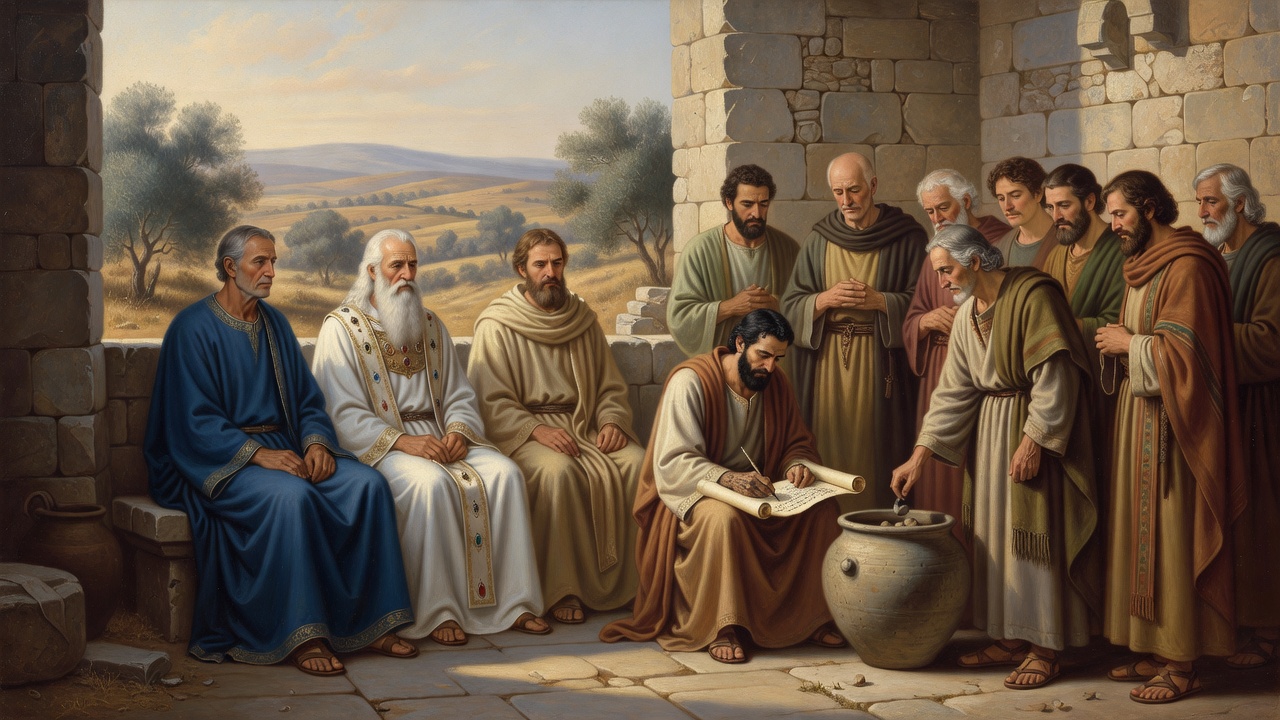
- To ensure fairness between the two ancestral lines, the order of service was determined by casting lots in the presence of King David, Zadok, and Ahimelech. The scribe Shemaiah, a Levite, recorded the name of each family as their lot was drawn.Sources: the Bible text itself · Zadok · Ahimelech
- The remaining Levite clans, including descendants of Kohath and Merari, were also assigned their responsibilities by casting lots. The selection was conducted without regard to age or rank, treating family heads and their younger brothers equally.Sources: the Bible text itself · Merari
Notes written with AI assistance from open sources (Theographic Bible Metadata, CC BY-SA 4.0; Easton’s Bible Dictionary, public domain) and reviewed before publishing.
Places in this chapter
- Holy Place · Today: on Mount Moriah · 31.778, 35.236 · verse 5
Only places identified with high confidence are shown (90% or more according to the scholarly sources compiled by OpenBible). Period map: DARE (Digital Atlas of the Roman Empire), CC BY 4.0; modern map: © OpenStreetMap contributors; places: OpenBible.info (CC BY 4.0).
Credits and license for this translation
Die Schlachter-Bibel 1951
The Holy Bible in German, Schlachter 1951 version
copyright © 1951 Genfer Bibelgeschellschaft (Geneva Bible Society)
Language: Deutsch (German, Standard)
Translation by: Franz-Eugen Schlachter
Contributor: Genfer Bibelgesellschaft
Die Heilige Schrift des Alten und Neuen Testaments nach dem Urtext Übersetzt von Franz Eugen Schlachter. Neue Überarbeitung 1951 durch Genfer Bibelgesellschaft.
This translation is made available to you under the terms of the
Creative Commons Attribution license 4.0.
You may share and redistribute this Bible translation or extracts from it in any format, provided that:
You include the above copyright and source information.
If you make any changes to the text, you must indicate that you did so in a way that makes it clear that the original licensor is not necessarily endorsing your changes.
Pictures included with Scriptures and other documents on this site are licensed just for use with those Scriptures and documents.
For other uses, please contact the respective copyright owners.
Note that in addition to the rules above, revising and adapting God's Word involves a great responsibility to be true to God's Word. See Revelation 22:18-19.
2022-03-30
Source: http://ebible.org/deu1951/ · eBible.org