Psalms 79
Lutherbibel 1912 · Tap a verse to see its cross-references.
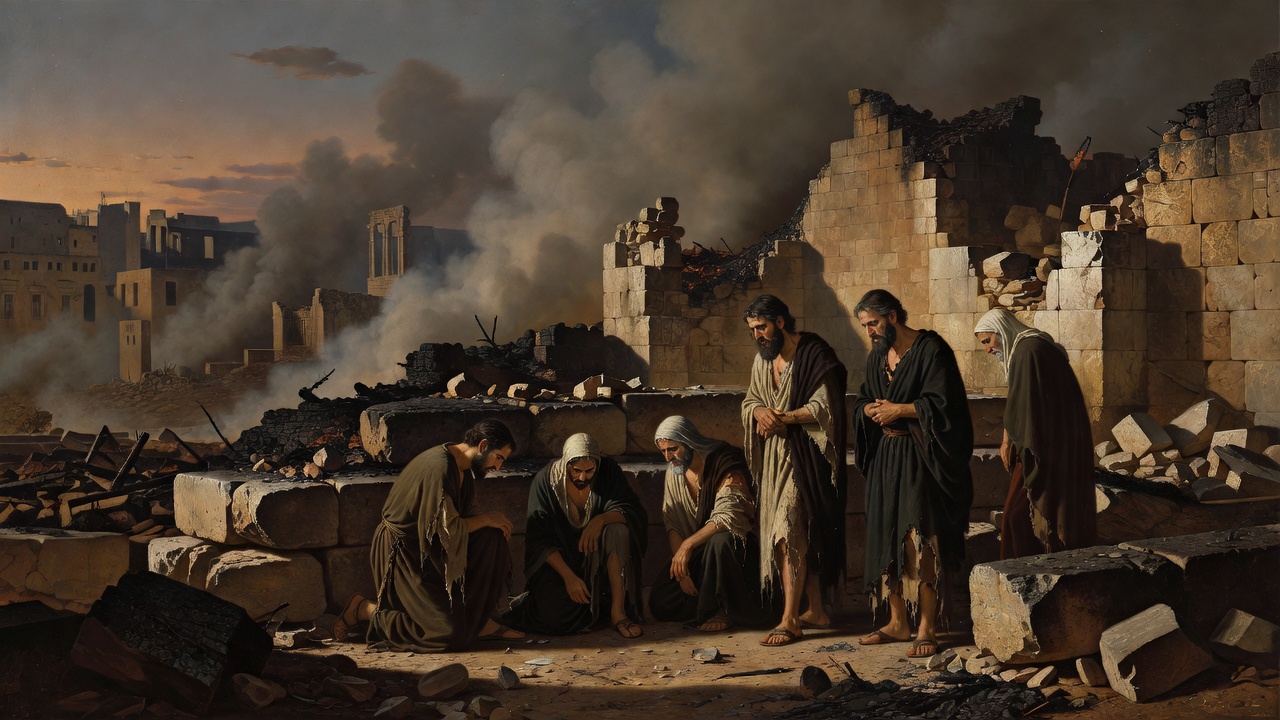
1Ein Psalm Asaphs. Gott, es sind Heiden in dein Erbe gefallen; die haben deinen heiligen Tempel verunreinigt und aus Jerusalem Steinhaufen gemacht.
2Sie haben die Leichname deiner Knechte den Vögeln zu fressen gegeben und das Fleisch deiner Heiligen den Tieren im Lande.
3Sie haben Blut vergossen um Jerusalem her wie Wasser; und war niemand, der begrub.
4Wir sind unsern Nachbarn eine Schmach geworden, ein Spott und Hohn denen, die um uns sind.
5HERR, wie lange willst du so gar zürnen und deinen Eifer wie Feuer brennen lassen?
6Schütte deinen Grimm auf die Heiden, die dich nicht kennen, und auf die Königreiche, die deinen Namen nicht anrufen.
7Denn sie haben Jakob aufgefressen und seine Häuser verwüstet.
8Gedenke nicht unsrer vorigen Missetaten; erbarme dich unser bald, denn wir sind sehr dünn geworden.
9Hilf du uns, Gott, unser Helfer, um deines Namens Ehre willen; errette uns und vergib uns unsre Sünden um deines Namens willen!
10Warum lässest du die Heiden sagen: “Wo ist nun ihr Gott?” Laß unter den Heiden vor unsern Augen kund werden die Rache des Blutes deiner Knechte, das vergossen ist.
11Laß vor dich kommen das Seufzen der Gefangenen; nach deinem großen Arm erhalte die Kinder des Todes
12und vergilt unsern Nachbarn siebenfältig in ihren Busen ihr Schmähen, damit sie dich, Herr, geschmäht haben.
13Wir aber, dein Volk und Schafe deiner Weide, werden dir danken ewiglich und verkündigen deinen Ruhm für und für.
Did you know?
A Lament over the Destruction of Jerusalem
- Psalm 79 is titled a psalm of Asaph, placing it among a collection of psalms (Psalms 50 and 73–83) associated with the Levite musician and seer Asaph. In the biblical record, the title may also refer to the sons of Asaph, a recognized guild of temple singers and poets.Sources: Asaph (Levite) · the Bible text itself
- The psalm laments the defilement of the holy temple, the destruction of Jerusalem into rubble, and the unburied bodies left throughout the city. Jerusalem, known as the holy city and a mountain fastness, is portrayed here as having suffered devastating invasion by surrounding nations.Sources: Jerusalem · the Bible text itself
- The poem calls upon God for help because foreign nations have devoured Jacob and devastated his homeland. In biblical tradition, the name of the patriarch Jacob is frequently used as a poetic collective term for his descendants and their shared homeland.Sources: Jacob (Israel) · the Bible text itself
Notes written with AI assistance from open sources (Theographic Bible Metadata, CC BY-SA 4.0; Easton’s Bible Dictionary, public domain) and reviewed before publishing.
Places in this chapter
Only places identified with high confidence are shown (90% or more according to the scholarly sources compiled by OpenBible). Period map: DARE (Digital Atlas of the Roman Empire), CC BY 4.0; modern map: © OpenStreetMap contributors; places: OpenBible.info (CC BY 4.0).
Credits and license for this translation
Lutherbibel 1912
The Holy Bible in German, Luther 1912
Public Domain
Language: Deutsch (German, Standard)
Translation by: Martin Luther
2025-12-29
Source: http://ebible.org/deu1912/ · eBible.org