Psalms 125
Lutherbibel 1912 · Tap a verse to see its cross-references.
1Ein Lied im Höhern Chor. Die auf den HERRN hoffen, die werden nicht fallen, sondern ewig bleiben wie der Berg Zion.
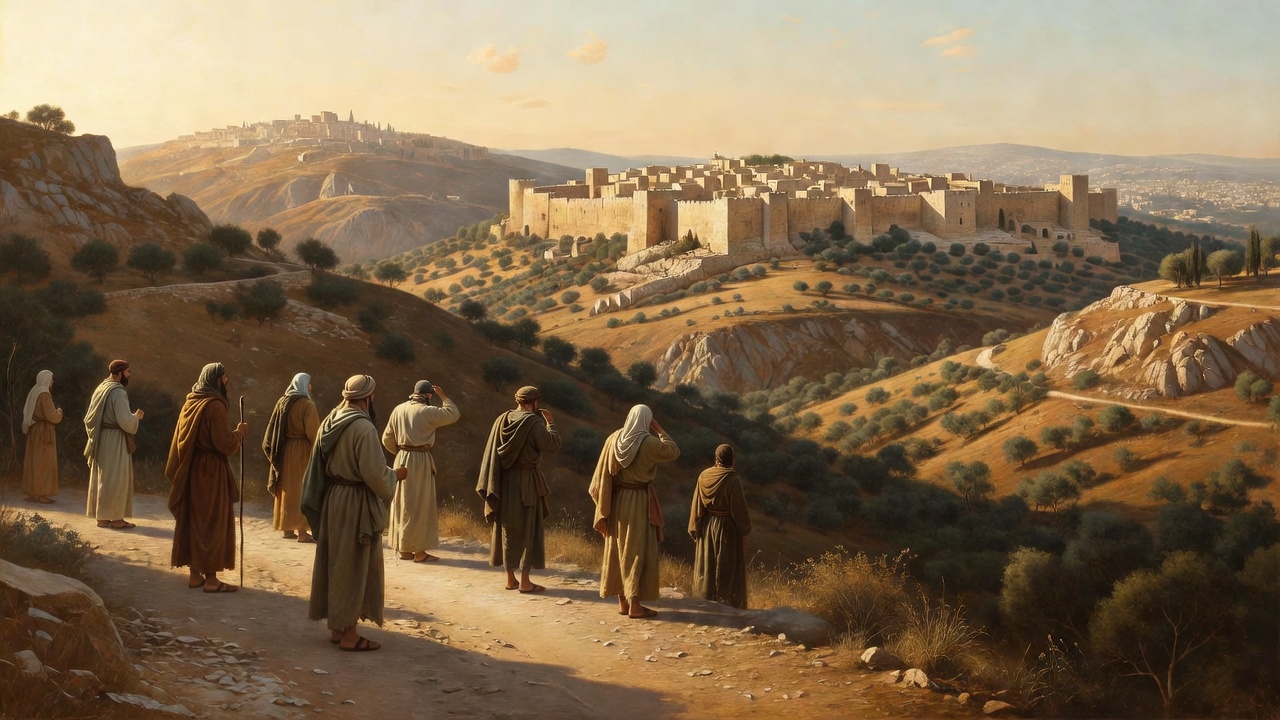
2Um Jerusalem her sind Berge, und der HERR ist um sein Volk her von nun an bis in Ewigkeit.
3Denn der Gottlosen Zepter wird nicht bleiben über dem Häuflein der Gerechten, auf daß die Gerechten ihre Hand nicht ausstrecken zur Ungerechtigkeit.
4HERR, tue wohl den guten und frommen Herzen!
5Die aber abweichen auf ihre krummen Wege, wird der HERR wegtreiben mit den Übeltätern. Friede sei über Israel!
Did you know?
Unshakable Security in Jerusalem
- Psalm 125 is one of the Songs of Ascents, comparing those who trust in God to Mount Zion. Mount Zion was a naturally fortified hill in Jerusalem, surrounded by deep valleys on nearly all sides, making it a fitting symbol of permanence and stability.Sources: the Bible text itself · Mount Zion
- The psalmist draws on local geography by noting how mountains encircle Jerusalem. Built as a mountain fortress among neighboring heights, the city provided an evocative physical illustration of divine protection surrounding the community.Sources: the Bible text itself · Jerusalem
- The psalm concludes with a prayer for peace upon Israel, which resonates with the traditional interpretation of Jerusalem's Hebrew name as a foundation or possession of peace.Sources: the Bible text itself · Jerusalem
Notes written with AI assistance from open sources (Theographic Bible Metadata, CC BY-SA 4.0; Easton’s Bible Dictionary, public domain) and reviewed before publishing.
Places in this chapter
Only places identified with high confidence are shown (90% or more according to the scholarly sources compiled by OpenBible). Period map: DARE (Digital Atlas of the Roman Empire), CC BY 4.0; modern map: © OpenStreetMap contributors; places: OpenBible.info (CC BY 4.0).
Credits and license for this translation
Lutherbibel 1912
The Holy Bible in German, Luther 1912
Public Domain
Language: Deutsch (German, Standard)
Translation by: Martin Luther
2025-12-29
Source: http://ebible.org/deu1912/ · eBible.org