Joshua 1
Lutherbibel 1912 · Tap a verse to see its cross-references.
About this book
About Joshua
- Easton's Bible Dictionary (1897) explains Joshua's name as "Jehovah is his help" or "Jehovah the Saviour." He was the son of Nun, of the tribe of Ephraim, born in Egypt, and Moses' successor as leader of Israel; the wars of conquest he carried on are recorded in the book that bears his name. That entry does not name the book's author or give a date for its writing.Sources: Easton: Joshua · Joshua
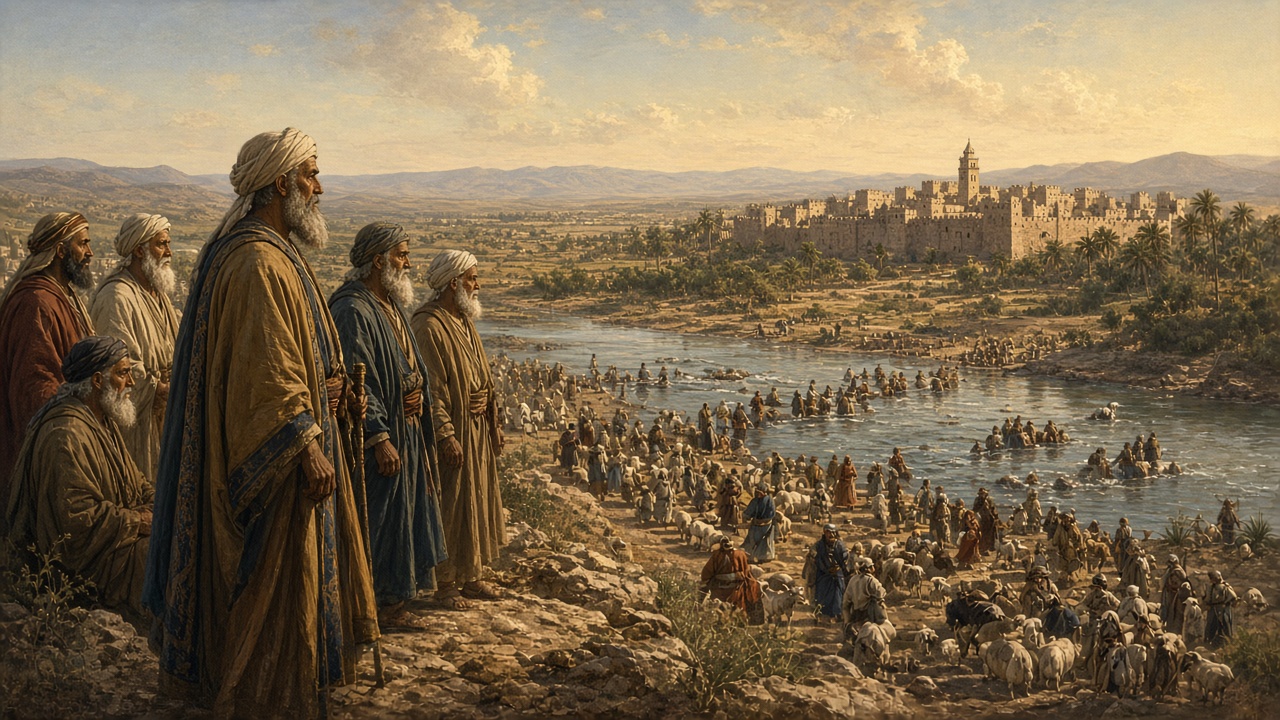
- When Joshua took command, the people were encamped at Shittim. They crossed the Jordan and camped at Gilgal, where, Easton says, he circumcised the people and kept the Passover. Jericho, a fortified city among palm trees about five miles west of the Jordan, is described as Canaan's strongest fortress and the key to western Palestine; Ai, east of Bethel, was the second Canaanite city taken, after an initial defeat.Sources: Easton: Joshua · Jericho · Ai
- Easton's Bible Dictionary (1897) says Joshua conquered six nations and thirty-one kings, then divided the land among the tribes, with Timnath-serah in Mount Ephraim assigned to himself. East of the Jordan, Gilead is described as a mountainous region held by the tribes of Gad and Reuben and the southern part of Manasseh.Sources: Easton: Joshua · Gilead
- Quoting Edersheim, the dictionary says Joshua's name was changed from Oshea, "help," to Jehoshua, "Jehovah is help," and notes that he is called Jesus in Acts 7:45 and Hebrews 4:8. It states that he died at the age of one hundred and ten, twenty-five years after crossing the Jordan, and was buried in his own city of Timnath-serah; of his father Nun, nothing more is recorded than that he was Joshua's father.Sources: Easton: Joshua · Joshua · Nun
- Before leading the conquest, Joshua commanded Israel's host against the Amalekites at Rephidim, served as Moses' minister, and was one of twelve sent to explore Canaan; only he and Caleb brought back an encouraging report. As Easton sketches the book, it runs from the crossing of the Jordan and the taking of Jericho through years of war to the division of the land and Joshua's last address.Sources: Easton: Joshua
Notes written with AI assistance from open sources (Theographic Bible Metadata, CC BY-SA 4.0; Easton’s Bible Dictionary, public domain) and reviewed before publishing.
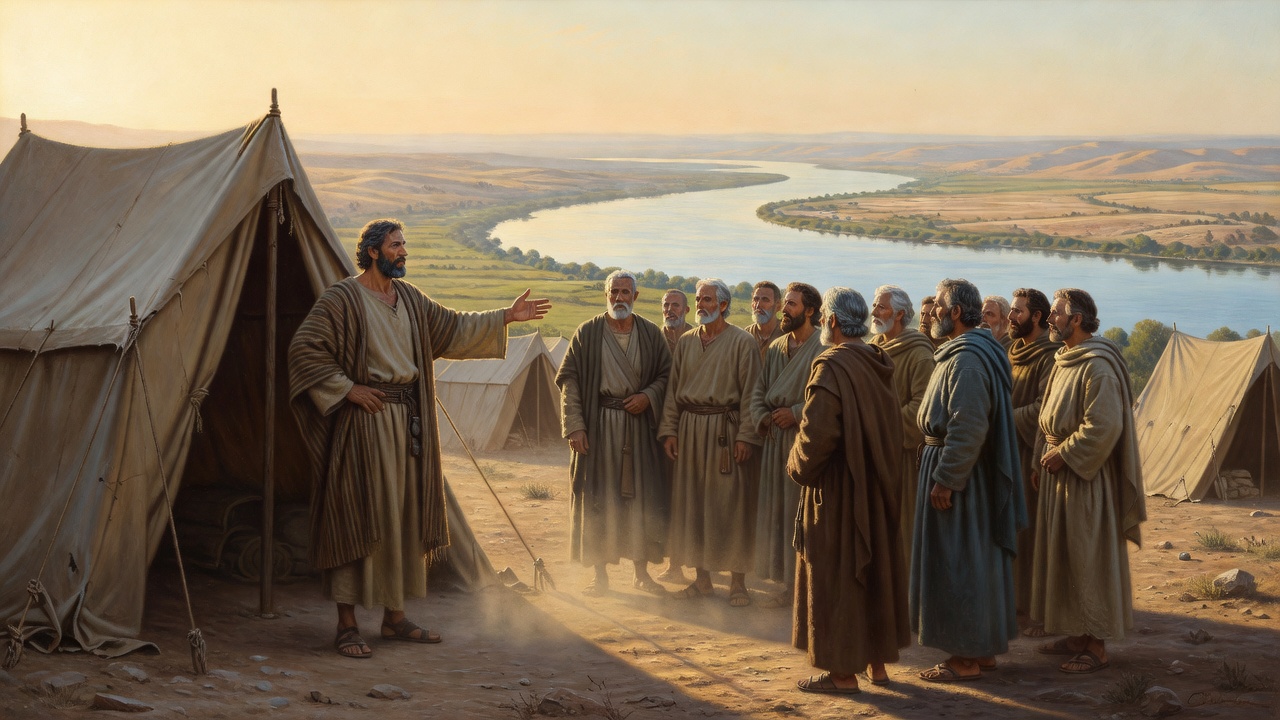
1Nach dem Tode Mose's, des Knechts des HERRN, sprach der HERR zu Josua, dem Sohn Nuns, Mose's Diener: 2Mein Knecht Mose ist gestorben; so mache dich nun auf und zieh über den Jordan, du und dies ganze Volk, in das Land, das ich ihnen, den Kindern Israel, gegeben habe. 3Alle Stätten, darauf eure Fußsohlen treten werden, habe ich euch gegeben, wie ich Mose geredet habe. 4Von der Wüste an und diesem Libanon bis an das große Wasser Euphrat, das ganze Land der Hethiter, bis an das große Meer gegen Abend sollen eure Grenzen sein. 5Es soll dir niemand widerstehen dein Leben lang. Wie ich mit Mose gewesen bin, also will ich auch mit dir sein. Ich will dich nicht verlassen noch von dir weichen. 6Sei getrost und unverzagt; denn du sollst diesem Volk das Land austeilen, das ich ihren Vätern geschworen habe, daß ich's ihnen geben wollte. 7Sei nur getrost und sehr freudig, daß du haltest und tust allerdinge nach dem Gesetz, das dir Mose, mein Knecht, geboten hat. Weiche nicht davon, weder zur Rechten noch zur Linken, auf daß du weise handeln mögest in allem, was du tun sollst. 8Und laß dieses Buch des Gesetzes nicht von deinem Munde kommen, sondern betrachte es Tag und Nacht, auf daß du haltest und tust allerdinge nach dem, was darin geschrieben steht. Alsdann wird es dir gelingen in allem, was du tust, und wirst weise handeln können. 9Siehe, ich habe dir geboten, daß du getrost und freudig seist. Laß dir nicht grauen und entsetze dich nicht; denn der HERR, dein Gott, ist mit dir in allem, was du tun wirst. 10Da gebot Josua den Hauptleuten des Volks und sprach: 11Geht durch das Lager und gebietet dem Volk und sprecht: Schafft euch Vorrat; denn über drei Tage werdet ihr über diesen Jordan gehen, daß ihr hineinkommt und das Land einnehmt, daß euch der HERR, euer Gott, geben wird. 12Und zu den Rubenitern, Gaditern und dem halben Stamm Manasse sprach Josua: 13Gedenket an das Wort, das euch Mose, der Knecht des HERRN, sagte und sprach: Der HERR, euer Gott, hat euch zur Ruhe gebracht und dies Land gegeben. 14Eure Weiber und Kinder und Vieh laßt in dem Lande bleiben, das euch Mose gegeben hat, diesseit des Jordans; ihr aber sollt vor euren Brüdern her ziehen gerüstet, was streitbare Männer sind, und ihnen helfen, 15bis daß der HERR eure Brüder auch zur Ruhe bringt wie euch, daß sie auch einnehmen das Land, das ihnen der HERR, euer Gott, geben wird. Alsdann sollt ihr wieder umkehren in euer Land, das euch Mose, der Knecht des HERRN, gegeben hat zu besitzen diesseit des Jordans, gegen der Sonne Aufgang. 16Und sie antworteten Josua und sprachen: Alles, was du uns geboten hast, das wollen wir tun; und wo du uns hinsendest, da wollen wir hin gehen. 17Wie wir Mose gehorsam sind gewesen, so wollen wir dir auch gehorsam sein; allein, daß der HERR, dein Gott, nur mit dir sei, wie er mit Mose war. 18Wer deinem Mund ungehorsam ist und nicht gehorcht deinen Worten in allem, was du uns gebietest, der soll sterben. Sei nur getrost und unverzagt!
Did you know?
Joshua Assumes Leadership
- Joshua, the son of Nun from the tribe of Ephraim, served as Moses' assistant and military commander before being commissioned to succeed him as leader of Israel. His name means "Jehovah is his help" or "Jehovah the Saviour."Sources: Joshua · the Bible text itself
- The territory outlined in God's commission to Joshua stretches from the southern wilderness and the Lebanon mountain range in the north to the Euphrates (called "the great river") in the east and the Mediterranean ("the Great Sea") to the west.Sources: the Bible text itself · Lebanon · Euphrates · Great Sea
- The tribes of Reuben, Gad, and the half-tribe of Manasseh had already received territory east of the Jordan River under Moses. However, their armed warriors were required to cross over ahead of the other tribes to assist them until the entire land was secured.Sources: the Bible text itself · Manasseh (son of Joseph)
Notes written with AI assistance from open sources (Theographic Bible Metadata, CC BY-SA 4.0; Easton’s Bible Dictionary, public domain) and reviewed before publishing.
Places in this chapter
- Jordan · Today: Jordan River · 31.761, 35.558 · verses 2, 11, 14, 15
- Euphrates · Today: Euphrates River · 31.004, 47.442 · verse 4
- Great Sea · Today: Mediterranean Sea · 31.805, 34.170 · verse 4
- Lebanon · 33.540, 35.584 · verse 4
- Negeb · 31.245, 34.841 · verse 4
- Syria · Today: Aram · 33.511, 36.306 · verse 4
Only places identified with high confidence are shown (90% or more according to the scholarly sources compiled by OpenBible). Period map: DARE (Digital Atlas of the Roman Empire), CC BY 4.0; modern map: © OpenStreetMap contributors; places: OpenBible.info (CC BY 4.0).
Credits and license for this translation
Lutherbibel 1912
The Holy Bible in German, Luther 1912
Public Domain
Language: Deutsch (German, Standard)
Translation by: Martin Luther
2025-12-29
Source: http://ebible.org/deu1912/ · eBible.org