Hosea 6
Lutherbibel 1912 · Tap a verse to see its cross-references.
1Kommt, wir wollen wieder zum HERRN; denn er hat uns zerrissen, er wird uns auch heilen; er hat uns geschlagen, er wird uns auch verbinden. 2Er macht uns lebendig nach zwei Tagen; er wird uns am dritten Tag aufrichten, daß wir vor ihm leben werden. 3Dann werden wir acht darauf haben und fleißig sein, daß wir den HERRN erkennen. Denn er wird hervorbrechen wie die schöne Morgenröte und wird zu uns kommen wie ein Regen, wie ein Spätregen, der das Land feuchtet. 4Was soll ich dir tun, Ephraim? was soll ich dir tun, Juda? Denn eure Liebe ist wie eine Morgenwolke und wie ein Tau, der frühmorgens vergeht. 5Darum schlage ich sie durch die Propheten und töte sie durch meines Mundes Rede, daß mein Recht wie das Licht hervorkomme. 6Denn ich habe Lust an der Liebe, und nicht am Opfer, und an der Erkenntnis Gottes, und nicht am Brandopfer. 7Aber sie übertreten den Bund wie Adam; darin verachten sie mich. 8Denn Gilead ist eine Stadt voll Abgötterei und Blutschulden. 9Und die Priester samt ihrem Haufen sind wie die Räuber, so da lauern auf die Leute und würgen auf dem Wege, der gen Sichem geht; denn sie tun, was sie wollen. 10Ich sehe im Hause Israel, davor mir graut; denn da hurt Ephraim und verunreinigt sich Israel. 11Aber auch Juda wird noch eine Ernte vor sich haben, wenn ich meines Volks Gefängnis wenden werde.
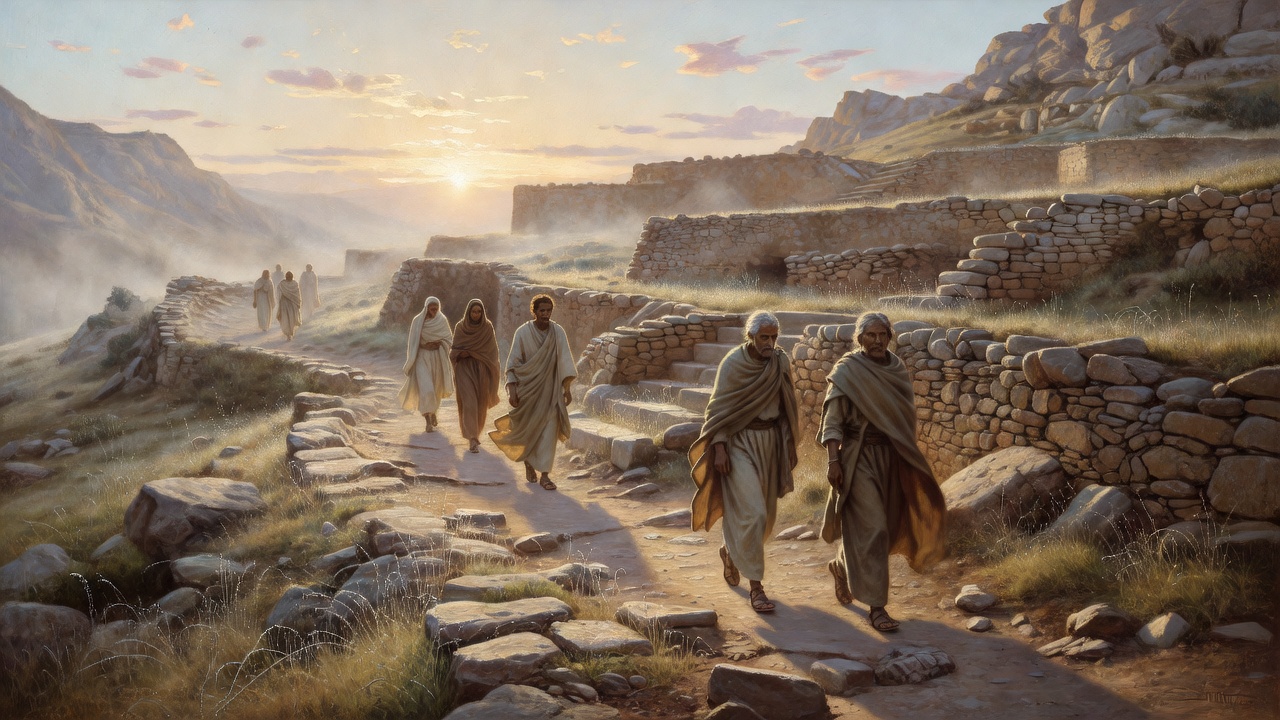
Did you know?
Fleeting Loyalty and True Devotion
- In Hosea 6:6, the prophet proclaims that God values mercy and the knowledge of God above ritual animal sacrifices and burnt offerings, emphasizing heartfelt covenant faithfulness over mere religious formalities.Sources: the Bible text itself
- The prophetic text compares the loyalty of Ephraim and Judah to morning mist and vanishing dew; Ephraim, originally named after Joseph's son for double fruitfulness, is frequently used in the book to address the northern kingdom of Israel.Sources: the Bible text itself · Ephraim
- The chapter condemns lawlessness in Gilead, a mountainous region located east of the Jordan River, and accuses corrupt bands of priests of committing violent ambushes on travelers along the road toward Shechem.Sources: the Bible text itself · Gilead
Notes written with AI assistance from open sources (Theographic Bible Metadata, CC BY-SA 4.0; Easton’s Bible Dictionary, public domain) and reviewed before publishing.
Places in this chapter
- Shechem · Today: Tell Balatah · 32.214, 35.282 · verse 9
Only places identified with high confidence are shown (90% or more according to the scholarly sources compiled by OpenBible). Period map: DARE (Digital Atlas of the Roman Empire), CC BY 4.0; modern map: © OpenStreetMap contributors; places: OpenBible.info (CC BY 4.0).
Credits and license for this translation
Lutherbibel 1912
The Holy Bible in German, Luther 1912
Public Domain
Language: Deutsch (German, Standard)
Translation by: Martin Luther
2025-12-29
Source: http://ebible.org/deu1912/ · eBible.org