Revelation 7
Yoac kekehagocac Dzadzahac gboria nga Mitiyegec · Tap a verse to see its cross-references.
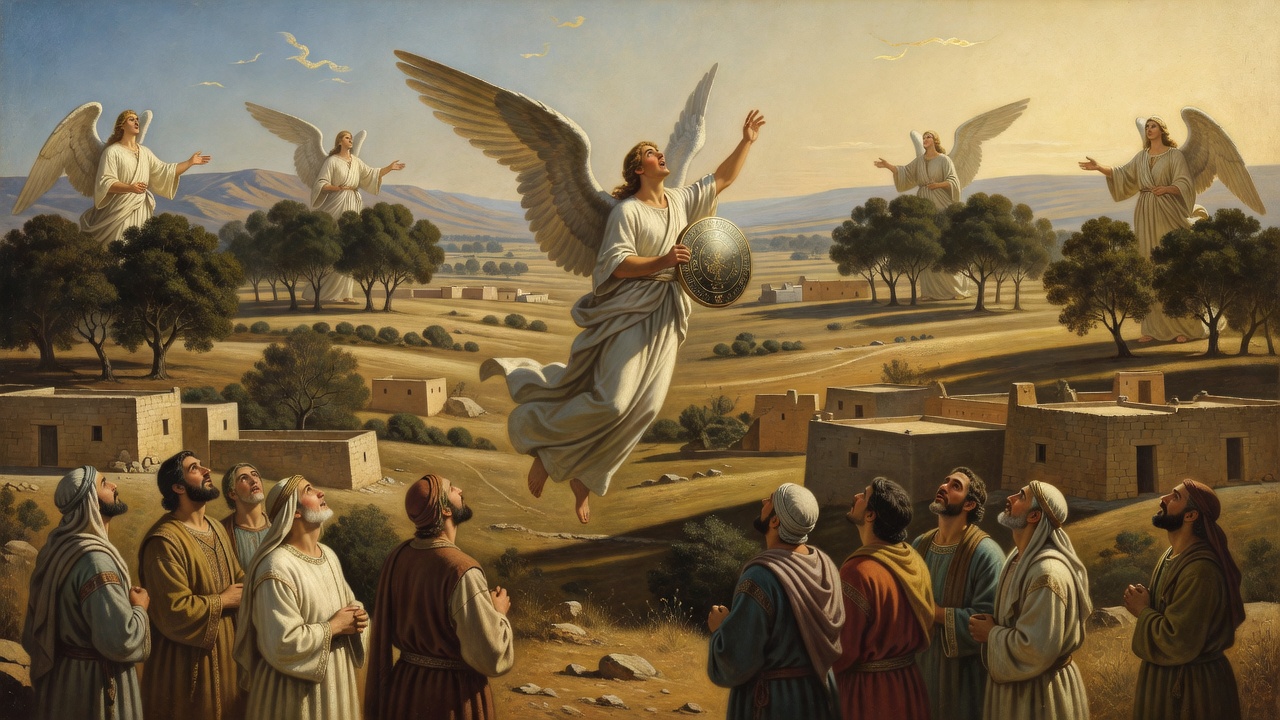
1Imocac ngadeau angero 4 yenenai. Yeni bangectoa bangec, imocac tuturung 4, imohai nanggec. Nga yenemba yeni bangecac firang 4 medzickema nanggec firang imoc yeni bangecfu me kondunnu me icfu kpegecdeacsoc mi anggec.
2Anu ni angero mong henai. Ye Anutu kekehagoc yeac onga mekecma wenac ere ereaunac haec. Nga angero 4 yeni bangec nga kondung memanganegecdeac ua yemmeyemmea, yeng yeneac kpacma yofi deec, 3“Ngeni bangec me kondung me ic bic mi memanganebisia. Neneng Anutuninaac wanacarengfora mesunginau kibi faiminaguc ngeni ine wiac sasawa memanganebisia.” 4Anu ngicngac mesunginau kibigoc, yeneac kpetengina 144 tauseng degec negenai. Kibinginagoc imoc yeni Israe medacforaac habuareng 12, yenearunac sasawa. 5Mesunginau kibigoc yeneac kpetengina yofi,
Yuda kisicfunac 12 tauseng
Rubeng kisicfunac 12 tauseng
Gade kisicfunac 12 tauseng
6Ase kisicfunac 12 tauseng
Naftari kisicfunac 12 tauseng
Manase kisicfunac 12 tauseng
7Simong kisicfunac 12 tauseng
Rewi kisicfunac 12 tauseng
Isasa kisicfunac 12 tauseng
8Seburong kisicfunac 12 tauseng
Yosefe kisicfunac 12 tauseng nga
Benyaminggac kisicfunac 12 tauseng.
9Imocac witiau habutoa yombong yenenai nga kpetengina imoc ngic mongngo naric mi osoude. Ngicngac yenenai, yeni bangeha bangeha nga fakaga fakangina amma yoacna yoacga nga sebi siric hania hania, yenearunac. Amma yeni ngakpingina herea kongac kongac heima maringinau pam icac maria mema ngictau tatacfu nga ramamedahaac kicfu nanggec. 10Namma yofi dema kunengngoc arohogec,
“Anutunina ngictau tatacfu tacde nga ramamedaha yeri memengerec mingina.”
11Ifi degec angero sasawango hama ngictau tatac nga ngic enara 24 amma wiac kekecnginagoc 4 orongyunuma nanggec, yeni ngictau tatacac kiwau makpema kicngina hetutuckema Anutu afehegec. 12Afehema yofi degec,
“Fora, kenec nga kibikperagi, negen negentegec nga ubangerec, eweheihei nga kpac kuneng nga kuc imoc Anutunina ammini nasoya nasoya feengkecbeso, imoc foranoc.”
13Ifi degec, ngic enara yenearunac mongngo yofi kpesinenec, “Ngicngac ngakpingina herea kongac kongac yomoc, yeni merac merac nga yeni dahacnac hagec?”
14Kpesinenu merenai, “Kunenna, ge geanggaoc negennec.” ifi deba yeng yofi edenuec, “Ngic yomoc yeni kpendzengtoaunac hama ngakpingina ramamedahaac sawango dzuacgec kongac kongac ande. 15Imocac amma yeni hadzing tofocnac Anutuac womong manau ngictau tatacac kiwau namma yeac kingang kpema ua mekecdae. Megec Kebu ngictau tatacfu tacde, yeng yenigoc kecma kporucbedzoya yeneac witiu faiu tarude. 16Nga yeni herenginaac monggoc mi homegecde nga dokuac mi ayemmeude. Wenacngo monggoc mi yonohoude nga wiac goaac gereango naric mi yonohoude. 17Imoc yofiac, ramamedaha ngictau tatacac dzongiau nande, yeng ramagarengngina amma kekecac dokukiwau hesicyunuude. Nga Anutungo kickumangina sasawa kicnginaunac mekerenggeude.”
Did you know?
The sealed tribes and the great multitude
- Revelation 7 numbers the sealed as 144,000, twelve thousand from each of the tribes of Israel named in the chapter. Israel was another name for Jacob, the second-born of the twin sons of Isaac and Rebekah; Easton's Bible Dictionary (1897) explains Jacob's name as someone who follows on another's heels, or a supplanter.Sources: the Bible text itself · Jacob (Israel)
- Although Reuben was the eldest son of Jacob and Leah, the list of the sealed begins with Judah and then names Reuben. The list also includes both Joseph and Manasseh; Manasseh was Joseph's elder son, and Jacob adopted him and his brother Ephraim as his own sons.Sources: the Bible text itself · Reuben · Manasseh (son of Joseph)
- After the sealing, the vision shows a multitude too large to count, from every nation, tribe, people, and tongue, standing before the throne and the Lamb, wearing white robes and holding palm branches. One of the elders says they have come out of the great tribulation and have washed their robes and made them white in the blood of the Lamb.Sources: the Bible text itself
Notes written with AI assistance from open sources (Theographic Bible Metadata, CC BY-SA 4.0; Easton’s Bible Dictionary, public domain) and reviewed before publishing.
Credits and license for this translation
Yoac kekehagocac Dzadzahac gboria nga Mitiyegec
The New Testament and Psalms in the Dedua Language of Papua New Guinea
Buk Baibel long tokples Dedua long Niugini
copyright © 2005 Wycliffe Bible Translators, Inc.
℗ 2012 Wycliffe Bible Translators, Inc.
Language: Dedua
Translation by: Wycliffe Bible Translators
This translation is made available to you under the terms of the
Creative Commons Attribution-Noncommercial-No Derivatives license 4.0.
You may share and redistribute this Bible translation or extracts from it in any format, provided that:
You include the above copyright and source information.
You do not sell this work for a profit.
You do not change any of the words or punctuation of the Scriptures.
Pictures included with Scriptures and other documents on this site are licensed just for use with those Scriptures and documents.
For other uses, please contact the respective copyright owners.
2015-01-02
Source: http://png.bible/ded/ · eBible.org