Matthew 11
Dai Cangcim Kthai · Tap a verse to see its cross-references.
Baptican Johan ja Jesuh
1Axüisawe xaleinghngih a jah mtheh käna, mlüh kce hea ngthu pyen hü khaia Jesuh citki.
2Baptican Johan thawngim üngka naw Jesuha pawhmsahe a jah ngjak üng hnukläk nghngih Khritawa veia a jah tüih. 3Acun xawi naw Jesuh veia, “Johan naw law khai a pyen cen nang mä? Am ani üng akce kami na äp khai aw” ti lü ani kthäh.
4Jesuh naw jah msang lü, “Nghlat be ni lü nani hmuh ja nani ngjake naküt Johan üng va mtheh be nia” a ti. 5“Amikmüe naw hmuh be u lü, akxoe pi cit be thei ve u, mnehkse mnehkie daw be ve u, a nghnga kpange naw ngja be ve u, akthihe tho law be u lü, thangkdaw pi msih mpyaki he üng jah mtheh päng ve u. 6Keia phäha a mlung am uplatsaki ta a josenki ni” ti lü a pyen.
7Johana axüisaw he ami ceh be üng Jesuh naw Johana mawng khyangpäe üng jah mtheh lü, “Johana veia khawkhyawng khawa nami ceh üng, i hmu khaia ni nami ceh? Khawkhi naw a ksün khuhnah bükteng khaia mä nami ceh? 8“I bükteng khaia ja nami ceh? Suisak akdaw suisaki bükteng khaia mä nami ceh? Suisak akdaw suisakie cun Sangpuxangea ima ni ami ve khawi. 9“Na mtheh ua, I teng khaia ni nami ceh? Sahma mä? Ä, ning jah mtheh veng, sahmaa pi kyäp bawki ve ve. 10“Ahina mawng ni cangcim üng ng'yu lü, “Pamhnam naw, na maa ka ngsä na lam pyang khai ka tüih law khai. 11Akcanga ka ning jah mthehki, nghngicim naküt üng Baptican Johana kthaka daw bawki u am ve. Acunüngpi khankhawa veki akdik säih cun Johana kthaka daw bawki ni. 12Baptican Johana a ngthu pyen üngkhyüh tuh vei cäpa khankhaw naw tuknak khameiki, ngtuatkia khyang ksee naw khaw ami yah vaia kthanakie. 13Pamhnama sahma he naküt ja Mosia thume naw Johana a ve vei cäpa Pamhnama Khawa mawng cun pyenkie. 14Ami pyen nami jum hlü üng, Johan cun law khaia ami na pyen khawi Elijaha kyaki. 15A nghnga veki naw ngja se.
16Acunsepi atuh khyang he hin i am ni ka jah mtumtäng kawm? Ahin he cun hnasen lumeikie ami püi khü u lü, 17Pülün ning jah tum pe ngü se am nami nglamkie, yawk ng’äi mcuk ngü sepi am mbawikyap uki. 18Johan a law üng am ei aw se, “Khyang naküt naw khawyaia venak” ami ti. 19Khyanga Capa law lü ei aw se khyang naküt naw, “Teng ua, meng lü capyittui aw ve, akhawn kawke ja khyangkaea püi hin” ami ti. “Acunüng pi ksinghmatnak cun a bilawh üng ngsingki” ti lü a jah mtheh.
Am Jumeikia Mlühe
20Acunüng Jesuh naw müncanksee aktunga a pawhnaka mlühe cun am ami ngjuta phäha a jah ksenak. 21“Korazin mlüh aw na jo se ve, Bethsaida mlüh aw na jo se ve. Isetiüng ta, nangni üng mdana mäiha müncanksee hin Turah ja Sidon mlüha mdang vai sü ta, ahlana va kpyawnkse ngbung u lü, mput awt u lü ngjut päng khaie sü. 22Akcanga ka ning jah mthehki, ngthumkhyahnaka mhnüp üng Turah ja Sidon mlüh xawi cun nangnia kthaka Pamhnam naw jah mpyenei khai. 23Nang Kapenawm mlüh pi, namät naw namät khankhaw cäpa na mhlünmtaiei hlüki aw? Mulaia ning khyakin vai. Nang üng mdana mäiha Sodom mlüh üng müncanksee jah mdan vai sü üng ta tuh vei cäpa ve ham khai sü. 24Ka ning jah mthehki, “Ngthumkhyahnaka mhnüp üng nanga kthaka Sodom mlüh üng Pamhnama mpyeneinak däm khai,” a ti.
Ka veia Law lü Hüiei ua
25Jesuh naw pyen lü, “Ka pa, khawmdek ja khankhawa Bawipa aw! Khyang ktheme üng jah thup lü a mlung mhnemki hnasena mäihe üng na jah mhnüha phäh na ngming ka mküiki. 26Ä, ka pa aw, ahin cun na ngjak hlüa kyaki ni.
27Ka pa naw avan a na pet päng. U naw a capa am ksing, ka pa däk naw ni a ksing. Ka pa pi u naw am ksing, a capa däk naw ni a ksing. Acun ja a capa naw a mtheh däk naw ni a ksing.
28A phüih yüh lü bawngbaiki naküt ka veia law ua, ka ning jah hüieisak khai. 29Ka kawhcung kawt ua. Ngmüimkhya lama ka mlungmthin hniphnawi lü nemkia kyase, ka veia ngtheingthang law ua. Acunüng, nami ngmüimkhyaa hüieinak nami yah khai. 30“Isetiüng ta, ka ning jah pet vaia kawhcung cun jäi lü, nami khana ka mtaih vaia phüih pi hangki ni” a ti.
Did you know?
John's question and the cities that did not repent
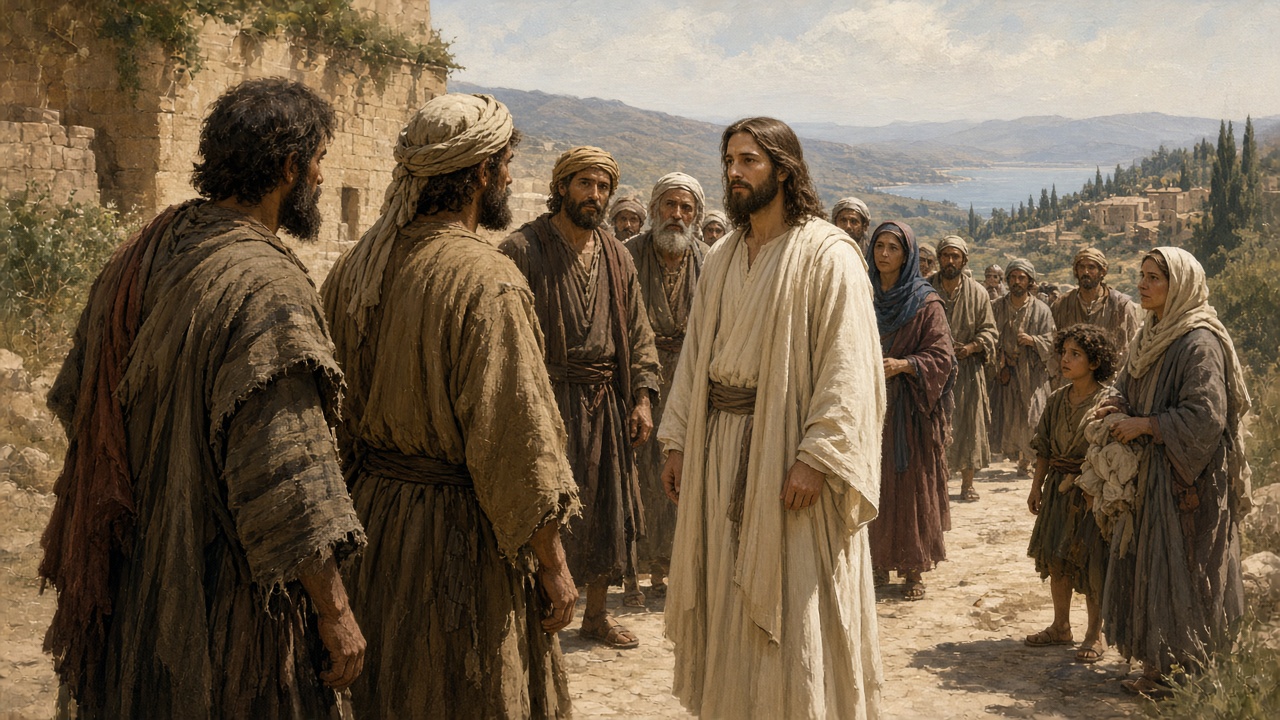
- From prison, John sent his disciples to ask whether Jesus was the one who was to come. Jesus told the crowds that John was more than a prophet—the messenger sent ahead to prepare the way—and, if they were willing to accept it, the Elijah who was to come. A Bible dictionary calls John the forerunner and says his mission was already the subject of prophecy, citing Isaiah 40:3 and Malachi 3:1; it also introduces Elijah as the Elias of the New Testament.Sources: the Bible text itself · John the Baptist · Elijah
- Jesus then denounced Chorazin, Bethsaida, and Capernaum, where most of his miracles had been performed, because they did not repent. A dictionary identifies Chorazin with modern Kerazeh, about two and a half miles up the Wady Kerazeh from Capernaum, and says that Capernaum, absent from the Old Testament, became Jesus' own city after he left Nazareth. It places Bethsaida on the east side of the lake, two miles up the Jordan in Gaulonitis, enlarged by Philip the tetrarch and named Julias after the emperor's daughter, though some have supposed there was only one Bethsaida, near where the Jordan enters the lake.Sources: the Bible text itself · Chorazin · Capernaum · Bethsaida
- He set those cities against Tyre and Sidon, which he said would have repented long ago in sackcloth and ashes, and against Sodom, which he said would have remained to this day. Sidon, on the Mediterranean coast about twenty-five miles north of Tyre, was the oldest Phoenician city there and the mother city of Tyre. A dictionary says the commerce of the whole world was gathered into Tyre's warehouses, and that Sodom, in the vale of Siddim, was destroyed by fire from heaven so completely that no trace of it has been found.Sources: the Bible text itself · Sidon · Tyre · Sodom
Notes written with AI assistance from open sources (Theographic Bible Metadata, CC BY-SA 4.0; Easton’s Bible Dictionary, public domain) and reviewed before publishing.
Places in this chapter
- Galilee · 32.760, 35.527 · verse 1
- Sidon · Today: Sandikli archaeological site in Sidon · 33.561, 35.372 · verses 21, 22
- Tyre · 33.271, 35.196 · verses 21, 22
Only places identified with high confidence are shown (90% or more according to the scholarly sources compiled by OpenBible). Period map: DARE (Digital Atlas of the Roman Empire), CC BY 4.0; modern map: © OpenStreetMap contributors; places: OpenBible.info (CC BY 4.0).
Credits and license for this translation
Dai Cangcim Kthai
The New Testament in the Dai Chin language of Myanmar
copyright © 2018 The Word for the World International
Language: Daai (Chin, Daai)
Contributor: The Word for the World Southeast Asia
The New Testament in Dai
published as
DAI CANGCIM KTHAI
The Word for the World International
This translation is made available to you under the terms of the
Creative Commons Attribution license 4.0.
You may share and redistribute this Bible translation or extracts from it in any format, provided that:
You include the above copyright and source information.
If you make any changes to the text, you must indicate that you did so in a way that makes it clear that the original licensor is not necessarily endorsing your changes.
Pictures included with Scriptures and other documents on this site are licensed just for use with those Scriptures and documents.
For other uses, please contact the respective copyright owners.
Note that in addition to the rules above, revising and adapting God's Word involves a great responsibility to be true to God's Word. See Revelation 22:18-19.
2023-04-09
Source: http://ebible.org/dao/ · eBible.org