2 Corinthians 8
Dai Cangcim Kthai · Tap a verse to see its cross-references.
Khritjan hea Petmsawtnak
1Kami püi he aw, Maketawniha sangcim hea veia Pamhnam naw bäkhäknak a jah pet kami ning jah ksing hlüsaki.
2Acuna sangcim he cun ami awmnaka khuikhanak aktäa khamei u lü m'yenkseki he, acunsepi aktäa petmsawtnak üng ktha naki he kyase ami jekyainak dämki.
3Ami khyaih khawjah pe u lü acuna thea pi peki he tia ka ksingki. Ami pet hlüa kba peki he ni.
4Acukba petmsawtnak üng khyang ngcim he jah kpüi yüm vaia Judah khawa jah nghui naki he.
5Kami ngaiha kthaka, akcüka Bawipa veia ngpe kyu u lü; acunüng Pamhnama ngjakhlüa amimät keimia veia ngpe kyuki he.
6Acunakyase, Petmsawtnaka khut tünei maki Tihtuh naw petmsawtnaka khut a kpäng vaia kami mthehki.
7Acunakyase, ahmäi üng jummeinak, ngthu sangnak, ksingkhyapnak, ahmäi hmäi üng ngsümtawmnak, keimi nami jah jawngnak nami mdana kba, acuna bäkhäknak pi nami mdan vaia ktha na ua.
8Ngthupeta kba am ka ning jah mthehki, khyang kcea jah kpüi vai ihlawka yängki he ti la, jawngnak akcang la am akcang ti mhnüteinaka ka pyen na kyaki ni.
9Mi Bawipa Jesuh Khritawa bäkhäknak nami ksingki ni; ani cun nangmi nami bawimangnak vaia phäha amät naw amät m'yenkse saki ni. Acun cun Nangmi nami bawimangnak vaia phäha m'yenkse lawki.
10Tuh kum üng nami tüneinak atuh nami kpäng vai ka ngja lüki. Nangmi cun nami tünei khai dänga am kya lü nami tünei vai nami ngjahlü kcükia pi nami kyaki.
11Acunakyase, ajana petmsawt hlünaka mlungmthin nami taka kba, atuh nami khyaiha pe u lü ngpängsak ua.
12Petmsawt hlünaka mlung a ve üng, am na tak am ni, na takca i pi na pet cun Mhnam naw ning dokhamei pe khai.
13Akce he phüiha jang vaia nami khana phüih k’yüh am ta veng. Atuh nami bawimangnak am amimi jah kpüi u lü, tuha amimi ami bawimang law üng ning jah kpüi khai he. Ahinkba atänga ve ua.
15Cangcim naw, “Mcun dämki naw am da na law naw, apica mcunki pi a tak am jaw naw” tia a pyena kba.
Tihtuh la a Püi he
16Ning jah kpüi vaia kami kthanaka kba Tihtuh naw pi a kthanak vaia mlung pekia Pamhnam kami jenaki.
17Ani cun, ka nghuinak, a ngai dänga am kya lü mlung hlünak am nami veia a hlüa lawki.
18Acunüng, thangkdaw a khüihnak üng sangcim he naw aktäa ami leisawnga bena, ani am atänga kami tüih law khai.
19Acun dänga am kya, Bawipa hlüngtainak vaia kami bilawh, petmsawtnak kami cehpüi üng jah ngkhahpüi khai la, kpüi vaia kami yängnak mdang khaia, sangcim he naw ami xüa kyaki.
20Acunüng, acuna petmsawtnaka khutbi kami bilawh üng, u naw am a jah mkatei vaia kami mceiki.
21Bawipa ngaih dänga am kya lü khyanga ngaiha pi dawkya khaia kami ngaiki he ni.
22Ami veia kami bena kce pi kami tüih si khai; ani cun ahmäi üng khüi lü kthanaki ti khawvei kami ksing päng, atuh pi ning jah üp na lü ning jah kpüi khaia yäng bawk bawki.
23Tihtuh cun ka püi la nami phäha ka khüihpüia kyaki; ani mah maha lawki hea bena kce he cun sangcim hea jah tüih law, Khritawa hlüngtainaka kyaki he.
24Acun hea veia nami jawngnak jah mdan u; acunüng kami ning jah awhcahnak cun sangcim he naw ksing khai he.
Did you know?
Generosity and the Jerusalem Collection
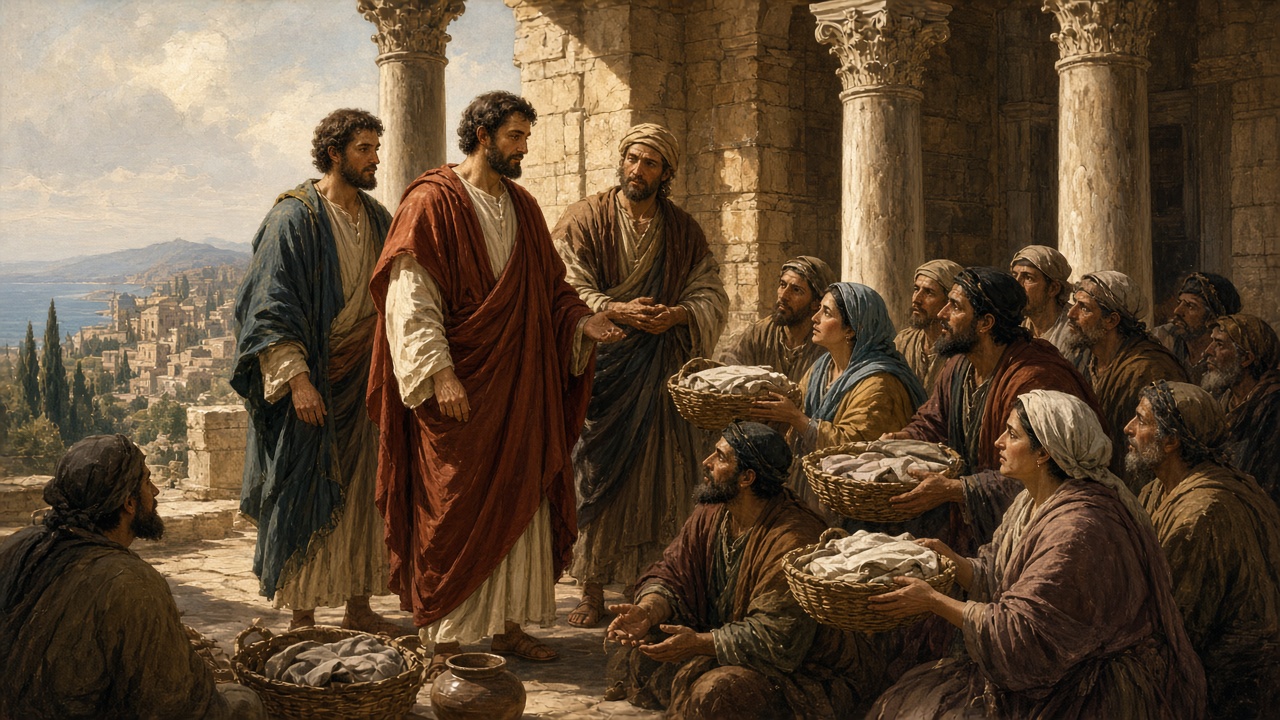
- In New Testament times Macedonia was a Roman province north of Greece. Paul was summoned by the vision of a man of Macedonia to preach the gospel there, and this chapter tells the Corinthians how those churches, in a terrible ordeal and deep poverty, gave joyfully and even beyond their ability.Sources: Macedonia · the Bible text itself
- Titus, whose name nowhere occurs in Acts, appears to have been a Gentile chiefly engaged in ministering to Gentiles. From Ephesus, Paul sent him to Corinth to forward the church's contributions for the poor saints at Jerusalem; in this chapter Paul urges him to complete that work, and Titus is coming eagerly of his own accord.Sources: Titus · the Bible text itself
- Along with Titus, Paul is sending a brother praised by all the churches for his work in the gospel and chosen by them to accompany the offering, and another brother whose earnestness has been proven many times and in many ways. He explains that this care is meant to avoid criticism of how the generous gift is administered, so that they do what is right not only in the eyes of the Lord but also in the eyes of other people.Sources: the Bible text itself
Notes written with AI assistance from open sources (Theographic Bible Metadata, CC BY-SA 4.0; Easton’s Bible Dictionary, public domain) and reviewed before publishing.
Places in this chapter
Only places identified with high confidence are shown (90% or more according to the scholarly sources compiled by OpenBible). Period map: DARE (Digital Atlas of the Roman Empire), CC BY 4.0; modern map: © OpenStreetMap contributors; places: OpenBible.info (CC BY 4.0).
Credits and license for this translation
Dai Cangcim Kthai
The New Testament in the Dai Chin language of Myanmar
copyright © 2018 The Word for the World International
Language: Daai (Chin, Daai)
Contributor: The Word for the World Southeast Asia
The New Testament in Dai
published as
DAI CANGCIM KTHAI
The Word for the World International
This translation is made available to you under the terms of the
Creative Commons Attribution license 4.0.
You may share and redistribute this Bible translation or extracts from it in any format, provided that:
You include the above copyright and source information.
If you make any changes to the text, you must indicate that you did so in a way that makes it clear that the original licensor is not necessarily endorsing your changes.
Pictures included with Scriptures and other documents on this site are licensed just for use with those Scriptures and documents.
For other uses, please contact the respective copyright owners.
Note that in addition to the rules above, revising and adapting God's Word involves a great responsibility to be true to God's Word. See Revelation 22:18-19.
2023-04-09
Source: http://ebible.org/dao/ · eBible.org