1 Corinthians 7
Dai Cangcim Kthai · Tap a verse to see its cross-references.
Ngkhyunglanaka mawng ngthähnak
1Atuh nami yuka mawng üng sängki ka pyen khai. Kpami cun am a khyumah pi kdaw khai ni. 2Isetiakyaküng hüipawmnak vekia kyase kpami naküt khyu mah lü, nghnumi naküt pi cei mah kawm. 3Kpami naw pi kpamia bilawh vai bilo lü, nghnumi naw pi a bilawh vai bilo se, ngkhyungla xawi naw mat ja mata hlükaw cun kbe ni se. 4Nghnumi naw amäta pumsa am ka na, acunsepi a ceia phäha kyaki ni; acuna mäiha, kpami naw pi amäta pumsa am ka na, a khyua phäha kyaki. 5Atänga nami ktaiyünak vaia phäha mat jah mat käh ma lü nami ve khawia kba ve ni a. Acukba nami ve ta Khawyama hlawhlepnak üng nami ngxungei thei khai.
6Hin ka ning jah mtheh hin ngthupeta kba ka ning jah mtheha am kya, nami pawh vaia ka ning jah mtheh ni. 7Nangmi akcanga keia akba nami ve vai ka tängki. Acunsepi, khyang naküt üng Pamhnama pet am täng, mat ja mat ta yah am täng, mat naw akce ta lü mat naw akce taki.
8Tukbäih am ceimahkie ja hmeinuea veia ka pyen hlü ta, keia kba nami ve khawh ta daw bawk khai ni. 9Acunsepi, nami hlüeinak am nami üp thei ta khyungla ua; isetiakyaküng, mlunga khuikha kthaka ta khyumah hin daw säihki ni.
10Ngkhyungla pängkiea veia ngthu jah pet hin ka mät naw ka jah pet am ni, Bawipa jah peta kyaki: Nghnumi naw a cei käh hawih lü; 11a hawih üng käh ceimah be kawm, am ani üng a cei ng’yäpüi be se, a cei naw pi käh ngtaipüi kawm.
12Khyang kcee veia kamäta pyen ta (Bawipa pyen am ni), jumeiki mat naw am jumeiki nghnumi a khyunak üng acun naw ve yüm khai xawia a bü üng käh hawih kawm. 13Acunüng, nghnumi naw am jumeiki a ceinak üng, a cei naw a hlawnga a ve vaia ngaih üng käh yawk kawm. 14Am jumeikia kpami cun a khyua phäha ngcimcaih lü, am jumeikia nghnumi pi a ceia phäha ngcimcaihki ni; acukba am ni vai sü ta nami cae am ngcim khaie sü; acunsepi ngcimki he ni. 15Nilüpi, am jumeiki naw Khritjan a püi a ngkya hlüpüi üng ngkyapüi kawm. Acubang üngta Khritjan kpami ja nghnumi cun ami ngaih sima kya khai. Pamhnam naw ngkhawtnak üng nami xüngsei khai a ning jah khü ni. 16Khritjan nghnumi aw, ihawkba na cei am na küikyan thei vai na ksingki ni? Khritjan kpami aw, ihawkba na khyu am na küikyan thei khai na ksingki ni?
Pamhnama khüa kba xüngsei
17Pamhnam naw a ning jah khü üng a ning jah peta kba xüngsei u lü ve ua. Acukba sangcime naküt ka jah mtheiki. 18Khyang mat vun mawihnak kham pängki naw Pamhnama khünak a yah üng vun mawihnak cun käh mkhyüh se, vun am mawi hamki naw Pamhnama khünak a yah üng pi vun käh mawi hlü se. 19Khyanga vun mawih ja am mawih cun ia am kya, Pamhnama ngthupet naküt ngai ua. 20Pamhnama khünak nami yah üng nami vea mäiha ve u. 21Mpyaa nami kyak ham üng Pamhnam naw a ning jah khü ni. Ia käh ngai ua; lätnak vai akyak üng sumei ua. 22Bawipa khüa mpya cun Bawipa mhläta khyanga kyaki; acukba bäa mpya am niki Khritaw naw a khü üng Khritawa mpya kyaki. 23A phu pe lü Pamhnam naw a ning jah khyäih ni; acunakyase khyanga mpyaa käh thawn be u. 24Ka püie, Pamhnam naw a ning jah khü üng nami ve khawia kba Pamhnam üng ngphunei ua.
Am Khyumahkie ja hmeinuea mawng ngthähnak
25Am khyumahkia mawng nami yuk lawnak üng, Bawipa ngthu peta am kya lü; Bawipa a mpyeneinak üng ümnak ngkäiha kyakia kyase, ka ngaih ka pyenki.
26Acunakyase, atuh khuikhanaka phäha, kpami amät a ve khawia kba a ve vai hin daw khaia ngai veng. 27Na khyu veki aw? Acun kba akyak üng käh ksäta. Am na khyumahki aw? Acukba akyak üng na khyu vai käh suia. 28Acunsepi, na khyumah üng na mkhyekatki am ni, am ceimah hamki nghnumi a ceimah üng pi mkhyekatkia am kya. Acunsepi, ngkhyunglakie naw amhnüp tä se khuikhanak ta bawki he ni, acukba nami ve vai am täng ve.
29Ka püie aw, ka pyen hlü cun akcün hin tawikia kyase, khyumahki pi, am khyumahkia kba ve kawm. 30Kyapkie pi am kyapkiea mäiha ve u se. Jeki pi am jekia mäiha ve kawm. Khawhthem khyäihktuki naw pi ami khyäih am takiea kba ve u se. 31Hina khawmdek khawhthem summangeiki pi am summangeikia mäiha ve u se. Isetiakyaküng hina khawmdek cun ivei am law lü xük law khaia kyaki.
32Cäicingnak üng nami lätlang vai hlüei veng. Am khyumahki naw Bawipa khut mcei lü a bi cun Bawipa jekyai hlüsak lü ni. 33Khyumahki naw a khyua jenak vai ngaih lü khawmdek lam cäi naki; 34acunakyase lam nghngih üng veki. Am ceimahki ja ngla naw cun pumsa ja Ngmüimkhya üng Bawipa khut bi khaia ngcuapei lü, ceimahkia nghnumi cun a cei a jekyaisak vai ngaih lü khawmdek lam cungaiki.
35Ahin ka pyen cun, isetikyaküng, ka ning jah kuei hlüa phäh ni. Ka ning jah mkhyawhnak am ni. Akdaw bilo lü ia sungkhamnak am ve lü Bawipa khut binak üng nami mät nami cuap vaia ka pyen ni.
36Ngkhyungla khai xawia mkhyäp päng te am ngkhyungla khai xawia ti beki xawia mawngma üng: kpami naw akdawa am a vecawhpüi üng a ngaihnak am nängei üngta khyumah kawm. Kakawngki xawia am kya. 37Acunsepi, kpami naw am khyumah khaia a mlung khängsak lü amäta ngainak näng khaia bü lü acuna ngla am a khyunak üng ia am kya. Dawki ni. 38Acunakyase, khyumah hin dawki, cunsepi am khyumah hin daw bawki ni.
39Ceimahkia nghnumi cun a ceia xüna k'um üngta a ceia phäha kyaki; acunsepi, a cei a thih käna a ngaiha khyang cei na khaia lätki ni. Acunsepi kpami a cei vai cun Bawipaa hnu kläka kya kawm. 40Acunsepi, keia ngaiha ta, am ceimah lü amät a ve üng jekyai bawk khai. Ahin ta ka mäta ngaih ni. Pamhnama Ngmüimkhya ka takia ka ngaiki.
Did you know?
Counsel on marriage and the present crisis
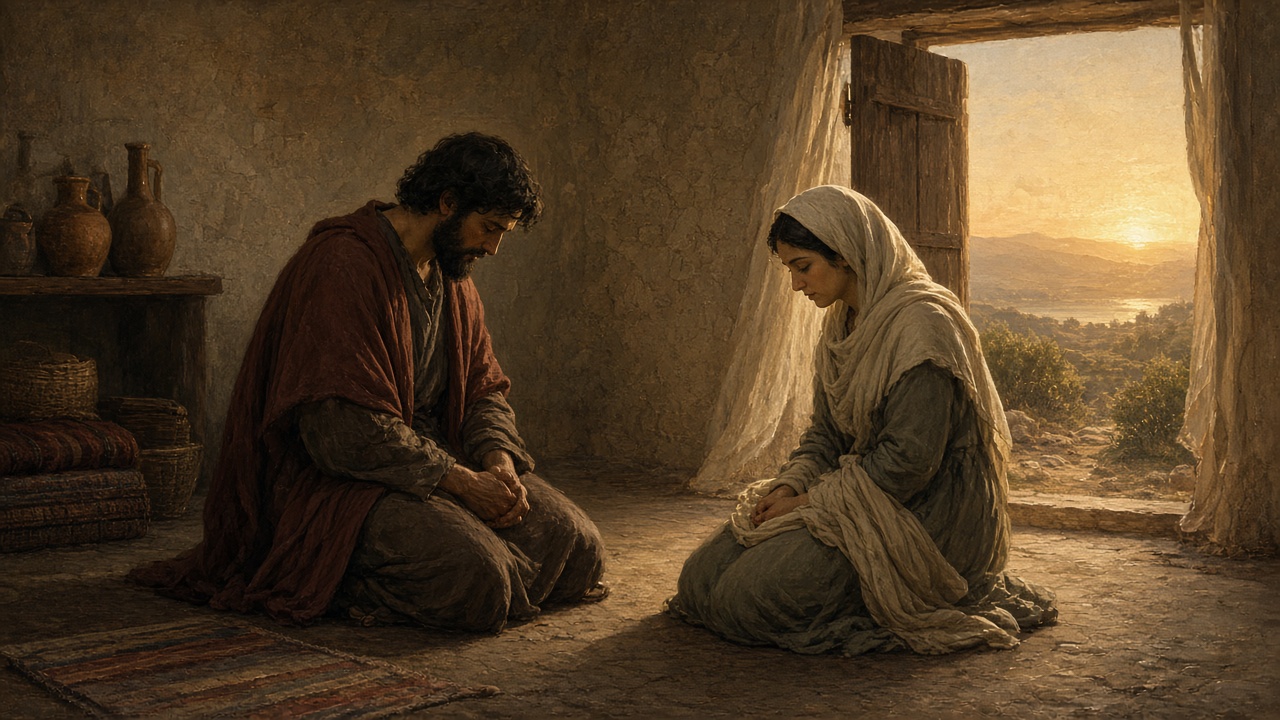
- The chapter opens as a reply to matters the readers had written about. The writer says it is good to abstain from sexual relations, yet, because there is so much sexual immorality, each man should have his own wife and each woman her own husband. He presents this as a concession, not as a command, and says that each person has their own gift from God.Sources: the Bible text itself
- In marriage, the writer says the wife does not have authority over her own body, but the husband does, and likewise the husband does not have authority over his own body, but the wife does. They should not deprive each other except by mutual consent and for a time, so they may devote themselves to prayer, and then come together again, so that Satan will not tempt them through lack of self-control. Easton's Bible Dictionary (1897) presents the name Satan as “adversary” or “accuser,” and notes that he tempted Jesus in the wilderness.Sources: the Bible text itself · Satan
- The writer distinguishes a command he attributes to the Lord—a wife must not separate from her husband, and a husband must not divorce his wife—from his own judgment where he says he, not the Lord, is speaking, including marriages with an unbeliever and questions about virgins. Because of what he calls the present crisis, and because he says the time is short and this world in its present form is passing away, he thinks it good to remain as one is. He adds that to marry is not to sin, though those who marry will face troubles in this life.Sources: the Bible text itself
Notes written with AI assistance from open sources (Theographic Bible Metadata, CC BY-SA 4.0; Easton’s Bible Dictionary, public domain) and reviewed before publishing.
Credits and license for this translation
Dai Cangcim Kthai
The New Testament in the Dai Chin language of Myanmar
copyright © 2018 The Word for the World International
Language: Daai (Chin, Daai)
Contributor: The Word for the World Southeast Asia
The New Testament in Dai
published as
DAI CANGCIM KTHAI
The Word for the World International
This translation is made available to you under the terms of the
Creative Commons Attribution license 4.0.
You may share and redistribute this Bible translation or extracts from it in any format, provided that:
You include the above copyright and source information.
If you make any changes to the text, you must indicate that you did so in a way that makes it clear that the original licensor is not necessarily endorsing your changes.
Pictures included with Scriptures and other documents on this site are licensed just for use with those Scriptures and documents.
For other uses, please contact the respective copyright owners.
Note that in addition to the rules above, revising and adapting God's Word involves a great responsibility to be true to God's Word. See Revelation 22:18-19.
2023-04-09
Source: http://ebible.org/dao/ · eBible.org