Luke 6
Jamaw ta Marbinto: Kabarre ta Gala ɗo bi ka Iisa Masi iŋ daŋla · Tap a verse to see its cross-references.
Iisa iŋ ƴiriy ta sabitdi
1Ƴiriy rakki ta *sabitdi, kun̰ Iisa bira min ɗo morginar. Maajirnay teestu ƴiime kaƴ ku *gemer, ŋu sooyiyo ho ŋu eeymiyo. 2Ɗo wer-ak, gin *Pariziyenna daarin̰ kuuk kaawiico aman : « Maa di ku giniy maan kaak *gaanuunte toɗiite iŋ eele ka geeror ? » 3Iisa telkiico aman : « Ku bal garkiyin̰ ga maan kaak Dawuud iŋ een̰ji gintu ƴiriy rakki taat mey diyiigu ? 4Dawuud un̰jitu ɗo *ger ka Buŋdi, ŋa teetu tee kaak ŋu bertu *satkin ɗo Buŋdi, ho ŋa beriico ɗo een̰ji oki. Zer tee ŋaar-ak, gem ka pey ginno botol taat ŋaa teen̰ji, illa gay satkiner di. » 5Iisa kaawiico pey aman : « Nun *Roŋ gemor di mee sabitdi. »
Coole ka gem kaak pisin̰ji mate
6Gin menaw, iŋ ƴiriy ta sabit ta pey, Iisa un̰jitu ɗo ger ka salaaner ka *Yuudinnar ho ŋa teestu ɓilde gee. Ɗo ger-ak, gin gem kaak pisin̰ji ka meeda mate. 7Agindaw ku gaanuundi iŋ *Pariziyenna ɗibiiji ɗo Iisa, ŋu rakiy tale ya ŋaa coole gem iŋ ƴiriy ta sabitdi, kar ŋuuji diye kaawo. 8Sando, Iisa gay ibinit pikirrico. Ŋa ɗiyiiji ɗo gem kaak pisin̰ji mat-ak aman : « Uc pey ɗatik ta geemir. » Ek di ŋa uctu, ŋa peytu. 9Kar Iisa kaawiico aman : « Nu indaakoŋ ja : gaanuunte kaaw a gii ginguwe taat sellen̰ wala gii ginguwe taat jookumo iŋ ƴiriy ta sabitdi ? Gii jilguwe gee wala gii idguwin̰co ? » 10Min ŋa indiig pa-ak, ŋa taliig gee-ak okin̰co, kar ŋa kaawiiji ɗo gem kaak pisin̰ji mat-ak aman : « Taarig pisin̰jiŋ. » Ek di ŋa taariiga ho pisin̰ji cooltu ɗo weriy. 11Min agindaw ku gaanuundi iŋ Pariziyenna taliig maanna-ak, ŋu dapin̰tu aale ho ŋu teestu kaawe benannico ɗo maan kaak ŋuuji gine ɗo Iisa.
Paliinna kuuk orok iŋ seera
12Ƴiriy rakki, Iisa coktu ka dambar a ŋaa salkiye. Ŋa waltu kuwa iŋ inde ka Buŋdi. 13Min wer waltu, ŋa koliig maajirnay, kar ŋa doɓtu minninco orok iŋ seera ho ŋa koliig a ŋu *paliinna. 14Paliinna-ak, ŋuur ko : Simon kaak Iisa koliig oki Piyer iŋ siŋji Andre, Zaak iŋ Yaaya, Pilip iŋ Bartelemi, 15Matiye iŋ Tooma, Zaak roŋji ka Alpe, Simon kaak mala ɗo darrey, 16Zuud roŋji ka Zaak, ho iŋ Zuudas Iskariyoot kaak asaaji isine ɗo Iisa.
Coole ka geemir
17Kar ba aaro, wiktin taat Iisa paayiy min ka dambar iŋ paliinnay-aku, ŋa peytu ɗo wer kaak patal. Maajirnay dakina goy ɗo wer-aka, iŋ gee dakin dakina ku pey min kiɗ okin̰ji ka Zuude, min Zeruzaleem, ho min geegirnay ku Tiir iŋ Sidon kuuk goy ɗo biy ka barrer. 18Gee okin̰co-ak as a ŋuu cokiye kaawoy ho ŋaa coolin̰co. Ŋuur kuuk aariɗna obgu sa, Iisa coolgu. 19Ay gem di raka diirin̰ji, asaan gudurre taat amila min ɗo ziy-at coolaag gee okin̰co.
Iisa kaawa ɗo bi ka galal iŋ taaɓine
20Ɗo wer-ak, Iisa jaaltu kaay, ŋa taliig maajirnay ho ŋa teestu kaawe aman :
« Galal ɗo kuŋ kuuk pokirna,
asaan *Meennaw ta Buŋdi taar loko.
21Galal ɗo kuŋ kuuk mey diyaako diŋka,
asaan tee yaako neciŋko.
Galal ɗo kuŋ kuuk zulin̰ko min̰aw diŋka,
asaan ku asa site iŋ galilko.
22« Galal loko ya gee elgiikonno, ya ŋu ƴilaako, ya ŋu waraako ho ya ŋu kaawaako jookumo, asaan ku aamin ɗo nun *Roŋ gemor. 23Aaciyoŋ min galal wiktin taat gamin-ak as ko, asaan haginko taat Buŋ yaako bere ka samaaner-at, taar dakina. Ansii ko, aginiyco ku geemir-aŋ taaɓiyiig nabiinna oki pa.
24« Kar gay, ɗo gaaƴiƴko kuŋ gay gamnar,
asaan ku gasit ko galilko.
25Ɗo gaaƴiƴko kuŋ kuuk diŋ tee neciŋko,
asaan mey asaako deeŋko.
Ɗo gaaƴiƴko kuŋ kuuk sita diŋka,
asaan kuu asa ale ɗo taaɓinko.
26« Ɗo gaaƴiƴko kuŋ kuuk gee okin̰co ozilaako,
asaan awalle aginiyco ozilaag nabiinna kuuk raada oki. »
Ele ka adiner
27« Kar gay, ɗo kuŋ kuuk cokiyaanu, nu kaawaako : Elguwoŋ adinko ho ginguwon̰co sellen̰ ɗo ŋuur kuuk elgiikonno. 28Indon̰co barkin ta Buŋdi ɗo ŋuur kuuk surpiyaako ho salkiyon̰co ɗo ŋuur kuuk taaɓiyaako.
29« Ya waan baasin̰ciŋ ɗo gargumon̰, newsijit taat rakki oki. Ya waan gaamit batkon̰, rasjit ta kapak oki. 30Beriy ɗo ay waan kaak indaaciŋ maanna ho ya waan gaamig maannan̰, da icenno pey biy. 31Ginon̰co ɗo geemir ay maanna ar taat kuŋ rakiy a ŋuuko gine loko.
32« Ya kuŋ kat el gee kuuk elgiikon di, maman Buŋ yaako oziliŋko ? Gee kuuk jookumo oki elgig ŋuur kuuk elgiigu ! 33Ya kuŋ kat gina sellen̰ ɗo ŋuur kuuk ginaako sellen̰ di, maman Buŋ yaako oziliŋko ? Gee kuuk jookumo oki gina pa ! 34Ya ku bera ɗaan ɗo gee kuuk yaako kappiyinti di, maman Buŋ yaako oziliŋko ? Gee kuuk gina jookumo oki bera ɗaan ɗo een̰co ya ŋu hariya a ŋuuco kappiyinti. 35Kar gay, elguwoŋ adinko, ginguwon̰co sellen̰. Berguwon̰co ɗaana ho dakoŋ hariyenno a ŋuuko kappiyinti. Ansii kat, kuu gine kooginay ku Buŋ ka kuwa ho kuu gase haginko taat dakina oki. Asaan Buŋ, ŋaar sellen̰ ɗo gee okin̰co, ŋuur kuuk ozilgigɗo yoo kuuk motilay oki. »
Ɗukume ka seriiner
36Iisa gaaytu pey aman : « Kuuniyoŋ sellen̰ ar Takko ka sellen̰. 37Dakoŋ talenno ziŋkiko ar gay ɗukume seriiner, paa kat, Buŋ ɗukumiikonno seriine loko. Dakoŋ diyenno kaaw ɗo gemor, paa kat, seriin ta Buŋdi obaakonno. Saamiyon̰co ɗo gee kuuk ginaako jookumo ho Buŋ yaako saamiye loko. 38Beroŋ ho Buŋ yaako bere. Ŋaako bere ar gem kaak liya koo ɗo girdor, ŋa yakyikiiga, ŋa ŋon̰ƴiiga nam ta sollaw. Ampaa ko, Buŋ yaako yeepin̰ maan kaak ku giniy ɗo geemir. »
39Iisa deliico pey daŋla aman : « Nool kat ɗaan̰giy giji noolo walla ? Ha’a, ɗaan̰no. Yampa seerco, ŋuu solle ɗo beendi. 40*Maajirin̰ce, ŋaar pakgigɗo tatkuwiy kaak ɓildiga, kar ŋaar kaak ŋu ɓildig samaane gay yaa nece iŋ kaak ɓildiga.
41« Maman ki taliy gan̰ kaak kapak kaak goy ɗo od ta siŋjiŋ, kar et kaak goy ɗo odon̰ tan̰jiŋ gay, ki talgigɗo ? 42Kiŋ kaak gin et tatik ɗo odon̰, kar maman ki kaawiy ɗo siŋjiŋ aman : ‟ Gem kol siŋji, rasin ja naa icin̰ gan̰ kaak goy ɗo odon̰-aŋka ? ” Ki tallo et kaak goy ɗo odon̰ walla ? Tal ja gem kaak kaawa iŋ biy di-aŋka ! Gedar ja ɗo tan̰jiŋ, kii tale karaŋ, kar kii imilin̰ gan̰ kaak goy ɗo od ta siŋjiŋ. »
Maajirin̰ kaak taɓ
43« Et kaak samaane waaɗo roŋ kuuk gallo ho et kaak samaanno oki waaɗo roŋ kuuk gala. 44Asaan ay eto, gee ibinaag min ɗo roŋji. Gee okaɗɗo roŋ ku buguwar wala roŋ ku karumder min ɗo et kaak gin jamay. 45Gem kaak sellen̰-ak, selliŋkuwiy asa min ɗo adiy kaak portiko. Kar gem kaak jookum gay, jookumiy-at sa asa min ɗo adiy kaak pondiko. Ka seener, kaaw taat goy ɗo adiy-at, taar ko ŋa imiliit kara. »
46Iisa kaawiico pey aman : « Maa di ku koliin aman : ‟ *Rabbine, Rabbine ” iŋ biŋkikon di, kar kuu gingitɗo taat nu kaawiiko ? 47Ŋaar kaak asa lotu, kaak cokiyaat kaawor ho kaak aaɗaat iŋ botilti, ŋa ar waa ? 48Gem ŋaar-ak ar gem kaak pina gero. Ŋa eciriy ja beenay baata, ŋa paayiig dulaayinna ku gerdi ho ŋa teesiy pine ar gem kaak pinig geriy ka maari. Paa kat, ya tambal aaɗji sa ŋaa eeziyɗo, asaan ŋa pin bombo. 49Kar gay, ya gem kaak cokiyaat kaawor ho aaɗgitɗo iŋ botilti, ŋaar ar gem kaak pin ger bal dulaayinna. Ya tambal aaɗji-ak, koɗok di ŋa eeziy nam ŋa nigiy tak-tak. »
Did you know?
The Sabbath, the Twelve, and the Plain
- On a Sabbath, as Jesus passed through the grainfields, his disciples picked heads of grain, rubbed them in their hands, and ate them, and some Pharisees called this unlawful. Jesus recalled that David and his hungry companions ate consecrated bread from the house of God, bread lawful only for the priests, and said that the Son of Man is Lord of the Sabbath. On another Sabbath he restored a man’s withered right hand in the synagogue while scribes and Pharisees watched for a reason to accuse him; a chronology dates both episodes to AD 28.Sources: the Bible text itself · Corn on the Sabbath · Healing a Withered Hand
- After spending the night in prayer on the mountain, Jesus called his disciples and chose twelve, whom he designated apostles. Among them were Simon, whom he named Peter, and Peter’s brother Andrew, fishermen from Bethsaida on the western coast of the Sea of Galilee, and Matthew, a tax collector at Capernaum who had formerly been known as Levi.Sources: the Bible text itself · Simon Peter · Andrew · Matthew
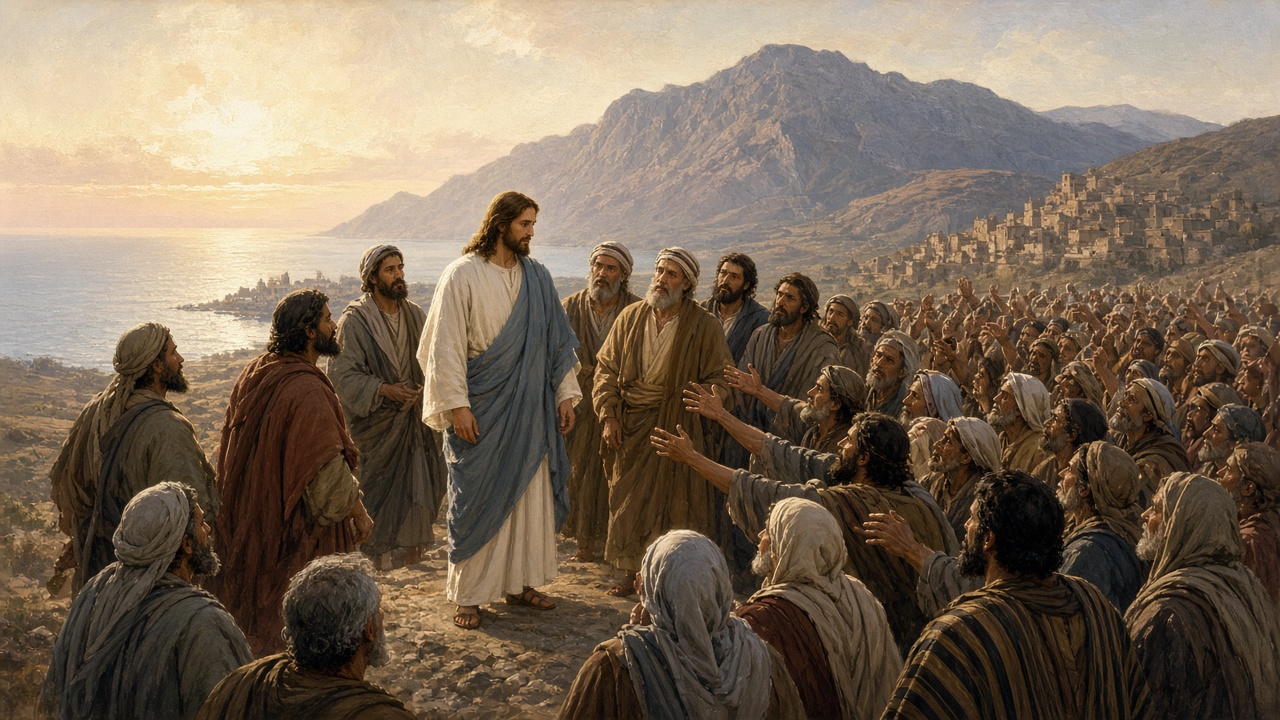
- Jesus came down with them and stood on a level place, where people from Judea, Jerusalem, and the sea coast of Tyre and Sidon had gathered to hear him and to be healed. Tyre and Sidon were ancient Phoenician cities on the Mediterranean; Sidon, the older city, lay about twenty-five miles north of Tyre. A chronology dates this teaching to AD 28 and titles it the Sermon on the Mount, though the narrative places Jesus on level ground after he came down from the mountain.Sources: the Bible text itself · Tyre · Sidon · Sermon on the Mount
Notes written with AI assistance from open sources (Theographic Bible Metadata, CC BY-SA 4.0; Easton’s Bible Dictionary, public domain) and reviewed before publishing.
Places in this chapter
- Jerusalem · 31.777, 35.234 · verse 17
- Judea · Today: Judea 1 · 31.777, 35.234 · verse 17
- Sidon · Today: Sandikli archaeological site in Sidon · 33.561, 35.372 · verse 17
- Tyre · 33.271, 35.196 · verse 17
Only places identified with high confidence are shown (90% or more according to the scholarly sources compiled by OpenBible). Period map: DARE (Digital Atlas of the Roman Empire), CC BY 4.0; modern map: © OpenStreetMap contributors; places: OpenBible.info (CC BY 4.0).
Credits and license for this translation
Jamaw ta Marbinto: Kabarre ta Gala ɗo bi ka Iisa Masi iŋ daŋla
New Testament in Dangaléat (CD:daa:Dangaléat)
copyright © 2012 Wycliffe Bible Translators, Inc.
Language: Dangaléat
Translation by: Wycliffe Bible Translators, Inc.
Copyright Information
© 2012, Wycliffe Bible Translators, Inc. All rights reserved.
This translation text is made available to you under the
terms of the Creative Commons License: Attribution-Noncommercial-No Derivative Works.
( http://creativecommons.org/licenses/by-nc-nd/3.0/ )
In addition, you have permission to port the text to different file formats, as long as you
do not change any of the text or punctuation of the Bible.
You may share, copy, distribute, transmit, and extract portions
or quotations from this work, provided that you include the above copyright
information:
You must give Attribution to the work.
You do not sell this work for a profit.
You do not make any derivative works that change any of the actual words or punctuation of the Scriptures.
Permissions beyond the scope of this license may be
available if you contact
us with your request.
The New Testament
in Dangaléat
© 2012, Wycliffe Bible Translators, Inc. All rights reserved.
This translation is made available to you under the terms of the
Creative Commons Attribution-Noncommercial-No Derivatives license 4.0.
You may share and redistribute this Bible translation or extracts from it in any format, provided that:
You include the above copyright and source information.
You do not sell this work for a profit.
You do not change any of the words or punctuation of the Scriptures.
Pictures included with Scriptures and other documents on this site are licensed just for use with those Scriptures and documents.
For other uses, please contact the respective copyright owners.
2021-11-01
Source: http://ebible.org/daaNT/ · eBible.org