1 Corinthians 15
Jamaw ta Marbinto: Kabarre ta Gala ɗo bi ka Iisa Masi iŋ daŋla · Tap a verse to see its cross-references.
Nooye ka Iisa Masi
1Gem kol siŋtay, nu raka pey diŋ kuu pakire ɗo Kabarre ta Gala taat nu gaariiko awalle. Kabarre-at, ku ooyta ho ku obit samaane ɗo gelbinko. 2Iŋ taar ko, Buŋ jiliiko ya ku obit kaaw-an bombo ar kaak nu gaariikonta. Yampa, imaanko uc maala. 3Nu ɓildiŋko min awalle maan kaak ŋu ɓildintu nun meendu. Maan kaak pakgig gamin okin̰co, ŋaar ko aŋka : Iisa Masi mat ɗo bi ka zunuubinnite ar kaak ŋu siirtu ɗo Kitamner, 4ŋu un̰jig ɗo maginer ho ƴiriy ta subbiŋkar gay, Buŋ nooyiig min ɗo muuti ar taat Kitamne kaawtu. 5Min ŋa nooye, ŋa bayniiji ɗo Piyer ho ŋa bayniico oki ɗo paliinna daarin̰. 6Kar ba aaro, ŋa bayniico ɗo maajirna dakin pak miy beeƴ n̰um werco rakki. Min maajirna-ak, daarin̰ mate, kar anuwco gay goya. 7Min ŋaar-ak, ŋa bayniiji ɗo Zaak, kar ŋa bayniico ɗo paliinna okin̰co.
8Kar min ŋa bayinco ja ɗo ŋuur okin̰co, kar kat ba aar, ŋa bayniidu lotu, nun kaak ar mic kaak ŋu weeyig koynay bal nece. 9Asaan min paliinna okin̰co-aŋ, nun di siŋdu allo tak-tak. Zer ya samaan-ak, nu bal nece ŋuun kolin a nu *paliine, asaan awalle, nu taaɓiyig ko taaɓiye gee ku *Egliz ka Buŋdi. 10Kar iŋ barkin ta Buŋdi gay, nu gintu ar kaak ku talin-aŋka. Barkin taat Buŋ beriidu-an bal uce maala. Ya taɓ gay, iŋ taar ko, nu gintu riy dakin pak paliinna okin̰co. Kar riy taat nu giniy-an, ŋa nununno kat ginaata, ta barkin ta Buŋdi taat goy iŋ nunu. 11Ansi-ak, ya ŋa nun kat gaarkon Kabarre ta Gala wal ya ŋu paliinna kuuk daarin̰ sa, kaawni rakki di. An ko kaaw taat ni gaariyo ho taat ku aamintu.
Nooye ka gee ku mate
12Ya ni kaawaako a Buŋ nooyig Iisa Masi min ɗo muuti, maa di minninko, daarin̰ ɗiyiy a gee ku mate, ŋuur nooyɗo ? 13Ya gee ku mate nooyɗo, ŋaar-ak, Iisa Masi sa bal nooye. 14Ho ya ŋa bal nooye, kaaw taat ni gaariy-an uc us maala, ho imaanko sa, bal baati. 15Kar pey, ya ka seener gee kuuk mate ŋuur nooyɗo, ta-aŋ Buŋ oki bal nooyin̰ Iisa Masi min ɗo muuti. Ŋaar-ak, ni raada iŋ maan kaak Buŋ gintu, asaan ni kaaw waraŋ a ŋa nooyga. Kar ya kaaw taat ŋu kaawiy-an ka seener, ŋaar-ak, ŋa bal nooyin̰ji. 16Asaan ya gee kuuk mate kat nooyɗo, ŋaar-ak, Iisa Masi oki, Buŋ bal nooyin̰ji. 17Kar ya Buŋ bal nooyin̰ji gay, imaanko taat ku aamintu loci-at sa, taar us maala ho ku goy misa ɗo zunuubinniko. 18Ŋaar-ak, ŋuur kuuk aamin ɗo Iisa Masi ho mate, ŋuur-ak rawte ziŋkico. 19Ya gi diy gelbinte ɗo Iisa Masi ɗo goye ka diŋ di, ŋaar-ak, min gee okin̰co, ginteŋ di ŋuute talinte aminda paka.
20Kar ka seener gay, Buŋ nooyig Iisa Masi min ɗo muuti. Ŋa ŋaar ko nooy awalle a ŋaa gaare kadar botol pile a gee ku mate yaa nooye oki. 21Ka seener, ar muut un̰jitu ɗo duniiner iŋ botol ta gem rakki di, ampaa ko, nooye oki astu iŋ botol ta gem rakki di.
22Gee okin̰co mataw asaan ŋu koogin ku Aadum. Ansii ko, ŋuur kuuk n̰um iŋ Iisa Masi, okin̰co yaa gase goye. 23Kar gay, ay gem di yaa ƴoke kamney : Iisa Masi, ŋaar ogirco ɗo gee okin̰co ɗo nooyindi, kar kat yaa ase geen̰ji ɗo wiktin taat ŋaa yeepe. 24Kar ba aaro, duniin yaa gaaseŋ kate. Ɗo wiktin taar-at, Iisa Masi yaa idin̰ ruwwinnay kuuk jookumo okin̰co, iŋ aginduwco okin̰co ho iŋ ŋuur okin̰co kuuk gin gudurre ɗo duniiner ho ŋaaji berin Meennaw ɗo Tatte Buŋ. 25Asaan Iisa Masi yaa tee Meennuwiy nam ƴiriy taat Buŋ yaaco nosire ɗo adiney okin̰co, ŋuu gine wer ka lee asin̰ji. 26Adin kaak Buŋ asiy ide ba aar-ak, taar muutu. 27Ka seener, ŋu siir ɗo Kitamner aman : « Buŋ diyig Iisa Masi kaaco ka gamin okin̰co. » Kar min gamin-aŋ gay, Buŋ meen̰ji attanno, asaan ŋaar di kaak berji gudurre ɗo Iisa ɗo gamin-aŋku. 28Ka seener, wiktin taat Buŋ yaa diyin̰ Iisa Masi kaaco ka gamin okin̰co, meen̰ji Buŋ di yaa goye kaaci. Hiyya, Buŋ keeji di yaa goye tak-tak kaaco ka gamin okin̰co.
29Di taloŋ, gee daarin̰ kuuk gina batem ɗo saan ta siŋtico kuuk mat bal batiziye. Ŋu giniy pa-ak a ŋuu gase maa ? Ya gee kuuk mat nooyɗo-ak, maa di pey gee-ak giniy batem ɗo bi kan̰co ? 30Kar nini gay, maa di ay wiktine, ni beriy ziŋkini ɗo taaɓiner ? 31Gem kol siŋtay, kun kawta, nu goy ko ɗo taaɓin ta muuti di. Nu kaawaako, ya ka seener adir portiko iŋ kuŋko, asaan ku aamin iŋ siŋ ku *Rabbinte Iisa Masi, kaaw taat nu kaawiy-an oki, taar ka seener. 32Wiktin taat nu goyiy ɗo geeger ka Epeez, ŋu taaɓiyin ko taaɓiye. Nu gintu ar nu taasin̰a iŋ kumin ku yeero. Ya nu taasin̰a ɗo bi ka gamin ku duniiner-aŋ, naa gase maa ? Kar pey ya gee kat nooyɗo min ɗo muuti, ŋaar-ak, gee kaawa seene wiktin taat ŋu kaawiy iŋ kaaw agunuwa aman : « Taante ho saante, asaan kawta muut ƴokaate. »
33Yaman, dakoŋ caaciyenno ziŋkiko ! Goye kaak iŋ gee kuuk jookum-ak, ŋaar niga gemo. 34Ŋaar-ak, yeepoŋ ɗo pikirre taat samaane ho rasoŋ gine ka zunuubinnar tak-tak. Nu tala kadar minninko, gee daarin̰ ibingigɗo misa Buŋ. Nu kaawtu pa-ak a sokan̰ yaako deŋko.
Zi ka gem kaak nooye
35Kar gay, wal gem yaa inde aman : « Maman gem ka mate nooygiyo ? Kar ya gem-ak kat nooye, ŋaa ice maa zirda ? » 36Taloŋ kat gem kaak kaay kan̰jiɗo-aŋka ! Ya ki luwaw, busumji zooɗɗo di ŋu rocciyo walla ? 37Ko taat ki luwiy-at, ya ŋa juuju wal ta meriya oki, ki luwa busumco di. Yampa, ki luwɗo aarco. 38Kar busam kuuk ki luwiy-ak gay, Buŋ giniig ŋu rocciyo ho ŋu maaɗiyo. Ay busum di iŋ aaroy ar kaak meen̰ji Buŋ rakiyo.
39Gamin okin̰co kuuk siikimaw, ziŋkico sawaɗo. Ziŋka ku geemir, ku mallel, ku ɗiiɗir ho iŋ ku boosir sa, okin̰co, ŋu sawaɗo. 40Gamin kuuk ka samaaner iŋ ku keɗer, ŋuur sawaɗo. Ŋuur kuuk ka samaaner, samaanuwco keetiti min ku keɗer. 41Pato ceera keetiti ho koye ceera keetiti. Kaalna sa, ceerin̰co sawaɗo, ay kaal di iŋ ceerin̰ji.
42Ansii di oki, ɗo wiktin taat gee kuuk mate yaa nooye, taa kuuniye pa. Momte kaak ŋu tiisig keɗer, ŋaar ar busum kaak ŋu luwga. Momte-ak yaa zooɗe. Kar min ŋa nooye, ŋa zooɗaaɗo pey tak-tak. 43Wiktin taat ŋu tiisig momte-ak, ŋa ka talinno. Kar min ŋa nooye, gee rawɗo talin̰ji. Wiktin taat ŋu tiisiiga, ŋa ginno gudurre. Kar min ŋa nooye, ŋa gin gudurre dakina. 44Wiktin taat ŋu tiisiiga, ŋaar zi ka gemor di. Kar min ŋa nooye, ŋa gin zi kaak asa min Ruwwin ta Buŋdi. Ya ŋa gin zi ka gemor, ŋa gin oki zi kaak asa min Ruwwin ta Buŋdi. 45Ka seener, ŋu siir ɗo Kitamner aman : « Aadum, ŋaar ko gem kaak awalle, Buŋ berji siikime. » Kar Iisa Masi, ŋaar Aadum ka ba aaro. Ŋaar ruwwine taat bera goye ɗo geemir. 46Ŋa ziɗo kaak asa min Ruwwin ta Buŋdi kat as awalle. Kar gay, ŋa zi ka gemor ja, kar kat astu zi kaak asa min Ruwwin ta Buŋdi. 47Aadum kaak awalle, ŋaar Buŋ kilgiyig iŋ kiɗa. Kar Aadum ka seeriŋkar gay, ŋaar as ase min kuwa. 48Gee kuuk goy ɗo duniiner-an, ŋuur ar ŋaar kaak Buŋ kilgiytu iŋ kiɗa ho ŋuur kuuk goy ka samaaner gay, ŋuur ar ŋaar kaak as ase min kuwa. 49Uudin taat gi ariy gem kaak Buŋ kilgiytu iŋ kiɗa, ƴiriy rakki, gi asiy are oki gem kaak as ase min kuwa. 50Gem kol siŋtay, cokiyon kaawor-anta : zi ka gemor iŋ kumay ho iŋ baariy un̰jaaɗo ɗo *Meennaw ta Buŋdi, ho gamin kuuk yaa zooɗen sa, ŋuur hadiraaɗo iŋ kuuk zooɗaaɗo tak-tak.
51Cokiyoŋ, naako kaawe maan rakki kaak cigile : gi mataaɗo okinte. Kar gay, okinte, ziŋkite asa jipte 52koɗok di ar kooce ka columdi. Ŋuu jipte ɗo wiktin taat perin ta ba aaro yaa aale. Ya ta aale, gee kuuk mate yaa nooye. Ŋuu nooye iŋ ziŋka kuuk zooɗaaɗo tak-tak. Kar ginte okinte gay, ziŋkite yaa jipte. 53Ka seener, zi kaak yaa zooɗe, ŋaa jipte iŋ ŋaar kaak zooɗaaɗo tak-tak, ho zi kaak kawtan di yaa mate sa, ŋaa jipte iŋ ŋaar kaak mataaɗo tak-tak. 54Wiktin taat zi kaak yaa zooɗe-ak yaa jipte iŋ kaak zooɗaaɗo, ho kaak yaa mate-ak iŋ kaak mataaɗo, ŋaar-ak, kaawin kuuk ŋu siirtu ɗo Kitamner yaa ase kat ɗo werco aman :
« Buŋ nosirtit tak-tak ɗo muuti, muut ginno pey bat. »
55« Way kaŋke muutu, di mooŋ kat ka nosire ?
Way muut-anta, mooŋ kat gudurrike ? »
56Muutu, taar gin gudurre taat ta diyiy gee-ak min zunuubinna kuuk gee giniyo. Kar zunuubinna gay, ŋuur gin gudurre taat ŋu sakkiyig gee min ɗo *gaanuun ka imila baaco. 57Ozilinteŋ Buŋte, ŋaar kaak beraate gudurre taat giiti nosire ɗo muuti iŋ gudurre ta Rabbinte Iisa Masi.
58Ansi-ak, gem kol siŋtay kuuk nu elgiyo, oboŋ tirit ɗo imaanko ho yoo maan sa eeraakonno. Zeeɗoŋ kuu ɓaa iŋ uŋko ɗo riy ta *Rabbin Buŋ, asaan ku iban tam kadar taaɓin taat ku taaɓiyiy ɗo ay maan kaak ku giniy iŋ siŋ ku Rabbiner, taar ucaaɗo maala kat bat.
Did you know?
The Resurrection of the Dead
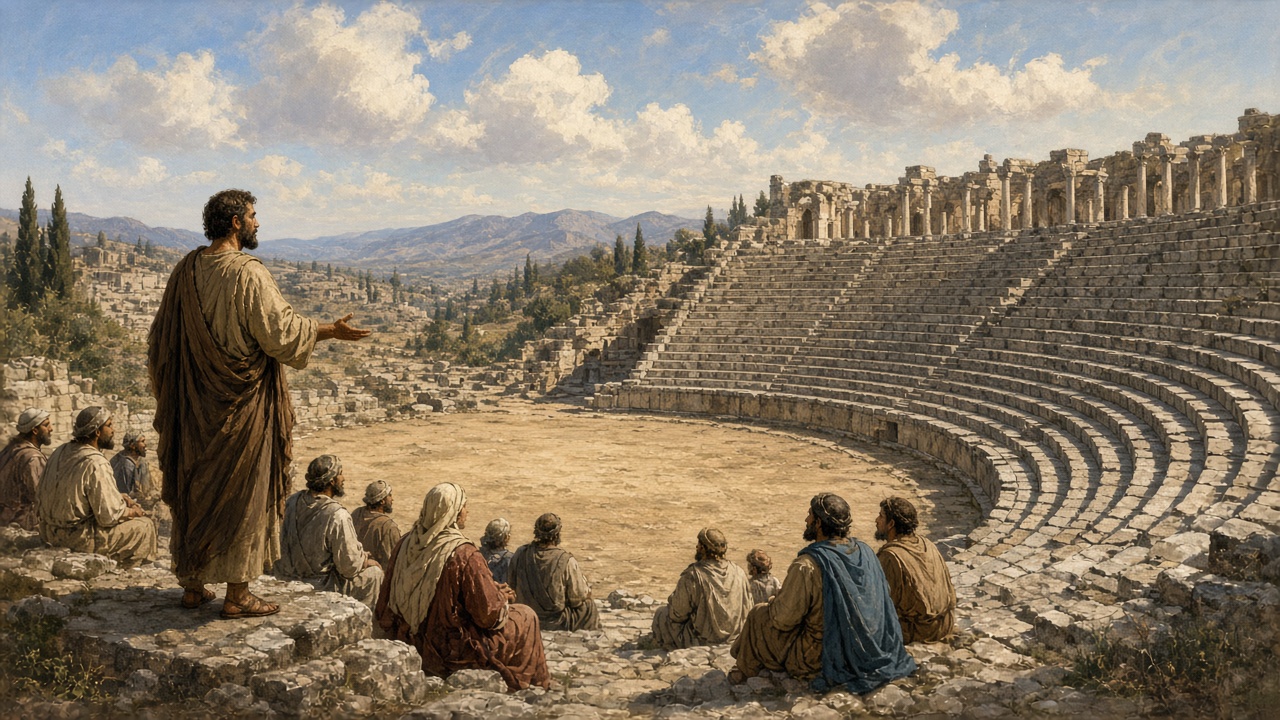
- When this chapter asks what was gained by fighting wild beasts in Ephesus, it names a city that Easton's Bible Dictionary calls the capital of proconsular Asia, known for an open-air theatre—the largest in the world, able to hold 50,000 spectators—where fights of wild beasts and of men with beasts were staged.Sources: Ephesus · the Bible text itself
- Easton's Bible Dictionary explains that Adam, a Babylonian word meaning red and the ordinary name for man in Hebrew and Assyrian, was the first man, formed from the dust of the earth, which is why he received that name. This chapter takes up that picture: death came through a man, the first man was of the dust, and the last Adam is a life-giving spirit.Sources: Adam · the Bible text itself
- Easton's Bible Dictionary (1897) identifies the James to whom Christ appeared after the resurrection, as this chapter records, as the brother or near kinsman of Jesus, also called James the Less, and says that he later headed the church in Jerusalem.Sources: James (Brother of Jesus) · the Bible text itself
Notes written with AI assistance from open sources (Theographic Bible Metadata, CC BY-SA 4.0; Easton’s Bible Dictionary, public domain) and reviewed before publishing.
Places in this chapter
- Ephesus · 37.939, 27.341 · verse 32
Only places identified with high confidence are shown (90% or more according to the scholarly sources compiled by OpenBible). Period map: DARE (Digital Atlas of the Roman Empire), CC BY 4.0; modern map: © OpenStreetMap contributors; places: OpenBible.info (CC BY 4.0).
Credits and license for this translation
Jamaw ta Marbinto: Kabarre ta Gala ɗo bi ka Iisa Masi iŋ daŋla
New Testament in Dangaléat (CD:daa:Dangaléat)
copyright © 2012 Wycliffe Bible Translators, Inc.
Language: Dangaléat
Translation by: Wycliffe Bible Translators, Inc.
Copyright Information
© 2012, Wycliffe Bible Translators, Inc. All rights reserved.
This translation text is made available to you under the
terms of the Creative Commons License: Attribution-Noncommercial-No Derivative Works.
( http://creativecommons.org/licenses/by-nc-nd/3.0/ )
In addition, you have permission to port the text to different file formats, as long as you
do not change any of the text or punctuation of the Bible.
You may share, copy, distribute, transmit, and extract portions
or quotations from this work, provided that you include the above copyright
information:
You must give Attribution to the work.
You do not sell this work for a profit.
You do not make any derivative works that change any of the actual words or punctuation of the Scriptures.
Permissions beyond the scope of this license may be
available if you contact
us with your request.
The New Testament
in Dangaléat
© 2012, Wycliffe Bible Translators, Inc. All rights reserved.
This translation is made available to you under the terms of the
Creative Commons Attribution-Noncommercial-No Derivatives license 4.0.
You may share and redistribute this Bible translation or extracts from it in any format, provided that:
You include the above copyright and source information.
You do not sell this work for a profit.
You do not change any of the words or punctuation of the Scriptures.
Pictures included with Scriptures and other documents on this site are licensed just for use with those Scriptures and documents.
For other uses, please contact the respective copyright owners.
2021-11-01
Source: http://ebible.org/daaNT/ · eBible.org