1 Corinthians 10
El Nuevo Testamento · Tap a verse to see its cross-references.
A sten yu'hui na cha' 'in jo'o
1'Un jun ta'a na, a nchca cha' jlya ti' na si'yana nchgaa nten cula 'in na mda'an ne' se'en nducui ndla', lo' nchgaa ne' mdijin xi'yu ne' sca yaa' tujo'o, 2lo' nchgaa ne' lo'o Moisé mda'an ne' se'en nducui ndla' can', mdijin xi'yu ne' tujo'o can', 3a cunta nchgaa ne' ycu ne' jaslya nu mdaa Ndiose 'in ne', 4cui' cuaña'an nchgaa ne' yi'o ne' tyi'a nu mdaa Ndiose, cui' nu mdo'o loo quee nu mdaa ñi, lo' quee can' lca Cristo, ñi nu mda'an lo'o 'in ne'. 5Una qui'an la ne' a nguinu tsu'hue tiquee Ndiose lo'o ne', can' cha' ngula yaa' ñi 'in ne' si'yana caja ne' se'en ngutyi can'. 6Yato'o cha' re si'yana chu'hui cha' tiyaa 'in na, lo' a chcui ti' na cha' ngunan' ña'an m'ni ne' can'. 7A nchca cha' cu'ni tnu um jo'o tsaña'an nguinu scua cha' 'in ne': —Yten tucua nten can' ycu ne', mdyisnan yi'o ne', lo' mdi'in jya ne'—. 8Lo' ñi a ntsu'hui cha' sten yu'hui na lo'o scasca ne' cuna'an ña'an m'ni ne', lo' yato'o ngujui tsa cla nducua snan mii ne', ni' sca tsaan ti. 9Ñi a quijya su'hua na lo'o cha' 'in Ñi X'nan na ña'an m'ni ne', yato'o ngujui ne' xa ycu cunaan 'in ne'. 10Ñi a chcui' yuhue' um si'ya scasca cha', ña'an nu m'ni ne', lo' yato'o yjui angujle 'in ne'. 11Cha' re yato'o na si'yana qui'ya na cunta scasca cha', lo' ngua'an scua na si'yana su'hua tiyaa na 'in na, tsalca nu ti' ndi'in xa tsatii cha' nu nchca loo chendyu re. 12Can' cha' nu xque' ti' tla ndon lo'o cha' nu ndiya qui'an ti', xñi cunta si'yana a tyu loo qui'ya. 13Scasca cha' nu ljyaan 'in um, a s'ni nchgaa tucui ndijin cha' can', una tla cha' 'in Ndiose, a taa ñi ya' tyijyin um sca cha' nu a ta loo um, cui' ca nu loo cha' can' sla ñi sca tucueen nu tyi'o um nde loo, si'yana tyijyin um cha' can'. 14Can' cha' 'un jun ta'a na nu ndyu'hui cuiya' tin' 'in, a cu'ni tnu um lcuin jo'o. 15Nchcuin' lo'o um si'yana lca um nten nu ndyi'ya cha' tiyaa, lo' cu'ni quii tsu'hue um cha' ta cui' ña'an nchcuin'. 16Xa ndyaa na xu'hue 'in Ndiose si'ya vino nu cua' ncuan ñi, ¿ta si'i sca cha' ti 'in na si'ya tne Cristo? Ticui' cuaña'an xa nchcu na jaslya, ¿ta si'i sca cha' ti 'in na lo'o Cristo? 17Siya' qui'an tucui lca na una tsatlyu nchcu na scati jaslya, can' cha' sca cha' ti 'in na nchgaa na. 18Xñi um cunta 'in ne' Israel xa nchcu ne' cunan' 'ni nu ndiquin tucua ne' tloo Ndiose, ¿ta si'i sca cha' ti 'in ne' lo'o ñi xacan'? 19¿Ña'an ta xacan'? ¿Ta si'ya cha' re ntsu'hui lyoo jo'o can' uta na nu cua' mducua loo na? 20Una cunen lo'o um si'yana ne' gentil xa ndujui ne' sca 'ni tloo jo'o 'in ne', 'in cui'in xa'an ngui'ni tnu ne', lo' si'i 'in Ndiose, can' cha' a cu'ni sca um cha' 'in um lo'o cui'in xa'an. 21A ntsu'hui cha' co'o um vino tso' nu 'in Ñi X'nan na, lo' ticui' xaa tso' 'in cui'in xa'an, a tca cuan xu'hue um na nu nducua loo msa 'in Ñi X'nan na, lo' ticui' xaa na nu nducua loo msa 'in cui'in xa'an. 22¿Ta xtyi ti' na taa na cha' nsin' ti' 'in Ñi X'nan na? ¿Ta tla la cha' 'in nare' que 'in ñi?
Su'hua loo na 'in Ndiose si'ya nchgaa loo cha'
23Nchgaa cha' tca cu'nin, una si'i nchgaa na ndyi'o tñan cu'nin 'in na, nchgaa cha' tca cu'nin, una a nchgaa na nda yaa' na 'in xca tucui. 24A chu'hui yuhue ti' na tsa 'in ti na, cui' ca nu chu'hui yuhue ti' na 'in xca tucui. 25Ña'an nchca ti' cunan' 'ni nu ndujui' ne' se'en nchca quiya', tca cu um nchgaa loo cunan' can', una a cuñicha' um la jui na, ta si'yana ngui'ni tucua ti' um, 26—si'yana chendyu re lo'o nchgaa na nu ndi'in 'in na, na 'in Ñi X'nan na lca na—. 27Cha' nde'en nu a ndiya qui'an ti' 'in Ndiose cuni 'in um cu um lo'o, lo' cha' ndyi'o tiquee um tsaa um, tca cu um nchgaa loo na nu tyi'in tyaa tloo um, una a cuñicha' um la jui na, ta si'yana ngui'ni tucua ti' um. 28Una cha' nde'en nu quitsa' 'in um si'yana cua' mducua na loo jo'o, a cu um 'in na, cui' si'ya cha' 'in nu mtsa' 'in um ta si'yana ntsu'hui nu ngui'ni tucua ti', —si'yana chendyu re lo'o nchgaa na nu ndi'in 'in na, na 'in Ñi X'nan na lca na—. 29Si'i cha' 'in um ca nchcuin', cui' ca nu cha' 'in nu ngui'ni tucua ti' can'. ¿Ta ndyi'o tñan cu'nin sca cha' tloo xca tucui si'yana culo qui'ya can' 'ñan? 30Cha' nan' tsu'hue ntsu'hui tiqueen nchcun sca na lo' ndyaan xu'hue 'in Ndiose, ¿ta ndyi'o tñan caja nu chcui ndijin si'ya cha' can'? 31Can' cha' xa cu um lo' co'o um, uta cu'ni um scasca loo cha', su'hua loo um 'in Ndiose si'ya cha' can'. 32A nchca cha' chcui ndijin um tloo ne' judio, uta ne' gentil, lo' ñi tloo jun ta'a na. 33Cui' cuaña'an nan' ntsu'hui yuhue tin' 'in nchgaa la tucui lo'o nchgaa loo cha', lo' si'i tsa 'ñan tin ntsu'hui yuhue tin', cui' ca nu nchca tin' si'yana quinu tsu'hue nchgaa tucui, ña'an ca si'yana tca tyi'o laa qui'an nten.
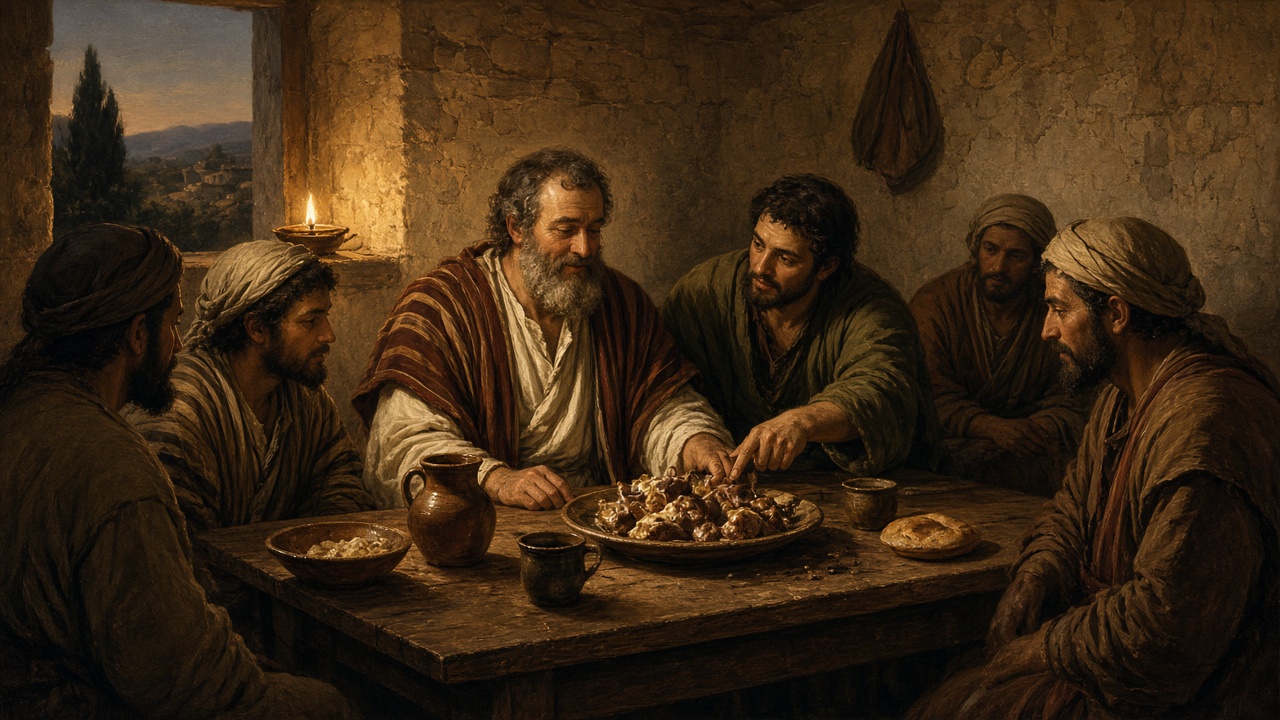
Did you know?
Wilderness Warnings and the Lord's Table
- Paul says he does not want the Corinthians unaware that the forefathers were all under the cloud and all passed through the sea, and that they were baptized into Moses in the cloud and in the sea. They all ate the same spiritual food and drank the same spiritual drink from the spiritual rock that accompanied them, and he says that rock was Christ.Sources: the Bible text itself
- Paul says God was not pleased with most of them, for they were struck down in the wilderness. He lists idolatry, sexual immorality in which twenty-three thousand died in one day, testing Christ, which brought death by snakes, and complaining, punished by the destroying angel, and calls these events examples written down as warnings.Sources: the Bible text itself
- He calls the cup of blessing and the bread that is broken a participation in the blood and body of Christ, and says pagan sacrifices are offered to demons, not to God, so the two tables cannot be shared. Food sold in the meat market may be eaten without raising questions of conscience, for "The earth is the Lord's, and the fullness thereof," but if someone says it was offered to idols, it should be refused for that person's conscience.Sources: the Bible text itself
Notes written with AI assistance from open sources (Theographic Bible Metadata, CC BY-SA 4.0; Easton’s Bible Dictionary, public domain) and reviewed before publishing.
Credits and license for this translation
El Nuevo Testamento
New Testament in Chatino, Nopala
copyright © 2013 Wycliffe Bible Translators, Inc.
Language: Nopala Chatino (Chatino, Nopala)
Translation by: Wycliffe Bible Translators
Contributor: Wycliffe Bible Translators, Inc.
Copyright Information
© 2013, David Niel Nellis, All rights reserved.
This translation text is made available to you under the
terms of the Creative Commons License: Attribution-Noncommercial-No Derivative Works.
( http://creativecommons.org/licenses/by-nc-nd/3.0/ )
In addition, you have permission to port the text to different file formats, as long as you
do not change any of the text or punctuation of the Bible.
You may share, copy, distribute, transmit, and extract portions
or quotations from this work, provided that you include the above copyright
information:
You must give Attribution to the work.
You do not sell this work for a profit.
You do not make any derivative works that change any of the actual words or punctuation of the Scriptures.
Permissions beyond the scope of this license may be
available if you contact
us with your request.
Printed book ISBN 968310150X
The New Testament
in Chatino, Nopala
© 2013, David Niel Nellis, All rights reserved.
This translation is made available to you under the terms of the
Creative Commons Attribution-Noncommercial-No Derivatives license 4.0.
You may share and redistribute this Bible translation or extracts from it in any format, provided that:
You include the above copyright and source information.
You do not sell this work for a profit.
You do not change any of the words or punctuation of the Scriptures.
Pictures included with Scriptures and other documents on this site are licensed just for use with those Scriptures and documents.
For other uses, please contact the respective copyright owners.
2015-03-17
Source: http://ebible.org/cya/ · eBible.org