Matthew 3
Nduudu nʼdai yeⁿʼe Ndyuūs yeⁿʼe cuicateco yeⁿʼe Tepeuxila · Tap a verse to see its cross-references.
Yeⁿ'e chi Juan cuɛɛ̄dínuūⁿniⁿ yā ní ngaⁿ'a yā nduudu cuaacu
1Tiempo miiⁿ chiicá Juan chí cuɛɛ̄dínuūⁿniⁿ yā na lugar naachi nguɛ́ɛ́ ch'ɛɛtinéé 'iiⁿ'yāⁿ. Lugar miiⁿ chi yeⁿ'e yáⁿ'āa Judea ní mííⁿ ngaⁿ'a Juan nduudu cuaacu. 2Juan miiⁿ ní ngaⁿ'a yā chi 'túúcā: Ndís'tiī, ndaacadaamí nī yeⁿ'e chi diíⁿ nī chi nguɛ́ɛ́ n'dai caati 'āā ndaā niiⁿnuúⁿ nguuvi miiⁿ naachi Ndyuūs ngaⁿ'a ntiiⁿnyúⁿ yā na va'ai chɛɛti nguuvi. 3Níícú yeⁿ'e Juan 'cūū ní saⁿ'a profeta Isaías caⁿ'a yā yeⁿ'e yā vmnááⁿ vmnaaⁿ taachí caⁿ'a yā 'túúcā:
'Caandiveéⁿ nī. 'Áámá saⁿ'ā ngaⁿ'ā yuudu sa 'túúcā na yáⁿ'āa cuūⁿmáⁿ naachi nguɛ́ɛ́ ch'ɛɛtinéé 'iiⁿ'yāⁿ: 'Cuundiyaáⁿ nī yúúní yeⁿ'ē Señor Ndyuūs caati cúchii yā. Nan'guáaⁿ nī yúúní cuaacu caavá yā. Didɛɛvɛ́ nī staava yeⁿ'é nī ní cuuvi cuaáⁿ nī 'iiⁿ'yāⁿ miiⁿ taachi ndaa yā.
4Catecai Juan miiⁿ ní nin'dai ndúúcū yuūdū yeⁿ'ē 'iiti camello. Ní cinturón yeⁿ'ē sa ní diiⁿmaⁿ 'iiti. Níícú chí che'ē sa ní 'iiti langostas ndúúcū n̄'di'i yeⁿ'ē 'iiti 'yáaiⁿ chi vɛɛ cuɛɛti. 5N'deeé 'iiⁿ'yāⁿ can'daa yā chi 'caandiveéⁿ yā nduudu yeⁿ'é Juan miiⁿ. Ní can'daa yā yeⁿ'e yáāⁿ Jerusalén, yeⁿ'e yáⁿ'āa Judea, ní yeⁿ'e yáⁿ'āa chi cuaaⁿ 'diituú yeⁿ'ē yíícú Jordán. 6'Iiⁿ'yāⁿ ní caⁿ'a yā nuuⁿndi yeⁿ'é yā nanááⁿ Ndyuūs níícú Juan miiⁿ ní chɛɛdínuūⁿnīⁿ sá 'iiⁿ'yāⁿ miiⁿ na yíícú Jordán miiⁿ.
7Taachí Juan miiⁿ n'diīchī sa chi neené 'yaaⁿ 'iiⁿ'yāⁿ fariseos ndúúcū 'iiⁿ'yāⁿ saduceos neⁿ'é yā chi cuɛɛdínuūⁿnīⁿ sa 'iiⁿ'yāⁿ, Juan miiⁿ caⁿ'a sa chii sa 'iiⁿ'yāⁿ miiⁿ: Ndís'tiī tan'dúúcā cúú, 'tíícā ndís'tiī. ¿Du'ú chí 'cuééⁿ ndís'tiī chí cuuvi cáánu nī yeⁿ'e castigo taaⁿ chi cuchiī? 8N'daāca diíⁿ nī maaⁿ níícú 'cuuⁿ'míⁿ nī 'iiⁿ'yāⁿ chi 'āā ndaacadaamí nī yeⁿ'e nuuⁿndi yeⁿ'e nī. 9Ndís'tiī ní 'āā ntɛ́ɛ́ nadacádíínuuⁿ nī chi n'dai nī caati ndaata yeⁿ'e Abraham ndís'tiī. Naati 'úú ní ngaⁿ'á ngīi ndís'tiī chi Ndyuūs cuuvi diíⁿ yā chi tuūu s'tiī ní cuuvi daiya Abraham. 10Cutíīiⁿ mííⁿ 'āā canéé na dii'yu yáⁿ'á. Nducyaaca yáⁿ'á chí nguɛ́ɛ́ n'dáacā ngii n'gui'i yeⁿ'ē canee chi 'caata yáⁿ'á mííⁿ ní cūnuuⁿ na yaⁿ'ā. 11'Úú ní cuaacu nííⁿnyúⁿ chí ngɛɛ̄dínuūⁿníⁿ ndís'tiī ndúúcū nuūⁿnīⁿ caati 'āā ndaacadaamí nī yeⁿ'e nuuⁿndi yeⁿ'e nī. Naati ndáá táámá 'iiⁿ'yāⁿ cuayiivi yeⁿ'e 'úú chi ch'ɛɛtɛ taavi cá poder yeⁿ'e yā nguɛ́ɛ́ ti 'úú. 'Úú ní nguɛ́ɛ́ neené n'dai 'úú chi cuuvi candɛɛ́ ndaacuú yeⁿ'e yā. 'Iiⁿ'yāⁿ miiⁿ ní n'dai taavi cá yā chi cuuvi 'úú. 'Iiⁿ'yāⁿ miiⁿ ní cuɛɛdínuūⁿniⁿ yā ndúúcū Espíritu N'dai yeⁿ'é Ndyuūs ndúúcū yaⁿ'ā. 12Ní taachi ndaa 'iiⁿ'yāⁿ miiⁿ chi nguuvi Jesús diíⁿ yā tan'dúúcā 'áámá 'iiⁿ'yāⁿ chí didɛɛvɛ́ yā trigo 'tíícā diíⁿ yā ndúúcū 'iiⁿ'yāⁿ. Ní sta'á yā zaranda yeⁿ'e yā ní nadidaamá yā trigo na chɛɛti díínūuⁿ. Ní dɛɛcú miiⁿ ni'neeⁿ yaⁿ'a yā ná nguuchí yaⁿ'ā chi 'āā ntɛ́ɛ́ n'tuūvi. Dɛɛcú miiⁿ ní tan'dúúcā 'iiⁿ'yāⁿ chí nguɛ́ɛ́ i'téénu yā Ndyuūs.
Juan chɛɛdínuuⁿnīⁿ sa Jesús
13Tuu'mi ní Jesús chiicá yā na yáⁿ'āa Galilea ní ndaá yā na yíícú Jordán naachi canee Juan chi Juan miiⁿ ní cuɛɛ̄dinúuⁿnīⁿ sa Jesús miiⁿ. 14Juan miiⁿ ní nguɛ́ɛ́ 'cuuⁿ sa. Ní caⁿ'a sa chii sa Jesús miiⁿ: 'Úú ní neⁿ'é chi dii cuɛɛdínuūⁿnīⁿ di 'úú. ¿'Áá dii cuchiī di nanáaⁿ 'úú?
15Jesús nan'guɛɛcútaⁿ'a yā: Diiⁿ dí maaⁿ 'tíícā; ní diiⁿ yú tan'dúúcā chi Dendyuūs neⁿ'e yā chi diiⁿ yú. Tuu'mi ní Juan 'cuūⁿ sa.
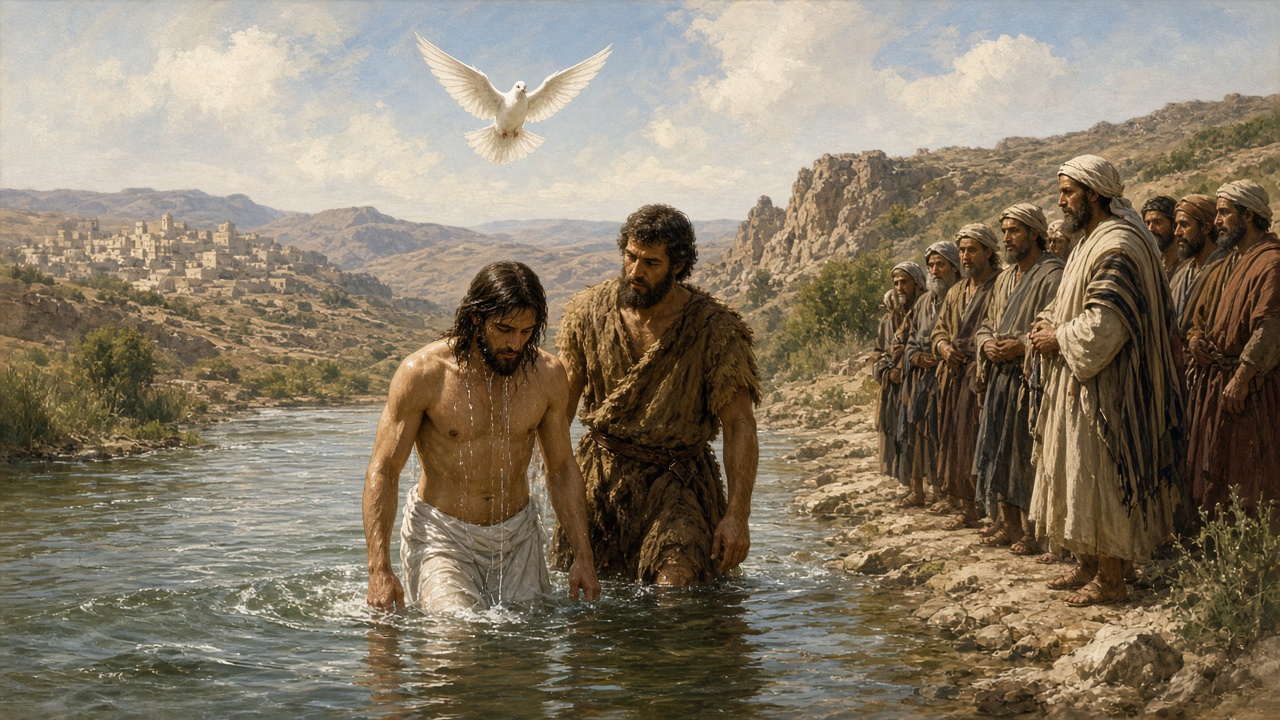
16Cuayiivi taachi 'āā chɛɛdínúuⁿnīⁿ Juan miiⁿ Jesús miiⁿ, tuu'mi ní Jesús ní nan'dáa yā na nuūⁿnīⁿ. Cuayiivi ní nanguaāⁿ nanguuvi. Ní Juan n'diichí sa Espíritu N'dai yeⁿ'é Ndyuūs miiⁿ chi tan'dúúcā paloma 'tíícā. Chiica yeⁿ'ē na va'ai chɛɛti nguuvi ní ndaā vmnaaⁿ yeⁿ'e Jesús miiⁿ. 17Tuu'mi ní n'giindiveéⁿ yā 'áámá nduudu yeⁿ'ē nanguuvi chí ngaⁿ'a: Saⁿ'a 'cūū Daiyá chí neⁿ'e taaví. Ní yeenú taaví cáávā sáⁿ'a 'cūū.
Did you know?
Repentance and Baptism at the Jordan
- Matthew identifies John the Baptist as the one spoken of through the prophet Isaiah: a voice calling in the wilderness, “Prepare the way for the Lord.” Easton's Bible Dictionary (1897) records that John’s mission was the subject of prophecy, citing this passage, Isaiah 40:3, and Malachi 3:1, and that he was of priestly descent—his father Zacharias a priest of the course of Abia, and his mother Elisabeth of the daughters of Aaron. A chronology dates both the beginning of John’s ministry and his baptism of Jesus to AD 26.Sources: the Bible text itself · John the Baptist · John the Baptist Begins Ministry · John Baptizes Jesus
- John came preaching in the wilderness of Judea, and people went out to him from Jerusalem, all Judea, and the whole region around the Jordan, confessing their sins and being baptized in the Jordan River. Easton's Bible Dictionary (1897) notes that under the Romans, in the time of Christ, Judea denoted the southernmost of the three divisions of Palestine, as distinguished from Galilee and Samaria, and included the territories of Judah, Benjamin, Dan, Simeon, and part of Ephraim. Jesus came from Galilee—called Galil by the Jews—to the Jordan to be baptized by John.Sources: the Bible text itself · Judea · Galilee
- John warned the Pharisees and Sadducees not to rely on the claim, “We have Abraham as our father,” saying that God could raise up children for Abraham from the stones. Easton's Bible Dictionary (1897) explains the name Abraham as “father of a multitude” and describes him as the son of Terah, named before his older brothers because he was the heir of the promises.Sources: the Bible text itself · Abraham
Notes written with AI assistance from open sources (Theographic Bible Metadata, CC BY-SA 4.0; Easton’s Bible Dictionary, public domain) and reviewed before publishing.
Places in this chapter
- Judea · Today: Judea 1 · 31.777, 35.234 · verses 1, 5
- Jerusalem · 31.777, 35.234 · verse 5
- Jordan · Today: Jordan River · 31.761, 35.558 · verses 5, 6, 13
- Galilee · 32.760, 35.527 · verse 13
Only places identified with high confidence are shown (90% or more according to the scholarly sources compiled by OpenBible). Period map: DARE (Digital Atlas of the Roman Empire), CC BY 4.0; modern map: © OpenStreetMap contributors; places: OpenBible.info (CC BY 4.0).
Credits and license for this translation
Nduudu nʼdai yeⁿʼe Ndyuūs yeⁿʼe cuicateco yeⁿʼe Tepeuxila
New Testament in Cuicatec, Tepeuxila (MX:cux:Cuicatec, Tepeuxila)
copyright © 1974 Wycliffe Bible Translators, Inc.
Language: Cuicatec, Tepeuxila
Translation by: Wycliffe Bible Translators, Inc.
Cuicateco, Tepeuxila [cux], Mexico
Copyright Information
© 1974, Wycliffe Bible Translators, Inc.
This translation text is made available to you under the
terms of the Creative Commons License: Attribution-Noncommercial-No Derivative Works.
( http://creativecommons.org/licenses/by-nc-nd/3.0/ )
In addition, you have permission to port the text to different file formats, as long as you
do not change any of the text or punctuation of the Bible.
You may share, copy, distribute, transmit, and extract portions
or quotations from this work, provided that you include the above copyright
information:
You must give Attribution to the work.
You do not sell this work for a profit.
You do not make any derivative works that change any of the actual words or punctuation of the Scriptures.
Permissions beyond the scope of this license may be
available if you contact
us with your request.
The New Testament
in Cuicatec, Tepeuxila
© 1974, Wycliffe Bible Translators, Inc.
This translation is made available to you under the terms of the
Creative Commons Attribution-Noncommercial-No Derivatives license 4.0.
You may share and redistribute this Bible translation or extracts from it in any format, provided that:
You include the above copyright and source information.
You do not sell this work for a profit.
You do not change any of the words or punctuation of the Scriptures.
Pictures included with Scriptures and other documents on this site are licensed just for use with those Scriptures and documents.
For other uses, please contact the respective copyright owners.
2014-04-22
Source: http://ebible.org/cuxNT/ · eBible.org