Matthew 11
El Nuevo Testamento: Cuicateco de Teutila · Tap a verse to see its cross-references.
Dechuh Jua̱n Bautista o ihyan te nahn cadino ye yahn Dihvo vo Jesucristo
1Cuahn che chihno ca̱h cuande Dihvo vo nduh che ndichio ihyan apóstol yahn ye ne, chica ye min cuahn ye, cacuahn ye ma̱n, cuahndudo ye ma̱n, nduh cua̱n ya̱n che nino min.
2Ta̱hn min ne, quenun Jua̱n Bautista va̱coya̱hn, ne cuahn che checadino ye yahn dehtenduh che redin Dihvo vo ne, dechuh ye o ihyan che rinduco ye ihyan na̱n Dihvo vo, 3tumerune ye:
―¿A ndih ihyan che a va ca̱de chi ye ndedevahn ye ihyan iyehnse, o coma̱n va che chi ihyan min ne?
4Ndahconan ye, ne ra̱hn ye ri ye ihyan chahn:
―Cuahn nchuhn cuengo ne Jua̱n nducuahn che rendihchero ne ma̱n, rihnevan ne ma̱n. 5Ca̱h ne che cadino ye nduhca̱ che redín che ri ro na̱n ihyan che ve ma̱n ye ma̱n, redín che rica ihyan che neneva doh ca̱h ye ma̱n, redín che rendoyahn ihyan che ndi ye cah che recha̱ yute ma̱n, redín che ihyan che chato ye rihnevan ma̱n, redín che rentuche ihyan che a ndih ye ma̱n, rahndudó ndudo ndah yahn Dendiohs, rihnevan ihyan che ri nda̱che ye yahn nunde yahn ye ma̱n. 6Rá̱hn rí nchuhn te a̱ma ndah ro yahn ihyan che riquendi ye numa ino ye ritahno ye u.
7Cuahn che a cona̱hn ihyan chahn ne, cana̱n rente Dihvo vo nduco ihyan che chenun ye min yahn Jua̱n, ne ra̱hn ye:
―¿Duh che chahn nchuhn chendihchero ne min ya̱hn ne na̱n che metah duhva ne? A devano ne te ndiyu a̱ma ihyan che ran do ye, che anduhneca̱ a̱ma nduco che a muhn a min redecuehte yuhne. 8¿Duh chahn nchuhn chendihchero ne ne? A devano ne te ndiyu a̱ma ihyan che a̱ma ninevaca tino ndah, te ihyan chemin chan ne, ndeva̱co rey chenun ye. 9A devano nchuhn te chahn ne, chendihchero ne a̱ma ihyan profeta. Cua̱co rá̱hn rí nchuhn te ihyan min che tahque chahte vederihquentiyon quenan cuma ye va̱n ihyan profeta. 10A yahn ihyan min che ra̱hn Dendiohs, ndirun na̱n Ndudo yahn ye tuhca̱:
Dechúh a̱ma se numanahn che metah cahn,
ca̱hcoya̱n se chedave yahn ihyan ca̱va che a vate ya̱n ye cuahn che nda.
11Cua̱co rá̱hn rí nchuhn te va̱n nducoya̱ca ihyan che chahte ye iyehnse nde a ra̱hn me nde meniyon ne, Jua̱n Bautista che tahque chahte vederihquentiyon quenan cuma ye. Ate va̱n ihyan che renevahnecun ye vederihquentiyon che nda̱hco ca̱de Dendiohs ne, nde ihyan che tahque doh vederihquentiyon quenan cuma ye ne, tahque chahte vederihquentiyon yahn ye che co vederihquentiyon che quenan cuma Jua̱n.
12’Nde ro che cana̱n Jua̱n ntiyon yahn ye nde meniyon ne, a̱ma redin nun ino ihyan ca̱va che tuno ye vahchetero na̱n che rihquentiyon Dendiohs. 13Moisés ma̱n, nducoya̱ca ihyan profeta, nde na̱n che cana̱n, nde nda̱ Jua̱n Bautista ma̱n, dirun ye yahn vederihquentiyon ra che nda̱hco ca̱de Dendiohs. 14Cuedevano nchuhn te che ndirun na̱n Ndudo yahn Dendiohs che ndaconan chi tun Elías ne, a Jua̱n Bautista nda̱ ye, dinahn vederihquentiyon min, andahre hua nahn cotahno ne. 15Nducoya̱ca nchuhn ne, cuihcovan ndah ne che tihca̱ rá̱hn.
16’Nchuhn che vate ne ma̱n ro cuh ne, nduhchan sa̱hn ca̱hya che reduche se ndihve, tihchan ne. Sa̱hn chahn ne, ra̱hn se ri se combiero yahn se: “Tive nuhn curetive, ate hua ca̱h yeno nchuhn, ndeh ne. Chita ra̱n nuhn, ate hua chaco ne.” 18Nduhchan sa̱hn chahn, tihchan ne, te nda̱ Jua̱n Bautista, ne a̱ma va̱h na̱n cheh na̱n chih ye, ne ra̱hn nchuhn te quenun vaco chihnga̱ ihyan. 19A namin no tun cuahn che nda̱ u che rinducó nducoya̱ca ihyan. Réh ma̱n, ríh ma̱n, da̱ma nduco ihyan che rahte vihco ye, ne ra̱hn ihyan: “Sa̱hn tih ne, a̱ma reh se ma̱n, a̱ma rih se ma̱n, rinduco se sa̱hn rica tume ca̱de iyo ma̱n, sa̱hn nunde chena̱hn ma̱n.” Renda̱hchenan ihyan ntiyon che redin nuhn, ate hua dehve din yahn, te ihyan che renahn ye ne, a devano ye che vededevano yahn Dendiohs ne, chemin che tahque ndah.
Ihyan ya̱n che hua nahn nto ino ye nunde yahn ye
20Chihno min ne, nte Dihvo vo yahn ihyan ya̱n na̱n che tahque din ye vederihno, te ihyan chahn ne, hua nahn nto ino ye nunde yahn ye. Ra̱hn ye:
21―Nchuhn ihyan ya̱n Corazín ma̱n, ihyan ya̱n Betsaida ma̱n, ¡a̱ma vedin nchuhn!, te ndete che ihyan ya̱n Tiro ma̱n, ihyan ya̱n Sidón ma̱n, ndihchero ye vederihno che ndihchero nchuhn ne, a metah ro nto ino ye nunde yahn ye, chahtenun ye tino ndere, chahtera̱n ye va̱n iya. 22Rá̱hn ri nchuhn te nda̱ ro che cuhnde ca̱de yahn nducoya̱ca ihyan ne, nde tahque chahte castigo co nchuhn che co ihyan chahn. 23Me nchuhn ihyan ya̱n Capernaum ne, a̱ma redin ya̱de ne anduhneca̱ ndete che nde vahchetero tuno ne che ra̱hco ne, ate va che ca̱hn ne va̱n ruchiya̱hn, te ndete che ya̱n Sodoma dín vederihno nduhca̱ che dín ya̱n va̱co ne ne, chitahno ihyan chahn, ne vate ca ye nde meniyon. 24Rá̱hn rí nchuhn te ro che cuhnde ca̱de yahn nducoya̱ca ihyan ne, tahque chahte castigo co nchuhn che co ihyan chahn.
Ra̱hn Dihvo vo Jesucristo: “Cochi nchuhn, ne dín che nuhndema̱n chedave yahn ne”
25Tuhme cova̱h Dihvo vo, ne ra̱hn ye:
―Chida má̱n, ndih che rihquentiyon ne vahchetero ma̱n, iyehnse ma̱n, rendevá yavena̱n ne, te a ihyan che necun ye ca̱h ne che cadino ye vededevano yahn ne, ndiyu ihyan che a̱ma devano ye che ra̱hco ye. 26Tihca̱ Chidá, te tihca̱ nahn ma̱n ne.
27Tuhme rá̱hn Dihvo vo ri ye ihyan che chenun ye min:
―Chidá ne, nda̱hco ye vederihquentiyon tá̱h che ca̱hcantiyón nducuahn dehtenduh. Nde a̱ma ihyan hua rendihche ye u, te atena̱n Chidá che rendihche ye u. Namin nde a̱ma ihyan hua rendihche ye Chidá, te atena̱n u, nduco ihyan che má̱n ricuáhn ihyan ta̱ca̱ ye, che rendihche nuhn ihyan. 28Nducoya̱ca nchuhn che rechuhrihn ne, hua va ma̱n chedave yahn ne, cochahtino ne u, ne dín che cuahtema̱n chedave yahn ne. 29Codinahn ne vederihquentiyon yáhn, ne cuiquendi ne yune yáhn, te u ne, necún. Tuhme cuahtema̱n chedave yahn ne. 30Tihca̱ din nchuhn, te hua va̱hche ca̱va ne che dinahn ne vederihquentiyon yáhn.
Did you know?
John's question and the cities that did not repent
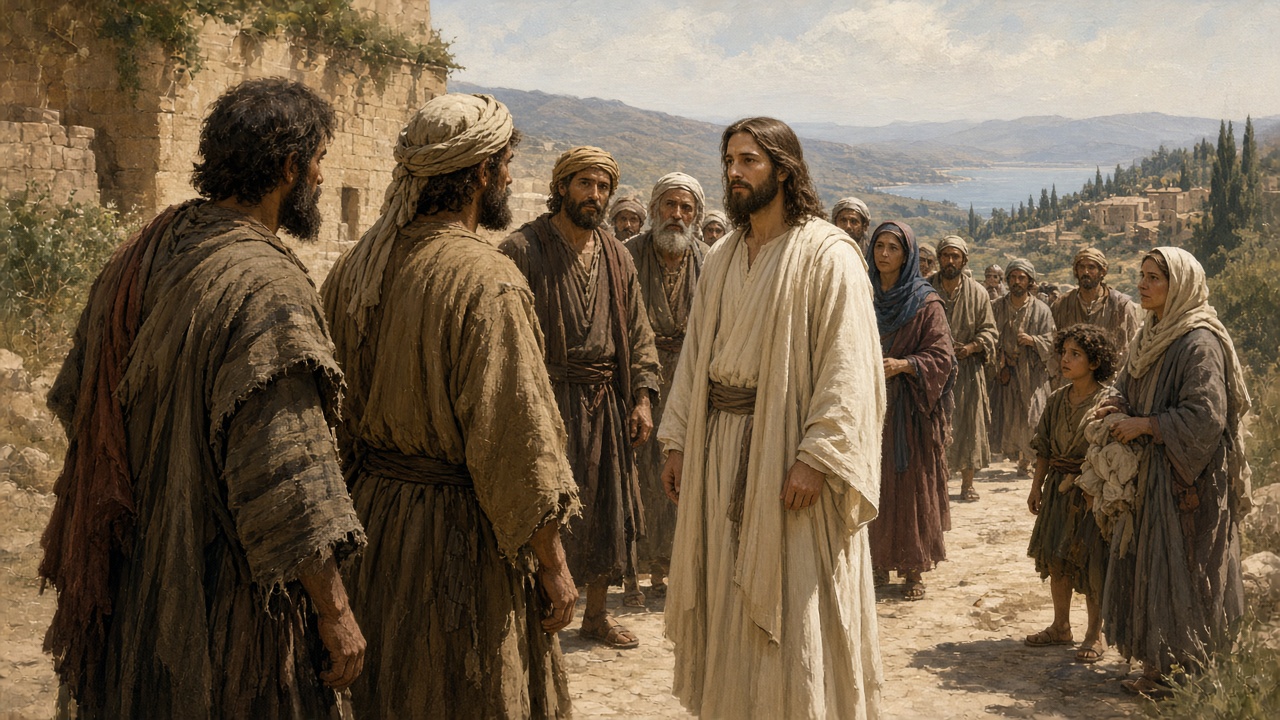
- From prison, John sent his disciples to ask whether Jesus was the one who was to come. Jesus told the crowds that John was more than a prophet—the messenger sent ahead to prepare the way—and, if they were willing to accept it, the Elijah who was to come. A Bible dictionary calls John the forerunner and says his mission was already the subject of prophecy, citing Isaiah 40:3 and Malachi 3:1; it also introduces Elijah as the Elias of the New Testament.Sources: the Bible text itself · John the Baptist · Elijah
- Jesus then denounced Chorazin, Bethsaida, and Capernaum, where most of his miracles had been performed, because they did not repent. A dictionary identifies Chorazin with modern Kerazeh, about two and a half miles up the Wady Kerazeh from Capernaum, and says that Capernaum, absent from the Old Testament, became Jesus' own city after he left Nazareth. It places Bethsaida on the east side of the lake, two miles up the Jordan in Gaulonitis, enlarged by Philip the tetrarch and named Julias after the emperor's daughter, though some have supposed there was only one Bethsaida, near where the Jordan enters the lake.Sources: the Bible text itself · Chorazin · Capernaum · Bethsaida
- He set those cities against Tyre and Sidon, which he said would have repented long ago in sackcloth and ashes, and against Sodom, which he said would have remained to this day. Sidon, on the Mediterranean coast about twenty-five miles north of Tyre, was the oldest Phoenician city there and the mother city of Tyre. A dictionary says the commerce of the whole world was gathered into Tyre's warehouses, and that Sodom, in the vale of Siddim, was destroyed by fire from heaven so completely that no trace of it has been found.Sources: the Bible text itself · Sidon · Tyre · Sodom
Notes written with AI assistance from open sources (Theographic Bible Metadata, CC BY-SA 4.0; Easton’s Bible Dictionary, public domain) and reviewed before publishing.
Places in this chapter
- Galilee · 32.760, 35.527 · verse 1
- Sidon · Today: Sandikli archaeological site in Sidon · 33.561, 35.372 · verses 21, 22
- Tyre · 33.271, 35.196 · verses 21, 22
Only places identified with high confidence are shown (90% or more according to the scholarly sources compiled by OpenBible). Period map: DARE (Digital Atlas of the Roman Empire), CC BY 4.0; modern map: © OpenStreetMap contributors; places: OpenBible.info (CC BY 4.0).
Credits and license for this translation
El Nuevo Testamento: Cuicateco de Teutila
New Testament in Cuicatec, Teutila (MX:cut:Cuicatec, Teutila)
copyright © 1972 Wycliffe Bible Translators, Inc.
Language: Cuicatec, Teutila
Translation by: Wycliffe Bible Translators, Inc.
Cuicateco, Teutila [cut], Mexico
Copyright Information
© 1972, Wycliffe Bible Translators, Inc.
This translation text is made available to you under the
terms of the Creative Commons License: Attribution-Noncommercial-No Derivative Works.
( http://creativecommons.org/licenses/by-nc-nd/3.0/ )
In addition, you have permission to port the text to different file formats, as long as you
do not change any of the text or punctuation of the Bible.
You may share, copy, distribute, transmit, and extract portions
or quotations from this work, provided that you include the above copyright
information:
You must give Attribution to the work.
You do not sell this work for a profit.
You do not make any derivative works that change any of the actual words or punctuation of the Scriptures.
Permissions beyond the scope of this license may be
available if you contact
us with your request.
The New Testament
in Cuicatec, Teutila
© 1972, Wycliffe Bible Translators, Inc.
This translation is made available to you under the terms of the
Creative Commons Attribution-Noncommercial-No Derivatives license 4.0.
You may share and redistribute this Bible translation or extracts from it in any format, provided that:
You include the above copyright and source information.
You do not sell this work for a profit.
You do not change any of the words or punctuation of the Scriptures.
Pictures included with Scriptures and other documents on this site are licensed just for use with those Scriptures and documents.
For other uses, please contact the respective copyright owners.
2014-04-22
Source: http://ebible.org/cutNT/ · eBible.org