Acts 19
El Nuevo Testamento: Cuicateco de Teutila · Tap a verse to see its cross-references.
Nda̱ Pa̱blo ya̱n Efeso
1Numanahn che quenan Apolos ya̱n Corinto ne, chuh Pa̱blo cua̱hn icoya̱hn, ne nda̱ ye ya̱n Efeso. Min ndihche ye neve se che ritahno se Dihvo vo Jesucristo, 2ne tumerune ye sa̱hn:
―¿A quenun Vaco Ndah yahn Dendiohs nchuhn cuahn che chitahno ne Jesucristo ne?
Ndahconan sa̱hn chahn:
―Nde hua nihnevan nuhn yahn Vaco Ndah yahn Dendiohs.
3Tuhme ndaconan tumerune ye sa̱hn chahn:
―¿Ta̱ca̱ chedenune nchuhn tuhme ne?
Ndahconan se:
―Chedenune nuhn nduhca̱ che chehdenune Jua̱n Bautista ihyan.
4Ra̱hn Pa̱blo ri ye sa̱hn:
―Jua̱n ne, chehdenune ye ihyan ca̱va che co ro che a nto ino ihyan chahn nunde yahn ye. Namin ra̱hn Jua̱n ri ye ihyan te va che cotahno ye a̱ma ihyan che cochi ye adive. A ihyan min che Jesús che a va ca̱de che chi ye, ndedevahn ye ihyan iyehnse.
5Cuahn che chihnevan sa̱hn chahn che tihca̱ ne, chedenune se, cah se Dihvo vo Jesucristo. 6Nahn ta̱h Pa̱blo sa̱hn, ne quenun Vaco Ndah yahn Dendiohs sa̱hn, din che nte se ta̱ma te o deva̱co ma̱n, cahndudo se Ndudo yahn Dendiohs ma̱n. 7Va̱n nducoya̱ca ne, ri se tenduh ndichio ihyan se.
8Numanahn che quenan Pa̱blo min ino iyo ne, rahn ye ya̱co, rahndudo ye numa ino ye, redin ye che renahn ihyan yahn vederihquentiyon yahn Dendiohs. 9Ate a̱ma ya̱hn ihyan ne, nducote cheche chedave yahn ye ne, hua chitahno ye, ne chihnga̱ ra̱hn ye yahn ndudo ndah yahn Dendiohs. Chemin che Pa̱blo nduco nducoya̱ca ihyan che ritahno ye Dihvo vo ne, chihcoma̱n ye ihyan chahn, ne cuahn ye, ndo da̱ma ye chete escuela yahn a̱ma ihyan che duche ye Tiranno. Min cahndudo ye ro ro. 10Chete che o nduyo quendi ye, rahndudo ye min, ne a̱ma ya̱hn ihyan, ihyan nación yahn Israel ma̱n, ihyan nación chena̱hn ma̱n, che vate ye ya̱hn yahn Asia ne, chihnevan ye ndudo yahn Dihvo vo. 11Dendiohs ne, ca̱h ye vederihquentiyon, quenan cuma Pa̱blo, ne rinahn vederihno rahte. 12Nde tino che retoh Pa̱blo, o pa̱yon yahn ye ne, riquenda ihyan, renahn ye ihyan cah, ne rendoyahn ye, renahn ye ihyan che chenun vaco chihnga̱ ihyan, ne rendiquenda̱h.
13Ate a̱ma o sa̱hn nación yahn Israel che vatechica se, rendetenda̱h se vaco chihnga̱ che chenun ihyan ne, nahn ndetenda̱h se vaco chihnga̱ nduco vederihquentiyon yahn Dihvo vo Jesucristo. Ra̱hn se ri se vaco chahn:
―Numacuahn vederihquentiyon yahn Jesucristo che rahndudo Pa̱blo yahn ye ne, rihquentiyon nuhn nchuhn che ndiquenda̱h ne.
14Esceva, a̱ma ihyan nación yahn Israel, che chidocuya̱n ndina̱n ye ne, vate ndache da̱ya ye, ne sa̱hn chahn ne, tihca̱ redin se. 15Ate a̱ma yune cuahn che tihca̱ ra̱hn se nduco a̱ma vaco chihnga̱ ne, ndahconan vaco me yahn se:
―A rendihché Jesucristo. Namin a devanó duh che Pa̱blo. Ate nchuhn ne, ¿duh nchuhn ne?
16Tuhme sa̱hn che quenun vaco chihnga̱ me ne, tumanga̱n se sa̱hn chahn, ne chahn se sa̱hn numacuahn vedeta̱n, nde na̱n che din cuno se nducoya̱ca se. A deva̱ne sa̱hn chahn ma̱n, nta̱ca yah se ma̱n, ndiquenda̱h vah se, chano se. 17Nducoya̱ca ihyan nación yahn Israel ma̱n, ihyan nación chena̱hn ma̱n, che vate ye min ya̱n Efeso ne, checadino ye che tihca̱ chi. A̱ma chahn ino ye, ne ndeva ye yavena̱n Dihvo vo Jesucristo.
18Me ihyan che ritahno ye Dihvo vo ne, a̱ma ya̱hn ye ne, ntuma ino ye nunde yahn ye che chitahno ye vedecuah ro mena̱n me. 19Namin a̱ma ya̱hn ihyan che quenan cuma ye vedecuah ro mena̱n me ne, quenda ye libro yahn ye, chihquiya̱hn ye na̱n nducoya̱ca ihyan. Cuahn che tenda̱h cuande ihyan ta̱va chihve nducuahn libro chahn ne, rigonun o raco ndiche mil tume diya̱hngua. 20Nduco tihca̱ ne, a̱ma chetuhn ndudo yahn Dihvo vo, chihnde ro vederihquentiyon yahn ye.
21Chihno min ne, chihco ca̱de Pa̱blo che ca̱hn ye ya̱hn yahn Macedonia ma̱n, Acaya ma̱n, quendihchero ye ihyan che ritahno ye Dihvo vo, ne quendi ye nde ya̱n Jerusalén. Tuhme va che ca̱hn ye ya̱n Roma. 22Dechuh ye o combiero yahn ye che rinan se ihyan, Timoteo nduco Erasto, che ca̱hn se ya̱hn yahn Macedonia numanahn che quenan ca ye ya̱hn yahn Asia.
Ndo da̱ma ihyan ya̱n Efeso numacuahn vedeta̱n
23Ta̱hn min ne, a̱ma chi ta̱n ihyan yahn che retuhn ndudo ndah yahn Dendiohs. 24Vedeta̱n min ne, cana̱n ca̱va a̱ma sa̱hn vichediya̱hngua che duche se Demetrio. Sa̱hn min ne, rendedevihne se diya̱hngua, redendah se ya̱co ca̱hya nduhca̱ ya̱co yahn Diana, dendiohs che va ye ya̱n va̱co se. Yahn chihve ntiyon min, ne ya̱hn sa̱hn che redin se ntiyon nduco se. 25Din da̱ma se sa̱hn chahn ma̱n, nducoya̱ca ca sa̱hn che rinan se sa̱hn na̱n ntiyon min ma̱n, ne ra̱hn se ri se sa̱hn:
―Nchuhn ne, a devano ne te na̱n ntiyon cuh a̱ma renda̱ca vo tume. 26A rendihche ne ma̱n, a rihnevan ne ma̱n, nduhca̱ che a̱ma racotuhn Pa̱blo ndudo va̱n nducoya̱ca ihyan ya̱n Efeso ma̱n, va̱n ihyan che vate ye numachahte ya̱hn yahn Asia ma̱n. Hua renguan se, rahndudo se te dendiohs che redendah ihyan ne, ndiyu dendiohs, ne a a̱ma ya̱hn ihyan ritahno ye. 27Che redin se ne, ca̱hnda yahn ntiyon che redin vo, te co cuihno, nde co cuhnde ma̱n ya̱co yahn dendiohs Diana, che a̱ma yudo ye, che rendeva nducoya̱ca ihyan yavena̱n ye, numachahte ya̱hn yahn Asia ma̱n, numachahte iyehnse ma̱n. Ndete che quendi tihca̱ ne, nde ametah tumeca̱h ihyan yahn vederihquentiyon yahn ye.
28Cuahn che chihnevan sa̱hn chahn che tihca̱ ne, a̱ma chi ta̱n se, ne cana̱n cah se:
―¡A̱ma yudo vederihquentiyon yahn Diana, dihve ihyan ya̱n Efeso!
29Nduco chemin ne, necuan ihyan ya̱n numacuahn vedeta̱n, cheta̱h ye Gayo nduco Aristarco, o ihyan ya̱hn yahn Macedonia che nduco ye Pa̱blo, ne chihnda̱ rudo ye ihyan chahn, quenda ye ihyan ndeva̱coya̱n. 30Pa̱blo ne, nahn ca̱hn ye min, ya̱hve ye ihyan ya̱n chahn, ate ihyan che ritahno ye Dihvo vo ne, hua cahnecun ye. 31Namin o ino ihyan ndina̱n che rihquentiyon ye ya̱hn yahn Asia, che amigo yahn Pa̱blo ne, tahve ye ndudo yahn ye che hua na̱hme na̱n ye min. 32Numanahmin ne, vari chende ihyan ya̱n chahn, chenun ye min. A vih rah a̱ma, a vih rah ta̱ma ye, te a nahn nducoya̱ca ye nde hua devano ye deh cuande che nto da̱ma ye. 33A̱ma o sa̱hn che nduco se min ne, ca̱h cuande se Alejandro deh che ri, ne chaconahn ihyan nación yahn Israel sa̱hn na̱n nducoya̱ca ihyan ca̱va che ca̱hma nan se ihyan. Din ta̱h se che cuahte dihn chende nducoya̱ca ihyan ya̱n chahn ca̱va che cuahndudo se. 34Ate cuahn che checadino ye te nda̱ta yahn Israel sa̱hn ne, cah ye tenduh o ura tuhca̱:
―¡A̱ma yudo vederihquentiyon yahn Diana, dihve ihyan ya̱n Efeso!
35Tuhme nda̱ sa̱hn secretario, chihco dihn se ihyan chahn, ne ra̱hn se:
―Nchuhn, ihyan ya̱n Efeso, numachahte iyehnse ne, devano ihyan te redin ihyan ya̱n Efeso cuda̱do ya̱co yahn dendiohs Diana che chica ye na̱n ro. 36Nducote nducoya̱ca ihyan devano ye yahn chemin ne, cuahte dihn nchuhn. Hua cuhma ne numanahn che metah ndedecadino ndah ne, 37te sa̱hn sih che nda ne muhn ne, hua chihnga̱ ra̱hn se yahn dendiohs yahn ne. 38Ndete che Demetrio nduco sa̱hn che redin ntiyon nduco se vate ca̱nda se nduco adecoduhno ihyan ne, va va̱coya̱n ma̱n, vate intiyahn che retecheca̱de ye ma̱n. Min ca̱hn queri a̱ma se cuhnde ca̱de yahn se. 39Ate ndete che tahque chahte ca̱nda yahn se ne, conan rino se, te va che ndo da̱ma nducoya̱ca ihyan ya̱n, ne ro min ne, co cuhnde ca̱de yahn se. 40Nde ca̱hnda yuhn vo che tihca̱ rendo da̱ma nchuhn, rah ne, te co ca̱ca nunde ihyan yuhn vo che rendedecuan vo ca̱nda. Ndete che ca̱carune ihyan ndina̱n ne, nde na̱n che ca̱hma vo metah.
41Chihno ra̱hn ye chemin ne, ndedechuh ye ihyan ya̱n chahn, cona̱hn ye.
Did you know?
Paul, the Way, and Artemis in Ephesus
- Ephesus was the capital of proconsular Asia, the Roman province covering the western part of Asia Minor, and in Roman times it bore the title of the first and greatest metropolis of Asia. The city was distinguished for the temple of Artemis, whom the Romans called Diana, built outside the walls and reckoned one of the seven wonders of the ancient world. At its center stood an ancient image of the goddess, reputed to have fallen from the sky.Sources: Ephesus · Diana · Asia
- Demetrius, a silversmith at Ephesus, made silver shrines of Artemis, models of her temple or of her statue, which sold readily to visitors from all over Asia Minor. Acts says this trade was the craftsmen's source of prosperity, and that Demetrius warned them of danger to their business and to the honor of the temple of Artemis, the goddess he said was worshiped throughout the province of Asia and the whole world.Sources: Demetrius · the Bible text itself
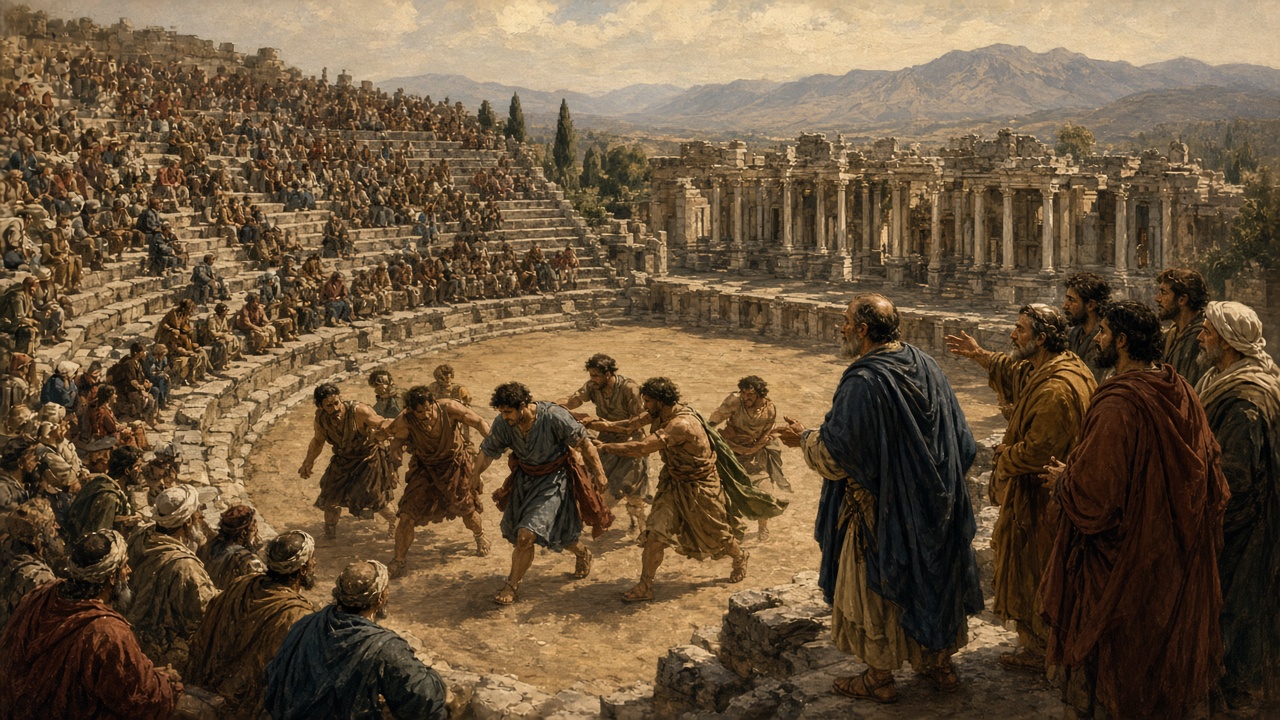
- The crowd rushed into the theatre of Ephesus, which Easton's Bible Dictionary (1897) describes as the largest in the world, open to the sky and able to hold 50,000 spectators. Friends of Paul among the chiefs of Asia, wealthy citizens elected each year to preside over the games and religious festivals of their cities, begged him not to go in. The city clerk then reminded the assembly that Ephesus was guardian of the temple of the great Artemis and of her image, said to have fallen from heaven.Sources: Ephesus · Asia · the Bible text itself
Notes written with AI assistance from open sources (Theographic Bible Metadata, CC BY-SA 4.0; Easton’s Bible Dictionary, public domain) and reviewed before publishing.
Places in this chapter
- Corinth · 37.906, 22.879 · verse 1
- Ephesus · 37.939, 27.341 · verses 1, 17, 23, 26, 35
- Asia · 38.400, 28.300 · verses 10, 22, 26, 27, 31
- Achaia · 38.720, 22.540 · verse 21
- Jerusalem · 31.777, 35.234 · verse 21
- Macedonia · 41.600, 22.540 · verses 21, 22, 29
- Rome · 41.892, 12.485 · verses 21, 40
Only places identified with high confidence are shown (90% or more according to the scholarly sources compiled by OpenBible). Period map: DARE (Digital Atlas of the Roman Empire), CC BY 4.0; modern map: © OpenStreetMap contributors; places: OpenBible.info (CC BY 4.0).
Credits and license for this translation
El Nuevo Testamento: Cuicateco de Teutila
New Testament in Cuicatec, Teutila (MX:cut:Cuicatec, Teutila)
copyright © 1972 Wycliffe Bible Translators, Inc.
Language: Cuicatec, Teutila
Translation by: Wycliffe Bible Translators, Inc.
Cuicateco, Teutila [cut], Mexico
Copyright Information
© 1972, Wycliffe Bible Translators, Inc.
This translation text is made available to you under the
terms of the Creative Commons License: Attribution-Noncommercial-No Derivative Works.
( http://creativecommons.org/licenses/by-nc-nd/3.0/ )
In addition, you have permission to port the text to different file formats, as long as you
do not change any of the text or punctuation of the Bible.
You may share, copy, distribute, transmit, and extract portions
or quotations from this work, provided that you include the above copyright
information:
You must give Attribution to the work.
You do not sell this work for a profit.
You do not make any derivative works that change any of the actual words or punctuation of the Scriptures.
Permissions beyond the scope of this license may be
available if you contact
us with your request.
The New Testament
in Cuicatec, Teutila
© 1972, Wycliffe Bible Translators, Inc.
This translation is made available to you under the terms of the
Creative Commons Attribution-Noncommercial-No Derivatives license 4.0.
You may share and redistribute this Bible translation or extracts from it in any format, provided that:
You include the above copyright and source information.
You do not sell this work for a profit.
You do not change any of the words or punctuation of the Scriptures.
Pictures included with Scriptures and other documents on this site are licensed just for use with those Scriptures and documents.
For other uses, please contact the respective copyright owners.
2014-04-22
Source: http://ebible.org/cutNT/ · eBible.org