Luke 6
Majepacʉ jʉ̃menijicʉi yávaiye mamaene coyʉitucubo · Tap a verse to see its cross-references.
Jesúi bueimara ne pʉyoino oteiyede jabʉóvaijãravʉi
1Apejãravʉ, judíovai jabʉóvaijãravʉ sábadoi, Jesús ʉ̃i vaiyede oteiye cʉrõi, ʉ̃i bueimara diede jẽni, pʉrʉáque cõjʉñori, ãrejaimad̶a. 2Aru apevʉ fariseovacavʉ jẽniari jã́rejaimad̶a náre:
—¿Aipe teni ãmeno d̶aivʉrʉ̃ mʉja, maja judíova maje d̶aicõjemenope, jabʉóvaijãravʉre? arejaimad̶a náre.
3Ʉbenita Jesús, ʉ̃i dápiaiye boje ʉ̃i bueimara ãmeno d̶abevʉre, arejamed̶a náre:
—¿Jãve ãrʉmetenarʉ mʉja yo David bácʉi d̶aino mácarõre ãvʉé ijiéde ʉ̃́re aru ʉ̃́que cʉrivʉre máre? 4Ʉ̃ mácʉ ecorejaquemavʉ Jʉ̃menijicʉi cʉ̃rami. Aru ãrejaquemavʉ pã́ure, Jʉ̃menijicʉre jíye báquede ina sacerdoteva ne ãiyede, sacerdote ãmecʉ bácʉvacari. Aru jídejaquemavʉ ʉ̃́que cʉrivʉre máre, sacerdoteva ãmevʉ bácavʉreca. Ʉbenita Jʉ̃menijicʉ ñájine d̶abedejaquemavʉ na mácavʉre, arejamed̶a Jesús.
5Cojedeca Jesús arĩ buedejamed̶a:
—Yʉ, Jʉ̃menijicʉi daroimʉ mácʉ ʉ̃mʉpe, jabocʉbu yʉ. Que baru d̶aicõjeni bʉojaivʉ yʉ põevare ne d̶aiyede caijãravʉare aru jabʉóvaijãravʉare máre, arejamed̶a Jesús.
Jesús ʉ̃i mead̶aino ʉ̃mʉ ãmuve jiacʉbecʉre
6Apejãravʉi cojedeca, judíovai jabʉóvaijãravʉ sábadoi, Jesús ecorejamed̶a ne cójijiñami. Aru bueni bʉ́rejamed̶a põevare. Noi cʉrejamed̶a cũinácʉ ʉ̃mʉ, ãmuve meapũravʉcaãmuve jiacʉbecʉ. 7Jʉ̃menijicʉi yávaiye báquede bueipõeva aru fariseova máre nore cʉrivʉ coreni jã́rejaimad̶a Jesúre. Jã́iyʉrivʉ barejáimad̶a mead̶ayʉre ʉ̃́re ne jabʉóvaijãravʉi, boro coyʉrĩ ad̶aiyʉrĩduivʉ Jesúre. 8Ʉbenita ʉ̃, majicʉ ne dápiaiyede, arejamed̶a ñai ʉ̃mʉ ãmuve jiacʉbecʉre:
—Nacajari nújacʉ põeva jẽneboi, arejamed̶a Jesús.
Jesús ʉ̃i que aiyede, ñai ʉ̃mʉ nacajari núrejamed̶a. 9Dinʉmʉma Jesús arejamed̶a náre:
—Jẽniari jã́quijivʉ cũináro mʉjare. ¿Yéde d̶aicõjeini Jʉ̃menijicʉ jabʉóvaijãravʉre, mearore o ãmenore; mead̶aru põevare o boarĩ́ jarʉvaru náre? arejamed̶a Jesús.
Ʉbenita bi arejaimad̶a na.
10Que baru Jesús, jã́ñʉ ina cʉrivʉre ʉ̃i yebai, arejamed̶a ñai ʉ̃mʉ ãmuve jiacʉbecʉre:
—Jabióvajacʉ mi ãmuvede, arejamed̶a Jesús.
Ʉ̃i jabióvaiyede, meatedejavʉ̃ya ʉ̃i ãmuve. 11Ʉbenita apevʉ, jorojĩni pare, jẽniari jã́rejaimad̶a ne bajumia:
—¿Aipe d̶arãjidica maja ñaine? arejaimad̶a na.
Jesús ʉ̃i beoino ʉ̃i yávaiye méne coyʉicõjeimarava
12Cũinájãravʉ Jesús nʉrejamed̶a cʉ̃racũai, jẽniacʉñʉ. Aru noi jẽniarejamed̶a Jʉ̃menijicʉque caiñami. 13Miad̶áe tʉiyede órejarejamed̶a ʉ̃i bueimarare. Aru doce paivʉre beorĩ epedejamed̶a ʉ̃i yávaiye méne beorĩ coyʉicõjeimarare. 14Na marejáimad̶a Simón, ʉ̃i ãmidoimʉ mácʉ Pedro; Andrés, Simón Pedroi yócʉ; Santiago, Juan, Felipe, Bartolomé, Mateo, Tomás; Santiago, Alfeoi mácʉ; Simón, ãmicʉcʉ Celote; Judas, Santiagoi mácʉ; aru Judas Iscariote. Ñai marejámed̶a jẽni jícʉyʉ Jesúre ʉ̃i mauvare.
Jesús ʉ̃i bueino obedivʉ põevare
17Jesús ẽmeñʉ mácʉ cʉ̃racũare jocarĩ, mautedejamed̶a dái ʉ̃i bueimaraque. Aru obedivʉ põeva cʉrejaimad̶a. Judea ãmicʉrijoborõcavʉ, Jerusalén ãmicʉriĩmarocavʉ, aru macajitabʉ ʉrabʉ ẽcarʉi ĩmarocavʉ máre: Tiro aru Sidón ãmicʉriĩmaroacavʉ máre cʉrejaimad̶a. Ina earejaimad̶a, jápiaiyʉrivʉ Jesúre aru ʉ̃i mead̶aquiyepe aivʉ náre ijiéde. 18Ina abujuva ne ñájine d̶aimarare máre Jesús mead̶arejamed̶a. 19Caivʉ põeva tʉoiyʉrejaimad̶a Jesúre, ʉ̃i mead̶aiye boje ʉ̃i parʉéque. Aru mead̶arejamed̶a ina caivʉre.
Jesús ʉ̃i bueino torojʉrõre aru chĩoinore máre
20Dinʉmʉre Jesús, jã́ñʉ ʉ̃i bueimarare, arejamed̶a:
—Mʉja cõmaje ãrojarivʉ, mʉjarecabu Jʉ̃menijicʉi jaboteimara. Que baru torojʉrãjaramu mʉja. 21Mʉja ãvʉé yaivʉ caride, yapinajaramu. Que baru torojʉrãjaramu mʉja. Mʉja caride oivʉ yʉrinajaramu. Que baru torojʉrãjaramu mʉja.
22’Torojʉrãjaramu mʉja põeva Jʉ̃menijicʉre jʉ abevʉ ne ãmeina jã́iye boje mʉjare aru ne jarʉvaiye boje mʉjare máre, mʉje yóvaiye boje yʉre, Jʉ̃menijicʉi daroimʉ mácʉre ʉ̃mʉpe. Torojʉrãjaramu mʉja, põeva Jʉ̃menijicʉre jʉ abevʉ ne jaraiye boje mʉjare aru ne ʉbe boje mʉjare máre, mʉje yóvaiye boje yʉre, Jʉ̃menijicʉi daroimʉ mácʉre ʉ̃mʉpe. 23Torojʉrãjaramu mʉja dijãravʉre. Aru cʉvarãjaramu mʉje boje ʉrarõ cavarõ mearo Jʉ̃menijicʉi cʉrõi. Nopedeca ãnina javecavʉ bácavʉ, mʉjeñecuva mácavʉ máre, ãmeina d̶arejaquemavʉ ãnina Jʉ̃menijicʉi yávaiyede coyʉcaipõeva mácavʉre.
24’Ʉbenita mʉja cʉve cʉvarivʉ ijãravʉre torojʉrĩ cʉvʉ mʉja. Que baru ãmeno ñájino cʉvarãjaramu mʉja. 25Mʉja yapivʉ caride ãino ʉrarõque, ãmei ãvʉé yainájaramu mʉja. Que baru ãmeno ñájino cʉvarãjaramu mʉja. Mʉja yʉrivʉ caride chĩori orãjaramu mʉja. Que baru ãmeno ñájino cʉvarãjaramu mʉja. 26Ãmeno ñájino cʉvarãjaramu mʉja, põeva ne me yávaiyede mʉjare. Nopedeca ãnina javecavʉ bácavʉ, mʉjeñecuva mácavʉ máre, me yávarejaquemavʉ ãnina borocʉrivʉ Jʉ̃menijicʉi yávaiyede coyʉcaipõevape teniduivʉ bácavʉre, arĩ buedejamed̶a náre Jesús.
Jesús ʉ̃i bueino maje ʉrõre maje mauvare
27Jesús, yópe arĩ, buedejamed̶a náre cojedeca:
—Ʉbenita coyʉyʉbu mʉjare, jápiaivʉre ji coyʉiyede. Ʉjarã mʉje mauvare. Me d̶ajarã náre ina ãmeina jã́ivʉre mʉjare. 28Torojʉrĩ mearore jíjarã náre ina ãmeina yávaivʉre mʉjare. Jẽniajara Jʉ̃menijicʉque ina borocʉrĩ yávaivʉre mʉjare. 29Cũinácʉ põecʉ ʉ̃i pẽvaru mi cũinápũravʉcaviobʉre, copedini pẽvaicõjejacʉ apepũravʉre máre. Aru cũinácʉ põecʉ ʉ̃i ĩnu mi cuitótecaje pʉenocacajede, jíjacʉ mi camisare máre. 30Jíjacʉ caivʉre ne jẽniainore mʉre. Aru ne tatoru míyede, jẽniamejacʉ cojedeca. 31D̶ajarã apevʉre yópe mʉje ʉepe d̶aivʉre mʉjaque.
32’Mʉje ʉru náre, ina ʉrivʉre mʉjare, Jʉ̃menijicʉ bojed̶abecʉbe põevare ne que d̶aiyede. Nopedeca ina ãmeina teivʉ máre ʉma ʉrivʉre náre. 33Mʉje mearore d̶aru náre, ina mearore d̶aivʉre mʉjare, Jʉ̃menijicʉ bojed̶abecʉbe põevare ne que d̶aiyede. Nopedeca ina ãmeina teivʉ máre d̶ad̶ama nópe. 34Mʉje jídu náre, ina jacopaiyovarãjivʉre mʉjare, Jʉ̃menijicʉ bojed̶abecʉbe põevare ne que d̶aiyede. Nopedeca ina ãmeina teivʉ máre jíyama apevʉ ãmeina teivʉre, ne jacopaiyovarãjiyepe aivʉ cojedeca. 35Ʉbenita ʉjarã mʉje mauvare. Me d̶ajarã náre. Aru jíjarã jacopaiyovaiyede corebevʉva no boje. Nópe d̶aru, ʉrarõ meaquiyebu mʉje boje jẽino. Aru Jʉ̃menijicʉi mára marajáramu mʉja. Que baru ʉ̃ meacʉbe náque ina jíbevʉre mearore ʉ̃́re aru ina jíyʉbevʉre apevʉre máre. 36Cõmaje ãroje jã́jara mʉja apevʉre, ñai majepacʉ Jʉ̃menijicʉ ʉ̃i cõmaje ãroje jã́iyepedeca, náre arĩ buedejamed̶a Jesús.
Jesús ʉ̃i põevare apevʉre ãmecoroicõjemeno
37Jesús, yópe arĩ, buedejamed̶a náre cojedeca:
—“Ãmenatamu” arĩ, ãmecorobejarã mʉja apevʉre. Mʉje nópe aru, majepacʉ Jʉ̃menijicʉ ãmecororĩ, “Ãmenatamu mʉja”, acʉyʉme mʉjare. Jarʉvabejarã mʉja apevʉre. Mʉje jarʉvabedu, Jʉ̃menijicʉ jarʉvabecʉbe mʉjare. Ãrʉmetejarã mʉja apevʉre ne ãmene. Mʉje ãrʉmetedu, Jʉ̃menijicʉ máre ãrʉmetecʉyʉme mʉje ãmeina teiyede. 38Jíjarã mʉja apevʉre. Aru Jʉ̃menijicʉ jícʉyʉme mʉjare. Jícʉyʉme mʉje pʉeá buidípʉea, doaipʉea, aru jayuipʉeare. Nopedeca mʉje apevʉre jíyepedeca Jʉ̃menijicʉ jícʉyʉme mʉjare, arejamed̶a náre Jesús.
39Aru yópe arĩ, jẽvari coyʉrejamed̶a Jesús:
—Cũinácʉ jã́ri eabecʉ bʉojabebi nʉñʉ mái apecʉ jã́ri eabecʉque. Que baru caipʉcarã jã́ri eabevʉ baru tʉjebu na cobei. 40Bueimara ñame baju majibema ne bueipõecʉ pʉeno. Ʉbenita bueni bʉojaivʉ baru, ne bueipõecʉpe tenajarama.
41’Me jã́ivʉbu mʉja mʉjecʉi docʉjĩe cʉrõre ʉ̃i yacorʉi. Ʉbenita jã́mevʉ mʉja mʉje ʉrarõ docʉcʉrõre mʉje yacorʉi. 42Aru jã́mevʉvacari mʉja ʉrarõ docʉcʉrõre mʉje yacorʉi, mʉjecʉre “¿Mi docʉjĩene ĩnaji mi cʉvaede mi yacorʉi?” arĩ bʉojabevʉ mʉja. ¡Jʉjovaivʉtamu mʉja! Mamarʉmʉ ĩjara mʉja mʉje ʉrarõ docʉcʉrõre mʉje yacorʉre. No yóboi, mearo jã́ivʉta, ĩjara mʉjecʉi docʉjĩene ʉ̃i cʉvaede ʉ̃i yacorʉi, arĩ buedejamed̶a náre Jesús.
Yópe aiyʉrõtamu iye Jesúi aiye báque: Põecʉ ʉ̃i ʉrarõ ãmenore d̶aru, “Dajocajacʉ mi ãmeina teiyede” arĩ, coyʉiye jaʉbevʉ ʉ̃́re apecʉre, quĩ́jino ãmenore d̶ayʉre. Quénora mamarʉmʉ ñai ʉrarõ ãmenore d̶ayʉre dajocaiye jaʉvʉ ʉ̃i baju ãmeina teiyede cãreja.
Jesús ʉ̃i bueino maje majinore jocʉcʉa jẽidʉare
43Cojedeca Jesús arĩ buedejamed̶a náre, ne majinajiyepe ayʉ aipe ãrojarivʉre põevare:
—Cʉbevʉ jocʉcʉ meacʉ jẽiye ãmene jícʉ. Aru cʉbevʉ jocʉcʉ ãmecʉ jẽiye méne jícʉ. 44Que baru coreóvaivʉbu jocʉcʉare dicʉá jẽiyeque. Miuñʉa jẽmevʉ higo ãmicʉridʉare. Nopedeca jẽmevʉ ʉ́yai miuñʉara. 45Ñai põecʉ meacʉ yávayʉbe méne, ʉ̃i ũmei mearo cʉe boje. Aru ñai põecʉ ãmecʉ yávayʉbe ãmene, ʉ̃i ũmei ãmeno cʉe boje. Que baru põecʉ yávaibi ʉ̃i jijecamuque ʉ̃́re cʉede ʉ̃i ũmei, arĩ buedejamed̶a Jesús.
Jesús ʉ̃i coyʉino pʉcad̶ãmia cʉ̃ramia d̶aivʉ bácavʉre
46Cojedeca Jesús arĩ buedejamed̶a náre:
—¿Aipe teni aivʉrʉ̃ yʉre “ñʉje jabocʉ”, ʉbenita d̶abevʉvacari ji coyʉiyede? 47Coyʉquijivʉ mʉjare ñamepe ãrojacʉre ñai yʉre darĩ jápiayʉre aru d̶ayʉre yópe ji coyʉiyepe. 48D̶aibi yópe ñai põecʉ ʉ̃i d̶aiye báquepe ʉ̃i cʉ̃rami jãjaroi. Aru jia yaboiyede, oco eavʉ̃ya diñamine. Ʉbenita cújibeteavʉ̃ya diñami, jãjaro núe boje. 49Ʉbenita ñai jápiayʉvacari yʉre, d̶abecʉ baru yópe ji coyʉiyepe, ñai põecʉ ʉ̃́pebe ñai d̶ayʉ bácʉpe ʉ̃i cʉ̃ramine jãjamenoi. Aru jia yaboiyede, oco eavʉ̃ya diñamine. Aru tʉavʉ̃ya diñami. Ʉrarõ mateávʉ̃ya diñami bíjaino, arĩ buedejamed̶a Jesús.
Did you know?
The Sabbath, the Twelve, and the Plain
- On a Sabbath, as Jesus passed through the grainfields, his disciples picked heads of grain, rubbed them in their hands, and ate them, and some Pharisees called this unlawful. Jesus recalled that David and his hungry companions ate consecrated bread from the house of God, bread lawful only for the priests, and said that the Son of Man is Lord of the Sabbath. On another Sabbath he restored a man’s withered right hand in the synagogue while scribes and Pharisees watched for a reason to accuse him; a chronology dates both episodes to AD 28.Sources: the Bible text itself · Corn on the Sabbath · Healing a Withered Hand
- After spending the night in prayer on the mountain, Jesus called his disciples and chose twelve, whom he designated apostles. Among them were Simon, whom he named Peter, and Peter’s brother Andrew, fishermen from Bethsaida on the western coast of the Sea of Galilee, and Matthew, a tax collector at Capernaum who had formerly been known as Levi.Sources: the Bible text itself · Simon Peter · Andrew · Matthew
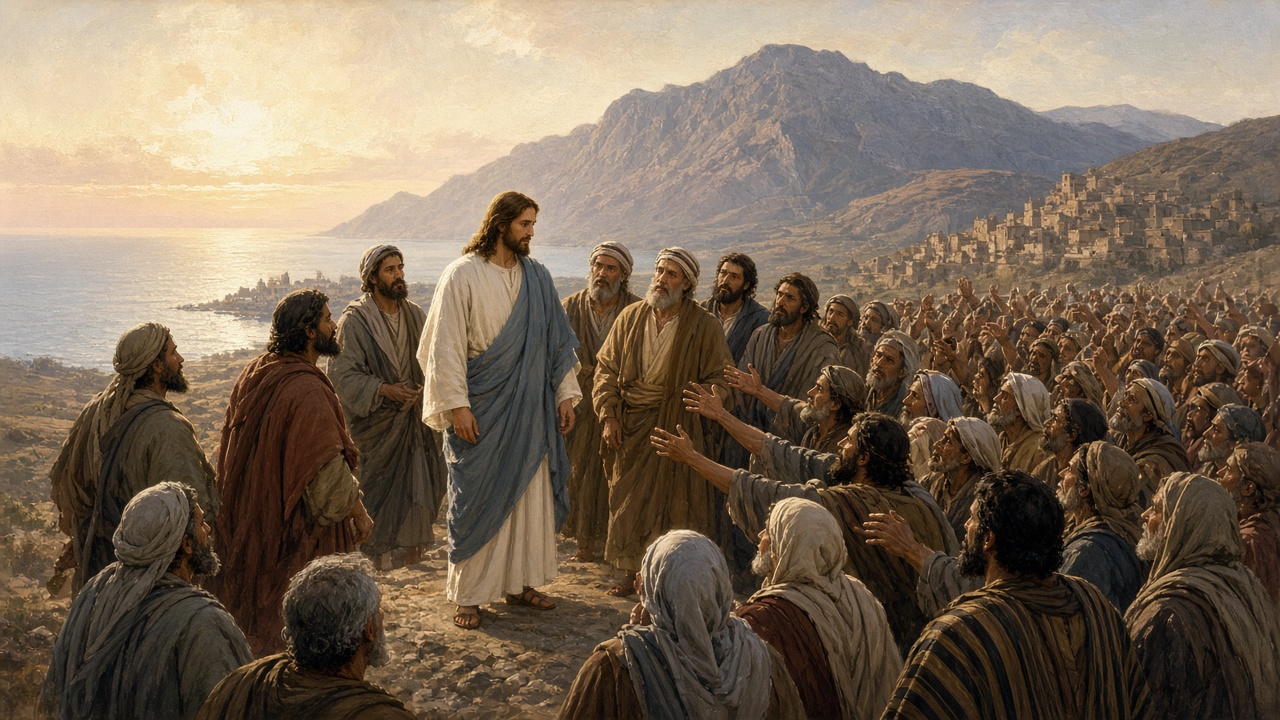
- Jesus came down with them and stood on a level place, where people from Judea, Jerusalem, and the sea coast of Tyre and Sidon had gathered to hear him and to be healed. Tyre and Sidon were ancient Phoenician cities on the Mediterranean; Sidon, the older city, lay about twenty-five miles north of Tyre. A chronology dates this teaching to AD 28 and titles it the Sermon on the Mount, though the narrative places Jesus on level ground after he came down from the mountain.Sources: the Bible text itself · Tyre · Sidon · Sermon on the Mount
Notes written with AI assistance from open sources (Theographic Bible Metadata, CC BY-SA 4.0; Easton’s Bible Dictionary, public domain) and reviewed before publishing.
Places in this chapter
- Jerusalem · 31.777, 35.234 · verse 17
- Judea · Today: Judea 1 · 31.777, 35.234 · verse 17
- Sidon · Today: Sandikli archaeological site in Sidon · 33.561, 35.372 · verse 17
- Tyre · 33.271, 35.196 · verse 17
Only places identified with high confidence are shown (90% or more according to the scholarly sources compiled by OpenBible). Period map: DARE (Digital Atlas of the Roman Empire), CC BY 4.0; modern map: © OpenStreetMap contributors; places: OpenBible.info (CC BY 4.0).
Credits and license for this translation
Majepacʉ jʉ̃menijicʉi yávaiye mamaene coyʉitucubo
New Testament in Cubeo (CO:cub:Cubeo)
copyright © 2009 Wycliffe Bible Translators, Inc.
Language: Cubeo
Translation by: Wycliffe Bible Translators, Inc.
Cubeo [cub], Colombia
Copyright Information
© 2009, Wycliffe Bible Translators, Inc. All rights reserved.
This translation text is made available to you under the
terms of the Creative Commons License: Attribution-Noncommercial-No Derivative Works.
( http://creativecommons.org/licenses/by-nc-nd/3.0/ )
In addition, you have permission to port the text to different file formats, as long as you
do not change any of the text or punctuation of the Bible.
You may share, copy, distribute, transmit, and extract portions
or quotations from this work, provided that you include the above copyright
information:
You must give Attribution to the work.
You do not sell this work for a profit.
You do not make any derivative works that change any of the actual words or punctuation of the Scriptures.
Permissions beyond the scope of this license may be
available if you contact
us with your request.
The New Testament
in Cubeo
© 2009, Wycliffe Bible Translators, Inc. All rights reserved.
This translation is made available to you under the terms of the
Creative Commons Attribution-Noncommercial-No Derivatives license 4.0.
You may share and redistribute this Bible translation or extracts from it in any format, provided that:
You include the above copyright and source information.
You do not sell this work for a profit.
You do not change any of the words or punctuation of the Scriptures.
Pictures included with Scriptures and other documents on this site are licensed just for use with those Scriptures and documents.
For other uses, please contact the respective copyright owners.
2014-04-22
Source: http://ebible.org/cubNT/ · eBible.org