Psalms 53
Thai Phum Holy Bible · Tap a verse to see its cross-references.
Cathut laipalah pathunae
Kathutkung: Devit
1Tamipathu niteh, a lungthung hoi Cathut awm hoeh ati awh.
Ka rawk niteh, panuet ka tho e payonnae hah a sak awh teh,
hawinae kasakkung awm awh hoeh.
2Thaipanueknae ka tawn e tami hoi
Cathut ka tawng e tami ao han vaimoe titeh panue han a ngai dawkvah,
Cathut ni kalvan hoi talai van a khet cathuk.
3Tami pueng koung a payon awh teh, koung a rawk awh.
Hawinae kasakkung awm hoeh.
Buet touh boehai awm hoeh.
4Vaiyei ca e patetlah ka taminaw hah a ca awh teh,
Cathut ka kaw hoeh e tamikathoutnaw panueknaen tawn laipalah maw ao awh.
5Taki hane ohoehnae koe puenghoi a taki awh.
Bangkongtetpawiteh, nang na kalup niteh,
na ka tarannaw e hru teh Cathut ni paringparang a kâyat sak.
Ahnimouh teh Cathut ni a takhoe dawkvah,
kayayeirai phu hoi ao sak han.
6Oe Isarel rungngangnae teh Zion hoi tâcawt naseh.
San lah kaawm e taminaw Cathut ni bout a tâcokhai toteh,
Jakop konawm naseh, Isarel lunghawi naseh.
Did you know?
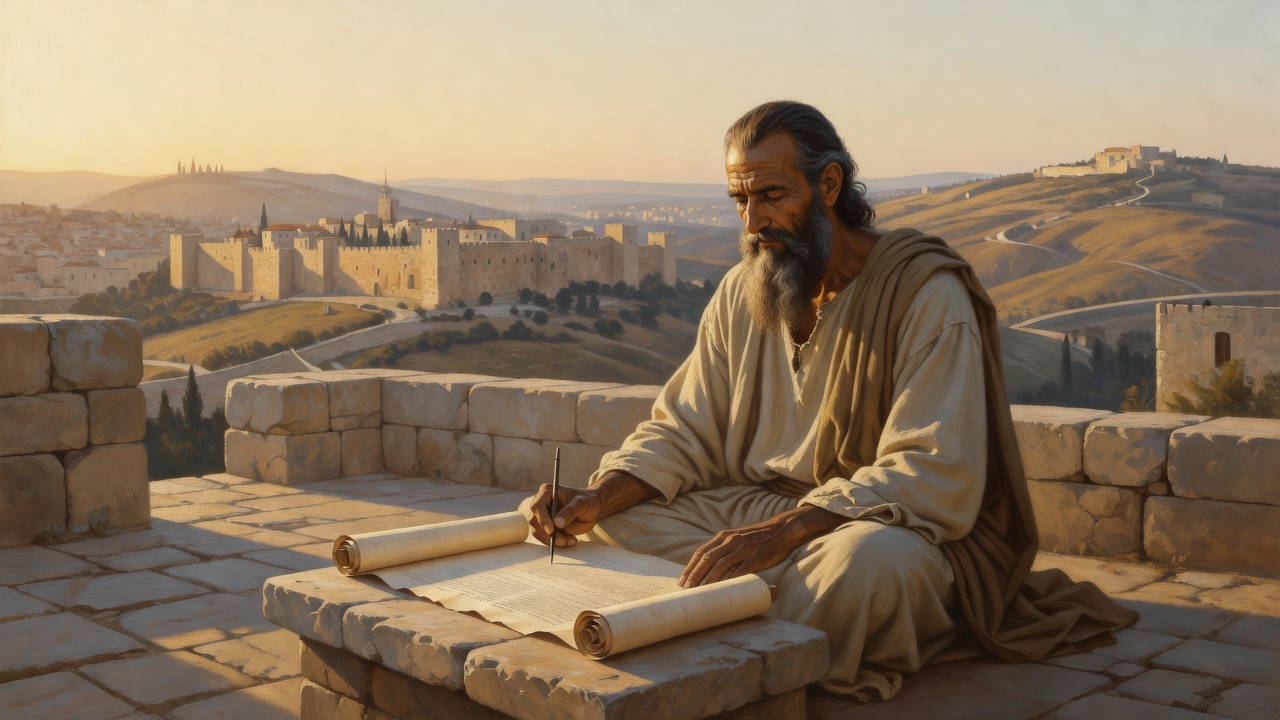
A Reflection on Folly and Deliverance
- The psalm depicts God observing humanity from heaven to see if any seek Him, observing that all have turned aside and become corrupt.Sources: the Bible text itself
- The closing verse calls for salvation to come from Zion, the south-eastern hill of Jerusalem where David established his citadel and palace after capturing it from the Jebusites.Sources: the Bible text itself · Zion
- The poem concludes by pairing the names Jacob and Israel in a call for rejoicing, recalling the patriarch Jacob, the son of Isaac, who also bore the name Israel.Sources: the Bible text itself · Jacob (Israel)
Notes written with AI assistance from open sources (Theographic Bible Metadata, CC BY-SA 4.0; Easton’s Bible Dictionary, public domain) and reviewed before publishing.
Places in this chapter
- Zion · Today: Jerusalem · 31.777, 35.234 · verse 6
Only places identified with high confidence are shown (90% or more according to the scholarly sources compiled by OpenBible). Period map: DARE (Digital Atlas of the Roman Empire), CC BY 4.0; modern map: © OpenStreetMap contributors; places: OpenBible.info (CC BY 4.0).
Credits and license for this translation
Thai Phum Holy Bible
The Holy Bible in the Thaiphum Chin language of Myanmar
Copyright © 2020 Batupuei Christian Fellowship
Language: Thai Phum (Chin, Thaiphum)
Translation by: Batupuei Christian Fellowship
copyright only valid in Myanmar; Public Domain elsewhere
This translation is made available to you under the terms of the
Creative Commons Attribution Share-Alike license 4.0.
You have permission to share and redistribute this Bible translation in any format and to make reasonable revisions and adaptations of this translation, provided that:
You include the above copyright and source information.
If you make any changes to the text, you must indicate that you did so in a way that makes it clear that the original licensor is not necessarily endorsing your changes.
If you redistribute this text, you must distribute your contributions under the same license as the original.
Pictures included with Scriptures and other documents on this site are licensed just for use with those Scriptures and documents.
For other uses, please contact the respective copyright owners.
Note that in addition to the rules above, revising and adapting God's Word involves a great responsibility to be true to God's Word. See Revelation 22:18-19.
2024-05-01
Source: http://ebible.org/cth/ · eBible.org