Proverbs 30
Thai Phum Holy Bible · Tap a verse to see its cross-references.
Agur lungangnae
1Jakeh capa Agur ni a dei e lawk.
Ama ni Ithiel, Ithiel hoi Ucal koe hettelah a dei.
2Tamipueng hlak tamipathu poung lah ka o teh,
thaipanueknae hai ka tawn hoeh.
3Lungangnae hai kamtu van hoeh niteh,
tamikathoungnaw e panuenae hai ka tawn hoeh.
4Kalvan ka luen ni teh ka kum e teh apimaw,
Talai poutnae pueng kacaksakkung teh apimaw,
A min apimaw, a capa min hai apimaw, na panue maw.
5Cathut lawk pueng teh a thoung,
ka kânguenaw pueng hanelah kânguenae lah ao.
6A lawk hah thap hanh, hoehpawiteh na yue vaiteh,
na laithoe e hah a hmu han.
7Hno kahni touh ka hei han,
ka due hoehnahlan na poe haw.
8Ahrawnghrang hoi laithoenae heh kai hoi
ahlanae koe na tat pouh haw, mathoenae nakunghai,
tawntanae nakunghai na poe hanh,
ka panki e rawca hoi na kawk haw.
9Hoehpawiteh ka tawnta vaiteh na pahnawt payon vaih,
BAWIPA teh apimaw, ka tet payon vaih.
Hoehpawiteh, ka mathoe vaiteh hno ka parawt vaiteh
Cathut min ka mathout sakpayon vaih.
10San teh a bawi koe pathoe hanh,
hoehpawiteh thoe na bo vaiteh,
nang dawk yonnae ao han.
11A na pa thoe a bo teh
a manu yawhawi a poe ngaihoehnae se ao.
12Ama mithmu vah kathoung poung lah kâpouknae ao,
hatei a khinnae koehoi pâsu hoeh rah.
13Khopouk ka rasang ni teh moungnae a o,
a khopouk teh a rasang katang.
14A hâ teh sendek patetlah,
a hâkamnaw teh sarai patetlah a onae se a o,
het talai van e tami mathoenaw hoi
kavoutthoupnaw hah koung ca hanelah kakâcainaw doeh.
15Tavat ni canu kahni touh a tawn teh,
na poe na poe a ti.
Ka boum thai hoeh e kathum touh ao.
A khout toe ka tet boihoeh e hno pali touh a o
16Tangkom, kating e thun,
tui ka boum hoeh e talai,
a khout toe ka tet boihoeh e hmai naw hah doeh.
17A na pa ka dudam niteh
a manu banglah ka noutna hoeh naw e mit teh,
vonga ni a cawngkhawi pouh vaiteh,
matawcanaw ni a ca awh han.
18Kai hanlah kângairu hno kathum touh a o,
ka thaipanuek hoeh e hno pali touh teh,
19Kahlî dawk mataw kamlengnae lamthung,
Lungphen van tahrun ceinae, tuipui van long ceinae,
hoi thoundoun ni tangla painae lam naw hah doeh.
20Napui kahawihoeh hai hottelah doeh ao van,
a ca hnukkhu a pahni a hui teh yonnae ka sak hoeh, telah ouk a ti.
21Hno kathum touh kecu talai heh taki hoi ouk a pâyaw,
bokheiyah, hno pali touh khang thai hoeh e ao.
22Siangpahrang lah kâsak e san,
king ka boum e tamipathu,
23Vâ ka sak e napui kathout,
a bawipa e yu ka khawng e sannu hetnaw hah doeh.
24Talaivan a thoungca eiteh
a lungkaang e hno pali touh ao.
25Atha awm hoeh eiteh kompawi vah
ama hane rawca ka pâtung e lungkhi,
26a tha ayoun eiteh
lungha rahak kaawm e saveh.
27siangpahrang tawn hoeh eiteh
ahuhu lahoi ka cet e samtong,
28a khok hoi a kâbang eiteh
siangpahrang im kaawm e bombanaw hah doeh.
29Hno kathum touh kahawicalah ka cet thai e a o,
bokheiyah pali touh hah teh,
30Saring pueng dawk athakaawme sendek,
bang ni hai ngang thai hoeh.
31Ransa marang, hmaetan,
apinihai ngang thai hoeh e siangpahrang hetnaw hah doeh.
32Mahoima kâtalue totouh na pathu pawiteh,
hoehpawiteh hnokathout sak hanelah na kâcai pawiteh,
na kut hoi na pahni tabuemh.
33Bangkongtetpawiteh, maitosanutui kalaw e ni
sanutuikamkak a tâcosak e patetlah,
hnawng kapennae ni hnawngthi a lawng sak.
Hot patetlah lungkhueknae ni kâyuenae a tâcokhai.
Did you know?
The Sayings of Agur
- Proverbs 30 is attributed to Agur son of Jakeh, who addressed his sayings to Ithiel and Ucal. Beyond what is recorded in this chapter, nothing further is known about Agur or his father.Sources: Agur · Jakeh · Ucal · the Bible text itself
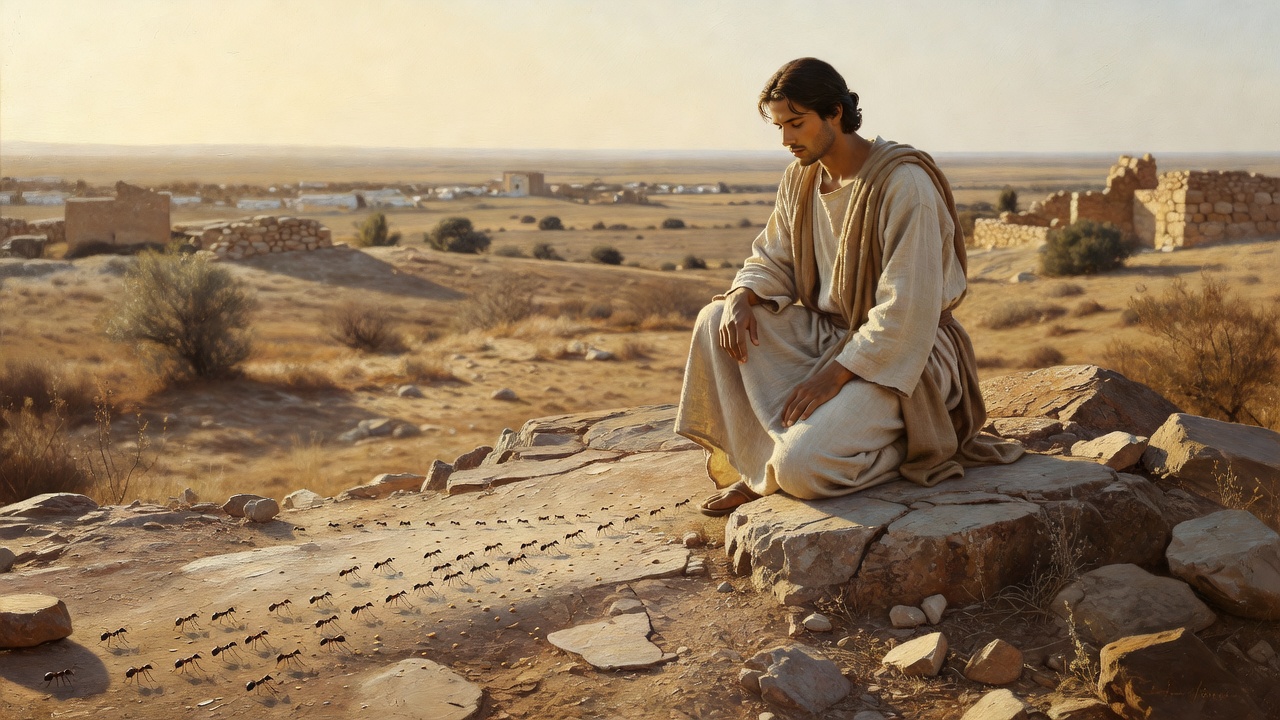
- The chapter frequently uses a graded numerical pattern ('three things... four that...') to group observations about nature and human behavior. Agur applies this structure to marvels of creation, social disruptions, stately walkers, and four small creatures that display remarkable wisdom: ants, rock badgers, locusts, and lizards.Sources: the Bible text itself
- Agur makes a specific two-part request, asking to be granted neither poverty nor riches, but only his daily portion of food. He explains that having too much might lead someone to disown the Lord, while falling into poverty might tempt a person to steal.Sources: the Bible text itself
Notes written with AI assistance from open sources (Theographic Bible Metadata, CC BY-SA 4.0; Easton’s Bible Dictionary, public domain) and reviewed before publishing.
Credits and license for this translation
Thai Phum Holy Bible
The Holy Bible in the Thaiphum Chin language of Myanmar
Copyright © 2020 Batupuei Christian Fellowship
Language: Thai Phum (Chin, Thaiphum)
Translation by: Batupuei Christian Fellowship
copyright only valid in Myanmar; Public Domain elsewhere
This translation is made available to you under the terms of the
Creative Commons Attribution Share-Alike license 4.0.
You have permission to share and redistribute this Bible translation in any format and to make reasonable revisions and adaptations of this translation, provided that:
You include the above copyright and source information.
If you make any changes to the text, you must indicate that you did so in a way that makes it clear that the original licensor is not necessarily endorsing your changes.
If you redistribute this text, you must distribute your contributions under the same license as the original.
Pictures included with Scriptures and other documents on this site are licensed just for use with those Scriptures and documents.
For other uses, please contact the respective copyright owners.
Note that in addition to the rules above, revising and adapting God's Word involves a great responsibility to be true to God's Word. See Revelation 22:18-19.
2024-05-01
Source: http://ebible.org/cth/ · eBible.org