Luke 11
Thai Phum Holy Bible · Tap a verse to see its cross-references.
Bawipa ratoumnae
1Hahoi, hnin touh hnin vah, Bawipa teh hmuen buet touh koevah a ratoum teh a baw hnukkhu, a hnukkâbang buet touh ni Bawipa, Jawhan ni a hnukkâbangnaw ratoumnae a pâtu e patetlah kaimouh hai na pâtu awh haw telah atipouh. 2Bawipa ni nangmanaw ni na ratoum awh navah na dei awh hane teh, kalvan kho kaawm e kaimae na Pa, na min barinae awm lawiseh, na uknaeram tho lawiseh. 3Na ngainae teh kalvan kho akuep e patetlah talai van hai kuep lawiseh, hnintangkuem von kawk khuem rawca pou na poe haw. 4Kaimae tak dawk yonnae kasaknaw, kaimouh ni ka ngaithoum e patetlah kaimae ka yonnae hai na ngaithoum haw, yon tacueknae thung kaimanaw na hrawi hanh. Tamikahawihoehe koehoi na hlout sak haw telah tet awh, atipouh.
Het, Tawng, Takhawng haw
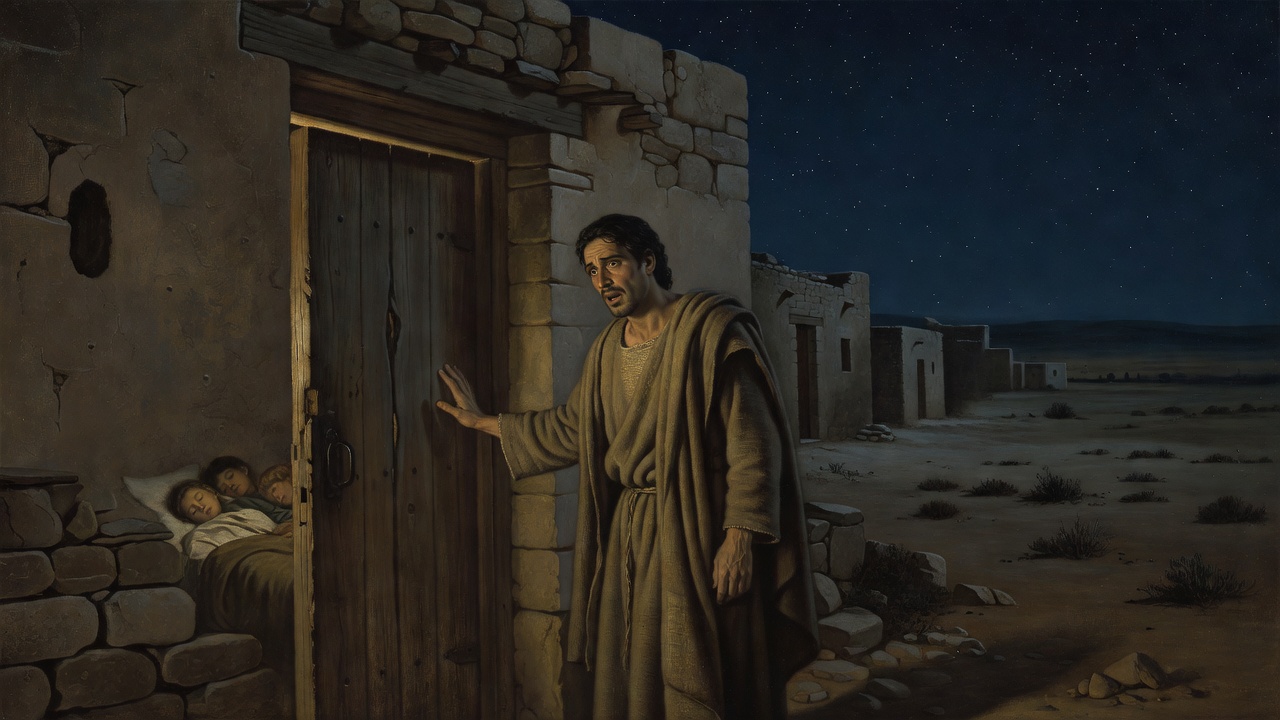
5Hathnukkhu hoi bout a dei e teh, nangmouh thung dawk tami buet touh ni a hui buet touh a tawn teh, karumsaning vah hote a hui im a cei teh, ka hui, 6kahlong lahoi ka hui buet touh a tho. Ka paca hane banghai ka tawn hoeh dawkvah vaiyei kathum touh na cawi sak ei telah atipouh. 7Imkung ni kai koe hrawang hanh, takhang hai ka khan toe, ka canaw hai koung a i awh toung dawkvah ka thaw vaiteh na poe thai mahoeh telah imthungkhu hoi atipouh han. 8Ka deingainae teh, hote tami teh a hui lah ao dawkvah, a lungpout laipalah a hei dawkvah a ngai e pueng a thaw vaiteh a poe han. 9Bout ka dei ngainae teh het awh, na poe han. Tawng awh na pâphawng han. Tho takhawng awh, na takhawng pawiteh paawng pouh lah ao han. 10Ka het e tami teh a poe. Ka tawng e tami teh a pâphawng. Ka takhawng e tami teh a paawng pouh.
11Apipatet e na pa ni maw a ca ni tanga moi a hei navah tahrun moi ouk a poe boi. 12Âdui a hei navah aikam moi ouk poe boi yaw. 13Nangmanaw ni tami kahawihoeh lah na o awh nakunghai, na canaw poehno kahawi ouk na poe pawiteh hot hlakvah nangmae kalvanlae na Pa ni ka hete taminaw hah, Kathoung Muitha hoe poe mahoeh maw telah atipouh.
Jisuh hoi Beelzebub
14Hahoi hnin touh navah, a lawk ka a e kahrai a pâlei teh, kahrai a tâco hnukkhu lawka teh lawk a dei. Kamkhueng e taminaw teh a kângairu awh. 15Tami tangawn ni hete tami ni kahraituilinaw e bawi Beelzebub e min lahoi doeh kahraituilinaw a pâlei ati awh. 16A tangawn ni, tanouk hane a ngai awh teh, kalvan lahoi e mitnoutnae a hei awh.
17Bawipa ni ahnimae lungthin a panue dawkvah, uknaeram hai buet touh hoi buet touh kâtaran pawiteh a kâkapek han. Hot patetlah imthungkhu hai kâpo hoehpawiteh a rawk han. 18Kai ni Beelzebub e min lahoi kahraituilinaw ka pâlei pawiteh, Setan e uknaeram bangtelamaw a kangcoung thai han. 19Kai ni Beelzebub e min lahoi kahraituilinaw ka pâlei toung pawiteh nangmae na canaw ni teh apie min lahoi maw a pâlei awh han. Hatdawkvah ahnimanaw ni nangmanaw lawkcengkung lah ao han. 20Kai ni Cathut e kutdawn hoi kahraituilinaw ka pâlei pawiteh, nangmouh koe Cathut uknaeram a kangduenae tueng teh a pha katang toe.
21A thakasai e ni senehmaica a puengcang kakuep lahoi amae toeim dawk ao navah, hnopainaw dawk lungtâsuenae awm hoeh. 22Hatei ahni hlak thakasai e tami a tho teh pet a tâ torei doeh ahni ni kâuepkhai e senehmaica a puengcangnaw a la vaiteh, a tawn e hnopainaw hai ayânaw a rei han. 23Kai hoi kaawm hoeh e tami teh kai na taran e doeh. Kai hoi cungtalah kamkhueng hoeh e tami teh kampek e doeh.
Kakhine muitha bout a ban
24Kakhine muitha teh a tâco hnukkhu, a kâhat nahane hmuen a tawng. A pâphawng hoeh dawkvah yampa ka onae im dawk ka ban han a titeh, 25A tangtho navah, hote im teh a houng teh apicai e a hmu. 26Hat torei teh ama hlak ka mathout e muitha a hui sari touh a hrawi teh hote tami thung a kâen awh. Hote tami teh hmaloe e hlak a hnukkhu e hoe a mathoe telah atipouh.
Yawhawinae katang
27Hottelah a dei navah napui buet touh ni taminaw e a rahak hoi a dei e teh, Bawipa nang na ka vawn e napui hoi sanu na ka pânei e napui teh a yawhawi telah atipouh. 28Jisuh ni Cathut e lawk ka thai ni teh ka tarawi e tami doeh a yawkahawi e tami telah atipouh.
Jawnah e mitnout
29Hahoi tami muen a kamkhueng awh dawkvah, Bawipa ni hete miphun teh miphun kathout doeh. Mitnoutnae a hei navah, profet Jawnah e mitnoutnae hloilah, bangpatet e mitnoutnae hai kamnuek sak mahoeh. 30Jawnah ni Nineveh kho dawk e taminaw hanelah mitnoutnae lah ao e patetlah tami Capa hai hete miphunnaw hanelah ao han. 31Lawkceng navah aka lae ram ka uk e siangpahrangnu ni hete miphun koe lah a kangdue vaiteh a sung sak han. Bangkongtetpawiteh hote siangpahrangnu teh Solomon e lungangnae lawk tarawi hanelah, talai pout koe lahoi a tho. Hete hmuen koe Solomon hlak ka talue e tami ao. 32Lawkceng navah, Nineveh kho e taminaw teh hete miphunnaw hoi cungtalah a thaw vaiteh, hete miphunnaw a yonnae a kamnue sak han. Bangkongtetpawiteh ahnimanaw teh Jawnah ni a dei e lawk dawk hoi pankângai awh. Hete hmuen koe Jawnah hlak kalen e tami ao.
Tak e hmaiang
33Apinihai hmaiim paang navah ouk ramuk bawi hoeh, tangthung hoi hai ouk ramuk bawi hoeh. Ka kâennaw ni angnae a hmu thai nahanelah, hmaiimkhok dawk doeh ouk ta awh. 34Na mit teh na takthai hanelah hmaiim lah ao dawkvah na mit ang pawiteh na tak abuemlah a ang han. Na mitmawm pawiteh na tak abuemlah a hmo han. 35Na tak dawk e angnae hah, hmonae lah na coung sak hoeh nahan kâhruetcuet awh. 36Puengcang buet touh boehai hmonae cakang lah awm laipalah, na tak abuemlah ang pawiteh, hmaiim teh nangmouh a ang e patetlah na tak abuemlah koung a ang han telah atipouh.
Tami kahawi lah kâsak e naw
37Hahoi hettelah a dei navah, Farasi tami buet touh ni bu ca hanelah a kaw teh caboi dawk a tahung. 38Bu a ca hoehnahlan kut kamsin hoeh e Farasi tami ni a hmu navah a kângairu. 39Jisuh ni Farasi nangmanaw, avanlah doeh manang, ailo na pâle awh. Athunglah teh hounlounnae, hawihoehnae hoi doeh na kawi awh. 40Tamipathunaw, avan lae ka sak e Cathut ni athung lae hai sak hoeh maw. 41Hot hlak hoe kahawi e teh, na sak thai toteh mathoenaw hah poe awh, telah na sak pawiteh hno puengpa ni na thoungsak awh han.
42Farasinaw, nangmouh teh na yawthoe awh. Bangkongtetpawiteh, songpam, songkeng hoi anhlanaw totouh, pung hra pung touh na poe awh navah, lannae hoi Cathut lungpatawnae teh banglahai na noutna awh hoeh. Apasuek dei e naw hai cettakhai laipalah, a hnukkhu dei e naw hai tarawi awh.
43Farasinaw, nangmanaw teh na yawthoe awh. Bangkongtetpawiteh, sinakok dawk ka talue e hmuen koehoi hno yonae koevah ayâ ni bari e hah lung na pataw awh.
44Cakathutkungnaw hoi Farasinaw, kakâsaknaw teh na yawthoe awh. Bangkongtetpawiteh ka kamnuek hoeh e phuen hoi na kâvan awh. Hote tangkom van kacetnaw ni phuen ao e panuek awh hoeh telah atipouh.
45Hahoi kâlawk kacangkhaikung buet touh ni Bawipa telah pawiteh kaimouh hai yon na pen awh maw, telah atipouh navah, 46Kâlawk kacangkhainaw, nangmouh teh na yawthoe awh. Bangkongtetpawiteh, phu thai hoeh e hno ayânaw van na patue awh. Namamouh teh kutdawn hoi boehai na tek awh hoeh.
47Nangmouh teh na yawthoe awh. Na mintoenaw ni a thei e profetnaw e phuen na sak awh. 48Hatdawkvah nangmouh teh, na mintoenaw e nuencang na tarawi awh. Na mintoenaw ni profetnaw teh a thei awh toe. Nangmouh ni phuen na sak awh. 49Hatdawkvah Cathut lungangnae ni profetnaw hoi gunceinaw hah ahnimanaw aonae koe patoun han. Ahnimanaw thung dawk tami tangawn teh a pacekpahlek han, tangawn teh a thei awh han. 50Hatdawkvah, Abel e a thi koehoi a kamtawng vaiteh, thuengnae hoi bawkim rahak vah a thei awh e Zekhariah e a thi totouh, talaivan kamtawngnae koehoi palawng tangcoung lah kaawm e profetnaw pueng e a thipaling phu teh hete miphunnaw koe ka suk han. 51Kai ni atangcalah ka dei e teh hete miphunnaw koe hote thipaling phu ka suk han telah kai ni ka dei.
52Kâlawk kacangkhainaw, nangmouh teh na yawthoe awh. Bangkongtetpawiteh panuenae cabi teh na kuem awh. Namamouh hai na kâen awh hoeh, kâen han kangainaw hai na ngang awh, telah atipouh.
53Hottelah taminaw koe a dei pouh navah, cakathutkungnaw hoi Farasinaw ni Bawipa dawk yon a pen thai nahanelah, 54a pawp awh teh lawk a dei e man thai nahane a tawng awh teh a konglam a cawngca a pacei awh.
Did you know?
Prayer, Signs, and Woes
- Jesus speaks of the blood of all the prophets, from the blood of Abel to the blood of Zechariah, who was killed between the altar and the sanctuary. Abel was the second son of Adam and Eve and was killed by his brother Cain. Easton's Bible Dictionary (1897) identifies this Zechariah as the son or grandson of the high priest Jehoiada, stoned at the king's command in the court of the house of the Lord after he condemned the king and the people, and notes that Jesus alludes to that murder in this chapter.Sources: the Bible text itself · Abel · Zacharias
- Jesus says this generation will be given no sign except the sign of Jonah: as Jonah was a sign to the Ninevites, so the Son of Man will be a sign to this generation, and the men of Nineveh, who repented at his preaching, will condemn it at the judgment, because someone greater than Jonah is here. Easton's Bible Dictionary (1897) describes Jonah, son of Amittai of Gath-hepher, as a prophet of Israel and a missionary to Nineveh, and calls him a type of the Son of Man. It describes Nineveh as a great and populous city, the flourishing capital of the Assyrian empire.Sources: the Bible text itself · Jonah · Nineveh
- After Jesus drives out a demon that was mute, some say he does it by Beelzebul, the prince of the demons. Easton's Bible Dictionary (1897) explains the name Satan as adversary or accuser, says the New Testament uses it interchangeably with the devil, and lists Beelzebub among his titles. Jesus answers that every kingdom divided against itself will be laid waste, and asks how Satan's kingdom can stand if Satan is divided against himself.Sources: the Bible text itself · Satan
Notes written with AI assistance from open sources (Theographic Bible Metadata, CC BY-SA 4.0; Easton’s Bible Dictionary, public domain) and reviewed before publishing.
Places in this chapter
Only places identified with high confidence are shown (90% or more according to the scholarly sources compiled by OpenBible). Period map: DARE (Digital Atlas of the Roman Empire), CC BY 4.0; modern map: © OpenStreetMap contributors; places: OpenBible.info (CC BY 4.0).
Credits and license for this translation
Thai Phum Holy Bible
The Holy Bible in the Thaiphum Chin language of Myanmar
Copyright © 2020 Batupuei Christian Fellowship
Language: Thai Phum (Chin, Thaiphum)
Translation by: Batupuei Christian Fellowship
copyright only valid in Myanmar; Public Domain elsewhere
This translation is made available to you under the terms of the
Creative Commons Attribution Share-Alike license 4.0.
You have permission to share and redistribute this Bible translation in any format and to make reasonable revisions and adaptations of this translation, provided that:
You include the above copyright and source information.
If you make any changes to the text, you must indicate that you did so in a way that makes it clear that the original licensor is not necessarily endorsing your changes.
If you redistribute this text, you must distribute your contributions under the same license as the original.
Pictures included with Scriptures and other documents on this site are licensed just for use with those Scriptures and documents.
For other uses, please contact the respective copyright owners.
Note that in addition to the rules above, revising and adapting God's Word involves a great responsibility to be true to God's Word. See Revelation 22:18-19.
2024-05-01
Source: http://ebible.org/cth/ · eBible.org