Joshua 1
Thai Phum Holy Bible · Tap a verse to see its cross-references.
About this book
About Joshua
- Easton's Bible Dictionary (1897) explains Joshua's name as "Jehovah is his help" or "Jehovah the Saviour." He was the son of Nun, of the tribe of Ephraim, born in Egypt, and Moses' successor as leader of Israel; the wars of conquest he carried on are recorded in the book that bears his name. That entry does not name the book's author or give a date for its writing.Sources: Easton: Joshua · Joshua
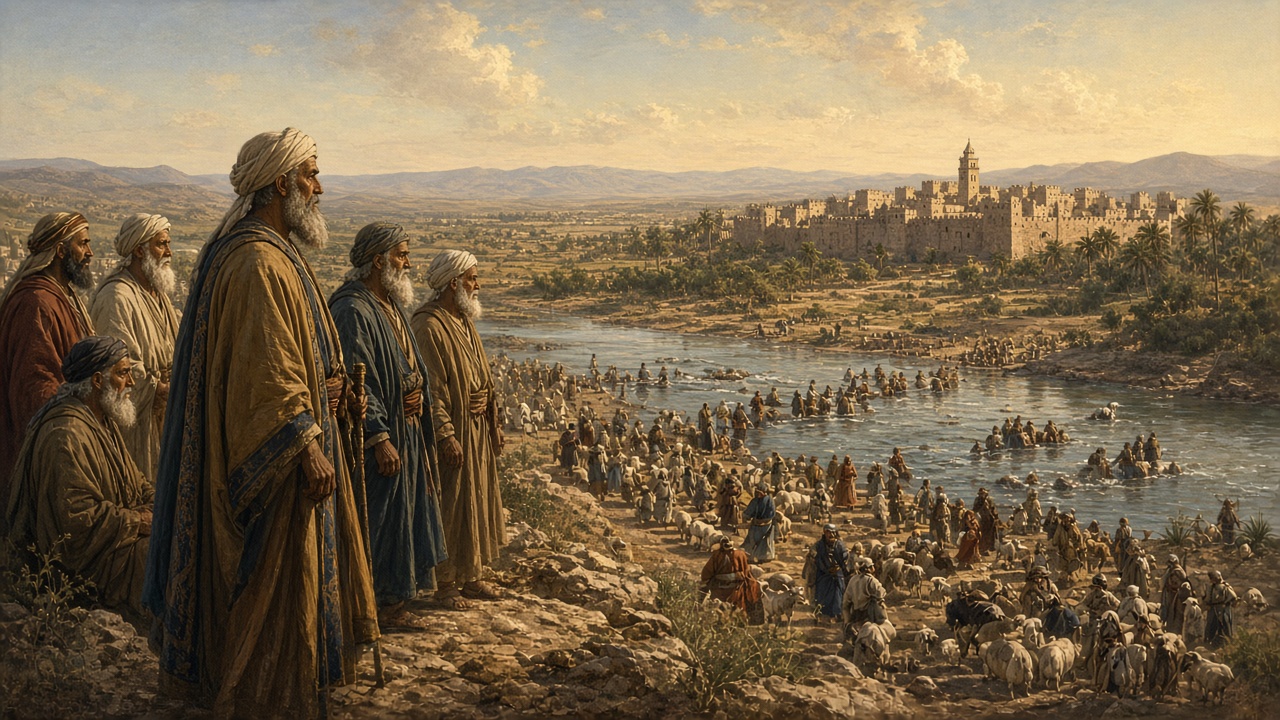
- When Joshua took command, the people were encamped at Shittim. They crossed the Jordan and camped at Gilgal, where, Easton says, he circumcised the people and kept the Passover. Jericho, a fortified city among palm trees about five miles west of the Jordan, is described as Canaan's strongest fortress and the key to western Palestine; Ai, east of Bethel, was the second Canaanite city taken, after an initial defeat.Sources: Easton: Joshua · Jericho · Ai
- Easton's Bible Dictionary (1897) says Joshua conquered six nations and thirty-one kings, then divided the land among the tribes, with Timnath-serah in Mount Ephraim assigned to himself. East of the Jordan, Gilead is described as a mountainous region held by the tribes of Gad and Reuben and the southern part of Manasseh.Sources: Easton: Joshua · Gilead
- Quoting Edersheim, the dictionary says Joshua's name was changed from Oshea, "help," to Jehoshua, "Jehovah is help," and notes that he is called Jesus in Acts 7:45 and Hebrews 4:8. It states that he died at the age of one hundred and ten, twenty-five years after crossing the Jordan, and was buried in his own city of Timnath-serah; of his father Nun, nothing more is recorded than that he was Joshua's father.Sources: Easton: Joshua · Joshua · Nun
- Before leading the conquest, Joshua commanded Israel's host against the Amalekites at Rephidim, served as Moses' minister, and was one of twelve sent to explore Canaan; only he and Caleb brought back an encouraging report. As Easton sketches the book, it runs from the crossing of the Jordan and the taking of Jericho through years of war to the division of the land and Joshua's last address.Sources: Easton: Joshua
Notes written with AI assistance from open sources (Theographic Bible Metadata, CC BY-SA 4.0; Easton’s Bible Dictionary, public domain) and reviewed before publishing.
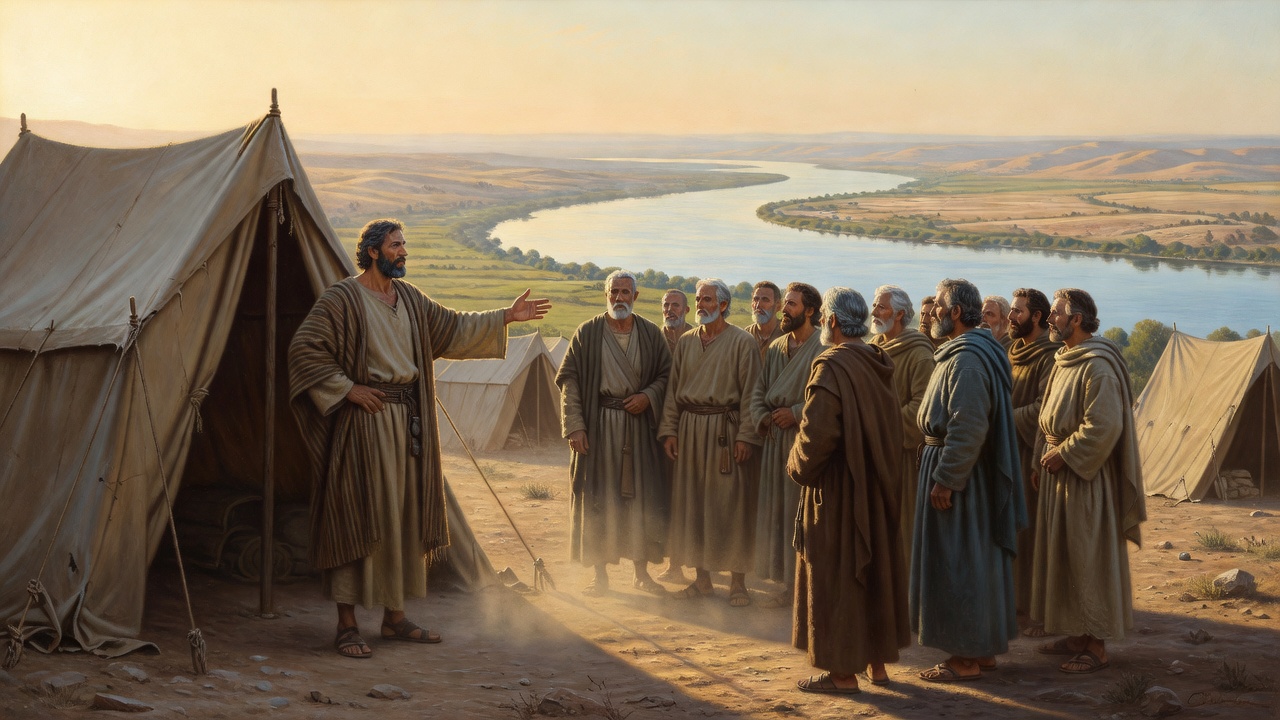
Cathut ni Joshua a patoun
1BAWIPA Cathut e san Mosi a due hnukkhu Mosi e yueng lah thaw ka tawk han e, Nun capa Joshua teh, BAWIPA Cathut ni, 2Kaie ka san Mosi te a due toe. Hatdawkvah nama hoi na taminaw pueng atu thaw awh nateh Jordan palang namran lah rakat awh leih. Isarel miphunnaw kai ni na poe e ram dawk kâen sak leih. 3Mosi koe lawk ka kam e patetlah nang ni na coungroe e talai pueng teh nangmouh na poe han. 4Kahrawng pueng hoi Lebanon mon koehoi, Euphrates palangpui koehoi Hitnaw e ram abuemlah hoi, kanîloumlah tuipui totouh nangmae ram lah ao han. 5Na hringyung thung pueng nange na hmalah apihai kangdout thai mahoeh. Mosi koe kai ka o e patetlah nang koehai kai ka o han. Kai ni na pahnawt mahoeh, na cetkhai mahoeh.
6Tha kâlat nateh, taranhawi haw. Mintoenaw koe na poe han ka tie kai ni lawk ka kam e ramnaw hah râw lah a coe awh nahanlah na rei han. 7Hatdawkvah kaie ka san Mosi koe ka poe e kâlawk pueng tarawi nahanelah, tha kâlat nateh, taranhawinae tawn haw. Na ceinae tangkuem koe tânae na hmu thai nahan, avoilah aranglah phen hanh. 8Hote kâlawk cauk dawk thut e pueng heh na tarawi thai na hanelah, Cakathoung hah touk laipalah awm hanh. Karum khodai pout laipalah luepluep na pouk han. Hottelah na sak pawiteh, nang ni kho na khang e dawk tânae na hmu han. 9Nang teh kai ni lawk na thui nahoehmaw. Tha kâlat nateh taranhawinae tawn haw, taket hanh, na lungpout hanh. Na cei nah tangkuem koe nang hoi rei ka o atipouh.
Jordan raka hanelah kâ a poe.
10Hahoi Joshua ni kahrawikungnaw hah a kaw teh, 11Ransanaw a onae tangkuem koe cet awh. Nangmae BAWIPA Cathut ni na poe awh e ram thung kâen awh nahanelah, hnin thum touh thung hete Jordan palang namran lah raka hanelah ao dawkvah, lamvon sin hanelah taminaw hah patuen dei pouh leih telah lawk a thui. 12Hahoi Joshua ni Reuben miphun, Gad miphun, Manasseh miphun, tangawn hah a kaw teh, 13BAWIPA Cathut e san Mosi ni nangmanaw lawk na thui e heh pahnim awh hanh. Nangmae BAWIPA Cathut ni nangmouh hanelah hete ram thung hmuen na ta pouh awh toe. 14Na yunaw na canaw, hoi saringnaw hah Jordan palang kanîtholah Mosi ni na poe e ram thung ao awh han. Hateiteh, senehmaica ka patuem e a thakaawme na hmaunawngha ransanaw pueng e hmalah na raka vaiteh, ahnimanaw hah na kabawp han. 15Cathut ni nangmanaw hmuen na ta pouh e patetlah hmaunawnghanaw hah hmuen na poe awh hoehnahlan nangmae BAWIPA Cathut ni na poe awh e ram heh, ahnimanaw ni ram be a la hoehroukrak, a tha kaawm e, taran ka tuk e abuemlah ni senehmaica patuep nalaihoi hmaunawnghanaw e hmalah a raka awh vaiteh, na tawmdawm han tie lawk hah pouk awh. Cathut e san Mosi ni Jordan palang Kanîtholae ram koe lah bout na ban han atipouh.
16Hottelah, ahnimouh nihai, nang ni na dei e pueng teh, kaimouh ni ka sak awh han na patoun e pueng koe ka sak awh han. 17Bang pueng dawk hai Mosi e lawk ka ngâi awh e patetlah nange lawk ka ngâi awh han. Hatdawkvah nange BAWIPA Cathut ni Mosi koe a okhai e patetlah nang koe haiyah awm van lawiseh. 18Nange kâ ka ek e tami pueng hoi nange lawk ka ngaihoeh e tami pueng, nange kâlawk ka tapoe e tami pueng teh thei lah ao han. Hatdawkvah, tha kâlat nateh na taranhawi hottelah Joshua koe bout atipouh awh.
Did you know?
Joshua Assumes Leadership
- Joshua, the son of Nun from the tribe of Ephraim, served as Moses' assistant and military commander before being commissioned to succeed him as leader of Israel. His name means "Jehovah is his help" or "Jehovah the Saviour."Sources: Joshua · the Bible text itself
- The territory outlined in God's commission to Joshua stretches from the southern wilderness and the Lebanon mountain range in the north to the Euphrates (called "the great river") in the east and the Mediterranean ("the Great Sea") to the west.Sources: the Bible text itself · Lebanon · Euphrates · Great Sea
- The tribes of Reuben, Gad, and the half-tribe of Manasseh had already received territory east of the Jordan River under Moses. However, their armed warriors were required to cross over ahead of the other tribes to assist them until the entire land was secured.Sources: the Bible text itself · Manasseh (son of Joseph)
Notes written with AI assistance from open sources (Theographic Bible Metadata, CC BY-SA 4.0; Easton’s Bible Dictionary, public domain) and reviewed before publishing.
Places in this chapter
- Jordan · Today: Jordan River · 31.761, 35.558 · verses 2, 11, 14, 15
- Euphrates · Today: Euphrates River · 31.004, 47.442 · verse 4
- Great Sea · Today: Mediterranean Sea · 31.805, 34.170 · verse 4
- Lebanon · 33.540, 35.584 · verse 4
- Negeb · 31.245, 34.841 · verse 4
- Syria · Today: Aram · 33.511, 36.306 · verse 4
Only places identified with high confidence are shown (90% or more according to the scholarly sources compiled by OpenBible). Period map: DARE (Digital Atlas of the Roman Empire), CC BY 4.0; modern map: © OpenStreetMap contributors; places: OpenBible.info (CC BY 4.0).
Credits and license for this translation
Thai Phum Holy Bible
The Holy Bible in the Thaiphum Chin language of Myanmar
Copyright © 2020 Batupuei Christian Fellowship
Language: Thai Phum (Chin, Thaiphum)
Translation by: Batupuei Christian Fellowship
copyright only valid in Myanmar; Public Domain elsewhere
This translation is made available to you under the terms of the
Creative Commons Attribution Share-Alike license 4.0.
You have permission to share and redistribute this Bible translation in any format and to make reasonable revisions and adaptations of this translation, provided that:
You include the above copyright and source information.
If you make any changes to the text, you must indicate that you did so in a way that makes it clear that the original licensor is not necessarily endorsing your changes.
If you redistribute this text, you must distribute your contributions under the same license as the original.
Pictures included with Scriptures and other documents on this site are licensed just for use with those Scriptures and documents.
For other uses, please contact the respective copyright owners.
Note that in addition to the rules above, revising and adapting God's Word involves a great responsibility to be true to God's Word. See Revelation 22:18-19.
2024-05-01
Source: http://ebible.org/cth/ · eBible.org