Job 28
Thai Phum Holy Bible · Tap a verse to see its cross-references.
Lungangnae kong dawk Job ni lawk a dei
1Ngun tainae tangkom ao katang,
sui sôlêinae a hmuen hai ao.
2Sum teh talai dawk hoi la e lah a o,
rahum teh talung dawk hoi thawng e lah ao.
3Tami ni hnonae dawk a pout sak teh,
a hmuen kingkadi e pueng totouh a tawng awh,
duenae tâhlip hoi hmonae thung vah
a cei awh teh a tawng awh.
4Tami a ohoehnae koe vah tangkom a tai teh,
khok ni a pahnim e hmuennaw hah
tami hoi a kâhlanae hmuen koe a bang awh teh,
pou a kâhuet awh.
5Talai e tui dawk hoi rawca tâconae lah a o,
a rahim lah teh hmai ni talai a kâthungsak e patetlah ao.
6Hote talungnaw teh, sapphire talung a phukaawm
a tâconae a kung lah ao. Sui kanuinaw hai ao.
7Hote lamthung teh tavanaw ni panuek hoeh,
mataw e mit ni hai hmawt hoeh.
8Ka po e sendek ni hai coungroe hoeh,
ka matheng e sendek hai cet boihoeh.
9Talung dawk tami ni kut a toung teh,
mon hah a kung koehoi pakhuppathan lah dek a palei.
10Lungsongpui hah a kavi teh, ravohong a sak teh,
a mit hoi a phukaawm poung e hno hah a hmu.
11Tui ka phuek e hah a tawng teh,
kâhrawk e hnonaw hah angnae dawk a tâcokhai.
12Hateiteh, nâ lah maw lungangnae hmuthainae teh,
nâ lah maw panuethainae hmuen hah ao.
13Aphu onae tami ni panuek hoeh,
Tami onae ram dawk hmu thai lah awm hoeh.
14Kadunge ni kai koe awm hoeh telah a ti,
talî ni kai koe awm hoeh a ti.
15Sui hoi ran thai lah awm hoeh,
aphu teh ngun hoi hai bangnue thai lah awm hoeh.
16Ophir talung phu kaawm ni hai phat thai hoeh,
aphu kaawm poung e onyx hoi
sapphire ni hai phat thai hoeh.
17Sui hoi talung phukaawm ni hai phat thai hoeh,
sui kathoung hoi hai thung thai lah awm hoeh.
18Koral hoi jasper hai deipan han kamcu hoeh,
Bangkongtetpawiteh, lungangnae phu teh,
Rubies talung hlak hai a phu hoe a rasang.
19Ethiopia ram e topaz talung phu kaawm ni phat thai hoeh,
sui kathoung ni hai aphu onae phat thai hoeh.
20Hot patet lae lungangnae teh,
nâhoi maw a tho,
thoumthainae hmuen teh nâ lah maw ao.
21Kahringnaw pueng e mit ni a khet teh hmawt thai hoeh,
kalvan e tavanaw ni hai a tawng teh hmawt thai hoeh.
22Rawkphainae hoi duenae ni a dei awh e kamthang hah,
ka hnâ ni a thai telah ati awh.
23Cathut ni a lamthung hah a panue pouh teh,
hmuen hai a panue
24Bangkongtetpawiteh, ama ni talai apout totouh a khet,
kalvan rahim pueng hah a hmu.
25Kahlî teh khing hane hoi,
tui teh bangnuenae hoi bangnue hane,
26kho a rak nahanelah lamthung a sak pouh teh,
khoparitnae hoi sumpapalik nahane lamthung a sak pouh navah,
27Lungangnae a hmu teh a pâpho,
a caksak teh a tawng.
28Tami koe khenhaw! BAWIPA takinae teh lungangnae doeh,
kahawihoehe ceitakhai e teh
panuethainae doeh telah a ti.
Did you know?
The Mining of Treasures and the Value of Wisdom
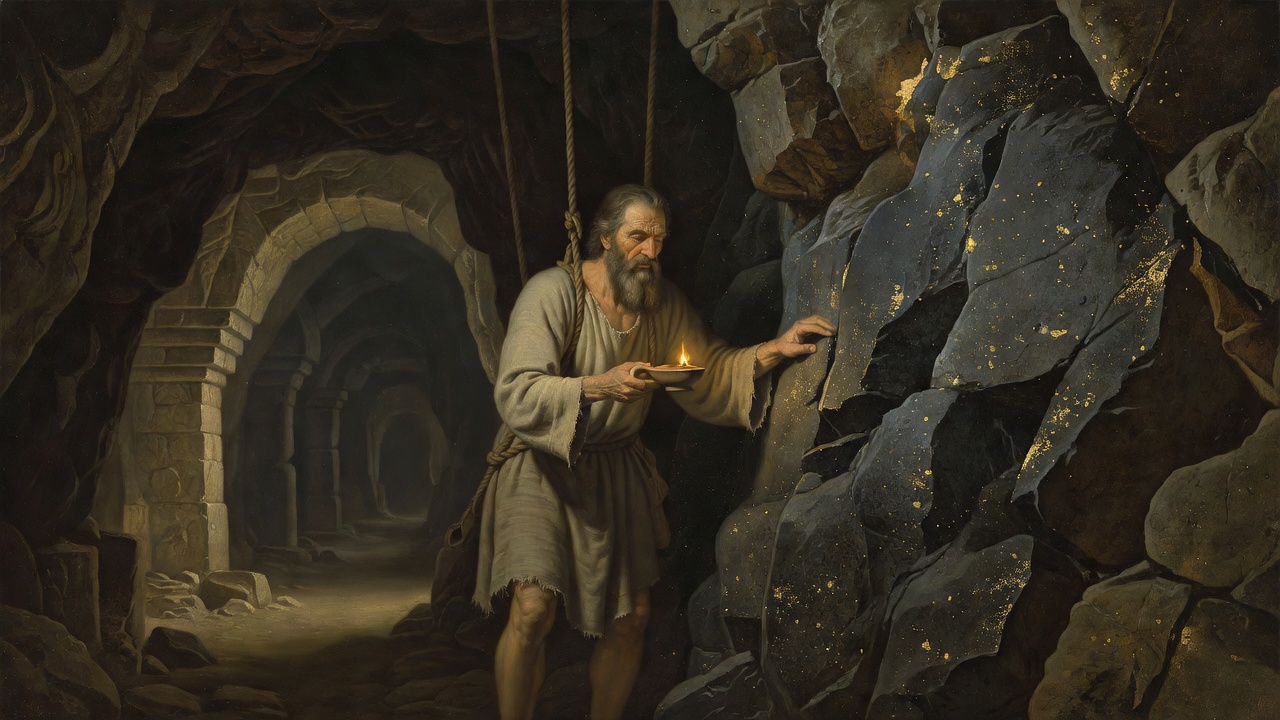
- Job 28 offers a vivid description of ancient mining practices, including digging deep shafts far from human settlements, descending on ropes, tunneling through rock, and damming underground water sources to extract copper, iron, silver, and precious stones.Sources: the Bible text itself
- To emphasize that wisdom exceeds all earthly wealth, the poem references the gold of Ophir and topaz from Cush (translated as Ethiopia in the Greek Septuagint). Ophir was a famous ancient source of pure gold often linked to Arabia or India, while Cush designated the region south of Egypt.Sources: the Bible text itself · Ophir · Ethiopia
- The poem concludes that while humans can master the subterranean world to extract buried treasures, true wisdom cannot be bought or mined. Instead, God reveals that wisdom for mortals consists in the fear of the Lord and turning away from evil.Sources: the Bible text itself
Notes written with AI assistance from open sources (Theographic Bible Metadata, CC BY-SA 4.0; Easton’s Bible Dictionary, public domain) and reviewed before publishing.
Places in this chapter
- Ethiopia · 16.935, 33.751 · verse 19
Only places identified with high confidence are shown (90% or more according to the scholarly sources compiled by OpenBible). Period map: DARE (Digital Atlas of the Roman Empire), CC BY 4.0; modern map: © OpenStreetMap contributors; places: OpenBible.info (CC BY 4.0).
Credits and license for this translation
Thai Phum Holy Bible
The Holy Bible in the Thaiphum Chin language of Myanmar
Copyright © 2020 Batupuei Christian Fellowship
Language: Thai Phum (Chin, Thaiphum)
Translation by: Batupuei Christian Fellowship
copyright only valid in Myanmar; Public Domain elsewhere
This translation is made available to you under the terms of the
Creative Commons Attribution Share-Alike license 4.0.
You have permission to share and redistribute this Bible translation in any format and to make reasonable revisions and adaptations of this translation, provided that:
You include the above copyright and source information.
If you make any changes to the text, you must indicate that you did so in a way that makes it clear that the original licensor is not necessarily endorsing your changes.
If you redistribute this text, you must distribute your contributions under the same license as the original.
Pictures included with Scriptures and other documents on this site are licensed just for use with those Scriptures and documents.
For other uses, please contact the respective copyright owners.
Note that in addition to the rules above, revising and adapting God's Word involves a great responsibility to be true to God's Word. See Revelation 22:18-19.
2024-05-01
Source: http://ebible.org/cth/ · eBible.org