Isaiah 63
Thai Phum Holy Bible · Tap a verse to see its cross-references.
BAWIPA e hnin dawk moipathungnae
1Edom ram, Bozrah kho hoi a tho teh, hni ka paling e kâkhu laihoi ka tho e hah apimaw. Ka sungren e hni, a thaonae bawilennae lahoi ka tho e teh apine. Kai teh lannae lahoi lawk ka dei niteh, rungngang hanelah athakaawme doeh. 2Bangkongmaw na kâkhu e hni hah a paling teh na hni teh misur katinnae koe tami ni a kho e hoi a kâvan. 3Misur paw hah kai kama dueng doeh katin toe. Tami moikapap e thung hoi kai koe buet touh hai awm awh hoeh. Bangkongtetpawiteh, lungkhuek laihoi katin toe. Lungkhuek lahoi ka coungroe teh, ahnimae a thi ni kaie hni dawk a tâcawn sin teh kaie hninaw hah kakhin sak toe. 4Moipathungnae hnin teh ka lung dawk ao. Ahnimanaw ka ratangnae kum ni a pha toe. 5Ka khet navah kabawmkung apihai awm hoeh. Hmoung ka ti nahai kapathawkung apihai awm hoeh. Hatdawkvah, kamae kut ni kama hanelah rungngangnae a sak toe. Ka lungkhueknae ni kai heh na man toe. 6Taminaw ka lungkhueknae lahoi ka coungroe toe. Ka lungkhueknae lahoi puenghoi ka kanawi toe. Ahnimae thi teh talai dawk ka rabawk toe. 7Pahren lungmanae patetlah BAWIPA ni lung na patawnae pueng thoseh, Isarelnaw koe a sak pouh e a lungmanae hai thoseh, BAWIPA e a lungmanae hoi, BAWIPA pahrennae teh ka pholen han. 8Hatdawkvah, BAWIPA ni a dei e teh, ahnimouh teh ka tami katang doeh. Laithoe ka dei hoeh e camo lah ao. Hatdawkvah, ahnimae rungngangkung lah ka o. 9Kângairunae dawkvah, a hmalah kaawm e kalvantami ni, ahnimanaw a rungngang teh a lungpatawnae lahoi a ratang. Ayan e tueng pueng dawk hai ahnimouh hah a po teh a hrawi awh.
10Hatei taran a thaw awh teh, Kathoung Muitha hah a lungmathoe sak awh. Hatdawkvah ahnimanaw hah a taran teh a tuk.
11Hat toteh, ayan e Mosi hoi a taminaw hah pahnim awh hoeh, hateh hettelah ati awh, ' talî thung hoi a tuhu kakhoumkungnaw hoi rei ka tâcawkhaikung Cathut te nâne ao. Kathoung Muitha ahnimanaw koe kapoekung nâne ao.
12Ka bawilen poung e, Mosi e aranglae kut hoi kahrawikung te nâne ao. Ama hanelah a yungyoe min a kâsai nahanelah ahnimae hmalah tui kâbawng sakkung te nâne ao.
13Ayawn dawk marang yawng sak e patetlah kangangkung awm laipalah, ka dungpoung e tui dawk hoi ahnimanaw kahrawikung te nâne ao.
14Ayawn dawk saringnaw ka cet e patetlah BAWIPA e Muitha ni a kangdue sak teh, hottelah a min sungren sak nahanelah namae na taminaw hah na hrawi toe ati awh.
Pankângai ratoumnae
15Kalvan hoi khen cathuk haw. Nange thoungnae hoi na bawilennae hoi na onae hmuen koehoi khenhaw! Na thaonae hnosakenaw hoi na lungthahmeinae nâne ao. Na lungthin hoi na dounnae hoi na pahrennae teh yout koe a roum toung boma.
16Abraham ni kaimanaw na panuek awh hoeh. Isarelnaw hah na coe hoeh nakunghai, atangcalah, kaimae na pa lah nang teh na o. Ayan hoi kamtawng teh, kaimanaw na ka ratang e Jehovah nama doeh.
17Oe, BAWIPA, bangkongmaw na lamthung dawk hoi kaimanaw hah lam na phen sak vaiteh nang takihoehnae lungthin hoi na pata sak han vaw. Na san, râw kacoekungnaw kecu dawk bout ban haw.
18Na tamikathoungnaw ni tueng kaduemca dueng a coe awh teh, na katarankungnaw ni na hmuen kathoung hah koung ka rawk lah rep a coungroe awh.
19Na uk boihoeh e hoi na min ka phawt boihoeh e ayan e tami patetlah doeh ka o awh toe.
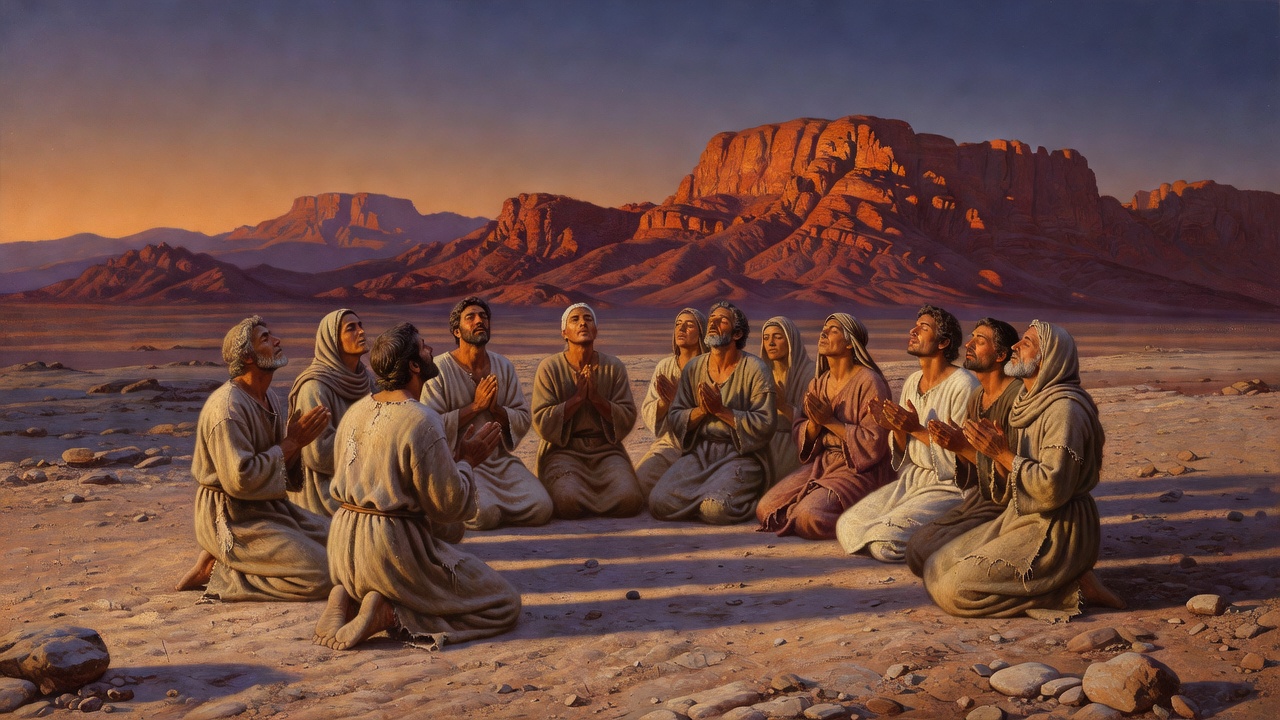
Did you know?
Judgment on Edom and a Prayer of Remembrance
- The chapter opens with a dramatic vision of a conqueror arriving from Bozrah, an ancient capital of the rugged, mountainous region of Edom. The imagery plays on the name Edom, which means red, picturing the figure dressed in crimson garments stained like those of a worker treading grapes in a winepress.Sources: Bozrah · Edom · Esau (Edom) · the Bible text itself
- The middle section of the chapter reflects on Israel's past, explicitly recalling the days of Moses when God divided the waters of the sea and guided the people through the depths by His Holy Spirit.Sources: Moses · the Bible text itself
- In their heartfelt plea, the people address God as their Father and Redeemer, confessing that even if their ancestral patriarchs Abraham and Israel were unable to acknowledge them, God remains their true protector.Sources: Abraham · the Bible text itself
Notes written with AI assistance from open sources (Theographic Bible Metadata, CC BY-SA 4.0; Easton’s Bible Dictionary, public domain) and reviewed before publishing.
Places in this chapter
Only places identified with high confidence are shown (90% or more according to the scholarly sources compiled by OpenBible). Period map: DARE (Digital Atlas of the Roman Empire), CC BY 4.0; modern map: © OpenStreetMap contributors; places: OpenBible.info (CC BY 4.0).
Credits and license for this translation
Thai Phum Holy Bible
The Holy Bible in the Thaiphum Chin language of Myanmar
Copyright © 2020 Batupuei Christian Fellowship
Language: Thai Phum (Chin, Thaiphum)
Translation by: Batupuei Christian Fellowship
copyright only valid in Myanmar; Public Domain elsewhere
This translation is made available to you under the terms of the
Creative Commons Attribution Share-Alike license 4.0.
You have permission to share and redistribute this Bible translation in any format and to make reasonable revisions and adaptations of this translation, provided that:
You include the above copyright and source information.
If you make any changes to the text, you must indicate that you did so in a way that makes it clear that the original licensor is not necessarily endorsing your changes.
If you redistribute this text, you must distribute your contributions under the same license as the original.
Pictures included with Scriptures and other documents on this site are licensed just for use with those Scriptures and documents.
For other uses, please contact the respective copyright owners.
Note that in addition to the rules above, revising and adapting God's Word involves a great responsibility to be true to God's Word. See Revelation 22:18-19.
2024-05-01
Source: http://ebible.org/cth/ · eBible.org