Ezekiel 25
Thai Phum Holy Bible · Tap a verse to see its cross-references.
Ammonnaw lathueng pâphonae
1BAWIPA e lawk kai koe a pha teh, 2tami capa Ammonnaw kangdout sin haw, ahnimouh taranlahoi pâpho. 3Ammonnaw koevah, Bawipa Jehovah e lawk hah thai awh, Bawipa Jehovah ni hettelah a dei, hmuen kathoung hah na khin sak lahun navah, Isarel ram taran lahoi, raphoe lah ao lahun nah, Judah imthung hah san lah a hrawi navah, haha! telah na ti dawkvah, 4nang teh Kanîtholae taminaw koe a coe awh hanelah na poe han, nang dawkvah roenae rim a sak awh vaiteh, haw e hmuen koe ao awh han, nange a pawhik a ca vaiteh, nange maito sanutui a nei awh han. 5Rabbah kho teh kalauk im lah ka sak vaiteh, Ammon hah saringhunaw a tabonae lah ka coung sak han, hottelahoi BAWIPA lah ka o tie a panue awh han.
6Bangkongtetpawiteh, Bawipa Jehovah ni hettelah a dei, Isarel ram thung vah na kut na tambei teh, na khok na pano, a rawknae kong dawkvah, lungthin abuemlah na lunghawi dawkvah, 7khenhaw! na lathueng vah ka kut ka dâw teh, miphunnaw koe lawphno patetlah na man sak han. Ram pueng koehoi nang teh na thei vaiteh, hote ram dawk hoi koung na pâmit han. Na raphoe vaiteh, BAWIPA lah ka o tie hah na panue han telah ati.
Moab lathueng pâphonae
8Bawipa Jehovah ni hettelah a dei, Moab hoi Seir ni khenhaw! Judah imthung teh miphun alouke patetlah doeh ao van telah ati awh dawkvah, 9khenhaw! Moab khopui e ram, a khopui e khori hah kamceng sak vaiteh, ka lentoe e ram Bethjeshimoth, Baalmeon Kiriathaim naw hah, 10Ammonnaw hah miphunnaw thung dawk hoi pou panuekhai e lah o hoeh nahan, Kanîtholae taminaw a coe hane ham hah, Ammonnaw hoi cungtalah ka poe han. 11Moab ram dawk lawkcengnae hah ka kuep sak vaiteh, BAWIPA lah ka o tie a panue awh han telah ati.
Edom lathueng pâphonae
12Bawipa Jehovah ni hettelah a dei. Edom ni Judah imthungnaw taranlahoi moi a pathung teh, a mahmawk lahoi ahnimae lathueng vah, kalenpoung lah yonnae a sak. 13Hatdawkvah, Bawipa Jehovah ni hettelah a dei. Edom lathueng vah, ka kut ka dâw vaiteh, amae thung hoi tami hoi saring he ka raphoe han. Teman kho teh kingdi sak han. Dedan totouh tahloi hoi a rawp awh han. 14Ka tami Isarelnaw e kut hoi a moi ka pathungnae hah, ka pha sak han, Edom e lathueng vah ka lungkhueknae hoi ka lungreithainae patetlah a sak awh han. A moipathungnae pawlawk dawk hoi a panue awh han telah Bawipa Jehovah ni a dei.
Filistin lathueng pâphonae
15Bawipa Jehovah ni hettelah a dei, Filistinnaw ni ayan hoi na maithoe awh kecu dawkvah, tami thei ngainae lungthin hah tawn laipalah, moipathung awh dawkvah, 16Bawipa Jehovah ni hettelah a dei, khenhaw! Filistinnaw taranlahoi ka kut ka dâw vaiteh, Kherethnaw hah tâkhawng teh, tuipuipaling teng e kacawie hah be ka raphoe han. 17Ka patawpoung e tounnae hoi ka patawpoung lah moi ka pathung han, hot patetlah ahnimae lathueng vah, moi ka pathung torei teh, BAWIPA lah ka o tie hah a panue awh han, telah ati.
Did you know?
Judgments on Surrounding Nations
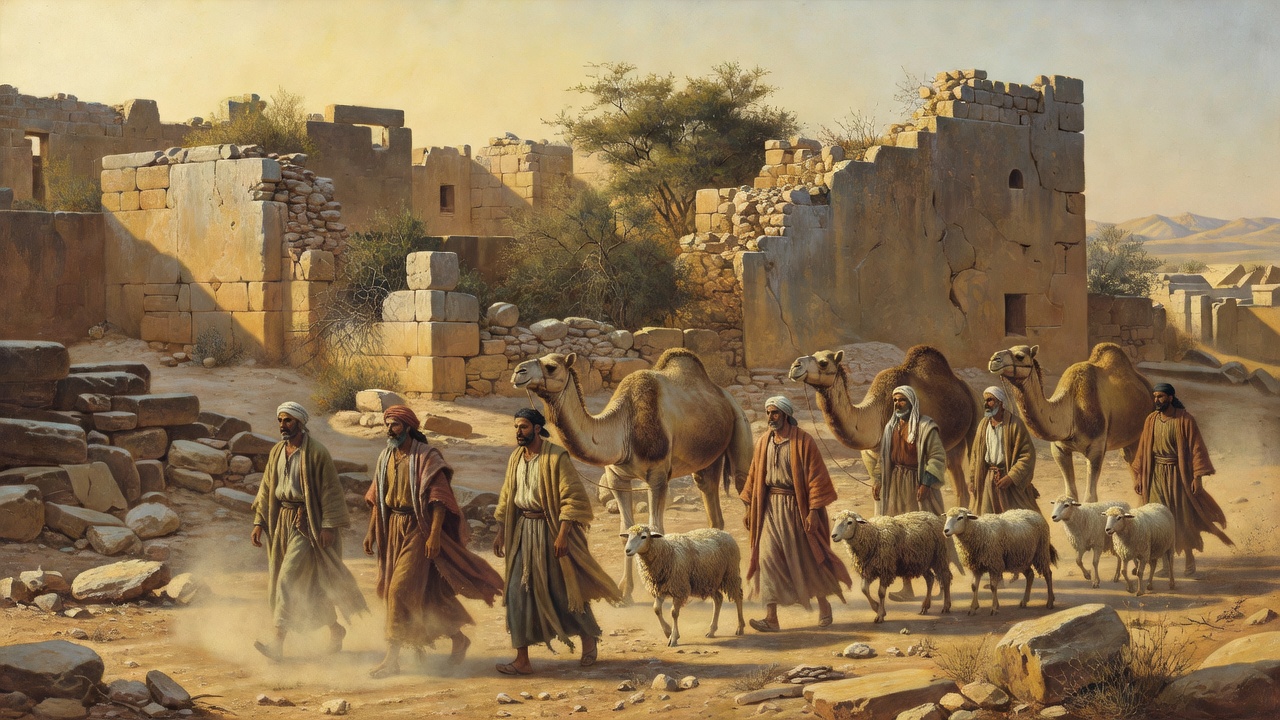
- Ammon lay east of the Jordan River with Rabbah as its chief city. Ezekiel prophesied that because Ammon gloated over the fall of Jerusalem and the profanation of the sanctuary, its territory and capital would be handed over to nomadic tribes from the East as pastures for camels and sheep.Sources: the Bible text itself · Ammon · Rabbah · East
- The neighboring regions of Moab and Mount Seir—the rugged hill country inhabited by the descendants of Esau—were rebuked for claiming Judah was just like all the other nations. Ezekiel warned that their frontier cities would be left exposed and given as a possession to peoples from the East.Sources: the Bible text itself · Moab · Seir · Esau (Edom)
- The chapter concludes with divine judgments against Edom and the Philistines, condemning both peoples for acting out of ancient hostility and taking malicious vengeance against Judah during its time of calamity.Sources: the Bible text itself · Edom
Notes written with AI assistance from open sources (Theographic Bible Metadata, CC BY-SA 4.0; Easton’s Bible Dictionary, public domain) and reviewed before publishing.
Places in this chapter
- Ammon · 31.955, 35.934 · verses 2, 3, 5, 10
- East · Today: region around Amman · 31.955, 35.934 · verses 4, 10
- Rabbah · Today: Amman · 31.955, 35.934 · verse 5
- Moab · Today: Moab 1 · 31.181, 35.701 · verses 8, 9, 10, 11
- Edom · 30.746, 35.604 · verses 12, 13, 14
- Philistia · 31.664, 34.546 · verse 15
Only places identified with high confidence are shown (90% or more according to the scholarly sources compiled by OpenBible). Period map: DARE (Digital Atlas of the Roman Empire), CC BY 4.0; modern map: © OpenStreetMap contributors; places: OpenBible.info (CC BY 4.0).
Credits and license for this translation
Thai Phum Holy Bible
The Holy Bible in the Thaiphum Chin language of Myanmar
Copyright © 2020 Batupuei Christian Fellowship
Language: Thai Phum (Chin, Thaiphum)
Translation by: Batupuei Christian Fellowship
copyright only valid in Myanmar; Public Domain elsewhere
This translation is made available to you under the terms of the
Creative Commons Attribution Share-Alike license 4.0.
You have permission to share and redistribute this Bible translation in any format and to make reasonable revisions and adaptations of this translation, provided that:
You include the above copyright and source information.
If you make any changes to the text, you must indicate that you did so in a way that makes it clear that the original licensor is not necessarily endorsing your changes.
If you redistribute this text, you must distribute your contributions under the same license as the original.
Pictures included with Scriptures and other documents on this site are licensed just for use with those Scriptures and documents.
For other uses, please contact the respective copyright owners.
Note that in addition to the rules above, revising and adapting God's Word involves a great responsibility to be true to God's Word. See Revelation 22:18-19.
2024-05-01
Source: http://ebible.org/cth/ · eBible.org