Deuteronomy 8
Thai Phum Holy Bible · Tap a verse to see its cross-references.
Na Cathut hah pahnim hanh
1Nang teh na hring vaiteh na pungdaw nahan BAWIPA Cathut ni na mintoenaw koe kam pouh e ram dawk na cei vaiteh, na coe nahanelah, sahnin kai ni lawk na poe e kâpoelawk pueng na tarawi nahanlah na kâhruetcuet han. 2Nange BAWIPA Cathut ni kâpoelawk tarawi ngainae lung na tawn hoi tawn hoeh e na tanouk awh teh, ka loum tangcoung kum 40 touh thung kahrawngum vah na hrawinae naw hah na pahnim awh mahoeh. 3Hottelah na lungthin rahnoum awh teh, kahaikahlam lah na o sak navah, na panue e nahoeh, na mintoenaw ni panue boihoeh e manna hoi na kawk awh teh, tami teh vaiyei hoi dueng hring hoeh, BAWIPA e lawk lahoi doeh hring tie a panue sak. 4Kum 40 touh thung hnicu hai pawn hoeh na khok hai phing hoeh. 5A na pa ni a ca a toun e patetlah na BAWIPA Cathut ni na toun tie na lung hoi na pouk han. 6Hatdawkvah, a lamthung na dawn teh BAWIPA taki lahoi kâpoelawknaw na tarawi han. 7Bangkongtetpawiteh, na BAWIPA Cathut ni kahawi e ram, tanghling, mon dawk hoi ka phuek e tuipui, sokca, tuihnu, tuiim hoi ka kawi e ram, 8catun, barli, misurkung, thaibunglungkungnaw, talekung, hoi ka kawi e ram, olive satui, khoitui hoi ka kawi e ram, 9voutnae awm laipalah, ka boum lah canae ram, sumtalung hoi a kawi teh, mon dawk hoi rahum tainae ram koe nangmouh hah na hrawi awh. 10Kahawi poung e ram na poe awh dawkvah, kaboumcalah na ca awh toteh, na BAWIPA Cathut e a lungmanae na pholen awh han. 11Sahnin kai ni na poe e kâpoelawknaw, phunglawknaw, hoi lawkcengnaenaw tarawihoehnae lahoi Cathut na pahnim awh hoeh nahanlah sahnin kai ni kâ na poe awh. 12Ka boum lah na ca teh im kahawi dawk na o navah, 13nangmae tu, maito, sui, ngun hoi hnopai naw apung toteh, 14na kâoup teh, yampa vah santoungnae Izip ram hoi na ka tâcawtkhai e, 15hmai tahrun, aikamnaw apap teh, tui kahran ti ohoehnae hmuen, takikathopounge kahrawngum dawk na ka hrawi niteh, hmai talung thung hoi tui ka tâcawt sak e, 16nang hah na tanouk teh, a hnukteng na pahren nahanelah, na mintoenaw ni panue boihoeh e mana hoi kahrawngum na kakawkkung nange BAWIPA Cathut hah na pahnim awh teh, 17Ka Bahu, ka thaonae kut hoi hete hno kai ni ka tawn toe telah na lungthung hoi na pouk hoeh nahan kâhruetcuet awh. 18Na BAWIPA Cathut duengdoeh na pouk han, Bangkongtetpawiteh, na mintoenaw kam pouh e lawkkam hah, sahnin e patetlah caksak nahanelah, hnopai hmuthainae na kapoekung teh Cathut doeh. 19Na BAWIPA Cathut na pahnim awh teh, alouke cathutnaw na hnai awh teh na bawk awh pawiteh, rawknae dawk na pha katang awh han. Sahnin kai teh nangmouh koe kapanuekkhaikung lah ka o. 20Na BAWIPA Cathut e lawk hah na ngâi awh hoeh dawkvah Jentelnaw nangmae na hmalah ka raphoe e patetlah nangmouh hai na raphoe awh han.
Did you know?
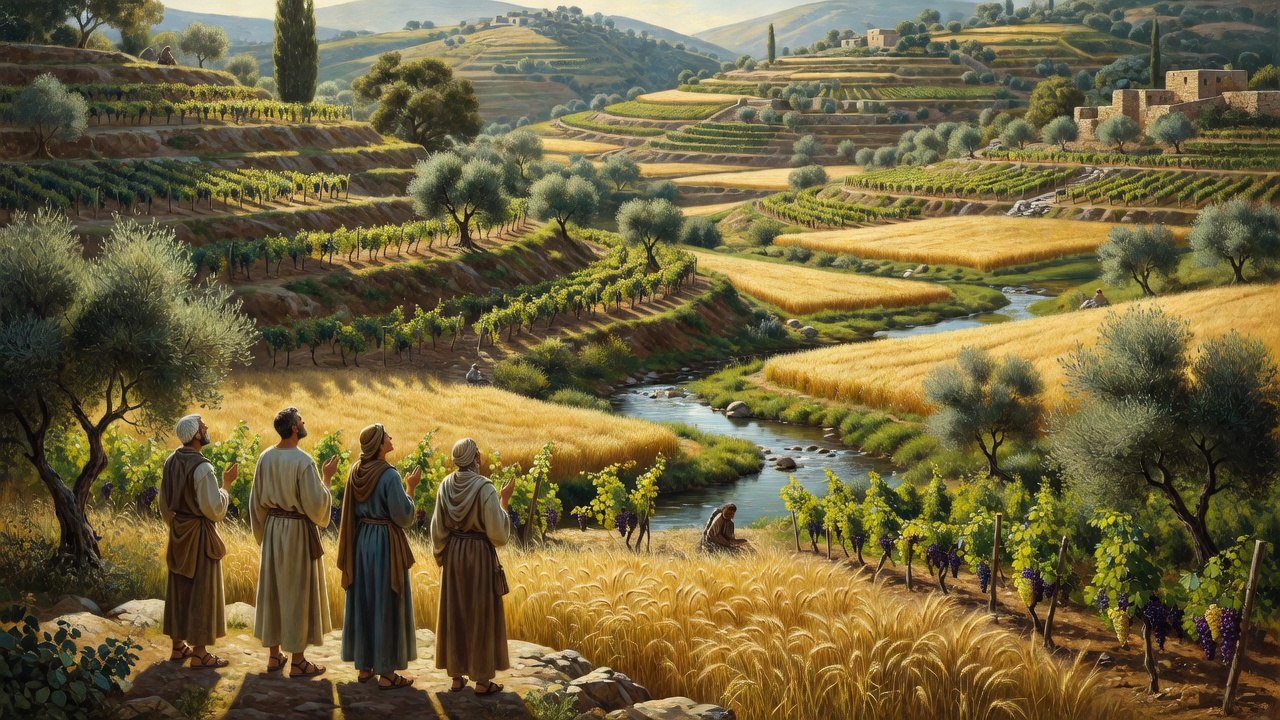
Remembering God in the Good Land
- Moses reminded the Israelites of their forty years of wandering in a harsh wilderness filled with venomous snakes, scorpions, and drought. During this testing period, God sustained them with manna and water from flint rock, and their clothing did not wear out nor did their feet swell.Sources: the Bible text itself
- The Promised Land is described not only by its natural water springs and streams, but also by seven primary agricultural products: wheat, barley, grapevines, fig trees, pomegranates, olive oil, and honey, along with valuable mineral deposits of iron and copper.Sources: the Bible text itself
- The chapter includes a strong warning against pride that can arise from prosperity. Moses cautioned the people that after building fine houses, expanding herds, and accumulating silver and gold, they might forget their liberation from Egyptian slavery and credit their own strength for their wealth.Sources: the Bible text itself · Egypt
Notes written with AI assistance from open sources (Theographic Bible Metadata, CC BY-SA 4.0; Easton’s Bible Dictionary, public domain) and reviewed before publishing.
Places in this chapter
- Egypt · 30.129, 31.308 · verse 14
Only places identified with high confidence are shown (90% or more according to the scholarly sources compiled by OpenBible). Period map: DARE (Digital Atlas of the Roman Empire), CC BY 4.0; modern map: © OpenStreetMap contributors; places: OpenBible.info (CC BY 4.0).
Credits and license for this translation
Thai Phum Holy Bible
The Holy Bible in the Thaiphum Chin language of Myanmar
Copyright © 2020 Batupuei Christian Fellowship
Language: Thai Phum (Chin, Thaiphum)
Translation by: Batupuei Christian Fellowship
copyright only valid in Myanmar; Public Domain elsewhere
This translation is made available to you under the terms of the
Creative Commons Attribution Share-Alike license 4.0.
You have permission to share and redistribute this Bible translation in any format and to make reasonable revisions and adaptations of this translation, provided that:
You include the above copyright and source information.
If you make any changes to the text, you must indicate that you did so in a way that makes it clear that the original licensor is not necessarily endorsing your changes.
If you redistribute this text, you must distribute your contributions under the same license as the original.
Pictures included with Scriptures and other documents on this site are licensed just for use with those Scriptures and documents.
For other uses, please contact the respective copyright owners.
Note that in addition to the rules above, revising and adapting God's Word involves a great responsibility to be true to God's Word. See Revelation 22:18-19.
2024-05-01
Source: http://ebible.org/cth/ · eBible.org