1 Kings 5
Thai Phum Holy Bible · Tap a verse to see its cross-references.
Solomon ni Bawkim sak a kâcai
1Taire siangpahrang Hiram ni Solomon koe a tami a patoun. Bangkongtetpawiteh, a na pa yueng lah siangpahrang hanelah satui awi tie hah a panue. Bangkongtetpawiteh, Hiram teh Devit a kâuep yungyoe. 2Solomon ni Hiram koevah, 3apa Devit ni, a hmuennaw pueng koe tarantuknae dawk BAWIPA ni tarannaw a khok rahim a ta hoeh rah dawkvah, BAWIPA Cathut e min hanelah im sak thai hoeh tie hah na panue. 4Hatei, atuteh BAWIPA ka Cathut ni hmuen pueng dawk roumnae na poe toe, taran hai ao hoeh e toung dawkvah, yawthoenae hai awm mahoeh toe. 5Khenhaw! BAWIPA ni apa Devit koevah, na capa teh nange yueng lah na bawitungkhung dawk ka tahung sak hane ni ka min ao nahane im a sak han telah a dei tangcoung e patetlah BAWIPA ka Cathut e min hanlah im sak hanelah ka kâcai.
6Hatdawkvah, Lebanon mon e Sidar thing tâtueng hanelah kâ na poe pouh loe. Ka sannaw hai na sannaw hoi cungtalah rei a tawk awh han. Nang ni na dei e patetlah na sannaw e kutphu teh ka poe han. Sidonnaw patetlah thing ka tâtueng thai e kai koe apihai awm hoeh tie na panue telah lawk a thui.
7Hahoi, hettelah ao, Hiram ni Solomon e lawk a thai navah, puenghoi a lung ahawi. Hettelah tami kapap e lathueng vah, lawkceng kathoum niteh, lungangnae capa Devit kapoekung BAWIPA teh sahnin vah pholen lah awm seh, telah ati.
8Hiram ni Solomon koevah, lawk na thui e ka thai. Sidar thing hoi hmaica thing hah na panki e pueng na sak pouh han. 9Ka sannaw ni Lebanon mon koehoi talî totouh a thokhai awh han. Hote hmuen koe ramri sak vaiteh, na dei e patetlah talî lam hoi thokhai vaiteh, hote hmuen koe na dâw han. Hahoi nang ni hai ka imthungnaw canei hane hoi panki e naw pueng na pouk pouh van han telah tami a patoun.
10Hat toteh, Hiram ni Sidar thing hoi hmaica thing hah Solomon ni a panki e patetlah a poe. 11Solomon ni Hiram imthungnaw a canei hanelah kum touh dawk cakang nuenae 20,000 touh hoi satuium nuenae 20 touh a poe.
12BAWIPA ni lawkkam e patetlah Solomon teh lungangnae a poe. Hiram hoi Solomon e rahak vah roumnae ao teh lawkkamnae a sak roi.
Solomon e thaw
13Solomon ni Isarelnaw pueng dawk tami 30,000 touh thaw a poe. 14Lebanon mon dawk thapa yung touh dawk pou kâthung hanelah tami 10,000 touh a patoun. Thapa yung touh Lebanon vah ao awh teh, thapa yung hni touh ama im vah ao awh. Adoniram teh ahnimouh kaukkung lah ao. 15Solomon ni hno ka phawt e tami 70,000 touh hoi talungdêikathoum e 80,000 touh a tawn. 16Hotnaw dei laipalah Solomon ni thaw ka tawk e kahrawikungnaw khetyawt hanelah tami 3,300 touh a tawn. 17Hahoi siangpahrang ni kâ a poe e patetlah im du ung hanelah dei tangcoung e talung kalenpounge aphu kaawm poung e a la awh. 18Hahoi, im kasaknaw Solomon e taminaw hoi Hiram e taminaw hoi Gebal taminaw ni talung a dei awh teh, im sak hane thing hoi talungnaw a rakueng awh.
Did you know?
Preparations for the Temple
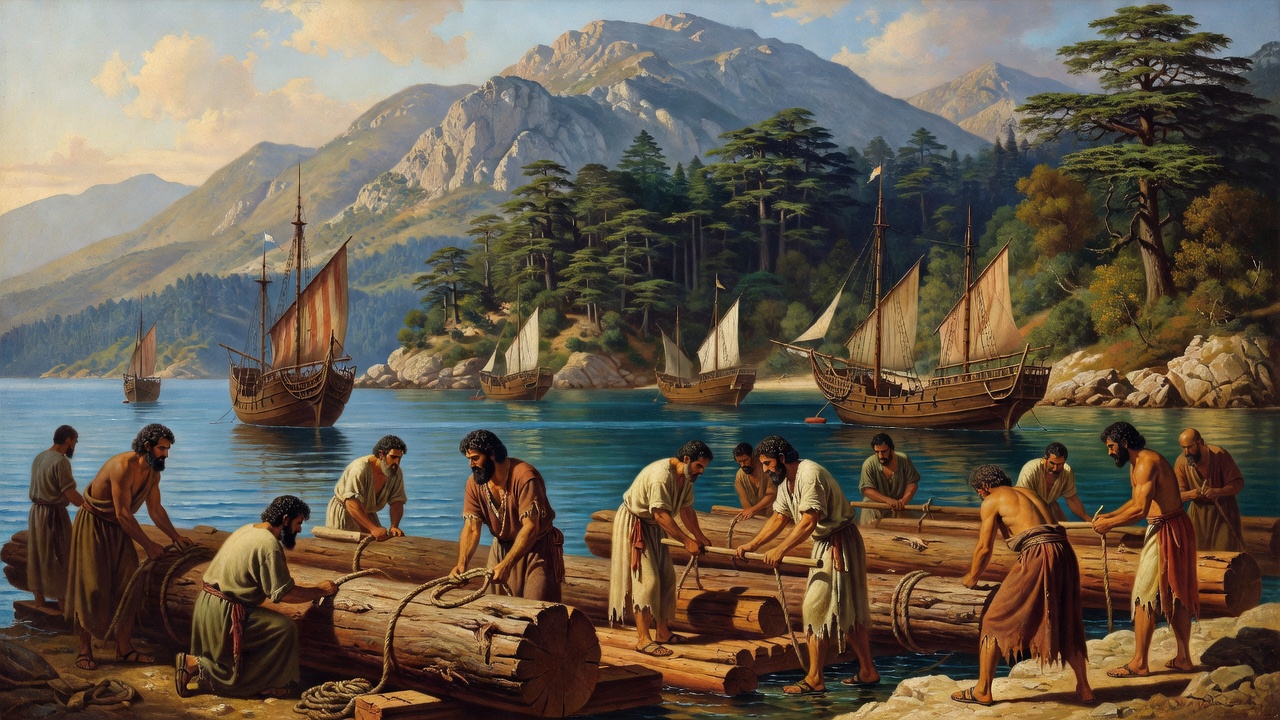
- King Hiram of Tyre, a major Phoenician maritime city, maintained friendly relations with David and entered into a formal treaty with Solomon. In exchange for cedar and cypress timber from Lebanon floated down the coast as rafts, Solomon supplied Hiram's household with annual provisions of wheat and pure olive oil.Sources: Hiram · Tyre · the Bible text itself
- To prepare materials for the temple, Solomon relied on Phoenician craftsmanship, noting the logging skills of the Sidonians. Builders from Tyre and Gebal—an ancient Phoenician coastal city known to the Greeks as Byblos—worked alongside Israelites to quarry large, dressed foundation stones and prepare the timber.Sources: Gebal · the Bible text itself
- Solomon organized a massive labor force for the project, conscripting 30,000 Israelites who served in Lebanon in rotating shifts of 10,000 per month under the supervisor Adoniram. An additional 70,000 transporters and 80,000 stonecutters labored in the mountains, directed by 3,300 foremen.Sources: Adoniram · the Bible text itself
Notes written with AI assistance from open sources (Theographic Bible Metadata, CC BY-SA 4.0; Easton’s Bible Dictionary, public domain) and reviewed before publishing.
Places in this chapter
- Tyre · 33.271, 35.196 · verse 1
- Lebanon · 33.540, 35.584 · verses 6, 9, 14
- Great Sea · Today: Mediterranean Sea · 31.805, 34.170 · verse 9
- Gebal · Today: Byblos · 34.119, 35.646 · verse 18
Only places identified with high confidence are shown (90% or more according to the scholarly sources compiled by OpenBible). Period map: DARE (Digital Atlas of the Roman Empire), CC BY 4.0; modern map: © OpenStreetMap contributors; places: OpenBible.info (CC BY 4.0).
Credits and license for this translation
Thai Phum Holy Bible
The Holy Bible in the Thaiphum Chin language of Myanmar
Copyright © 2020 Batupuei Christian Fellowship
Language: Thai Phum (Chin, Thaiphum)
Translation by: Batupuei Christian Fellowship
copyright only valid in Myanmar; Public Domain elsewhere
This translation is made available to you under the terms of the
Creative Commons Attribution Share-Alike license 4.0.
You have permission to share and redistribute this Bible translation in any format and to make reasonable revisions and adaptations of this translation, provided that:
You include the above copyright and source information.
If you make any changes to the text, you must indicate that you did so in a way that makes it clear that the original licensor is not necessarily endorsing your changes.
If you redistribute this text, you must distribute your contributions under the same license as the original.
Pictures included with Scriptures and other documents on this site are licensed just for use with those Scriptures and documents.
For other uses, please contact the respective copyright owners.
Note that in addition to the rules above, revising and adapting God's Word involves a great responsibility to be true to God's Word. See Revelation 22:18-19.
2024-05-01
Source: http://ebible.org/cth/ · eBible.org