John 8
Yak'usda Ooghuni · Tap a verse to see its cross-references.
1'Et Sizi shusyaz Olive huyulhni, 'i k'uz whinya. |src="hk00351b.tif" size="span" copy="©The British & Foreign Bible Society, 1954, 1967, 1972, 1995" ref="John 8.1"
Ts'eke dune bulh lubeshi 'uleh whe nahuyúlhtus. Sizi highu hinílhti 'ink'ez tse be hituzilhghelh hutni
2'Et 'om bun dzin soo 'uda' 'et Sizi lugliz whucho ts'e oozya. Ts'iyanne dunene highu nindil. 'Et nátl'adida' 'ink'ez whewhubuhóndunilh'e'.
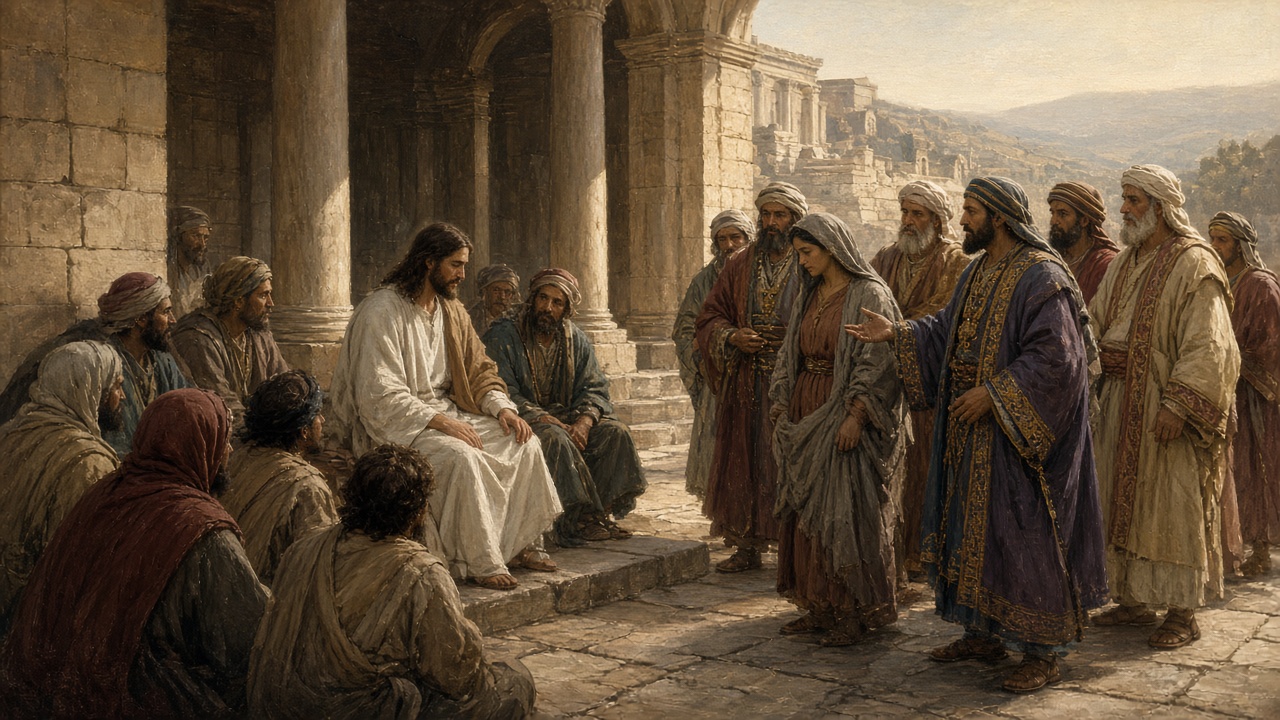
3'Et whubodulh'eh whe Moses be 'udustl'us 'uk'ununáguzne 'ink'ez Phariseene te, ts'eke dune bulh lubeshi 'uleh whe nahuyulhtus, 'en soo buniz 'et néhinilhti.
4'Et Sizi 'uhuyúlhni, “Neoodulh'éh-un ndun ts'eke 'en dune bulh lubeshi 'uleh whe soo 'et nats'ulhtus.
5Moses khuni ootulhúhisde'-i ootl'aídit'ai, 'i k'ut 'utni, ‘Mbene la ndi lubeshi 'ulh'enne, 'enne tse be 'ubuts'uzoolhghelh,’ ni. Nyun do' 'et huwun daja dini?”
6'Et 'onilha huyóolhzih hoonli hukwa hik'eóota'alh 'inka 'uhutni, 'Et Sizi nyo duja 'ink'ez dulasga be yun k'ut 'uk'ene'úsguz.
7'Et 'awhuz huyoodulhkut whe ndo dunaja 'ink'ez ubulhni, “Nohni nohtoh mbe la lubeshi lhit'ih-un, 'en 'udechoo tse be yuts'e 'oolh'is,” ubúlhni.
8'Et doo cha nyo dunaja 'ink'ez doo cha za yun k'ut hukw'u ne'úzguz.
9'Et la mbene la whudánts'o whe neyo ts'e oogha t'ets'oninzun-i whúbunilhtan didut cha lubeshi 'ulh'enne hinli, 'ink'ez 'ilhoghun hinli whe hoonyanne 'udetso hidulh whe ts'iyawh highu whenádil 'ink'ez nyoon ts'eke didutch'oh za Sizi yubut usyin.
10'Et Sizi doná'uja whe nyoon ts'eke whusaílhtine huhooloh whunilh'en whe ndun ts'eke 'uyulhni, “Ts'eke ndunne nk'éhoon'aine nts'e whe nahidil? 'Aw 'ilhoghun hoonts'i eh mba nahooyeh aít'oh?”
11'Et ts'eke 'uyulhni, “'Awundooh, 'aw 'ilhoghun hoonts'i hooloh.” 'Et Sizi 'uyulhni, “'Aw si cha mba nahoosyeh aít'oh. 'Et huwa naindalh 'ink'ez 'on 'at cha lubeshi 'olh'en junih!” yúlhni.
Yinka whut'enne didut 'unt'oh buba be hóot'en-i unli ubúlhni Sizi
12'Et Sizi doo cha za bubulh yálhduk whe ndutni, “Si 'ust'oh yinka whudune'ne buba be hóot'en-i usdli. Mbe la suniyalh-un, 'aw tsálhgus yo hutooya' aít'oh, k'us ndai la be hóot'en-i higha 'ilhiz wheni hutinalh-i, 'i la huyót'e',” ubúlhni.
13'Et Phariseene 'uhuyúlhni, “Nyun ch'oh khuyanailduk whe' dini, 'et huwa nghuni 'aw ts'ih'un lhe'ít'oh.”
14'Et Sizi 'ubulhni, “Nts'ez de hásya la t'éwhunúszun 'ink'ez nts'e tisyalh-un cha t'éwhunúszun, 'et huwa daja dusni la, si sghun 'alha 'uhoont'oh, sich'oh 'údusni 'et hoonts'i. 'Et nts'ez de hásya-un 'ink'ez nts'e tisyalh-un nohni 'aw t'éoonuzúhzun.
15Nohni dune ba nahihyilh, si 'aw 'uyoonne ba nahusyéhne hooloh.
16'Et si cha dune ba nahusyeh de, ndi be náhusyeh-i, 'i ts'ih'un un'a 'unt'oh. 'Aw sich'oh za iloh 'ust'oh, sBá, mbe la whuz de sútilh'a'-un, 'en sulh 'únt'oh, 'et huwa ndi be dune ba náhisyilh-i, 'i ts'ih'un un'a za 'unt'oh.
17'Et whuz un'a za 'uk'unusguz ndi khuni nohba ootulhúhisde'-i k'ut whe ndutni, ‘Nane dune ndet la huhon'én-un lhgha 'úhudija whe howu yahulhduk de, 'et ts'ih'un un'a 'uhoont'oh,’ ni whe 'utni.
18Sich'oh duba yanazduk 'ink'ez sBá mbe la whuz de sútilh'a'-un, 'en cha sba yalhduk,” ubulhni.
19'Et huyoodulhkut, “MBá 'en nts'e usda?” 'Et Sizi 'ubulhni, “'Aw si 'ink'ez sBá bulh 'aw t'enenuzúhzun. Si t'esunáhzun de, sBá cha da' t'enóhzin oole'.”
20Sizi ndi khuni 'i be yailhduk lugliz whucho 'et dune hodul'eh da'. Nts'e la sooneya nahulhdzóoh-un, 'et dune hodul'eh. 'Et 'awhuz ooba whudizulh-un whuts'un hoozulh 'et huwa 'aw lhuhuyílhchulh.
21'Et Sizi doo cha 'ubúlhni, “Nohghu tisyalh. Ska itóh'en la 'et hoonts'i nohlubeshi bulh la yaóohdlah, 'et huwa nts'e la tisyalh ts'e nohni cha 'aw whuz toohdilh aít'oh.”
22'Et doo cha nyoonne Lizwifne 'ulhodutni, “Nyoon dich'oh toleh na'dutuzilghelh? 'Et huwa toleh 'utni, ‘Nts'e la tisyalh ts'e nohni cha 'aw whuz toohdilh aít'oh,’ neúlhni?”
23'Et 'ubúlhni, “Nohni ndi yun k'ut ts'e hahdil, 'et si ndus de hásya whe 'ust'oh. Nohni ndi yun k'ut ts'e hahdil, 'et si 'aw ndi yun k'ut ts'e haszut iloh whe 'ust'oh.
24'Et huwa 'unohdusni nohlubeshi bulh la yaóohdlah. 'Aw nohba 'alha lhe'hóot'oh si mbe 'ust'oh 'et huwun, 'et huwa la nohlubeshi bulh la yaóohdlah,” ubúlhni.
25“Mbe inli whe 'int'oh?” huyúlhni. 'Et Sizi 'ubulhni, “Nohdusni soo 'udechoo whuts'un, 'en za 'ust'oh.
26'Awhuz tube lhat-un nohni nohghun howu yatisduk, 'ink'ez tube lhat-un nohni nohghun nahutisyeh-un whuz'ai, 'et hoonts'i mbe la ndun whuz de sútilh'a'-un, 'en ts'ih'un un'a 'unt'oh. Ndai la oots'un whudásts'o-un, 'et whuz un'a za yinka whudune'ne bubulh yásduk,” ubúlhni.
27'Et hoonts'i 'aw dudeni be t'ehonúszun duBá, 'en ghun bubulh yálhduk whe 'utni.
28'Et Sizi 'ubúlhni, “Yinka dune ye' ndo dube' dunahtan de, 'et de la soo ts'ih'un mbe usdli-un, 'en 'ust'oh t'éoonóhzin. 'Ink'ez 'aw sich'oh duba moodih nasdli íloh, sBá nts'en'a la whusodalh'e', 'i khuni za be yásduk,
29'ink'ez mbe la whuz de sútilh'a'-un, 'en sulh 'únt'oh. 'Ahoolhyiz wheni sBá hóont'i' te za ne'úst'en, 'et huwa 'aw sch'a nalhusdai,” ubúlhni.
30'Et ndi khuni ye yaílhduk whe tube lhane 'en buba 'alha' yint'oh suli'.
31'Et ndunne Lizwifne, mbene la Sizi yuba 'alha' 'unt'ohne, 'enne ubúlhni, “Sghuni oohtun 'ink'ez ook'úne' 'uht'en de, 'alha 'uhoont'oh whe sgha hodul'ehne ahli.
32'Ink'ez 'et huwa ndai la khuni 'alha' 'unt'oh-i t'enóhzin, 'ink'ez 'i gha la 'aw 'on 'un 'ulhnáne oolhle' aít'oh.”
33'Et 'uhuyúlhni, “Wheni Abraham oots'u haíndene 'uts'int'oh. 'Aw whutso da' 'uyoonne ba 'ulhna lhts'íloh, 'ink'ez di ha' nedíni, nohla nahudutitnih nedíni?”
34'Et sizi 'ubulhni, “Soo ts'ih'un un'a nohdúsni, mbene la lubeshi 'ulh'enne, 'enne lubeshi ba 'ulhnáne hinli.
35Ndet la yoh 'ilhoghun 'ulhna unlí-un, 'aw 'ahoolhyiz 'et lhídoh, 'et ndun yoh whudune'-un ooye', 'en 'ahoolhyiz wheni, 'et usda.
36'Et huwa ndun ooYe' lubeshi ch'a nohlanaditni de, 'et de ts'ih'un un'a 'aw 'on 'un 'ulhna oohle' aít'oh.
37T'ewhunúszun Abraham oots'u haíndene ahli, 'et hoonts'i sghuni 'aw ooka lhe'náhzun, 'et huwa sutuzilhghelh hukwa' nahzun.
38Ndet la sBá whusunilhtan-un, 'et nohdúsni. 'Et hoonts'i nohni nohbá unohulhni, 'oh te né'aht'en.”
39'Et 'uhuyúlhni, “Abraham 'en oots'u haindene ts'inli.” 'Et Sizi 'ubulhni, “Abraham 'en ts'u hahde de, 'en be 'ut'en k'oh za da' ne'óoht'en.
40'Et hoonts'i 'andit si nts'oh te la 'unohdúsni-un ts'ih'un un'a 'uhoont'oh whe Yak'usda ts'un whudásts'o. 'Et hoonts'i nohni sutuzilhghelh hukwa' nahzun. Njan 'et 'aw Abraham be 'ut'en k'oh iloh 'uhoont'oh.
41Nohbá be 'ut'en k'oh 'uwhulh'en.” 'Et doo cha 'uhuyúlhni, “'Aw wheni soh ulhtsíne iloh 'uts'int'oh! 'Ilhoghun nebá 'en Yak'usda unli!”
42'Et Sizi 'ubulhni, “Yak'usda 'en nohbá unli de, si sk'eoohtsi' oole' da', Yak'usda oots'un hasya 'et huwa. 'Aw sich'oh sghá iloh whusásya, Yak'usda whusasálh'a'.
43Nts'en'a la nohbulh yasduk-un, 'aw t'ewhunuzáhzun. Daja nohdusni-un 'aw sudóhts'o hukwa lhe'náhzun 'et huwa.
44Netsudule 'en nohbá 'unt'oh. Ndet la 'en hukwa' ninzun, 'oh te za ne'óoht'en hukwa' nahzun. Soo 'udechoo da' whuts'un dune ughan-un unli. 'Aw ts'ih'un 'uhoont'oh-un hukwa lhe'nizun, 'et huwa 'aw ndi khuni 'alha' 'unt'oh-i ooghu whéyooloh. Nts'oh tula ne'duni'-un tank'us un'a za yalhduk, dich'oh duk'un'a 'utni 'et huwa. Whuts'it-un unli, 'ink'ez whuts'it-i, 'en za oots'u haídukat.
45'Et si khuni 'alha' 'unt'oh-i be yasduk, 'et 'aw nohba 'alha lhe'duzusni.
46'Aw nohtoh 'ilhoghun hoonts'i si lubeshi 'ulh'en-un usdli doohni' aít'oh. 'Et huwa khuni 'alha' 'unt'oh-i be 'unohdúsni te, di ha 'et nohba 'alha lhe'duzusni?
47Mbene la Yak'usda ooch'e' unline, 'enne za Yak'usda ooghuni hidits'o. Nohni 'aw Yak'usda ooch'e' lháhloh 'et huwa ooghuni 'aw dóhts'o ait'oh,” ubúlhni.
48'Et Lizwifne 'uhuyúlhni, “'Alha-i be nts'uyútni nyun Samaria whut'en-un 'int'oh 'ink'ez ntsi'-i nudúdeh-i nyudínda!”
49'Et Sizi 'ubulhni, “'Aw ntsi'-i nudúdeh-i sghu hooloh, k'us sBá 'en dústi', 'et nohni 'aw sulhdúlhti'.
50Nts'oh dáduzti' 'et hoonts'i sba 'ants'i 'uhoont'oh. 'Aw 'uyoonne sudólhti' hukwa lhe'núszun, 'et 'ilhoghun sba whudutálhti'-un hoonli, 'en nahiyilh-un cha 'unt'oh.
51Soo ts'ih'un un'a nohdúsni, mbene la sghuni yoontúnne, 'aw dahóotsah aít'oh.”
52'Et Lizwifne 'uhuyúlhni, “'Andit 'awet t'éts'onínzun ntsi'-i nudúdeh-i nyudínda! Abraham 'ink'ez nus hóo'enne yahadla, 'et hoonts'i 'unedíni, mbene la nghuni yoontúnne, 'aw dahóotsah aít'oh díni.
53Nebá Abraham dazsai inle'. 'En ba nus 'ilcho whe eh 'udini? 'Et nus hóo'enne, 'enne cha yahadla. 'Enne cha buba nus 'ilcho eh? Soo mbe inli dini whe' dini?”
54'Et Sizi 'ubulhni, “Sich'oh duba naoodúzti' de, sich'oh be úscha-i 'ants'i 'unt'oh. 'Et hoonts'i nohni mbe la nohYak'usda dáhni-un, 'en si sBá 'unt'oh, 'ink'ez 'en sudílhti'.
55'Et nohni 'aw t'elhnáhzil, 'et si t'enuszun. 'Aw si t'enuzuszun dusni de, 'et de nohni nohk'un'a whuts'it-un usdli whe' dutisnelh. 'Et soo t'enuszun 'ink'ez ooghuni 'ahoolhyiz wheni ook'úne' 'ust'en.
56Nohbá Abraham tube hóont'i' whe stsó dizulh-un, 'et whuti'elh. 'Awet whunalh'en 'ink'ez tube whunálhni.”
57'Et Lizwifne 'uhuyulhni, “Nilh'en lhe'hoont'oh te ne'dini'! 'Awhuz kwulat whunizyai nyeyus k'ut iloh, 'ink'ez 'udini Abraham 'uda' in'en dini!”
58'Et Sizi 'ubulhni, “Soo ts'ih'un un'a nohdúsni, Abraham whutileh whutso da', 'et 'uda' si usdli whe 'ust'oh.”
59'Et ndúbulhni whe, ts'iyawh tse huyeni dízgooh, 'i be nahúyuntilh'uz 'ink'ez hituzilhghelh 'inka. 'Et Sizi buch'a úntilh'i 'ink'ez soo butoh 'et lhunásja whe lugliz whucho 'et tenánja.
Did you know?
Light, Law, and Abraham
- John 8 opens as Jesus goes to the Mount of Olives and returns early in the morning to the temple courts, where he sits and teaches the people who gather. The Mount of Olives is a ridge east of Jerusalem, separated from the city by the Kidron valley and named for the olive trees that cover its sides.Sources: the Bible text itself · Mount of Olives
- Scribes and Pharisees bring in a woman caught in adultery and ask Jesus what he says about Moses' command in the Law to stone such a woman, seeking to test him and to gain a basis for accusing him. Still in the temple courts, near the treasury, Jesus later says, "I am the light of the world." A dated event list places both episodes in AD 29, each lasting one day.Sources: the Bible text itself · Woman Caught in Adultery · Light of the World/I am discourse
- When Jesus says that the truth will set them free, his hearers answer that they are Abraham's descendants and have never been slaves to anyone. Abraham is called "father of a multitude"; he was the son of Terah and the heir of the promises. After Jesus declares, "before Abraham was born, I am," they pick up stones to throw at him.Sources: the Bible text itself · Abraham
Notes written with AI assistance from open sources (Theographic Bible Metadata, CC BY-SA 4.0; Easton’s Bible Dictionary, public domain) and reviewed before publishing.
Places in this chapter
- Mount of Olives · 31.778, 35.246 · verse 1
Only places identified with high confidence are shown (90% or more according to the scholarly sources compiled by OpenBible). Period map: DARE (Digital Atlas of the Roman Empire), CC BY 4.0; modern map: © OpenStreetMap contributors; places: OpenBible.info (CC BY 4.0).
Credits and license for this translation
Yak'usda Ooghuni
New Testament in Carrier (CA:crx:Carrier)
copyright © 2011 Wycliffe Bible Translators, Inc.
Language: Carrier
Translation by: Wycliffe Bible Translators, Inc.
Carrier
crx
Canada
Copyright Information
© 2011, Wycliffe Bible Translators, Inc. All rights reserved.
This translation text is made available to you under the
terms of the Creative Commons License: Attribution-Noncommercial-No Derivative Works.
( http://creativecommons.org/licenses/by-nc-nd/3.0/ )
In addition, you have permission to port the text to different file formats, as long as you
do not change any of the text or punctuation of the Bible.
You may share, copy, distribute, transmit, and extract portions
or quotations from this work, provided that you include the above copyright
information:
You must give Attribution to the work.
You do not sell this work for a profit.
You do not make any derivative works that change any of the actual words or punctuation of the Scriptures.
Permissions beyond the scope of this license may be
available if you contact
us with your request.
The New Testament
in Carrier
© 2011, Wycliffe Bible Translators, Inc. All rights reserved.
This translation is made available to you under the terms of the
Creative Commons Attribution-Noncommercial-No Derivatives license 4.0.
You may share and redistribute this Bible translation or extracts from it in any format, provided that:
You include the above copyright and source information.
You do not sell this work for a profit.
You do not change any of the words or punctuation of the Scriptures.
Pictures included with Scriptures and other documents on this site are licensed just for use with those Scriptures and documents.
For other uses, please contact the respective copyright owners.
2014-04-22
Source: http://ebible.org/crxNTpo/ · eBible.org