Joshua 9
Las Escrituras en Ashéninka Ucayali del Sur del Perú · Tap a verse to see its cross-references.
Ramatawinka Nampitsii-toni-jatzi
1Ari ikemaeyakini okaatzi awijeen-tsiri iwinkatharite-paeni Thaawan-taarini-jatzi, Ochempi-weni-jatzi, Owinteni-jatzi, Nampitsi-weni-jatzi, Thaante-weni-jatzi eejatzi Kayaa-weni-jatzi. Tema irika-paeni pinkathari riitaki jeeka-nampi-yitzirori Pareenkaarini, othapyaaki Antawoete Inkaari eejatzi Kiteniitoni. 2Ari ikaminaa-wakahae-yakani irikapaeni pinkathari, ikanta-wakaa: “Jame aapatziya-wakaeyaa, apiyata-wakyaari Josué jewatziriri Israel-paeni.”
3Riima Thaante-weni-jatzi nampitawori Nampitsii-toniki, ikemako-takiri Josué jempe ikantakiri Kashiryaari-jatzi eejatzi Tzimpookaarini-jatzi. 4Ikenkishire-teeya-nakani ramatawiteri. Raaki antyashipawo-paeni rotemento eejatzi paejatoteentsiri mashitsi, owamata-pooki-tanaka, ikithaa-yitanakawo, ikyaako-tanakari ipira-paeni jateeya-nakini. 5Tema pichaki-pooki-tanaka, ikyaanta-yitakari iitziki paejato-pookiri. Raanaki paejato-teentsiri rowanawo, othonka opowa-pooki-taki. 6Areetee-yakani Pineeronchaariniki jempe ipanko-thaantetaka Josué eejatzi isheninka-paeni, ikantapaakiri: “Eeroka nopokashitzi, tema inteena nopoñaa-yitaka. Nokoyi paapatziyina.” 7Ari rakaeya-nakini Israel-paeni ikantziri Thaante-weni-jatzi pokaentsiri: “Aama teerika pipoñaa inteena, okaakiini pijeeki. ¿Jempe okantyaari aapatziya-wakaeyaa?” 8Eekiro ishintsi-tanakitziiri, ikantziri: “Nokoyi pompera-tina.” Ikantziri Josué: “¿Jempema pipoñaaka? ¿Jempe piitaka? ¿Jempe ojeeki pinampi?” 9Ikanteeyini riroripaeni: “Inteena nopoñaaka, nokemako-takiri Pitajorentsite. Othonka nokemakiro eejatzi okaatzi rantakiri Pitajorentsite Apitantoniki. 11Rootaki rotyaan-tanta-kinari neewariti-paeni, eejatzi nosheninka-paeni, ikantakina: ‘Piyaati jempe ijeekaeyini Israel-paeni. Paanaki poyaari awotsiki. Aririka piñaakiri, pikantiri: “Naaka pomperatani. Nokoyi aapatziya-wakaeyaa.” 12Tema owakira nopokae-yanakini nothotyaa-koyitzimi, eeniro ojaawawita nowanawo. Rooma nimaeka paejato-tanaki rowanawo, othonka opowa-pooki-taki. 13Ari ikimi-witaka eejatzi mashitsi-naki owakirawitacha. Tema ithonka ijanaryaaki nimaeka. Ari okimitzita-kari eejatzi noethaari, nokyaantari noetziki, thonkaka, tema inteena nopoñaa-yitaka.’” 14Raakiro Israel-paeni rowanawo Nampitsii-toni-jatzi ramakiri inampiki, rowaka eepichokiini. Teemaeta ikowako-tziri Tajorentsi oetarika ranteri. 15Imatakiro Josué rojankina-takotakiro okantakota raapatziya-wakaan-tyaari eero rowayiri-tawakaanta. Ikantakiri: “Eero nowamayimi.” Roojatzi imatzitakari reewariti-paeni Israel-paeni ikantaki rirori-paeni.
16Okanta awijaki mawa kiteejeri, ikamantee-takiri Israel-paeni, ikantee-tziri: “Tee inteena ijeekaeyini Nampitsii-toni-jatzi, riitaki pitsipa-nampitari”. 17Jateeyakini Israel-paeni ithotyaako-teeri Nampitsii-toni-jatzi. Okanta awijaki mawa kiteejeri, rareetakari inampiki. Iroka iitziro inampi-paeni: Nampitsii-toni, Manityaarini, Kitaawonchaarini, Antamishaarini. 18Teemaeta rowayiri-tapaa-kyaari, tema raapatziya-wakari chapinki, ikantakiri: “Eero nowayiri-tzimi. Aririka notheeyakyaa nokantzimi, ari rowajankitaakina Tajorentsi, Itajorentsite Israel.” Rootaki ikijima-waetanta-nakariri Israel-paeni irika reewariti-paeni. 19Roo kanteencha, iroka ikanteeyini reewariti rakayitziri Israel-paeni: “Eero nowayiritari. Tema aritaki nokantzi-takari chapinki: ‘Eero nowayiri-tzimi. Aririka notheeyakyaa nokantzimiri, ari rowajankitaakina Tajorentsi, Itajorentsite Israel.’” 20Eekiro ikantana-kitzii reewariti-paeni Israel-paeni: “Eero akoshekari, ijeekiita. Tema eerorika amonkaa-tziniri akanta-kiriri Tajorentsi, aritaki ikijakae. 21Eero powamaa-kaanta-waetzi apaani, apatziro pompera-waetyaari rayi tsitsi, eejatzi nijaa.” Ari ikinakaerori jewari-paeni imonkaa-tziro ikantakiriri Nampitsii-toni-jatzi, raapatziyaari.
22Ari ikaemakaan-takiri Josué Nampitsii-toni-jatzi, rojampi-takiri ikantziri: “¿Iitaka pamatawi-tantanari pikantaki: ‘Inteena ojeeki nonampi.’? Tema okaakiini pijeekae-yawitani. 23¡Ari riyakaeteemi! Ashi powaero nompera-waeteemi. Otzimatyee pitsima-tapiintee, paapiintee nijaa ashi ipanko Notajorentsite.” 24Rakanaki rirori ikantanaki: “Tema antawo nothaawan-takimi powamana-kari, rootaki namatawi-tantzimiri. Tema nokemako-takiri Pitajorentsite ikantakiriri paerani Moisés, ikantziri: ‘Ari nothonkaeri ikaatzi nampitawori jaka, nopaemiro eerokapaeni maawoeni iroka iipatsite.’ 25Roo kanteencha, pimatiro pompera-waetina eeroka-paeni. Pantakaenawo okaatzi kameetha-tzimotzimiri eeroka.” 26Imatakiro Josué, tee ishinetziri Israel-paeni rowayiri-tyaari Nampitsii-toni-jatzi. 27Riiyitaki rowakiri tsimata-piintatsini, riijatzi aapiinta-tsini nijaa rashi maawoeni Israel-paeni, ashi itaapooki-mento Tajorentsi jempe-rika ikowakayiri Tajorentsi. Rootaki rantawaero rametanakari rantziro roojatzi nimaeka.
Did you know?
The Gibeonite Treaty
- The inhabitants of Gibeon were Hivites whose territory included four cities: Gibeon, Chephirah, Beeroth, and Kiriath-jearim. Located only about five and a half miles northwest of Jerusalem, Gibeon was a major hill-city that chose diplomacy over the military alliance formed by neighboring Canaanite rulers.Sources: the Bible text itself · Gibeon · Hivite
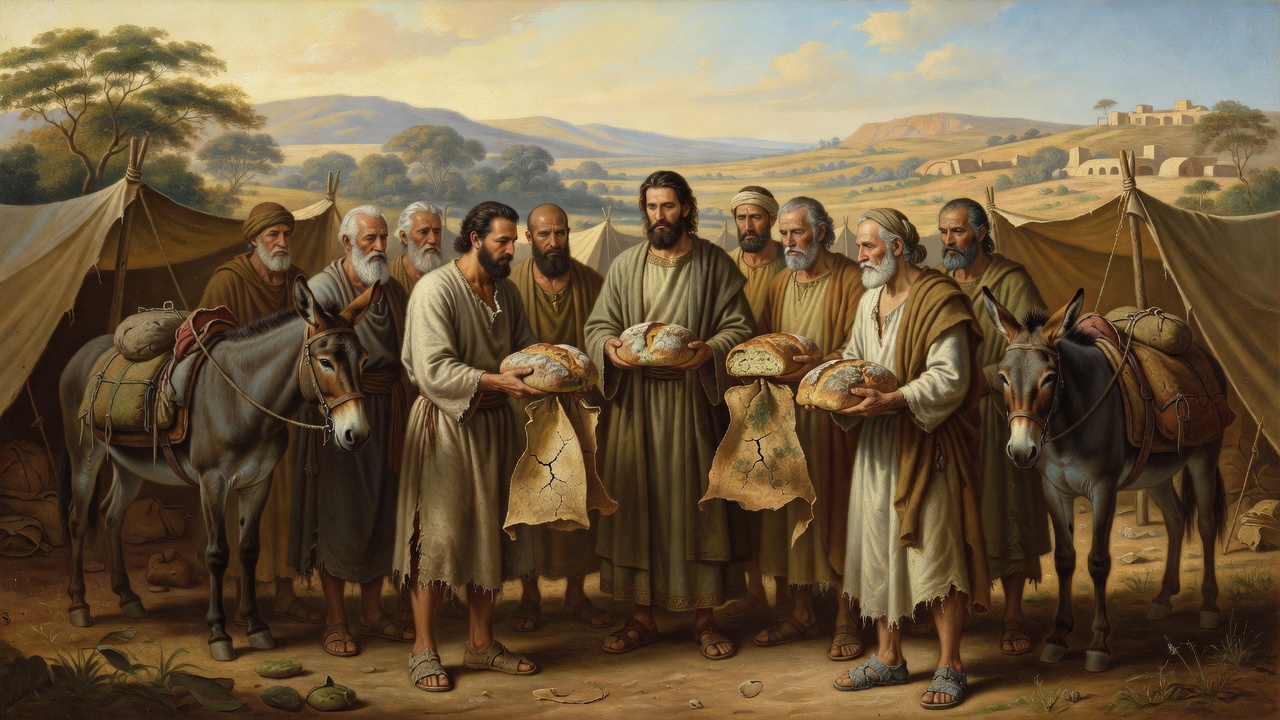
- To fabricate evidence of a long journey, the Gibeonites carried cracked wineskins, worn sandals, threadbare clothes, and dry, moldy bread. The Israelite leaders examined the physical provisions but neglected to seek counsel from the Lord, leading them to agree to a covenant of peace.Sources: the Bible text itself
- In ancient Israel, an oath sworn in the name of the Lord was binding even when secured through deception. Because the leaders had sworn by God, the Israelites spared the Gibeonites from death and instead assigned them as woodcutters and water carriers for the community and the altar.Sources: the Bible text itself
Notes written with AI assistance from open sources (Theographic Bible Metadata, CC BY-SA 4.0; Easton’s Bible Dictionary, public domain) and reviewed before publishing.
Places in this chapter
- Great Sea · Today: Mediterranean Sea · 31.805, 34.170 · verse 1
- Jericho · Today: Tell es Sultan · 31.872, 35.445 · verses 1, 3
- Jordan · Today: Jordan River · 31.761, 35.558 · verses 1, 10
- Lebanon · 33.540, 35.584 · verse 1
- Shephelah · 31.692, 34.875 · verse 1
- Gibeon · Today: El Jib · 31.847, 35.183 · verses 3, 17
- Egypt · 30.129, 31.308 · verse 9
- Bashan · 32.781, 35.935 · verse 10
- Kiriath-jearim · Today: Deir el Azar · 31.809, 35.104 · verse 17
Only places identified with high confidence are shown (90% or more according to the scholarly sources compiled by OpenBible). Period map: DARE (Digital Atlas of the Roman Empire), CC BY 4.0; modern map: © OpenStreetMap contributors; places: OpenBible.info (CC BY 4.0).
Credits and license for this translation
Las Escrituras en Ashéninka Ucayali del Sur del Perú
The Holy Bible in the South Ucayali Ashéninka language of Peru
Las Escrituras en Ashéninka Ucayali del Sur del Perú
copyright © 2008 Wycliffe Bible Translators, Inc.
Language: Ashéninka Ucayali del Sur (Ashéninka, South Ucayali)
Translation by: Wycliffe Bible Translators
This translation is made available to you under the terms of the
Creative Commons Attribution-Noncommercial-No Derivatives license 4.0.
You may share and redistribute this Bible translation or extracts from it in any format, provided that:
You include the above copyright and source information.
You do not sell this work for a profit.
You do not change any of the words or punctuation of the Scriptures.
Pictures included with Scriptures and other documents on this site are licensed just for use with those Scriptures and documents.
For other uses, please contact the respective copyright owners.
2016-06-08
Source: http://ebible.org/cpy/ · eBible.org