Genesis 49
Las Escrituras en Ashéninka Ucayali del Sur del Perú · Tap a verse to see its cross-references.
1Ikaemakiri Jacob maawoeni itomipaeni, ikantakiri: “Pontsirokena okaakiini, nokamantatyeemirowa okaate awijimotemini paata.
2¡Itomipaeni Jacob! Pipokaeyeni okaakiini pikemantyaari.
Powayempitatyaariri pipaapate Israel.
3Eeroka Rubén, neewarite notyomi,
Noshintsinka noyimi, eerokataki etakaantanakawori noshintsinka,
Eeroka etawori ipinkatheetzimi, oshekitzimotzimi pishintsinka.
4Ari okaatzimaetapaaka piriroperotane,
Poshiyawitapiintakawo oshinchaari nijaa,
Tema pitheenkaneentzitakinawo nomaamento.
5Rooma eeroka Simeón eejatzi Leví, pirentzi powawakaeyaani,
Powamaamento powayitakiro pichekopitepaeni.
6Eerowa napiiteero notsipateeyeemini jempe pipiyoteeyapiintani.
Tema otyahakimi paerani pimashirenka osheki atziri powamaaki.
Okantakaantziro pikijawaetaka piitzinkakiiwaetanakiri piratsipaeni.
7Koweenkari okantaka piyatsimankari,
Omaperota pikijanaka.
Naaka mataperoteemini notzimpookayiteemi notsipatahaemiri Israel-ite.
8Rooma eeroka Judá, rajahaawenteemi pirentzipaeni.
Poteeyakentsiyiteeri kijaneentemini.
Ipinkathayiteemi pirentziteeyaari.
9Eeroka Judá, notyomitari naaka.
Poshiyaari iryaani manitzi aririka ipakaeri rowari ratsikane.
Roeyoota, romaryaawaeta kepatsiki, ikantaha antari manitzi.
¿Iitaka materoni oñaashirenkaerini?
10Tekatsira materoni raapithateeri ishintsinka Judá,
Tekatsi aapithateerini iwinkatharimento roteeyakiri,
Roojatzi ipokantakyaari ashitawori iwinkatharimento,
Ikemijantawakiri inashiyitachari roshekitawakayitaha.
11Riitaki oojotakoterini iyawayote oponkitziki pankirentsi rireetziri,
Ikiwantawo rireetziri maawoeni iithaari, tema oshekiperotatzi chochoki rireetziri.
12Kameethantzi ikanteeya, tema cheenkaakiri okantayitya rooki awijanakiro ocheenkatzi rireetziri.
Kitamaari okantayitya raeki awijanakiro okitamaatzi tenitsi.
13Inampiteeyaawo Zabulón inkaarecheraki,
jempe aatapiintayita amaatakomentotsi.
Ari iweyaathapiyiteeyaani roojatzi janta Sidón-ki.
14Roshiyeeyaari Isacar piratsi ikyaakahaetari,
Ari makoryaapiintatsini piratsipankoki.
15Ikanta iñaawakirowa kameethari owetsikaka imakoryaanteetyaawo,
Oeyootanaka inatakahaeteri.
Maeriri ikantaka roshiyakahaetziri omperataarewo.
16Ipinkathariwenteeri Dan isheninka ikimitaa itsipa ipinkathariwenteeri Israel-ite.
17Roshiyeeyaari Dan maanki ijeeki awotsinampiki,
Riitaki atsikakiiterini kawayo,
Rowariimaetyaari kyaakotariri.
18¡Tajorentsi! Nawentahaemi powawijaakoteena.
19Ikoshekawaetaari Had owayiri-paeni,
Riitaki kantacha aritaki nopiyatakyaari paata.
20Riima Aser oshekitzimoteeri iwankiri rowaeyaari,
Kyaariperori owanawontsi ini, oshiyaawo rowanawo pinkathariperori.
21Roshiyaari Neftalí maniro tekatsi ashitakoterini,
Owaneenkatacha ikantayita itomipaeni.
22Riima José roshiyaawo pankirentsi shookatziiri ocheraki nijaa,
Osheki okithokinite,
Ithonkiro itaayitziro otanto.
23Osheki ikijaneenteeri omanatzinkari,
Roma-natantapiinteeyaari chekopi,
Ikanteetatyeeyaani roñaashirenkapiinteeri.
24Riitaki kantacha José shintsishempa ikanta rirori,
kijokiro royiro iwiani.
Ikaminthakiri Itajorentsite Jacob Shintsiri,
Okamintha iwaero kempoyaawentantaneri, kijakowentariri Israel.
25Ikamintha Itajorentsite ashitzimiri, ri neshironkateemini.
Riitaki Tajorentsi Shintsiperori, riitaki tajonkawenteemini.
Opoñaawo itajorenka jenoki ikiteki.
Opoñaawo itajorenka inthomoeyaaki inkaareki.
Opoñaawo itajorenka tenitsiki eejatzi owamaarentsiki.
26Okaatzira ipasonkitakotanakimi ashitzimiri,
Awijanakiro okaatzi ipasonkitakotanari ashitanari naaka.
Eero opeyaawo, roojatzi paata eero iñahaetantaawo eejatzi ochempi.
Oshiyakawo ijeepatziitotanteetyaarimi José irokapaeni tajorenkantsi,
Tema riitaki riyoyahaetakiri itsipatakari rirentzipaeni, riitaki riroperoyitaatsini.
27Roshiyeeyaari Benjamín owantaneri,
rananinki rowamanaari ratsikane,
Arika otsireniityaane ipawakaeyaani tzimahaantapaentsiri.”
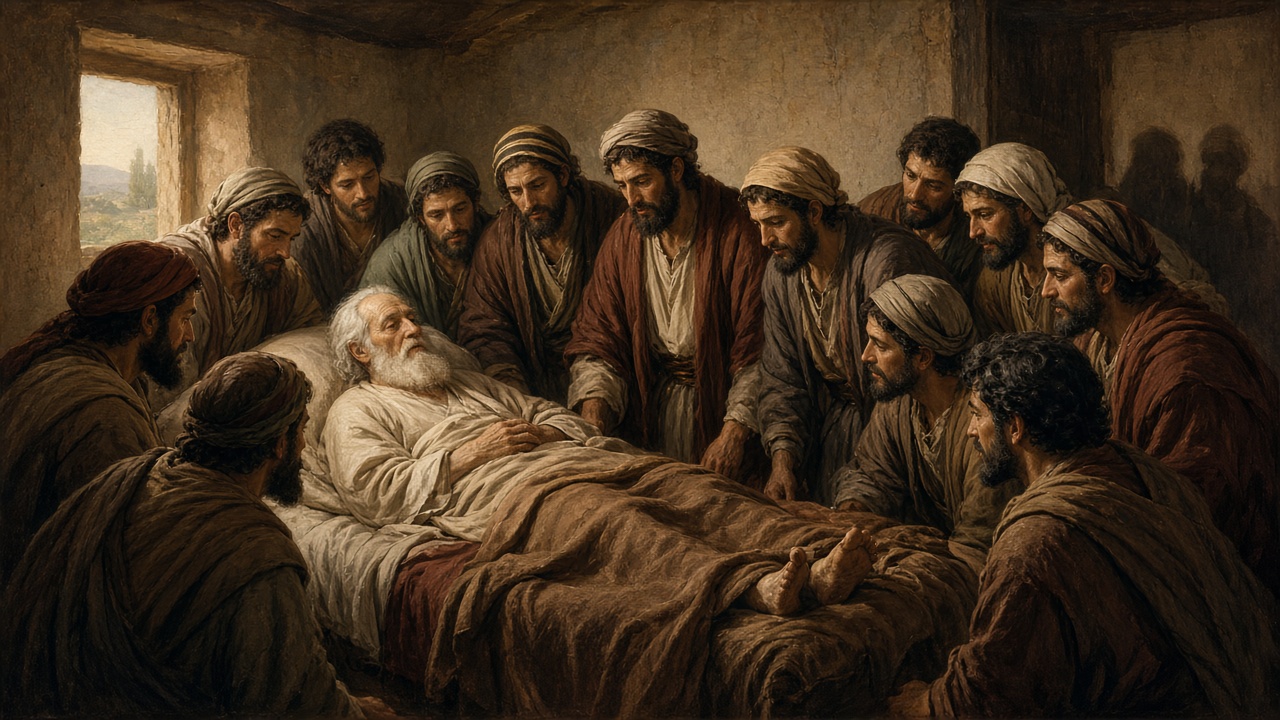
28Riiyitakira isheninkapaeni Israel, rootaki ñaantsipaeni ikantanakiriri ipaapate ipasonkitakotanakari itomipaeni. 29Ikantanakiri itomipaeni: “Okaatapaakiini nokamantyaari. Pitsipatahaenari nocharinipaeni pinkitateena, omookira iipatsiteki Efrón Het-jatzi, 30jeekatsiri janta Canaán-ki. Rootaki omoowa jeekatsiri Macpela-ki, amontetari Mamre, ramanantakiri paerani Abraham itsipataakiro iipatsite Efrón, okitataaha iina. 31Jaha ikiteetakiri Abraham itsipatahaetakiri iina Sara, eejatzi Isaac itsipatahaetakiri iina Rebeca. Ari nokitateero eejatzi Lea. 32Ironta kepatsi eejatzi omookira jeekatsiri janta riira Het-jatzi pimantakirori paerani.” 33Ikanta ithonkari Jacob riyotaayitanayiri itomipaeni, ari roma-ryaanakari, kamanaki. Itsipatapaari isheninkapaeni.
Did you know?
Last Blessings for Israel's Twelve Tribes
- Jacob's sayings play on the meanings of his sons' names. Judah (Hebrew Yehudah) comes from Leah's words, "Now will I praise" (odeh), and Jacob says that Judah's brothers will praise him. Dan's name echoes his mother Bilhah's "God hath judged me" (dananni); Jacob says Dan will judge, or provide justice for, his people, and Easton's Bible Dictionary (1897) suggests this probably alludes to Samson, a later judge from the tribe of Dan.Sources: Judah (patriarch) · Dan · the Bible text itself
- The chapter calls each speech a blessing, yet some are stern. Reuben, firstborn of Jacob and Leah, whose name means "Behold a son!", is told he will no longer excel because he defiled his father's bed. Simeon and Levi, who took violent revenge on Hamor and the Shechemites, hear their anger cursed and are told they will be dispersed in Jacob and scattered in Israel; the Authorized Version's "they digged down a wall" is rendered in the Revised Version "they houghed an ox," as this chapter says they hamstring oxen.Sources: Reuben · Simeon · Levi (patriarch) · the Bible text itself
- Jacob then asks to be buried with his fathers in the cave in the field of Ephron the Hittite, which Abraham bought as a family grave. Machpelah, a name understood to mean "portion" or "double cave," stood on a hillside east of Hebron, facing Mamre in the land of Canaan. Abraham and Sarah, Isaac and Rebekah, and Leah were already buried there.Sources: Machpelah · Ephron · Mamre · the Bible text itself
Notes written with AI assistance from open sources (Theographic Bible Metadata, CC BY-SA 4.0; Easton’s Bible Dictionary, public domain) and reviewed before publishing.
Places in this chapter
- Shiloh · Today: Khirbet Seilun · 32.056, 35.290 · verse 10
- Sidon · Today: Sandikli archaeological site in Sidon · 33.561, 35.372 · verse 13
- Canaan · 32.767, 35.333 · verse 30
- Machpelah · Today: Cave of the Patriarchs · 31.525, 35.111 · verse 30
Only places identified with high confidence are shown (90% or more according to the scholarly sources compiled by OpenBible). Period map: DARE (Digital Atlas of the Roman Empire), CC BY 4.0; modern map: © OpenStreetMap contributors; places: OpenBible.info (CC BY 4.0).
Credits and license for this translation
Las Escrituras en Ashéninka Ucayali del Sur del Perú
The Holy Bible in the South Ucayali Ashéninka language of Peru
Las Escrituras en Ashéninka Ucayali del Sur del Perú
copyright © 2008 Wycliffe Bible Translators, Inc.
Language: Ashéninka Ucayali del Sur (Ashéninka, South Ucayali)
Translation by: Wycliffe Bible Translators
This translation is made available to you under the terms of the
Creative Commons Attribution-Noncommercial-No Derivatives license 4.0.
You may share and redistribute this Bible translation or extracts from it in any format, provided that:
You include the above copyright and source information.
You do not sell this work for a profit.
You do not change any of the words or punctuation of the Scriptures.
Pictures included with Scriptures and other documents on this site are licensed just for use with those Scriptures and documents.
For other uses, please contact the respective copyright owners.
2016-06-08
Source: http://ebible.org/cpy/ · eBible.org