Genesis 44
Las Escrituras en Ashéninka Ucayali del Sur del Perú · Tap a verse to see its cross-references.
1Okanta amayitaka iroka, ikantakiri José romperatane: “Poteteniri owanawontsi irikapaenika atziri, potetayiteeniri iyorikitepaeni. 2Potetakaeri niramento iyaapitsi, pitsipataakiniri iyorikite ipinawitakawori eentsikiroeni rimpoete owanawontsi.” Imatakiro romperatane okaatzi ikantakiriri José. 3Owakira ishitowapaki ooryaa, rotyanteeri José rirentzipaeni ikyaakaaneeyaari ikawayote riyaayitee. 4Tekiraha riyaatziita inteena, ikanteeri José romperatane: “Piyaate poyaatawaeri ananinkaneentsiri inkaahanki, pikanteri: ‘¿Iitaka pantantawori kaariperori? ¿Iitaka pikoshitantawori iramentotsi? 5Rootakira riramento eewatanari, roo iñaawyaawaetantapiintari eejatzi. Pantakirowa kaariperori.’”
6Ikanta romperatane rareetawaari, ikantapaakiri ñaantsi ikantawakiriri omperatariri. 7Ari ikanteeyanakini rirori: “¿Iitaka pikantantanawori iroka ñaantsi? Teera nametawo nantayitero pikantakinari. 8Tema piñaana nopiyaaha Canaán-ki, noepiyeemiri koriki ikaatzi noñaakiri rotetaka owanawontsiki. ¿Iitaka nokoshitantyaariri omperatzimiri? 9Paminiro riramento omperatzimiri, aririka piñaakiro, iitakarika amakirori, ikamiita. Omperataarewo ninatye eejatzi naakapaenira ipankoki.” 10Ari ikantanaki omperataarewo: “Aritaki nomatakiro pikantakiri eerokapaenira. Arika noñaakiri iitakarika amakirori iramentotsi, apatziro nomperatashityaari. Riima itsipapaeni tekatsi nokanteri, riyaateeta.” 11Intsipaete rowayiiteeyanakironi rowanawo, raminayitakiro. 12Ithonka raminahaantakiri omperataarewo, retanakari rantarite rirentzi eejatzi iyaapitsi. Iñaatziiro otetaka iramentotsi Benjamín-ki. 13Itzijaanakiro iithaari, tema osheki okatsitzimoshiretanakiri. Inatakoyitaneero rowanawo, piyanaawo nampitsiki.
14Ikanta rareetapaaka Judá ipankoki José itsipayitakari rirentzipaeni, roojatzi ijeekaki José ipankoki. Rotziwerowashitapaakari, roeyootapaaka kepatsiki ipinkathatapaakiri. 15Rojampitawakiri José, ikantawakiri: “¿Iitaka panteeyakirini? ¿Tema piyote atziri oshiyanari naaka riyotziro iñaawyaatanta?” 16Ikantzi Judá: “¿Iitaka nokantemiri eeroka? ¿jempe nokantyaaka piyotantyaawori? Riyotzi Tajorentsi eenitatsi kaariperori nantakiri. Irikateeyakinani naaka jaka: naakataki pomperatane notsipatakari iñaakoetakiri piramento.” 17Riitaki kantacha José, ikantanaki: “Eero omata, apatziro nomperatyaari iñaakoetakiri niramento. Rooma eerokapaenira tekatsi nokantemi, piyaatee pipaapateki. Tekatsira oñaashirenkimini.”
18Ikanta Judá ipokashitapaakiri José, ikantakiri: “Pikeme nokantemi pinkathari, pishinetena nokamantemi. Nokowakotemi eero pikijana, oshiyawityaawo eerokami Faraón. 19Tema pojampitakina eenitatsirika ashitanari, eenitatsirika eejatzi iyaapitsi yeeyi. 20Nokamantakimira naaka eenitatsi nopaapate, tema antyashiparitaki, eenitatsi eejatzi iyaapitsi yeeyi weyaantapaakawori itzimi rantyashipariwitakaha nopaapate. Pikemaki nokantakimi, osheki retakoperotakari nopaapate, tema riitaki weyaantawori itzimawae otsipaki iina nopaapate. Eeniwitacha paerani iina, kamaki rirori. 21Pikowakotakinari eeroka nameri, tema pikowatzi piñeeri. 22Pikemakina nokantanakimi tee ishinetziri nopaapate ipoke, aririka rookanentanakiri nopaapate, aritaki ikamanaki. 23Roo kantacha pikanteeyakinani eeroka eerorika namashitari yeeyi, eero pishinetana napiiteero noñahaemi. 24Nokanta niyaatee paerani, nokamantapakiri nopaapate okaatziri pikantakinari. 25Roojatzi ikantantaanari nopaapate: ‘Papiitero pipiye pamanante eepichokiini oyaari.’ 26Nokantanakiri naaka: ‘Eero omata nopiye eerorika naanakiri iyaapitsi yeeyi. Tema eerorika royaatana rirori, eerowa ishinetana jeewari noñeeri.’ 27Ari ikantanakina nopaapate: ‘Piyoteeyini eeroka apitemacheeni otzimaki pinirothori. 28Peyakaha apaani, roojatzi nimaeka tee noñahaeri. Tema niyotaki rowakarira owantaneri.” 29Arika paaneeri itsipa pirentzi ayinani, oetaarika awijimotakirini, eerokaha kantakaanteroni nokamantyaari, teera roo nantyashiparinkari nowashirenkaha ayinani.’ 30Piñaakiro, antawoete retari nopaapate irika ewankari. Eerorika naaneeri, 31aritaki ikamaki nopaapate eerorika iñaawaeri. Naakatakira kantakaanteroni ikamantyaari ashitanari rowashirewaetanakyaarika. 32Nokantakiri eejatzi naakataki rashitakaeya nopaapate oetaarika awijimotakirini ewankari. Nokantakiri naaka: ‘Eerorika noepiyeemiri yeeyi, naakatakira kantakaanteroni roojatzira nokamantakyaari naaka.’ 33Rootakira nokowakotantzimirori payiina pomperatane. Naakatakira poyaatyaarini irika ewankari. Pishineteri riyaate royaataneeri rirentzipaeni. 34¿Jempema nokinakayiroka nopiye nopaapateki eerorika naaneeri yeeyi? Teera nokoyi noñeeri rowashirewaetya nopaapate.”
Did you know?
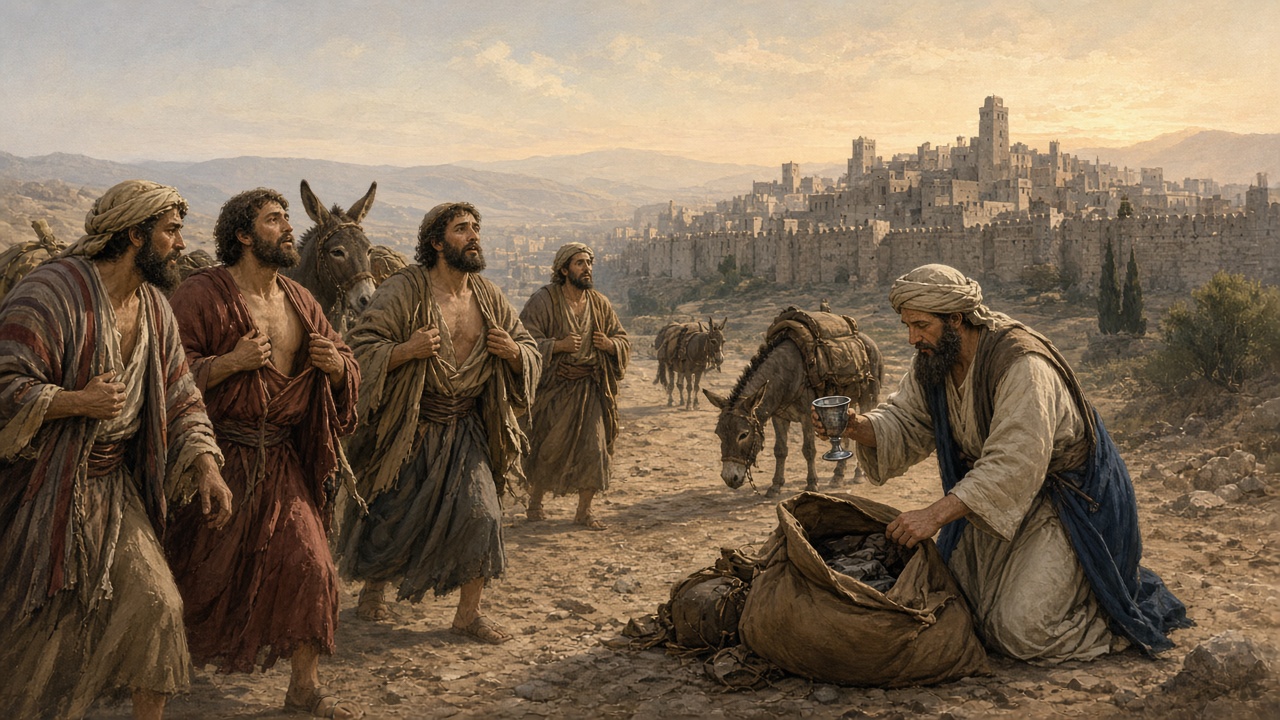
The Hidden Cup and Judah's Plea
- Judah, Jacob's fourth son by Leah, speaks for the brothers and offers to remain as a slave in the boy's place so that Benjamin may return with his brothers. Easton's Bible Dictionary (1897) notes that Judah had earlier intervened to spare Joseph's life, and that he took the lead in the family's affairs, including in the appeal recorded in this chapter.Sources: Judah (patriarch) · the Bible text itself
- Benjamin was the younger of Jacob's two sons by Rachel; she died giving birth to him and called him Ben-oni, "son of my pain," before his father named him Benjamin. The brothers tell Joseph that the boy is the only son of his mother still living, and that their father believes the other was torn to pieces. They say this to Joseph himself—Rachel's elder son, loved by Jacob as the child of his old age—while still speaking to him as a lord equal to Pharaoh.Sources: Benjamin (patriarch) · Joseph (son of Jacob) · the Bible text itself
- On Joseph's orders, the steward hid Joseph's silver cup—the cup he drank from and used for divination—in Benjamin's sack, along with the silver paid for the grain. When it was found, the brothers tore their clothes and returned to the city. Joseph then asked whether they did not know that a man like him could divine the truth, although the narrative shows that he had arranged for the cup to be found.Sources: the Bible text itself
Notes written with AI assistance from open sources (Theographic Bible Metadata, CC BY-SA 4.0; Easton’s Bible Dictionary, public domain) and reviewed before publishing.
Places in this chapter
- Canaan · 32.767, 35.333 · verse 8
Only places identified with high confidence are shown (90% or more according to the scholarly sources compiled by OpenBible). Period map: DARE (Digital Atlas of the Roman Empire), CC BY 4.0; modern map: © OpenStreetMap contributors; places: OpenBible.info (CC BY 4.0).
Credits and license for this translation
Las Escrituras en Ashéninka Ucayali del Sur del Perú
The Holy Bible in the South Ucayali Ashéninka language of Peru
Las Escrituras en Ashéninka Ucayali del Sur del Perú
copyright © 2008 Wycliffe Bible Translators, Inc.
Language: Ashéninka Ucayali del Sur (Ashéninka, South Ucayali)
Translation by: Wycliffe Bible Translators
This translation is made available to you under the terms of the
Creative Commons Attribution-Noncommercial-No Derivatives license 4.0.
You may share and redistribute this Bible translation or extracts from it in any format, provided that:
You include the above copyright and source information.
You do not sell this work for a profit.
You do not change any of the words or punctuation of the Scriptures.
Pictures included with Scriptures and other documents on this site are licensed just for use with those Scriptures and documents.
For other uses, please contact the respective copyright owners.
2016-06-08
Source: http://ebible.org/cpy/ · eBible.org