Genesis 29
Las Escrituras en Ashéninka Ucayali del Sur del Perú · Tap a verse to see its cross-references.
1Eekiro riyaatatzi Jacob ranashita, areetaka iipatsiteki nampitawori ishitowapiintzira ooryaa. 2Ikanta rareetaka owaantsiki ojeekira nijaateni, iñaapaaki osheki oveja rireeyini nijaa, mawa ikaatzi rinashiyitaka ipiyoteeyakani. Antawo ini mapi rashitakotanteetawori nijaa. 3Ikanta ipiyoteeyaanira koeratziriri oveja, raapithatawakaakawo ashitawo. Arika ithonkakiro imiritakaeri ipirapaeni, eejatzi rashitakotaneero nijaa. 4Rojampitapaakiri Jacob koeratziriri oveja, ikantziri: “¿Jempe pipoñaaka eeroka asheninka?” Ikanteeyini rirori: “Harán-jatzi nineeyini.” 5Rapiitanakiri rojampitziri: “¿Piñiiri eerokapaeni Labán itomi Nacor?” Ari rakaeyanakini: “Noñaatatziri.” 6Eekiro ikantatzi Jacob: “¿Tee imantsiyawaetzi?” Ikanteeyini koeratziriri oveja: “Tekatsi ikanta Labán. Paminero jantó, rootakira rishinto pokaentsiri amakiriri ovejate, oeta Raquel.” 7Ikantanaki Jacob: “Eenitatsira okitejitzi tekiraha otsirenitziita pashitakotantyaariri povejate. ¿Iitaka kaari pipantari imiri, pitziyeri eejatzi?” 8Ikanteeyini riroripaeni: “Eero nomatziro, otzimatye noyeeri itsipa koeratziriri rovejate naawyaantyaawori noshirinkiro ashitawo nijaa. Nopantyaariri imiri ovejapaeni.”
9Ikenkithawaemintheetzi Jacob, areetakaapaakari Raquel rovejate opaapate, rootakira koeratziniriri. 10Ikanta iñaawakiro Jacob iinathori Raquel areetakaapaakari rovejate rikonkiri Labán, jatanaki roshirinkiro ashitawo nijaateni, ipakiri imiri ovejapaeni. 11Riwethatawakawo Raquel ithowootawakiro, rirayimotawakawo. 12Ikanta ikamantapaakiro Jacob riira otomi Rebeca, itzinerira rini Labán, iyaatashitanakiri Raquel opaapate, okamantapaakiri. 13Ikemakowentawakiri Labán itzineri Jacob, otomi ritsiro, ishiyashitanakari, rawithakitapakiri, iwethatawaakari eejatzi, raanakiri ipankoki. Ari ikenkithawaetakaapaakiri Jacob rikonkiri ikamantakiri okaatzi awijimotakiriri. 14Ikantanaki Labán: “Eerokataki nosheninka okaakiini, ari poshiyana naaka.” Apaani kashiri ijeekawaetapaaki Jacob ipankoki Labán.
15Omapokashitaka, ikantakiri Labán: “Tee inimotena eerorika nopinatzimi pantawaeri, nosheninkathorira pini. Pikantena jempe ikaateka pikoyiri nopinatemiri.” 16Eenitatsi apite rishinto Labán: rantawote rishinto oeta Lea, otsipa ewonkiri oeta Raquel. 17Amashiwaetatyaaha okiki Lea, rooma Raquel kameethanto ini roori. 18Rootaki ikowashiryaakiri Jacob iroka Raquel, ikantanaki: “Kantacha nantawaete 7 ojarentsi, nantawaewentero pishinto, Raquel.” 19Ikantzi Labán: “Rootaki kameethatatsi nopimiro eeroka, tee nokoyi noperi itsipajatzi. Pijeekapae nopankoki.” 20Imatakiro Jacob rantawaewentakiro Raquel okaatzi 7 ojarentsi, tee iñiimaetawo ojamanitzimoteri rantawaewentakirowa, tema inintaperotatziiro.
21Okanta omonkaataka 7 ojarentsi, ikantakiri Jacob rikonkiri Labán: “Pipenawowa pishinto noenantyaawo, nomonkaatakiro nokantakiri paerani okaate nantawaewentero.” 22Ikaemakaantakiri Labán nampitawori janta, ipokaki maawoeni ikimoshireteeyini aawakaeyaaha rishinto Labán. 23Okanta otsirenitanaki, raanakiro rishinto Lea, ipakiri Jacob, imaantakawo. 24Ipakiro Labán rishinto Lea apaani romperatane oeta Zilpa, rootakira omperaantyaari. 25Okanta okitejitamanaki iñaatziiro Jacob imaantashitakawo Lea. Riyaatashitanakiri Labán, ikantakiri: “¿Iitaka pikoshekantanari? Kaarira Lea nantawaewente, Raquel-ra nantawaewentaki. ¿Iitaka pamatawitantanari?” 26Rakanaki Labán, ikantziri: “Tee rameteetawo jaka iimintakahaetyaawo ewonkiri shintotsi tekirarika oemintyaata etawori otzimaki. 27Payero Lea, arira nopakimiro eejatzi Raquel, otzimatye pantawentawaero eejatzi okaate 7 ojarentsi.” 28Ari ikantakiro Jacob, raakiro Lea. Rayitaawo eejatzi Raquel. 29Ipakiro eejatzi Raquel apaani romperatane oeta Bilja, rootaki omperaantyaari. 30Imatakiro Jacob raakiro Raquel. Rootaki ikowaperotakiri awijanakiro ikoyiro Lea. Eejatzira rantawaeteeniri Labán okaatzi 7 ojarentsi.
31Ikanta iñaakiri Tajorentsi imanintawaetziro Lea, itzimakakiro otomipaeni. Rooma Raquel tee okanta otzimi roori. 32Okanta omotzitaki Lea, otzimakiri otomi iiteetakiri Rubén, tema okantashiretakitzi roori: “Iñaakina Tajorentsi nowashiretakowaetaka, rootaki ikowantakinari noemi.” 33Ari apiitanakiro Lea omotzitee, otzimani otomi, iiteetakiri Simón. Ari okantashiretanaki roori: “Iñaakina Tajorentsi imanintawaeteetanaha, rootakira rowaeyakaantanariri itsipa notomi.” 34Eejatzi apiiteero omotzitee, otzimakiri itsipa otomi, iiteetakiri Leví. Tema okantashiretakitzi: “Itsipaperoteenaata noemi, tema notzimakiniri mawa itomi.” 35Eejatzi itzimawae itsipa eentsite Lea, iiteetakiri Judá, tema okantashiretanakitzi: “Nomampaawentaari Tajorentsi.” Ari okaatapaaki tzimanitaki.
Did you know?
Jacob’s Marriages in Haran
- Jacob fled to Haran, where his uncle Laban lived, in the land of the people of the east. The city, also called the city of Nahor and identified with Harran, stood on the Belik, a tributary of the Euphrates, about seventy miles above the Belik’s junction with that river, in Upper Mesopotamia. Laban was the son of Bethuel and the grandson of Nahor, Abraham’s brother; Laban’s sister Rebekah was Isaac’s wife.Sources: Haran · Laban · Nahor (brother of Abraham) · the Bible text itself
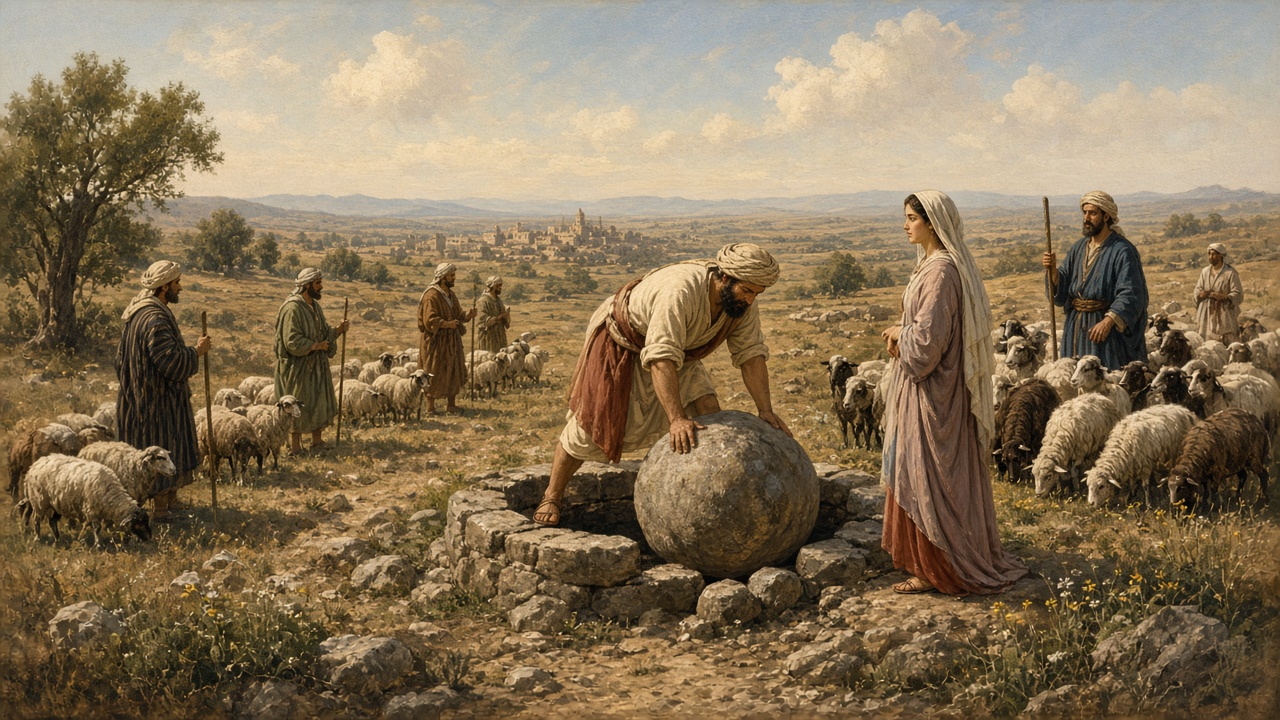
- The well was closed by a large stone that the shepherds rolled away only after all the flocks had gathered, then put back in place. Rachel, whose name is given as “ewe,” was a shepherdess bringing her father’s sheep, and Jacob, who had himself lived as a shepherd, moved the stone and watered his uncle’s flock.Sources: Rachel · Jacob (Israel) · the Bible text itself
- Leah, the elder sister, is called “weary,” and she is described as weak-eyed, or tender-eyed; Rachel, the younger, was shapely and beautiful. Jacob served seven years for Rachel, but at the evening feast Laban gave him Leah, saying it was not the custom there to give the younger daughter in marriage before the older, and then gave him Rachel for another seven years—fourteen in all. Leah’s first sons were Reuben, whose name is given as “Behold a son,” and then Simeon, Levi, and Judah; in naming them she spoke of the LORD seeing her affliction, hearing that she was unloved, her husband becoming attached to her, and her praise of the LORD.Sources: Leah · Rachel · Reuben · the Bible text itself
Notes written with AI assistance from open sources (Theographic Bible Metadata, CC BY-SA 4.0; Easton’s Bible Dictionary, public domain) and reviewed before publishing.
Places in this chapter
- East · Today: region around Amman · 31.955, 35.934 · verse 1
- Haran · Today: Harran · 36.864, 39.033 · verse 4
Only places identified with high confidence are shown (90% or more according to the scholarly sources compiled by OpenBible). Period map: DARE (Digital Atlas of the Roman Empire), CC BY 4.0; modern map: © OpenStreetMap contributors; places: OpenBible.info (CC BY 4.0).
Credits and license for this translation
Las Escrituras en Ashéninka Ucayali del Sur del Perú
The Holy Bible in the South Ucayali Ashéninka language of Peru
Las Escrituras en Ashéninka Ucayali del Sur del Perú
copyright © 2008 Wycliffe Bible Translators, Inc.
Language: Ashéninka Ucayali del Sur (Ashéninka, South Ucayali)
Translation by: Wycliffe Bible Translators
This translation is made available to you under the terms of the
Creative Commons Attribution-Noncommercial-No Derivatives license 4.0.
You may share and redistribute this Bible translation or extracts from it in any format, provided that:
You include the above copyright and source information.
You do not sell this work for a profit.
You do not change any of the words or punctuation of the Scriptures.
Pictures included with Scriptures and other documents on this site are licensed just for use with those Scriptures and documents.
For other uses, please contact the respective copyright owners.
2016-06-08
Source: http://ebible.org/cpy/ · eBible.org