Genesis 16
Las Escrituras en Ashéninka Ucayali del Sur del Perú · Tap a verse to see its cross-references.
1Tee okanta Sarai itzimakayiro oemi Abram, tzimimaetacha omperatane oeta Agar, Egipto-jato ini. 2Okantakiri Abram: “¡Pikemaki! Tee ikowakayina Tajorentsi itzimi, nokoyimaetaka pitsipatyaawo onampiri Agar, pitzimakayiro, riitaki noshiyakayeri notyomipaeni naaka.” Inimotakiri Abram okantakiriri iina Sarai. 3Aakiro Sarai onampiri Egipto-jato, opakiri Abram iinantyaawo. Tzimaki 10 ojarentsi inampitakawo Canaán-ki. 4Ikanta itsitakawo Abram ronampiri Agar, rowakakiro. Okanta oñaaka Agar omotzitaki, okijaneentanakiro Sarai. 5Okantakiri Sarai oemi Abram: “Eeroka kantakaantakirori okijaneetantanari Agar. Naakawitaka pakimirori piinantyaawo, oñaakaha omotzitaki, okowanaki awijena oñaaperotya. Tema Riitaki Tajorentsi yotziro iitarika kantakaantzirori naakarika, aama eerokarika.” 6Rakanakiro Abram iina, ikantanakiro: “¡Pikemina! Ponampirira ini iroka tsinani, eerokataki yoteroni jemperika pikantero.” Roojatsi okijantanaakawo onampiri, roojatzi oshiyantakari Agar.
7Iñiimaetakawo ronampiri Tajorentsi ochempimashiki, ojeekashitziro nijaateni jeekatsiri awotsiki riyaatantetari nampitsiki Shur. 8Rojampitakiro, ikantziro: “¿Jempe pikinapaakika omperatane Sarai? ¿Jempe piyaateka?” Ari akanakiri roori, okantanakiri: “Noshiyapithatatyaawo Sarai omperatanari.” 9Ikantanakiro ronampiri Tajorentsi: “¡Agar! Pipiyee opankoki omperatzimiri, panteniro okaate omperatemiri.” 10Eekiro ikantanakitziiro ronampiri Tajorentsi:
“Noshekyaaperoteemiri pijariteeyaari,
Tekatsi yoteerini jempe ikaate tzimatsini, ishekiperotaatyeera. 11Tema motzitakimi nimaeka, itzimae apaani pitomi,
Riitaki piiteri Ismael.
Tema iñaakimi Tajorentsi pashironkawaetaka.
12Roshiyari pitomi kawayoniro, mashireyantzi ikantya.
Rantamintheteeri maawoeni atziri, ari ikantzityaari maawoeni atziripaeni rantamintheteeri rirori.
Kijokiro rowaero inampi, okantawitya eero inimotziri isheninkapaeni.” 13Okanta okenkithawaetakaakiri Agar irika Tajorentsi, oeteeri: “Tajorentsi Ñaantatsiri,” tema okantakitzi roori: “Iñaana Tajorentsi, eeniro nañiira.” 14Rootaki iitanteetakawori iroka nijateni: “Inijaate Añaaniri Ñaakinari.” Tema iroka nijateni ojeeki niyankithakineki awotsi kinachari janta nampitsiki Cades roojatzi Berea-ki.
15Okanta Agar, tzimaki itomi Abram, oetakiri Ismael. 16Tzimimaetaka Abram okaatzi 86 rojarentsite, ari itzimakiri Ismael.
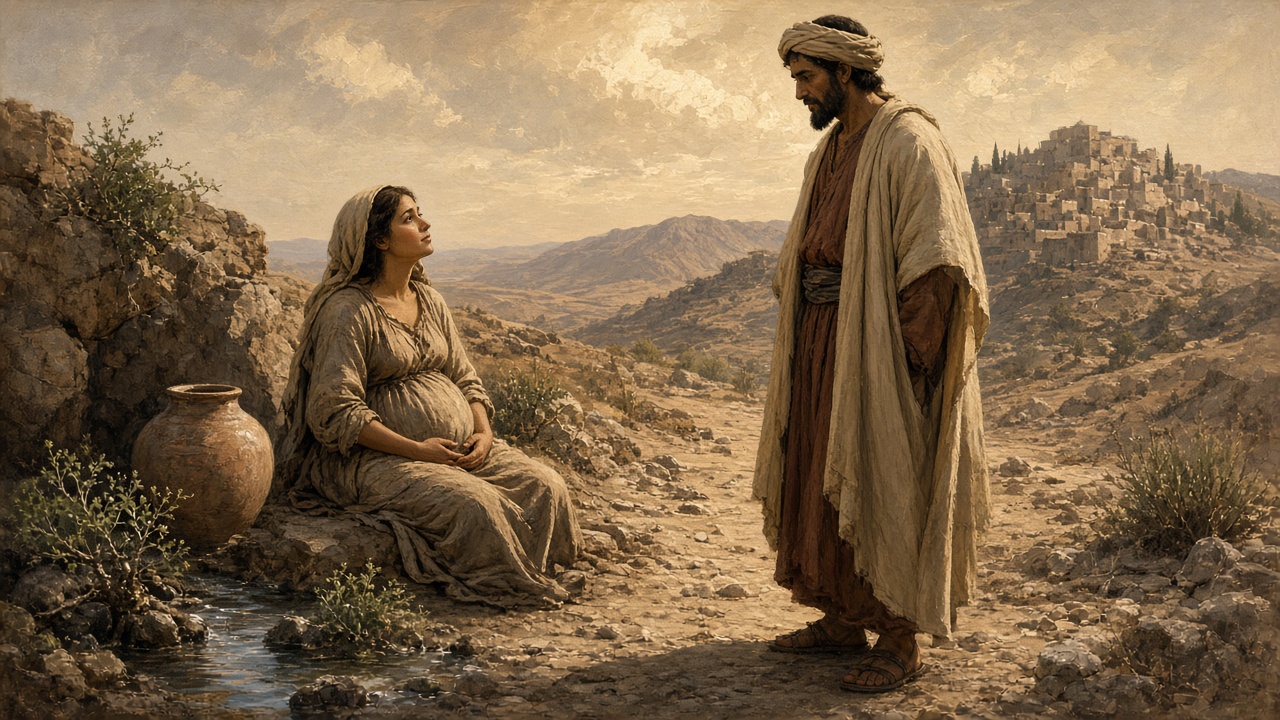
Did you know?
Hagar’s Flight and the Birth of Ishmael
- Hagar, an Egyptian maidservant of Sarai, bears a name understood to mean “flight,” or, according to others, “stranger.” After Abram had lived in Canaan for ten years, Sarai gave her to him as a secondary wife, hoping to build a family through her.Sources: Hagar · the Bible text itself
- When Sarai treated her harshly, Hagar fled along the road to Shur, through the desert that lay between her and Egypt, apparently intending to return to her relatives. The angel of the LORD found her by a spring of water there. Shur, meaning “wall,” was a wilderness on Egypt’s north-eastern border, probably named for frontier fortifications running from Pelusium to Heliopolis.Sources: the Bible text itself · Hagar · Shur
- Hagar called the LORD who spoke to her “the God who sees me,” and the well was named Beer-lahai-roi, “the well of the visible God,” between Kadesh and Bered, a town in the south of Palestine in the desert of Shur. She returned to Abram’s tent, and his eldest son, Ishmael, was born at Mamre when Abram was eighty-six; Abram gave him the name the angel had announced, because the LORD had heard her affliction.Sources: the Bible text itself · Hagar · Bered · Ishmael (Son of Hagar)
Notes written with AI assistance from open sources (Theographic Bible Metadata, CC BY-SA 4.0; Easton’s Bible Dictionary, public domain) and reviewed before publishing.
Places in this chapter
- Canaan · 32.767, 35.333 · verse 3
Only places identified with high confidence are shown (90% or more according to the scholarly sources compiled by OpenBible). Period map: DARE (Digital Atlas of the Roman Empire), CC BY 4.0; modern map: © OpenStreetMap contributors; places: OpenBible.info (CC BY 4.0).
Credits and license for this translation
Las Escrituras en Ashéninka Ucayali del Sur del Perú
The Holy Bible in the South Ucayali Ashéninka language of Peru
Las Escrituras en Ashéninka Ucayali del Sur del Perú
copyright © 2008 Wycliffe Bible Translators, Inc.
Language: Ashéninka Ucayali del Sur (Ashéninka, South Ucayali)
Translation by: Wycliffe Bible Translators
This translation is made available to you under the terms of the
Creative Commons Attribution-Noncommercial-No Derivatives license 4.0.
You may share and redistribute this Bible translation or extracts from it in any format, provided that:
You include the above copyright and source information.
You do not sell this work for a profit.
You do not change any of the words or punctuation of the Scriptures.
Pictures included with Scriptures and other documents on this site are licensed just for use with those Scriptures and documents.
For other uses, please contact the respective copyright owners.
2016-06-08
Source: http://ebible.org/cpy/ · eBible.org